 flip
flipPatina of Pears with Honey and Pepper
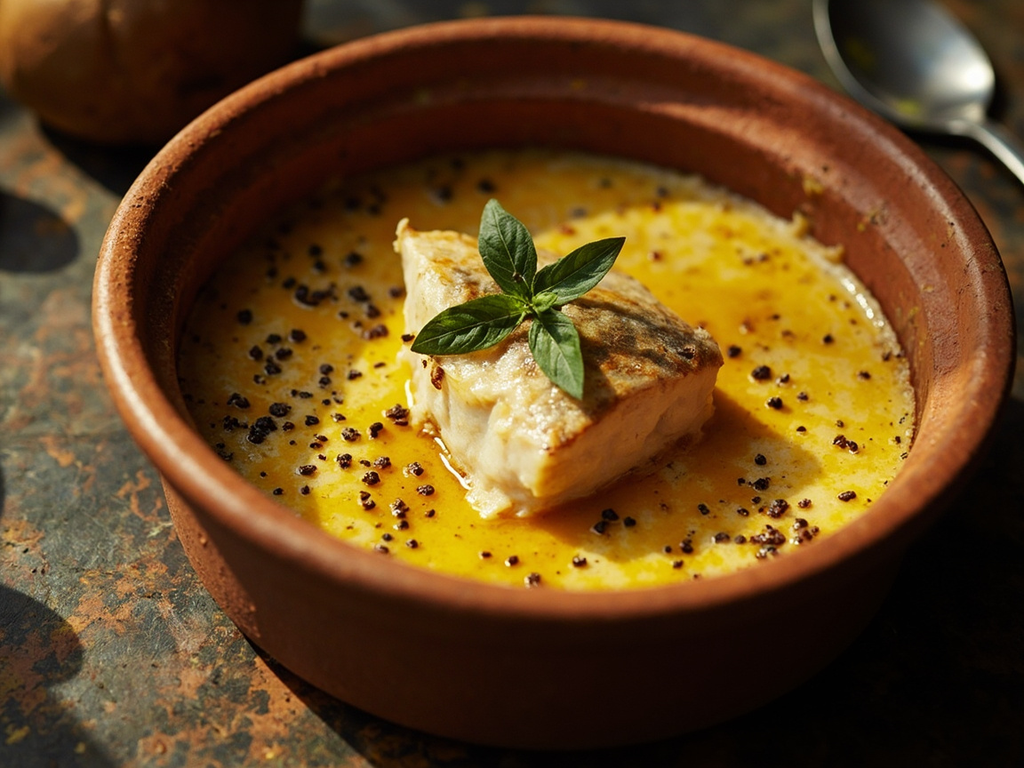
Patina of Pears with Honey and Pepper
Why this dish? When Seneca entertained, even frugally, the secunda mensa offered a sweetness: this pear flan with honey, spiked with a touch of garum and pepper in the Roman style, shows how a Stoic could honor his guests without falling into extravagance. A measured feast, in his image.
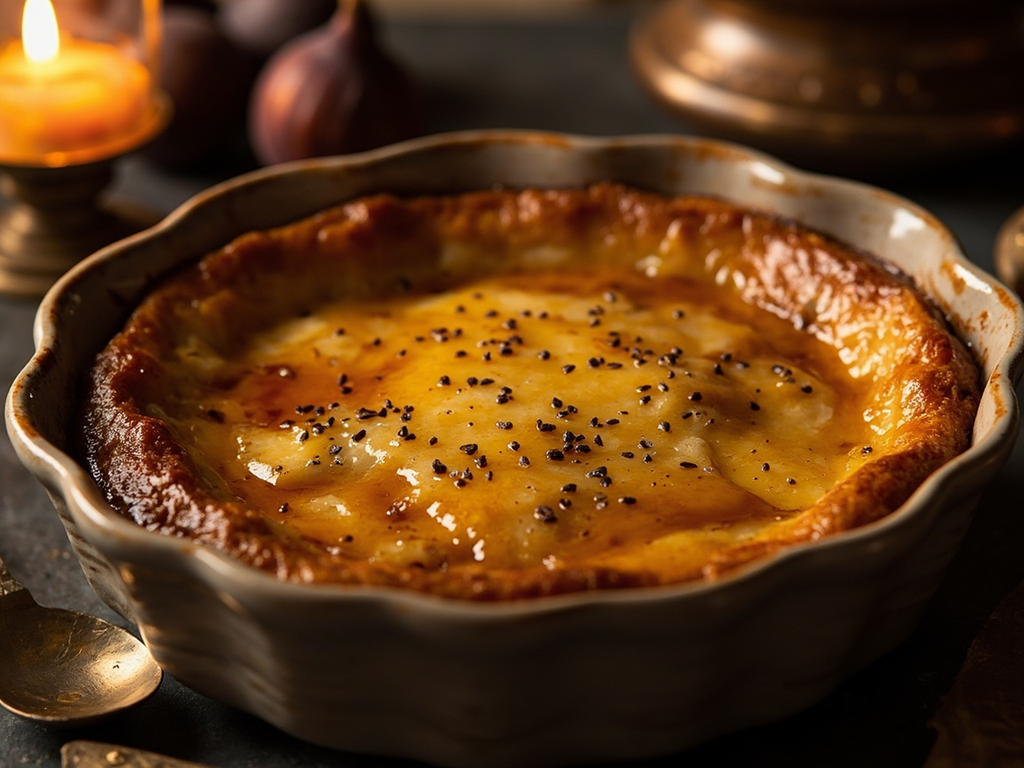
A tender flan of cooked pears, bound with eggs, sweetened with honey, and surprising with a hint of garum and pepper — the Roman art of blending sweet and savory. Served warm at the end of the meal, it is the sweetness of a man who knows that a rare pleasure is worth more than constant excess.
Do not think that a wise man despises all sweetness; he despises the slavery of gluttony, not the joy of a well-ripened fruit. For my guests, I cook the pears, I crush them, I mix in eggs, a little honey, a drop of garum, and a hint of pepper from the Orient — and the thing trembles in the dish like a living thing. They wonder at the salt in the sweet: that is because in Rome we know that opposites seek each other. Eat one portion, not two: measure is the salt of all pleasure.
- •Ripe pears — a basket (base)
- •Eggs — a few (binder)
- •Honey — to taste (sweetness)
- •Garum — a drop (salty umami)
- •Black pepper — a hint (imported spice)
- •Cooked wine (passum) — a drizzle (flavor, optional)
Patina of Pears with Honey and Pepper
A tender flan of cooked pears, bound with eggs, sweetened with honey, and surprising with a hint of garum and pepper — the Roman art of blending sweet and savory. Served warm at the end of the meal, it is the sweetness of a man who knows that a rare pleasure is worth more than constant excess.
Why this dish? When Seneca entertained, even frugally, the secunda mensa offered a sweetness: this pear flan with honey, spiked with a touch of garum and pepper in the Roman style, shows how a Stoic could honor his guests without falling into extravagance. A measured feast, in his image.
Do not think that a wise man despises all sweetness; he despises the slavery of gluttony, not the joy of a well-ripened fruit. For my guests, I cook the pears, I crush them, I mix in eggs, a little honey, a drop of garum, and a hint of pepper from the Orient — and the thing trembles in the dish like a living thing. They wonder at the salt in the sweet: that is because in Rome we know that opposites seek each other. Eat one portion, not two: measure is the salt of all pleasure.
Ingredients (period version)
- Ripe pears — a basket (base)
- Eggs — a few (binder)
- Honey — to taste (sweetness)
- Garum — a drop (salty umami)
- Black pepper — a hint (imported spice)
- Cooked wine (passum) — a drizzle (flavor, optional)
Ingredients
- Ripe pears — 4 (approx. 600 g) (base)
- Eggs — 4 (flan binder)
- Honey — 3 tbsp (sweetness)
- Fish sauce (instead of garum) — 1/2 tsp (subtle umami)
- Ground black pepper — 1 pinch (spice)
- Sweet wine or reduced grape juice — 2 tbsp (flavor)
Method
- Preheat the oven to 170°C. Peel, core, and cut the pears, then poach them for a few minutes to soften.
- Mash the pears into a coarse purée with a fork.
- Beat the eggs with the honey, fish sauce, pepper, and sweet wine.
- Mix the pear purée into the eggs, pour into an oiled baking dish.
- Bake in a water bath for 35–40 minutes until the flan is set but still jiggly.
- Serve warm, with a final drizzle of honey and a twist of pepper.
How it was made : The cookbook attributed to Apicius (1st century) is full of patinae, these savory or sweet egg flans. The combination of fruit, honey, garum, and pepper is typical: wealthy Romans liked to blur the line between sweet and savory, and pepper, imported from India at great expense, marked a prestigious dish.
The contemporary twist : Serve the patina in individual ramekins, caramelize the honey with a blowtorch: an ancient crème caramel that delightfully disorients guests.
Sources : Apicius, De re coquinaria, IV (Patinae)
Seneca · Charactorium