 flip
flipHarðfiskr — traveler's dried fish, butter and barley bread
Harðfiskr — traveler's dried fish, butter and barley bread
Why this dish? Sigurd is a wandering hero: he rides Grani from the Volga to the heath of Gnitaheiðr. For the road, one takes what does not spoil — fish dried hard as wood, butter, and flatbread — the "nesti" of the Nordic traveler.
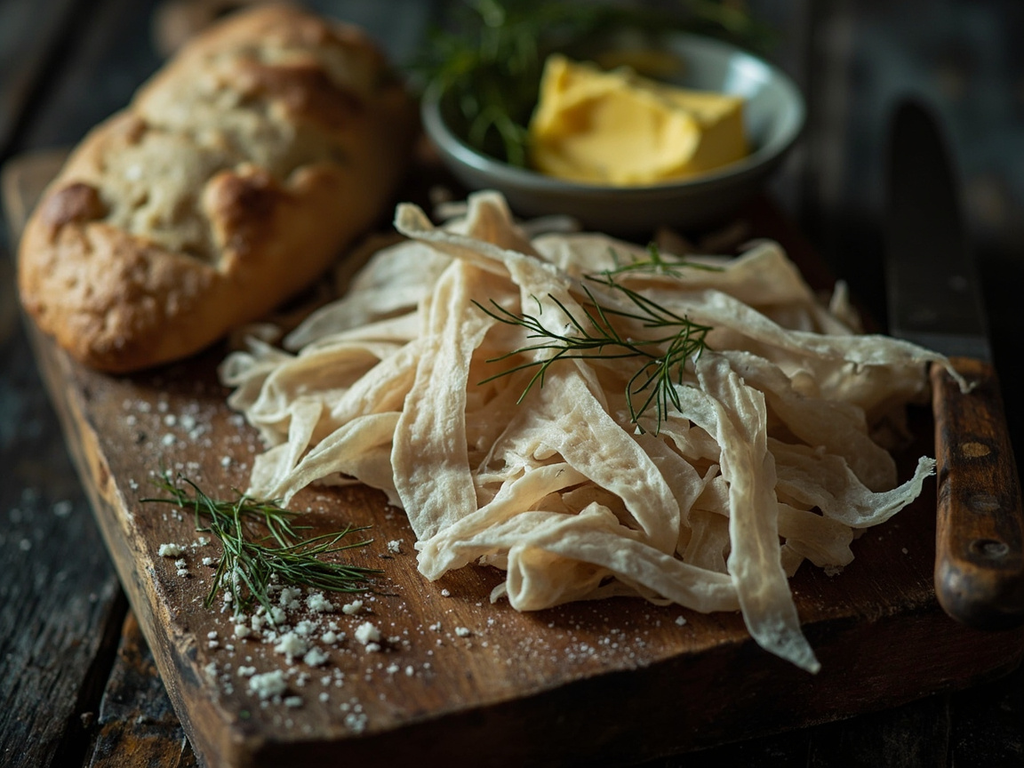
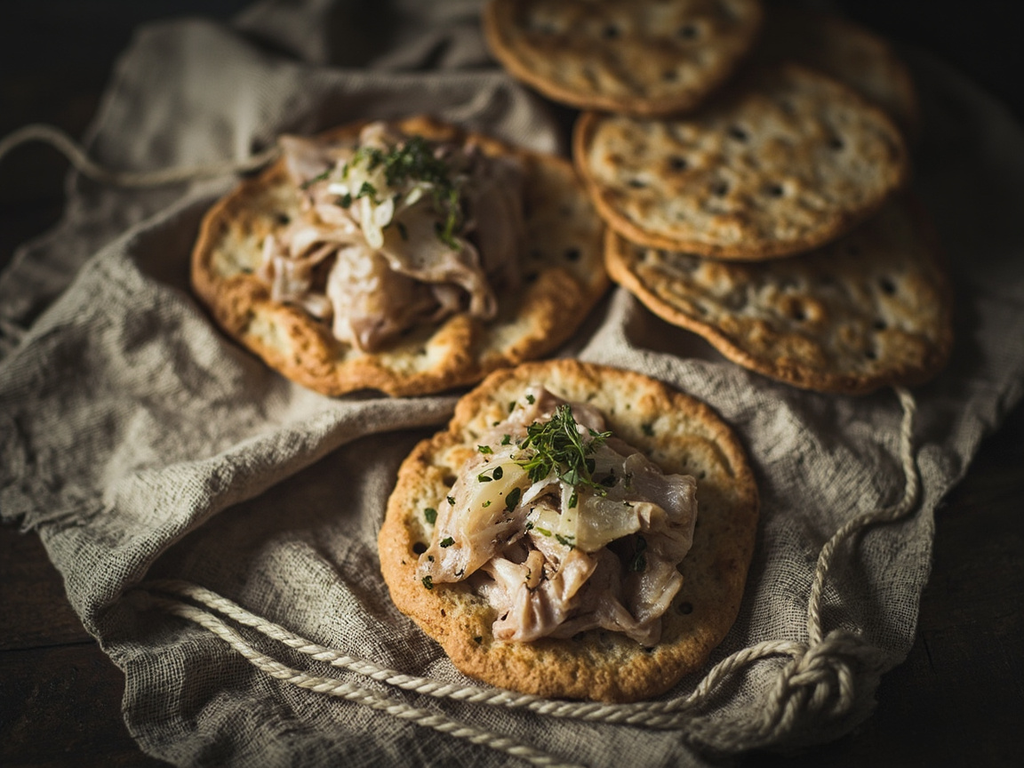
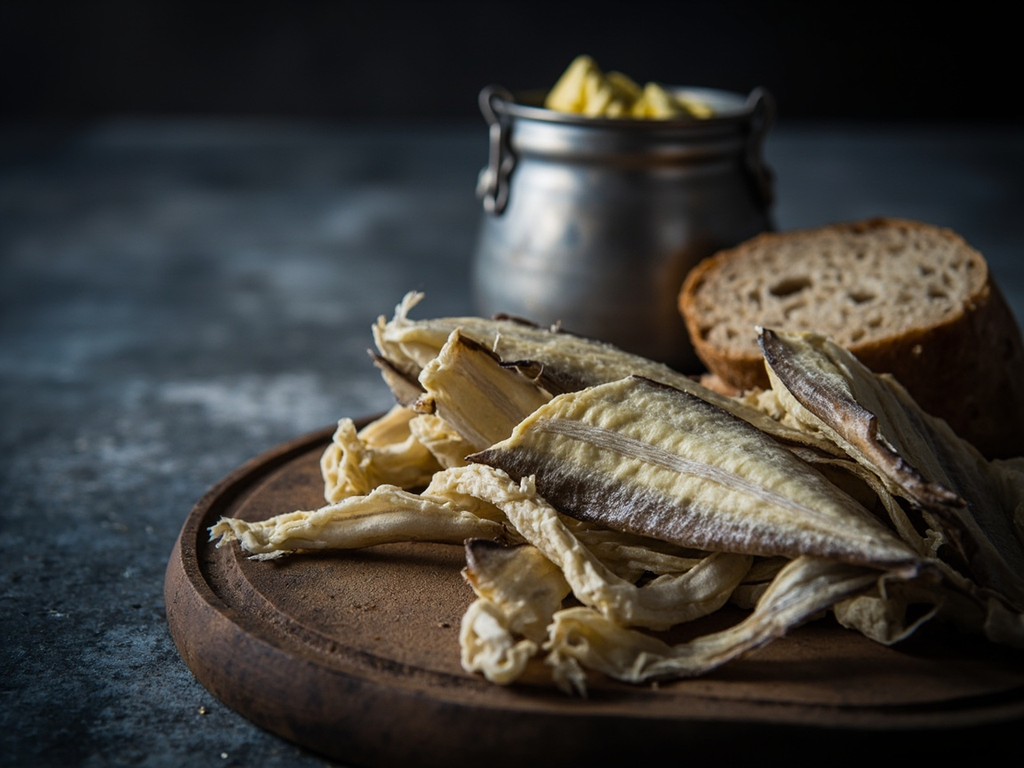
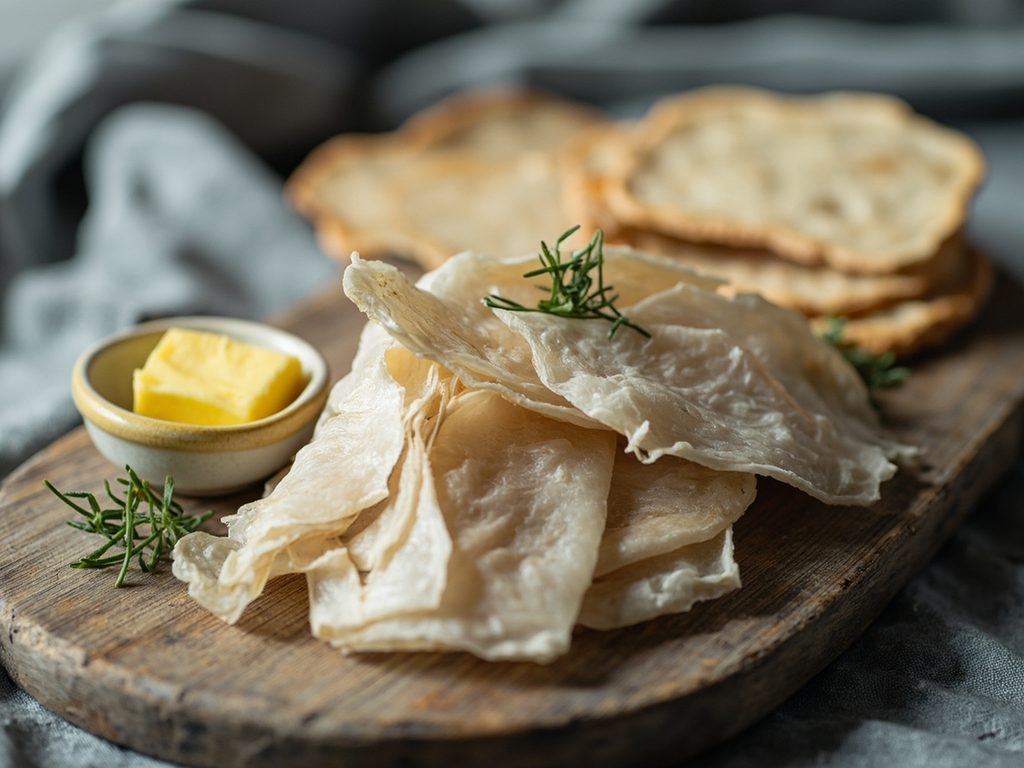
Lean fish dried in the northern wind, torn into strips and eaten spread with butter, alongside a flat barley bread. Light, imperishable, rich in strength: the ultimate travel ration.
For the long ride, do not burden Grani with pots: take harðfiskr, this fish that the north wind has hardened like horn. You tear it with your dagger, spread it with butter, bite the barley bread over it — and you are satisfied without fire or cauldron. It never spoils, even if you ride for weeks toward the dragon's heath. This is the food of men who go far.
- •Lean fish (cod, haddock, pollock) — whole fillets (imperishable dried protein)
- •Cold, dry wind — several days (natural drying)
- •Butter — a pot (fat and flavor)
- •Flat barley bread — a few cakes (travel starch)
Harðfiskr — traveler's dried fish, butter and barley bread
Lean fish dried in the northern wind, torn into strips and eaten spread with butter, alongside a flat barley bread. Light, imperishable, rich in strength: the ultimate travel ration.
Why this dish? Sigurd is a wandering hero: he rides Grani from the Volga to the heath of Gnitaheiðr. For the road, one takes what does not spoil — fish dried hard as wood, butter, and flatbread — the "nesti" of the Nordic traveler.
For the long ride, do not burden Grani with pots: take harðfiskr, this fish that the north wind has hardened like horn. You tear it with your dagger, spread it with butter, bite the barley bread over it — and you are satisfied without fire or cauldron. It never spoils, even if you ride for weeks toward the dragon's heath. This is the food of men who go far.
Ingredients (period version)
- Lean fish (cod, haddock, pollock) — whole fillets (imperishable dried protein)
- Cold, dry wind — several days (natural drying)
- Butter — a pot (fat and flavor)
- Flat barley bread — a few cakes (travel starch)
Ingredients
- Cod or pollock fillets — 4 fillets (protein to dry)
- Salt — for light salting before drying (preservation)
- Quality semi-salted butter — to spread (fat)
- Barley flour — 200 g (for flatbreads) (flatbread)
- Water and salt — for the dough (binder for flatbreads)
Method
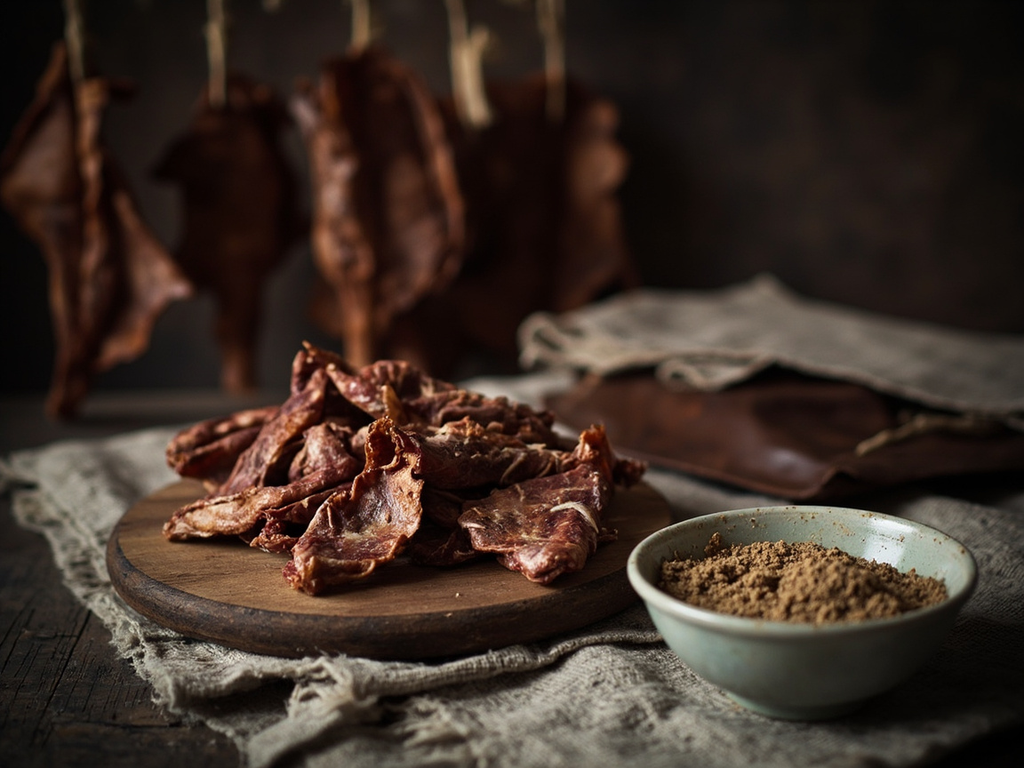
- Lightly salt the fillets, hang them in a cold, dry, well-ventilated place for 5 to 10 days until hard and dry (or use a dehydrator at low temperature).
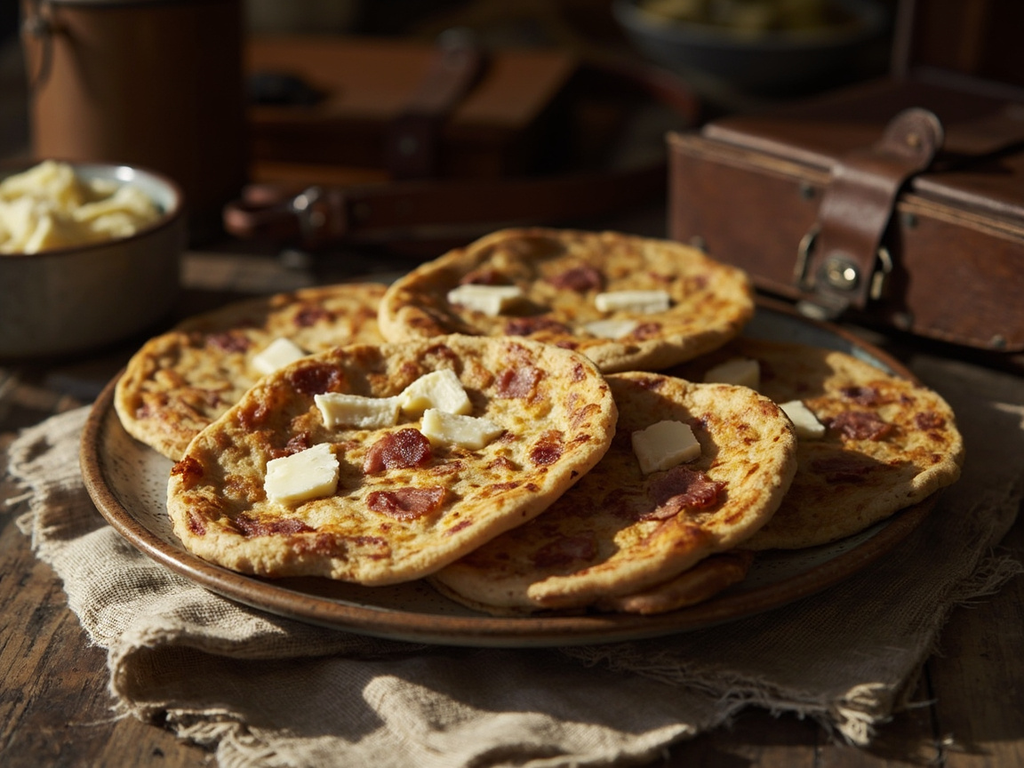
- For the bread: mix barley flour, water and salt, shape thin flatbreads and cook dry on a hot pan until they puff.
- When eating, tear the fish into fibrous strips.
- Generously spread with butter, eat with the barley bread.
- Store the dried fish in a cloth, in a dry place — it keeps for weeks.
How it was made : Wind-dried fish (stockfish/harðfiskr) is a pillar of the Nordic economy: without abundant salt or smoking, simple drying in the cold, dry coastal air sufficed to preserve cod for months. It was eaten as is, torn and buttered. It was both daily coastal food, travel ration, and trade commodity.
The contemporary twist : Present as a "traveler's board": dried fish strips, whipped butter, warm barley flatbreads — a Nordic snack to nibble with your fingers.
Sources : Daniel Serra & Hanna Tunberg, An Early Meal: A Viking Age Cookbook (2013)
Sigurd · Charactorium