 flip
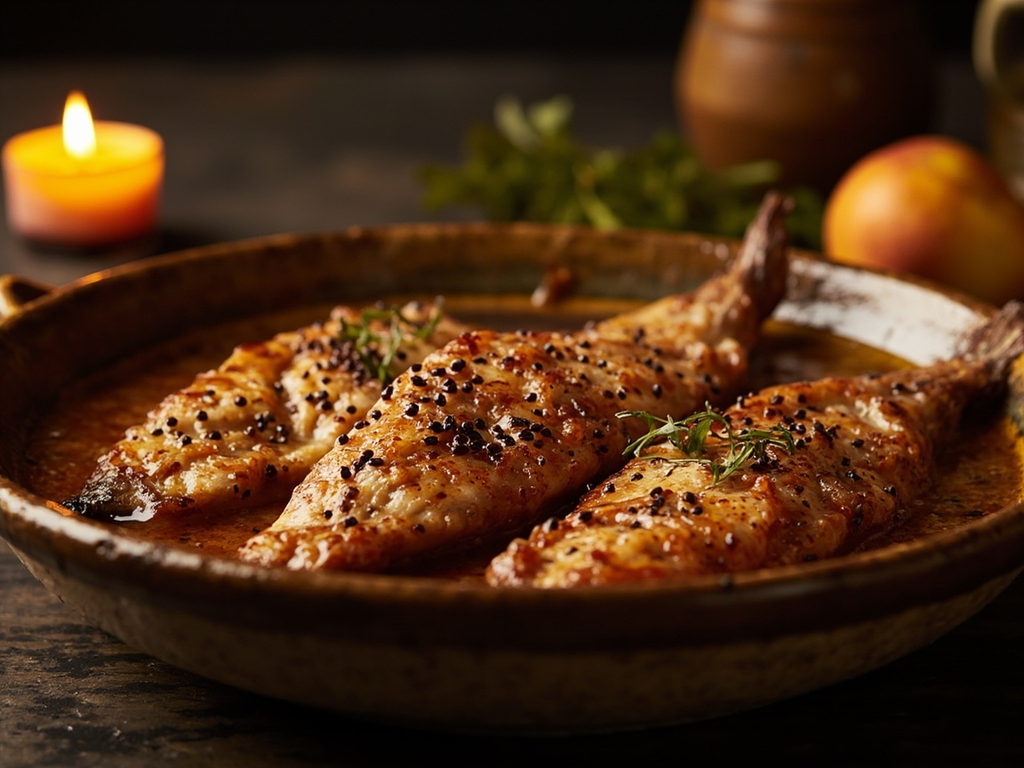
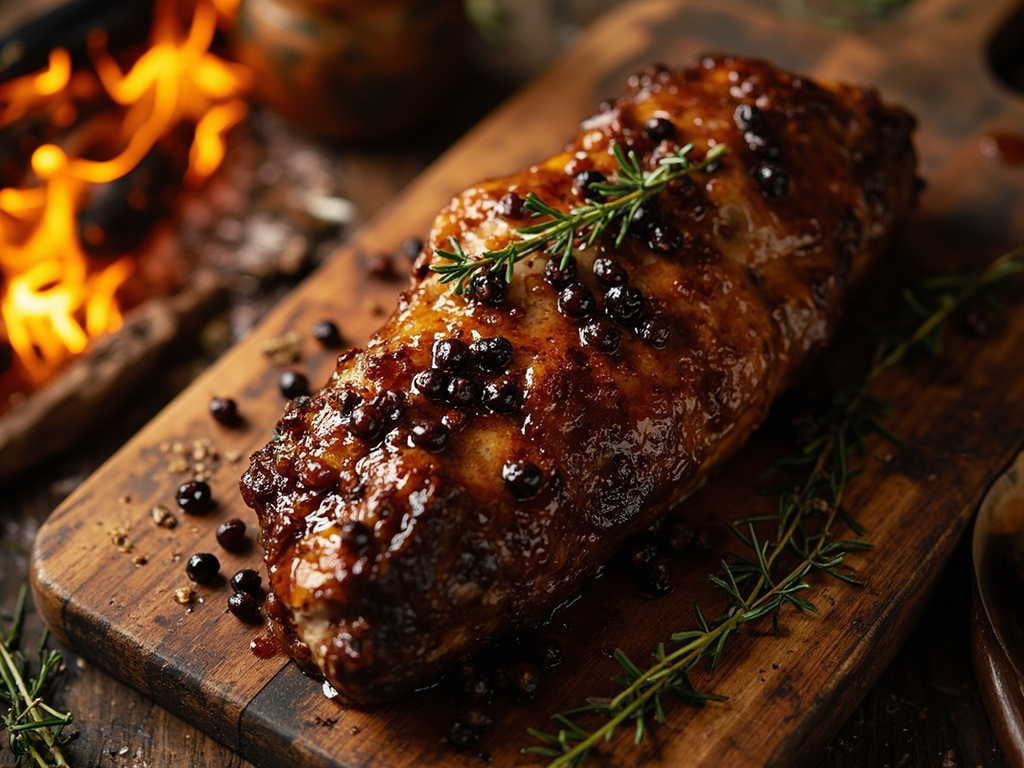
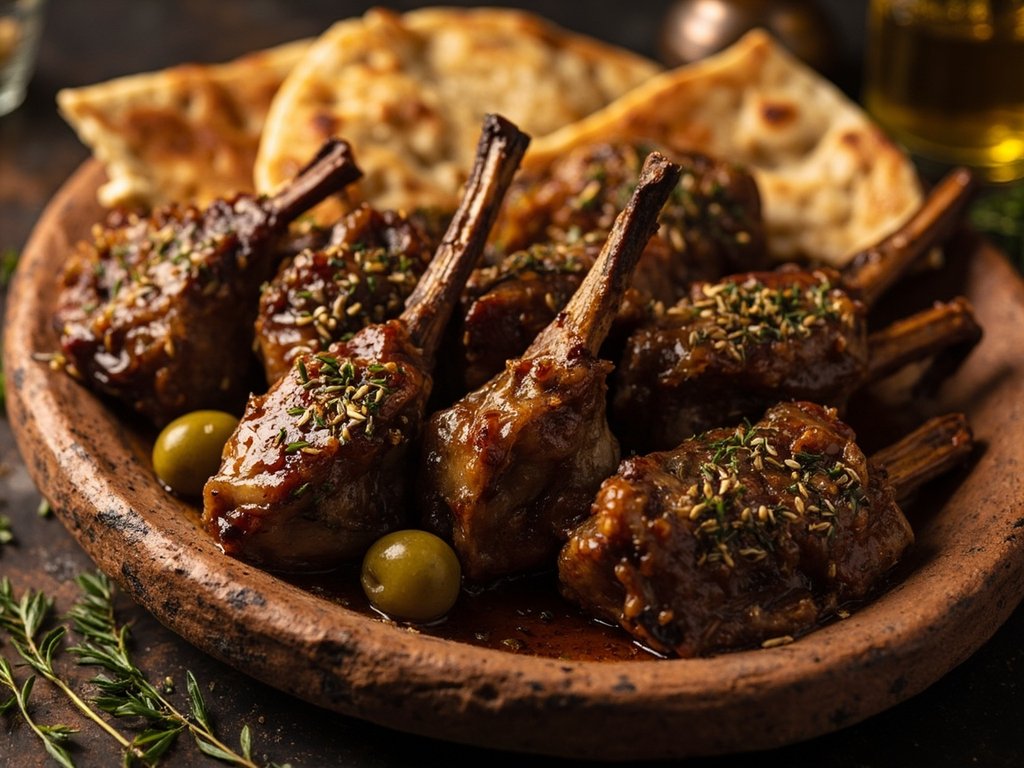
flipRoasted goat with thyme, coriander, and honey, after the sacrifice
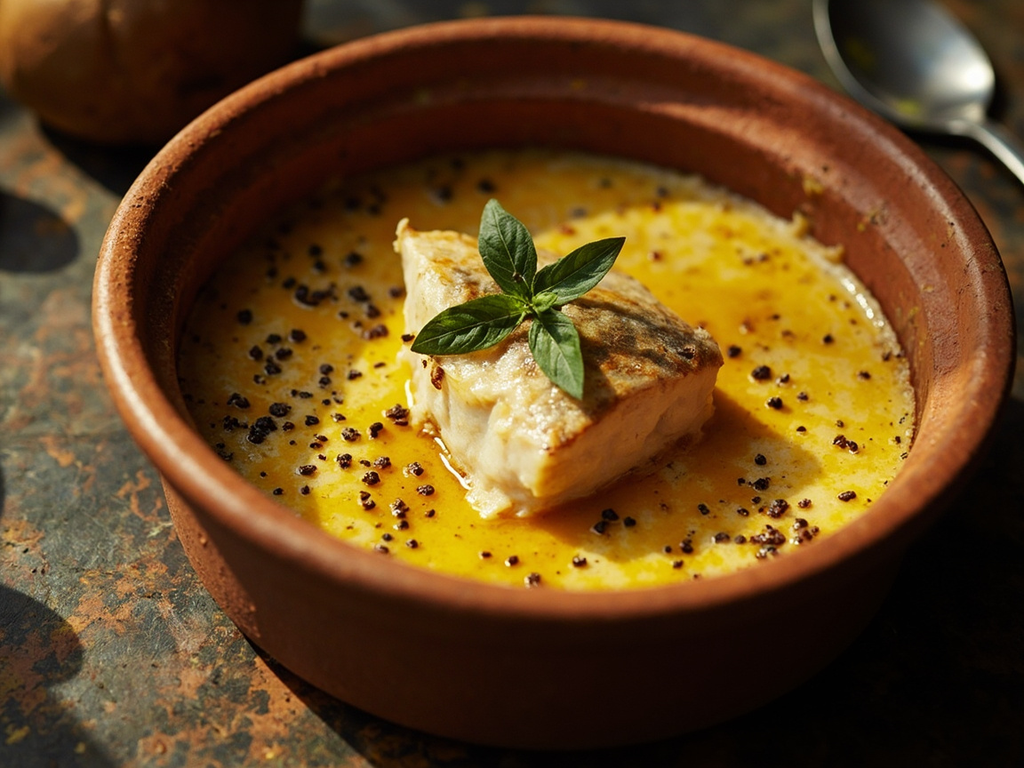
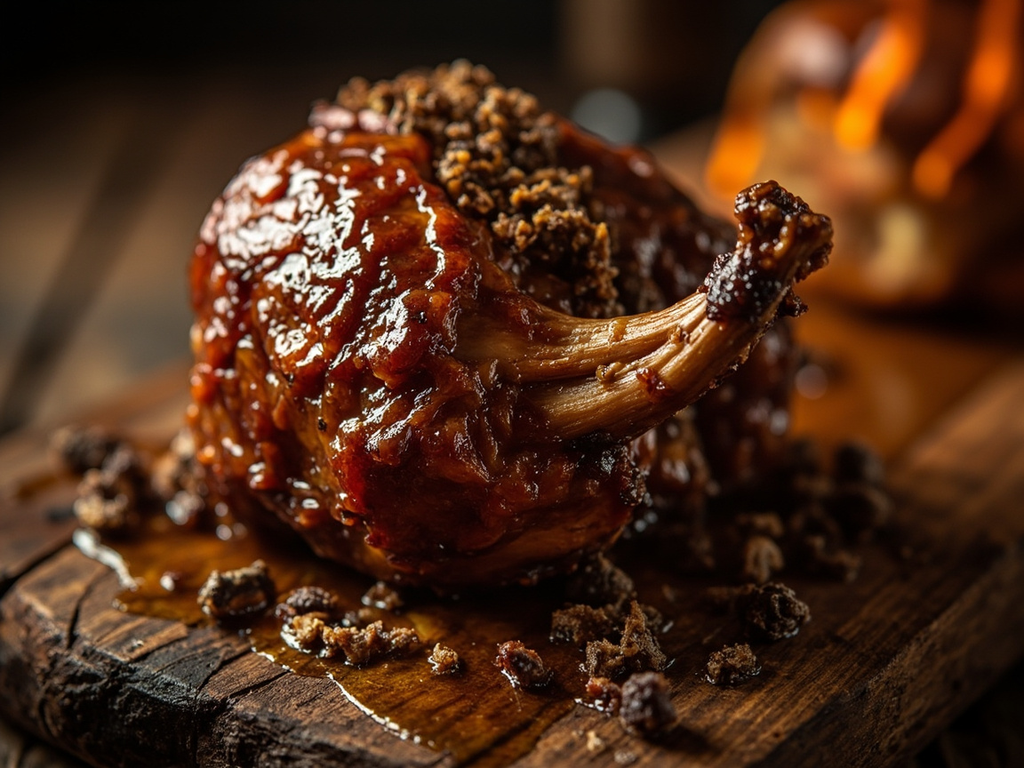
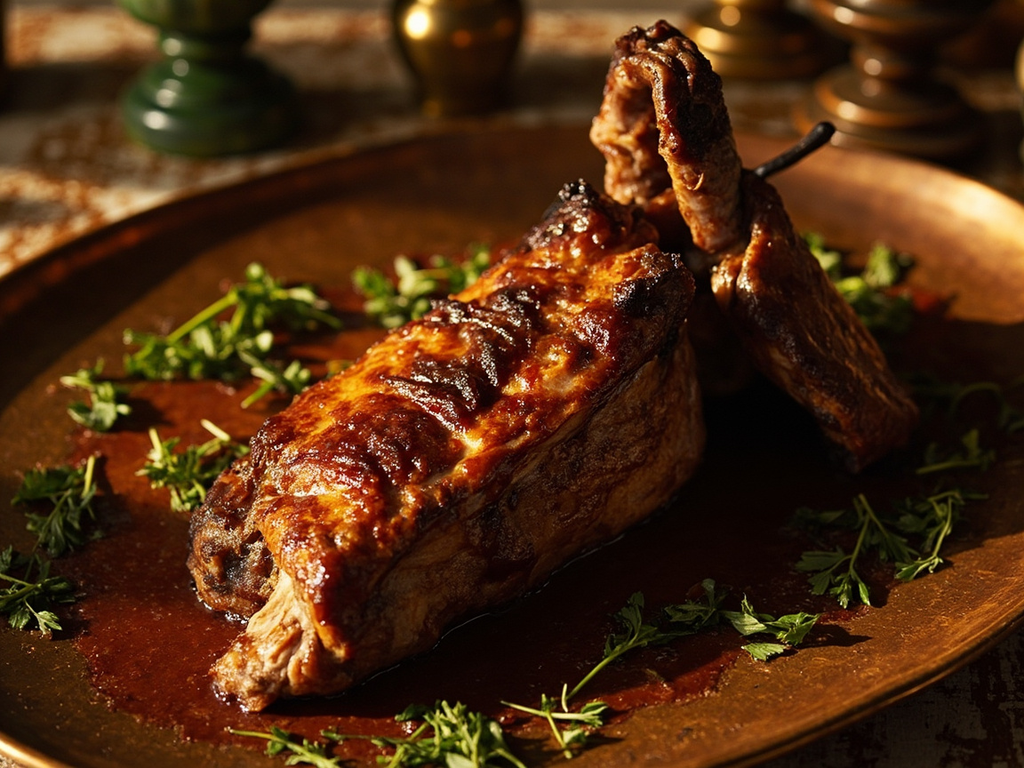
Roasted goat with thyme, coriander, and honey, after the sacrifice
Why this dish? Meat was rarely eaten in Greece except during sacrifices to the gods. Theseus, who instituted the Synoikia at Athens to celebrate the unification of Attica, presided over these great banquets where the beast offered on the altar was then shared and roasted for all the people.
Pieces of goat (or mutton) marinated in wild thyme, coriander seeds, and honey, then roasted on a spit until the skin caramelizes. The festive meat par excellence: rare, sacred, shared.
When the smoke of the sacrifice has risen to the gods, the flesh, on the other hand, returns to men — and that is just. My cooks rub the goat with thyme from the hill, crushed coriander seeds, and a veil of honey, then turn it long over the embers until the crackling sings. You will taste the salt of the sea and the sweetness of Hymettus at once. On that day only, the poorest Athenian eats like a king: that is what it means to unite a people around a single table.
- •Goat or mutton meat — one shoulder (centerpiece of the banquet)
- •Wild thyme — several sprigs (garrigue herb)
- •Coriander seeds — a handful (marinade spice)
- •Honey — two spoonfuls (glaze and sweetness)
- •Olive oil and salt — as needed (marinade)
Roasted goat with thyme, coriander, and honey, after the sacrifice
Pieces of goat (or mutton) marinated in wild thyme, coriander seeds, and honey, then roasted on a spit until the skin caramelizes. The festive meat par excellence: rare, sacred, shared.
Why this dish? Meat was rarely eaten in Greece except during sacrifices to the gods. Theseus, who instituted the Synoikia at Athens to celebrate the unification of Attica, presided over these great banquets where the beast offered on the altar was then shared and roasted for all the people.
When the smoke of the sacrifice has risen to the gods, the flesh, on the other hand, returns to men — and that is just. My cooks rub the goat with thyme from the hill, crushed coriander seeds, and a veil of honey, then turn it long over the embers until the crackling sings. You will taste the salt of the sea and the sweetness of Hymettus at once. On that day only, the poorest Athenian eats like a king: that is what it means to unite a people around a single table.
Ingredients (period version)
- Goat or mutton meat — one shoulder (centerpiece of the banquet)
- Wild thyme — several sprigs (garrigue herb)
- Coriander seeds — a handful (marinade spice)
- Honey — two spoonfuls (glaze and sweetness)
- Olive oil and salt — as needed (marinade)
Ingredients
- Lamb shoulder (or kid goat) — 1.2 kg, in large pieces (roasting meat)
- Fresh thyme — 1 generous handful (herb)
- Coriander seeds — 2 tsp, crushed (spice)
- Honey — 2 tbsp (glaze)
- Olive oil — 4 tbsp (marinade)
- Salt — 2 tsp (seasoning)
Method
- Crush the coriander seeds in a mortar.
- Mix oil, honey, coriander, stripped thyme leaves, and salt; coat the meat with the mixture.
- Marinate for at least 2 hours (ideally overnight in the fridge).
- Roast in the oven at 180°C for about 1 hour 15 minutes, or on a spit/barbecue, basting regularly with the juices.
- Increase the heat at the end of cooking to caramelize the honey and crisp the surface.
- Let rest for 10 minutes, carve, and serve with maza and olives.
How it was made : Meat consumption was almost always linked to religious sacrifice: the bones and fat were burned for the gods, and the flesh was redistributed to the community. Goat and sheep, more than cattle, were common animals. Cooking was done on a spit or over embers, without pots.
The contemporary twist : Presented on a sharing board, sprinkled with fresh thyme and lemon zest, like a revisited Mediterranean méchoui.
Theseus · Charactorium