 flip
flipTai no shioyaki — salt-grilled sea bream
Tai no shioyaki — salt-grilled sea bream
Why this dish? Whole grilled fish marked the victories and feasts of the clan. As a high-ranking warrior serving Minamoto no Yoshinaka, Tomoe had access to more varied fare than peasants: a beautiful grilled fish celebrated the triumphs of the Genpei War.
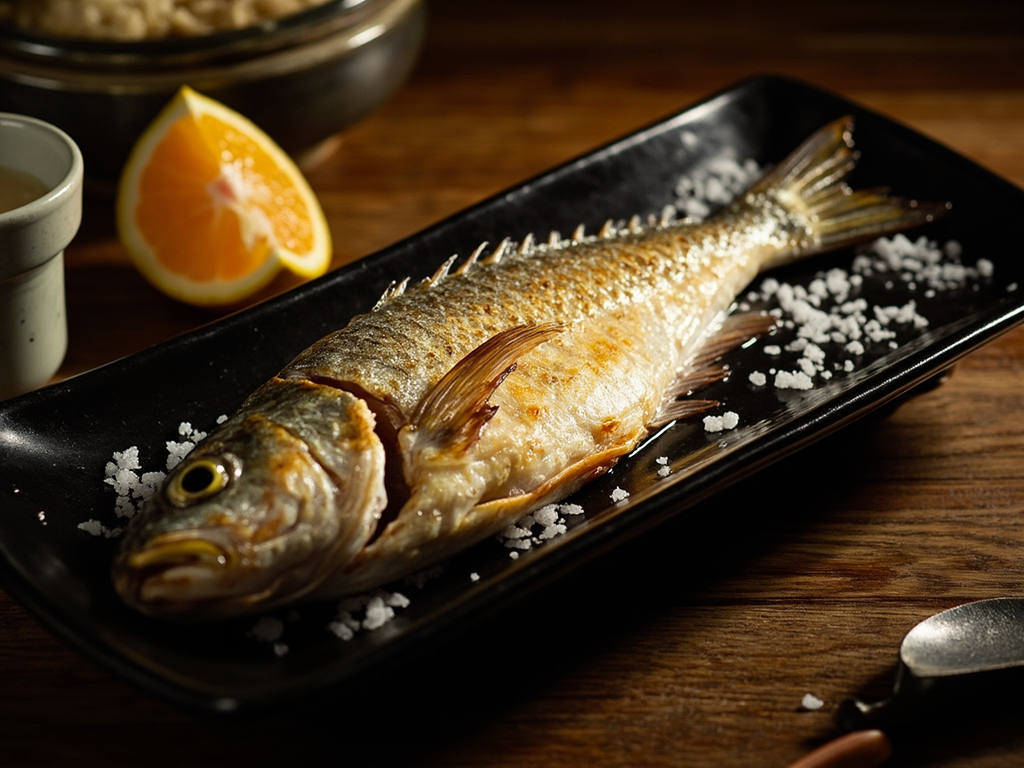
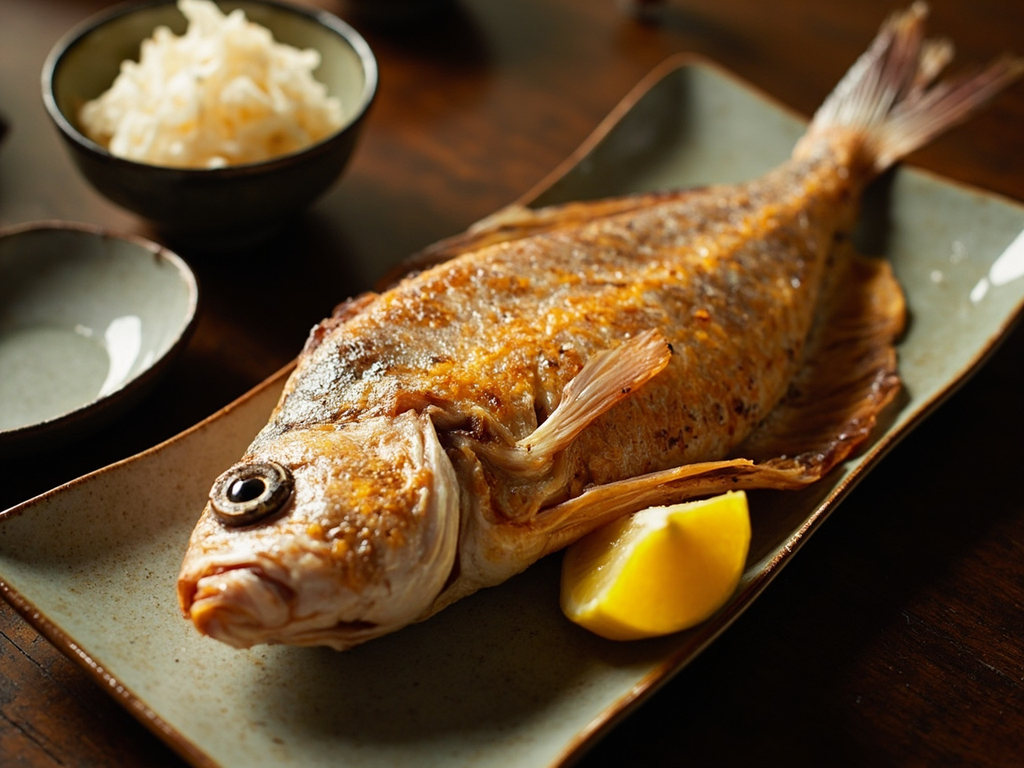
A whole sea bream sprinkled with salt and grilled until its skin crackles and turns golden. A celebratory fish par excellence in Japan, it is served whole to symbolize luck and abundance.
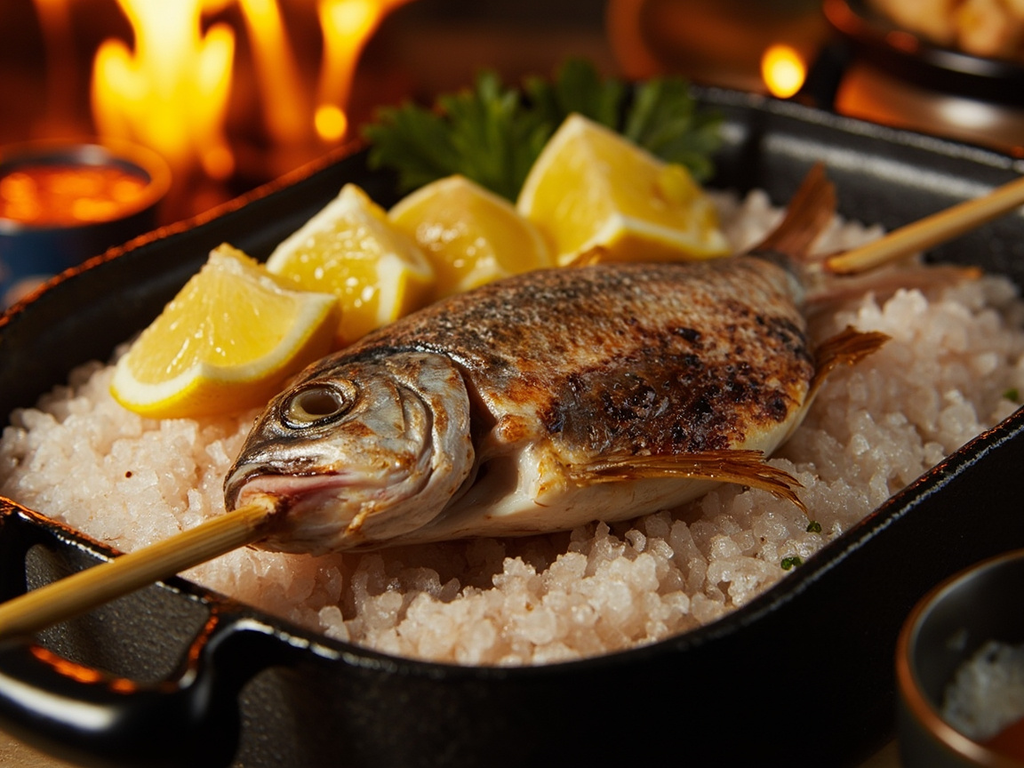
When the clan has carried the day, we spare no fire. This fish, we salt it with a generous hand — see how the salt makes the skin crackle — then we hold it over the embers, impaled on bamboo skewers so it keeps a proud posture. It is served whole, head included: a warrior does not chop luck into pieces. Eat, tonight we have earned the right to feast; tomorrow, salted rice will resume its rights.
- •Whole sea bream (tai) — one per honored guest (centrepiece of the banquet)
- •Sea salt — generously (seasoning and crust)
- •Saké (fermented rice wine) — a drizzle (fragrance, optional)
Tai no shioyaki — salt-grilled sea bream
A whole sea bream sprinkled with salt and grilled until its skin crackles and turns golden. A celebratory fish par excellence in Japan, it is served whole to symbolize luck and abundance.
Why this dish? Whole grilled fish marked the victories and feasts of the clan. As a high-ranking warrior serving Minamoto no Yoshinaka, Tomoe had access to more varied fare than peasants: a beautiful grilled fish celebrated the triumphs of the Genpei War.
When the clan has carried the day, we spare no fire. This fish, we salt it with a generous hand — see how the salt makes the skin crackle — then we hold it over the embers, impaled on bamboo skewers so it keeps a proud posture. It is served whole, head included: a warrior does not chop luck into pieces. Eat, tonight we have earned the right to feast; tomorrow, salted rice will resume its rights.
Ingredients (period version)
- Whole sea bream (tai) — one per honored guest (centrepiece of the banquet)
- Sea salt — generously (seasoning and crust)
- Saké (fermented rice wine) — a drizzle (fragrance, optional)
Ingredients
- Whole sea bream (gutted, scaled) — 1 (approx. 600 g) (centrepiece)
- Coarse sea salt — 2 to 3 tbsp (seasoning and crust)
- Saké — 2 tbsp (fragrance)
- Sudachi or yuzu citrus — 1, cut into wedges (tangy accompaniment)
Method
- Lightly score the fish skin on both sides, drizzle with saké and pat dry.
- Generously salt the entire surface, pressing a little salt onto the fins to protect them.
- Heat a grill (ideally over coals) and place the fish on it.
- Grill 8 to 10 minutes on each side until the skin is golden and crispy and the flesh is opaque.
- Serve whole on a platter, with wedges of Japanese citrus.
How it was made : Grilled fish over coals (especially tai) has long been associated with Japanese celebrations, its name sounding like 'medetai' (auspicious, happy). The fish was grilled impaled on bamboo skewers to keep a lifelike posture. This recipe is a plausible reconstruction of 12th-century warrior banquets.
The contemporary twist : Present the fish in a 'wavy' posture on a bed of salt, with the bamboo skewer visible: the traditional banquet presentation, always spectacular.
Tomoe Gozen · Charactorium