 flip
flipMaza, the Everyday Barley Flatbread
Maza, the Everyday Barley Flatbread
Why this dish? Before being a wandering king, Odysseus is first a man of Ithaca, a rocky island where barley grows better than wheat. Maza is the bread of sailors and shepherds: it is what they carry on the black ships, what satisfies the crew between ports.
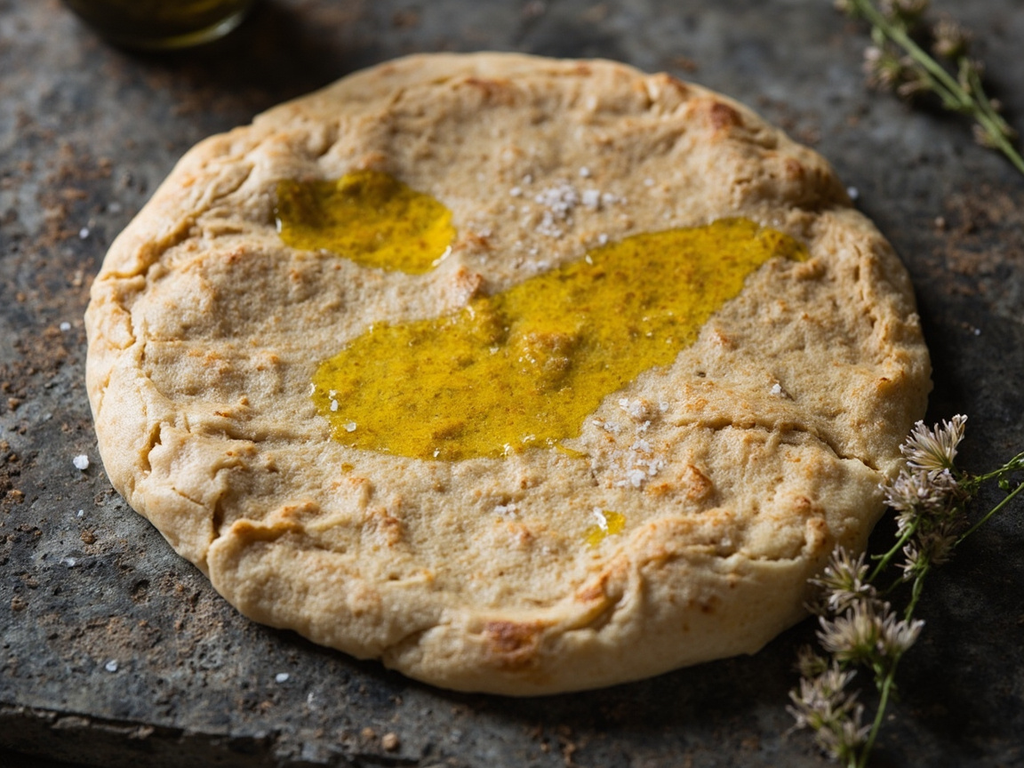
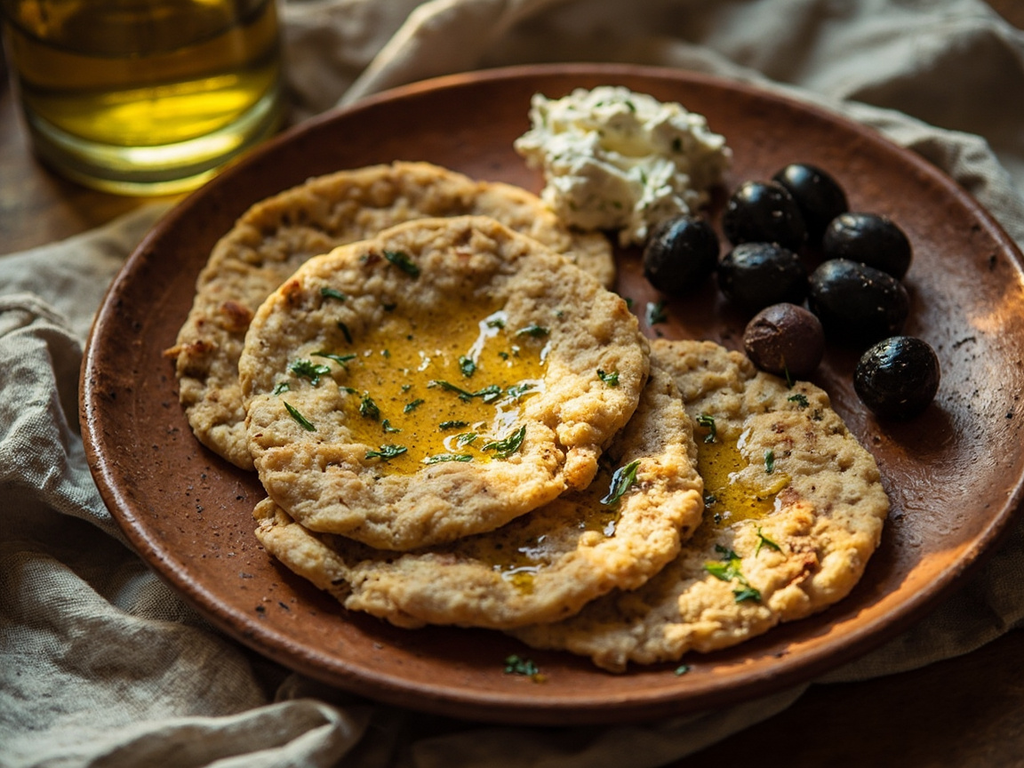
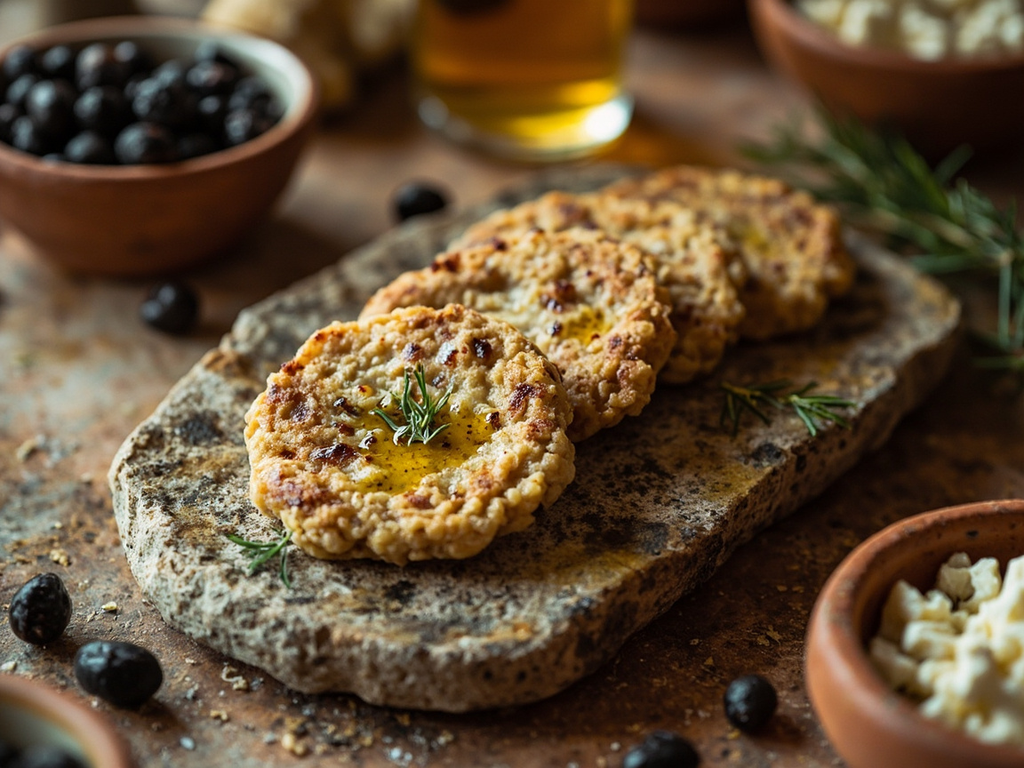
A dense, rustic flatbread of toasted barley kneaded with olive oil, barely cooked or simply dried. Nourishing, portable, it is the foundation of all Greek meals before the wheat bread of the wealthy.
Listen, stranger: before the gold of Troy, before the Sirens, there was this flatbread in my rowers' pouch. We toast the barley over the embers until it sings, crush it between two stones, and knead these álphita with a drizzle of oil and spring water. No oven needed: my hand suffices, and the sun of Ithaca dries the rest. A cunning man knows you don't cross the sea on an empty stomach — and this one, trust me, clings to the body better than an oath.
- •Toasted barley flour (álphita) — two handfuls per person (base)
- •Olive oil — a drizzle (binder and flavor)
- •Spring water — as needed (binder)
- •Sea salt — a pinch (seasoning)
Maza, the Everyday Barley Flatbread
A dense, rustic flatbread of toasted barley kneaded with olive oil, barely cooked or simply dried. Nourishing, portable, it is the foundation of all Greek meals before the wheat bread of the wealthy.
Why this dish? Before being a wandering king, Odysseus is first a man of Ithaca, a rocky island where barley grows better than wheat. Maza is the bread of sailors and shepherds: it is what they carry on the black ships, what satisfies the crew between ports.
Listen, stranger: before the gold of Troy, before the Sirens, there was this flatbread in my rowers' pouch. We toast the barley over the embers until it sings, crush it between two stones, and knead these álphita with a drizzle of oil and spring water. No oven needed: my hand suffices, and the sun of Ithaca dries the rest. A cunning man knows you don't cross the sea on an empty stomach — and this one, trust me, clings to the body better than an oath.
Ingredients (period version)
- Toasted barley flour (álphita) — two handfuls per person (base)
- Olive oil — a drizzle (binder and flavor)
- Spring water — as needed (binder)
- Sea salt — a pinch (seasoning)
Ingredients
- Barley flour (ideally hulled, ground and toasted) — 200 g (base)
- Extra virgin olive oil — 3 tbsp (binder and flavor)
- Warm water — 100 to 120 ml (binder)
- Salt — 1/2 tsp (seasoning)
- Honey (optional, to soften bitterness) — 1 tsp (balance)
Method
- Toast the barley flour in a dry pan for a few minutes, stirring, until fragrant (skip this step if your flour is already toasted).
- Mix the flour, salt, and olive oil, then add the warm water little by little until you get a supple but firm dough.
- Shape into flat cakes about 1 cm thick.
- Cook for 4 to 5 minutes per side on a hot stone, pan, or griddle, without fat, until golden.
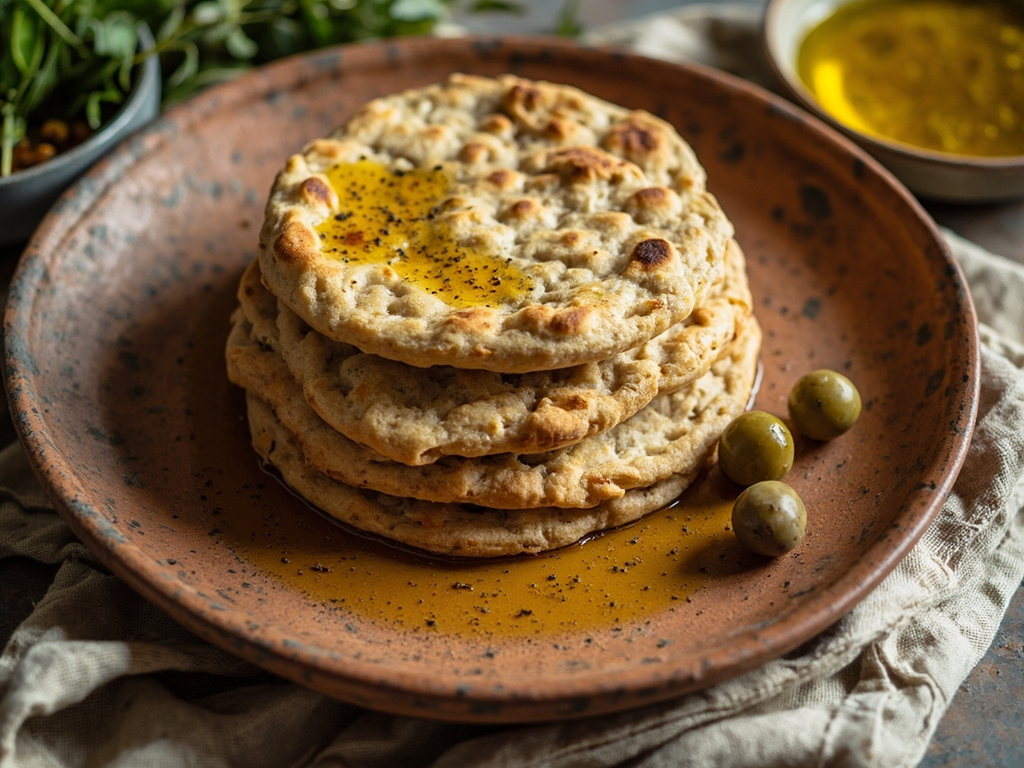
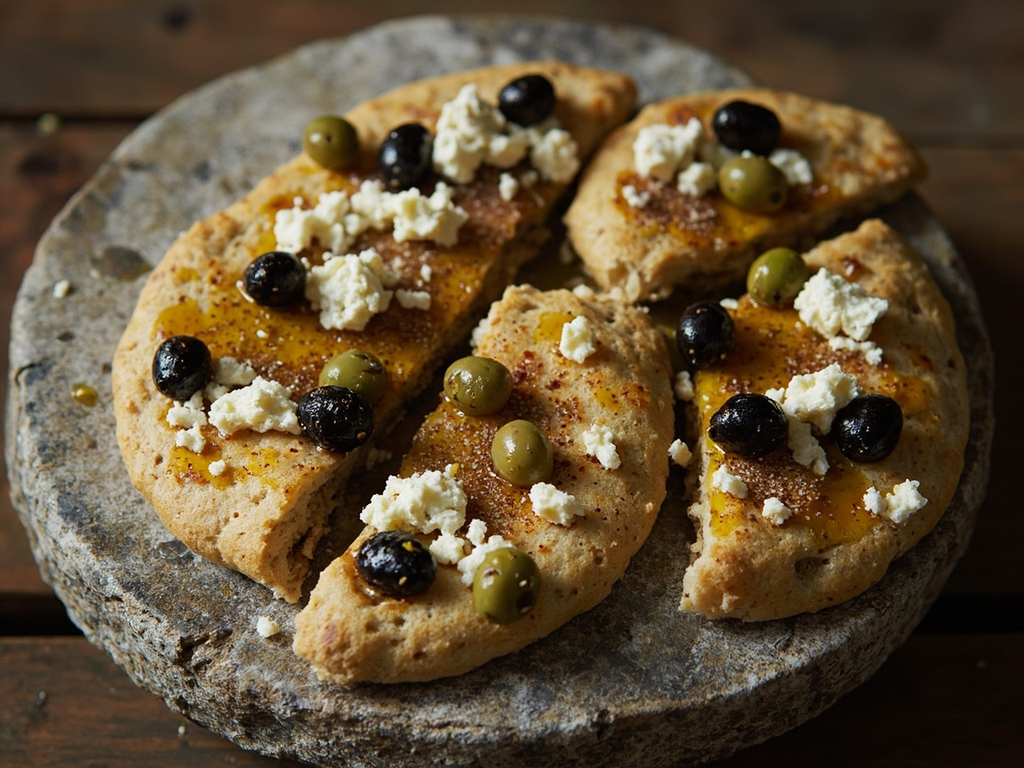
- Serve warm, drizzled with olive oil, with olives and goat cheese.
How it was made : Barley was the dominant grain of archaic Greece; wheat remained a luxury. It was toasted before grinding, producing álphita. Maza could be simply kneaded and eaten raw (sun-dried) or barely seared: oven baking was not systematic among the humble.
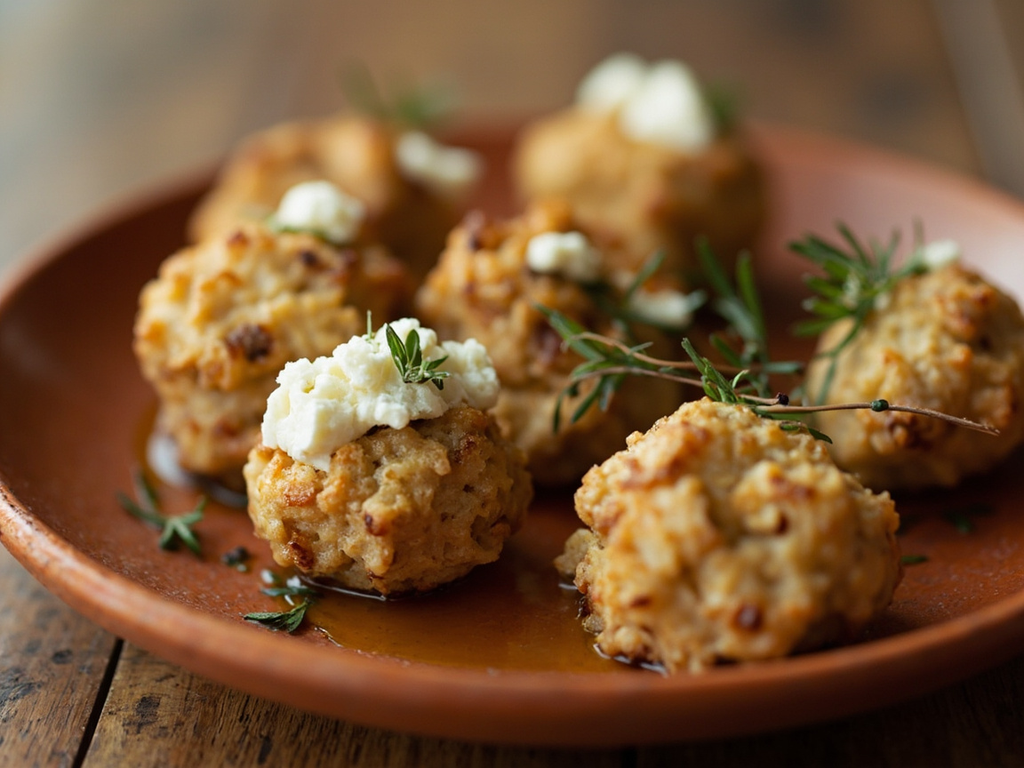
The contemporary twist : Serve it as a "rower's board" with tapenade, fresh cheese, and figs: an Ithaca meze for an aperitif.
Sources : Homer, The Odyssey and The Iliad · Andrew Dalby, Siren Feasts: A History of Food and Gastronomy in Greece (1996)
Odysseus · Charactorium