 flip
flipMoretum, the Rustic Herb Spread
Moretum, the Rustic Herb Spread
Why this dish? The Moretum is described in a short poem from the Appendix Vergiliana attributed to Virgil: a peasant, Simylus, crushes garlic, herbs, and cheese in a mortar for his morning meal. Virgil, born in the countryside near Mantua to a family of small landowners, knew intimately this simple field food that he celebrates in the Georgics.
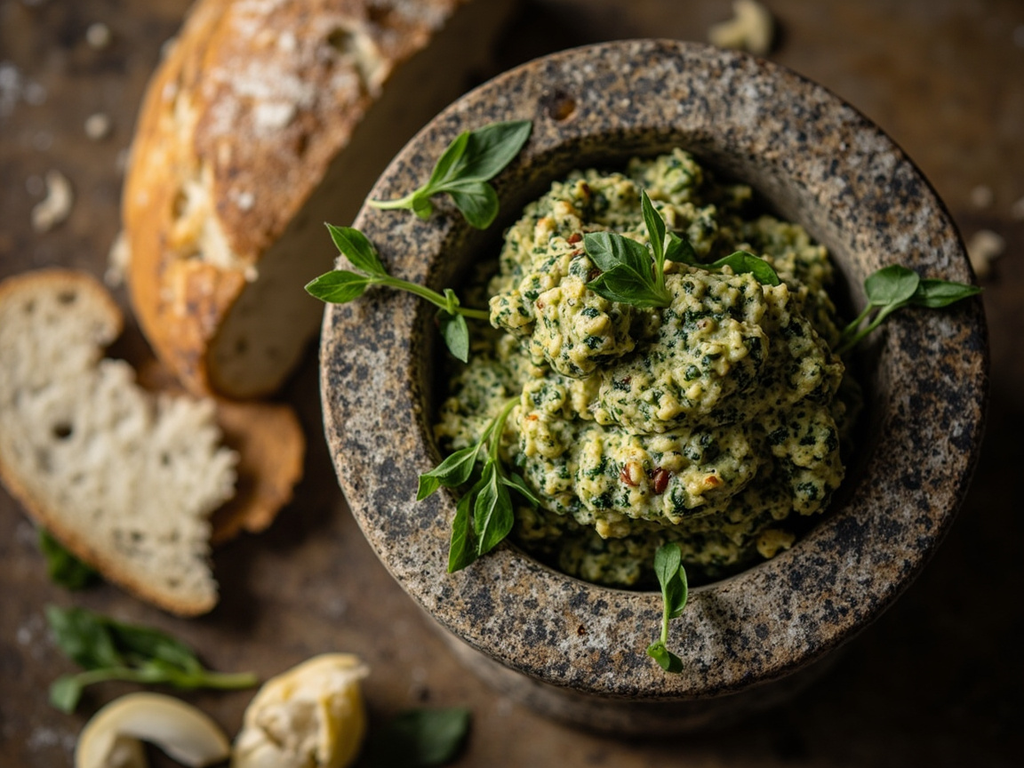
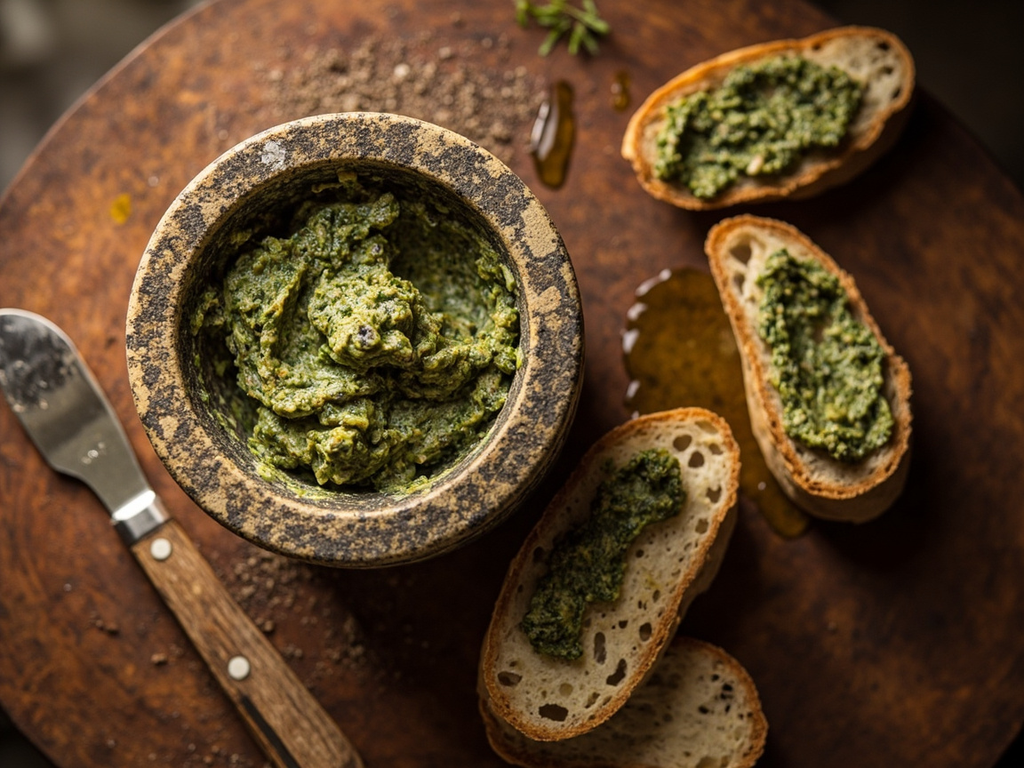
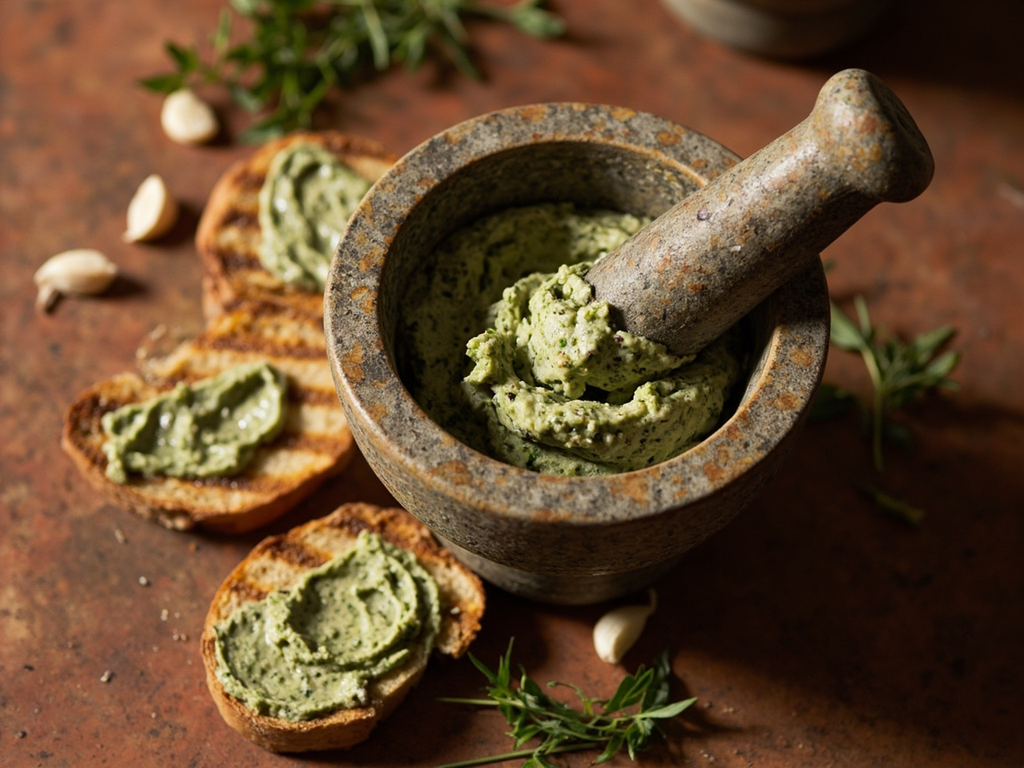
A fragrant green paste of cheese, garlic, fresh herbs, salt, and olive oil, pounded in a mortar and spread on bread. The laborer's meal, rustic and fortifying.
Listen to the peasant's gesture, reader: at dawn, when the cock tears the night, Simylus takes the garlic, the hard cheese, and the herbs his little garden gives him — rue, coriander, celery. He throws them into the hollow mortar and turns, turns the pestle, until all becomes one green and fragrant thing. A trickle of oil, a tear of vinegar, and here is what will hold you in the fields until evening. I have sung the earth and its labors; know that it is from this humble paste that Rome's virtue feeds.
- •Hard ewe's milk cheese — a good piece (fatty and salty base)
- •Garlic — a few cloves (aromatic punch)
- •Fresh herbs (coriander, celery, rue, parsley) — a handful (green freshness)
- •Salt — to taste (seasoning)
- •Wine vinegar — a dash (acidic touch)
- •Olive oil — a drizzle (binder)
Moretum, the Rustic Herb Spread
A fragrant green paste of cheese, garlic, fresh herbs, salt, and olive oil, pounded in a mortar and spread on bread. The laborer's meal, rustic and fortifying.
Why this dish? The Moretum is described in a short poem from the Appendix Vergiliana attributed to Virgil: a peasant, Simylus, crushes garlic, herbs, and cheese in a mortar for his morning meal. Virgil, born in the countryside near Mantua to a family of small landowners, knew intimately this simple field food that he celebrates in the Georgics.
Listen to the peasant's gesture, reader: at dawn, when the cock tears the night, Simylus takes the garlic, the hard cheese, and the herbs his little garden gives him — rue, coriander, celery. He throws them into the hollow mortar and turns, turns the pestle, until all becomes one green and fragrant thing. A trickle of oil, a tear of vinegar, and here is what will hold you in the fields until evening. I have sung the earth and its labors; know that it is from this humble paste that Rome's virtue feeds.
Ingredients (period version)
- Hard ewe's milk cheese — a good piece (fatty and salty base)
- Garlic — a few cloves (aromatic punch)
- Fresh herbs (coriander, celery, rue, parsley) — a handful (green freshness)
- Salt — to taste (seasoning)
- Wine vinegar — a dash (acidic touch)
- Olive oil — a drizzle (binder)
Ingredients
- Pecorino or dry feta — 150 g (fatty and salty base)
- Garlic — 2 cloves (aromatic punch)
- Coriander, parsley, and celery leaves — 1 good handful (green freshness)
- Salt — 1 pinch (seasoning)
- White wine vinegar — 1 teaspoon (acidic touch)
- Olive oil — 3 tablespoons (binder)
- Country bread — 4 slices (support)
Method
- Peel the garlic and crush it in a mortar with a pinch of salt until it forms a paste.
- Add the washed herbs and pound to release their aromas.
- Incorporate the grated or crumbled cheese and crush everything into a homogeneous paste.
- Pour in the vinegar, then drizzle in the olive oil while stirring until you get a green, cohesive cream.
- Spread generously on slices of country bread, fresh or toasted.
How it was made : The poem *Moretum* precisely describes the scene: the ingredients are ground in a stone mortar (the word 'moretum' probably comes from this). Rue, a bitter and medicinal herb highly prized by the Romans, is now discouraged in large doses: it can be omitted or replaced with celery.
The contemporary twist : Serve as an appetizer under the name 'Legionary's Pesto' with grissini, to transport guests to Simylus's table.
Sources : Appendix Vergiliana, Moretum (Latin poem attributed to Virgil)
Virgil · Charactorium