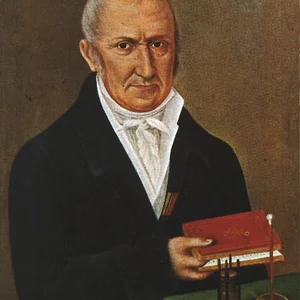
Wang Zhenyi was a Chinese astronomer, mathematician, and poet of the Qing dynasty. Despite the conventions of her time that kept women away from learning, she popularized astronomy and championed intellectual equality between men and women.
Wang Zhenyi(1768 — 1797)
Wang Zhenyi
dynastie Qing
5 min read
Frequently asked questions
Key Facts
- Born in 1768 in Nanjing under the Qing dynasty, into a scholarly family that encouraged her education
- Explained the mechanism of lunar eclipses using an experiment that modeled the Sun, the Earth, and the Moon
- Wrote works making mathematics and astronomy accessible, including a simplification of studies on trigonometry
- Argued in her writings that women were just as capable as men of studying the sciences
- Died prematurely in 1797 at the age of 29, leaving behind a respected body of scientific and poetic work
Works & Achievements
A text clearly explaining the geometry of lunar eclipses, based on her experiments with a lamp and a mirror; it challenges superstitious interpretations.
A five-volume work devoted to mathematics, in which she presents methods of multiplication and division in an accessible way.
A rewriting in plain language of Mei Wending's mathematical writings, reputed to be difficult, in order to make them understandable to beginners.
A study explaining the slow shift of the equinoctial points, a complex astronomical subject that she made accessible to the educated public.
A collection of poems and essays preserved in thirteen volumes, in which she addresses science, travel, and intellectual equality between women and men.
A demonstration explaining why people living on the other side of the globe do not fall off, incorporating the contributions of astronomy that had come from Europe.
Anecdotes
To understand lunar eclipses, Wang Zhenyi carried out an experiment in a garden pavilion: she hung a lamp to stand for the Sun, placed a round table on the floor to represent the Earth, and moved a round mirror as if it were the Moon. By shifting these objects around, she faithfully reproduced the geometry of eclipses, which she then explained in a clear text.
Largely self-taught, she learned astronomy and mathematics by devouring the vast library inherited from her grandfather, a high-ranking scholar-official. She supplemented her reading with direct observation of the sky, at a time when women were mainly expected to keep house.
Convinced that intelligence has no sex, she argued in her poems that girls and boys are equally capable of study. This stance was bold in Qing China, where scholarly education remained an almost entirely male privilege.
The writings of the famous mathematician Mei Wending were known to be very difficult. Wang Zhenyi rewrote them in plain language so that beginners could understand them, becoming one of the first popularizers of science in her country.
Having died at only 29, she entrusted her manuscripts to a close friend, Madame Kuai, before passing away. It is thanks to this transmission between women that part of her work, notably her collection *Defengting Chuji*, has come down to us.
Primary Sources
We are made to believe that women are not worth as much as men; but are you not convinced that girls too can be heroic?
When the Earth places itself exactly between the Sun and the Moon, its shadow conceals the Moon: this is the eclipse, which is no omen but obeys a regular law.
Study is not a matter of men or women: all, boys and girls, possess the same reason for learning.
Key Places
Birthplace of Wang Zhenyi, a major cultural and scholarly center in southern China under the Qing.
Northeastern region where her family stayed; there she consulted her grandfather's rich library and continued her studies.
Birthplace of the Wang family, in Anhui province, which counted several scholars and officials among its members.
Imperial capital of the Qing, passed through during the family's travels; center of power and of official astronomy.
Hometown of her husband Zhan Mei, where she lived after her marriage.
Typical Objects
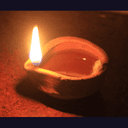
Lamp used by Wang Zhenyi to represent the Sun in her experiment explaining lunar eclipses.
📷 CC BY-SA 3.0 · Wikimedia Commons ↗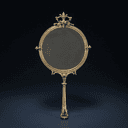
Circular mirror that Wang Zhenyi moved around to represent the Moon during her reenactment of an eclipse.
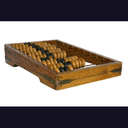
Chinese calculating instrument with sliding beads, essential to the mathematical work of the era.
📷 CC BY-SA 3.0 · Wikimedia Commons ↗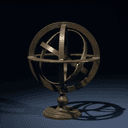
Model made of rings representing the celestial circles, used to depict the movements of the heavenly bodies.
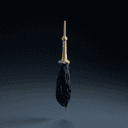
Calligraphy tools used to write poems, essays and mathematical demonstrations on paper.
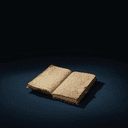
Notebook in which Wang Zhenyi gathered her poems and essays, such as her Defengting Chuji preserved in thirteen volumes.
School Curriculum
Vocabulary & Tags
Key Vocabulary
Tags
Daily Life
Morning
Up early in the family home, Wang Zhenyi devoted her mornings to reading and studying treatises on astronomy and mathematics. She copied out passages with a brush and noted her calculations on paper.
Afternoon
In the afternoon, she worked on her proofs, simplified scholarly texts, or prepared her experiments, such as recreating an eclipse using a lamp and mirrors. She also exchanged letters with other scholars.
Evening
When evening came, she observed the sky to track the Moon and the stars, then composed poems by lamplight. Writing served her as much to express her ideas as to defend the education of women.
Food
Her diet was that of a scholarly family in southern China: rice, vegetables, soy, freshwater fish, and tea accompanied the meals. The cooking varied from region to region during family travels.
Clothing
She wore the long, loose silk or cotton robes of women from the Qing scholarly gentry, with wide sleeves fastened at the side. A carefully arranged hairstyle and discreet ornaments completed the outfit.
Housing
She lived in scholars' residences arranged around interior courtyards, with pavilions and gardens. A well-stocked library and a pavilion open to the sky gave her the space she needed for study and observation.
Historical Timeline
Period Vocabulary
Liens externes & ressources
Références
Œuvres
Yue Shi Jie (Explication d'une éclipse de Lune)
vers 1792
Shu Suan Jian Cun (Principes simples du calcul)
vers 1790
Simplification des travaux de Mei Wending
vers 1791
Essai sur la précession des équinoxes
vers 1792
Defengting Chuji (Premier recueil du Pavillon de la Vertu et du Vent)
vers 1790
Explication de la forme sphérique de la Terre
vers 1793