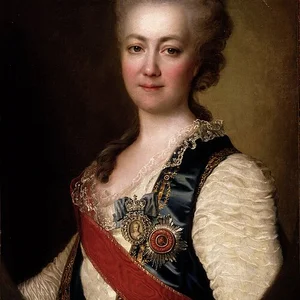

A learned Russian aristocrat and close associate of Catherine II, she played a part in the coup d'état of 1762. The first woman to head the Russian Academy of Sciences, she founded the Russian Academy devoted to the language.
Ekaterina Vorontsova-Dashkova(1743 — 1810)
Catherine Dashkova
Empire russe
6 min read
Frequently asked questions
Key Facts
- Born in 1743 in Saint Petersburg into the Russian high aristocracy (the Vorontsov family)
- Took part in the coup d'état of 1762 that placed Catherine II on the throne
- Appointed director of the Imperial Russian Academy of Sciences in 1783, a rare distinction for a woman
- Founded the Russian Academy in 1783, dedicated to the study and codification of the Russian language
- Died in 1810 after leaving behind Memoirs on the court of Catherine II
Works & Achievements
The first woman to head a national scientific academy; she restored its finances and revived its publications.
An institution devoted to the study and defense of the Russian language, of which she was the first president.
The first major explanatory dictionary of Russian, conceived under her direction and organized by word roots.
An academic periodical she launched to circulate literary texts and scholarly works in Russian.
A valuable autobiographical account of the court of Catherine II and the coup d'état of 1762, a first-rate historical source.
Varied works reflecting the curiosity of a woman of the Enlightenment, equally at ease with music and letters.
Anecdotes
In 1762, at just nineteen years old, Catherine Dashkova took part in the plot that overthrew Emperor Peter III to place Catherine II on the throne. The ultimate paradox: her own sister, Elizabeth Vorontsova, was at the time the favorite of the deposed emperor. The family was thus torn between both sides of the coup.
During her travels in Europe, the princess met Diderot in Paris in 1770 and spent entire evenings debating philosophy, serfdom, and politics with him. The philosopher, charmed by her intelligence, left an admiring portrait of her in his writings. She also visited Voltaire at his retreat in Ferney.
In 1783, Catherine II appointed her director of the Imperial Academy of Sciences in Saint Petersburg: she thus became the first woman in the world to head a national scientific academy. A truly exceptional position for a woman in the 18th century.
That same year, she founded and presided over the Russian Academy, devoted to the language. Under her leadership, the institution published the first great dictionary of the Russian language, whose words were arranged by roots rather than alphabetically, an original method for the time.
Upon the death of Catherine II in 1796, the new emperor Paul I, who despised his mother's entourage, abruptly dismissed her from all her duties and exiled her to a remote village in the North. She was only able to return after the accession of Alexander I in 1801.
Primary Sources
Written in French at the end of her life at the request of her Irish friend Martha Wilmot, these memoirs give a firsthand account of the 1762 coup d'état, the court of Catherine II, and the running of the two academies.
The first explanatory dictionary of the Russian language, produced under Dashkova's presidency, listing nearly 43,000 words organized by etymological roots.
The letters exchanged with the empress reveal their intellectual friendship and its later cooling, as well as questions concerning the administration of the academies.
Catherine and Martha Wilmot, guests of the princess at her Troitskoye estate, describe her daily life, her character, and her accounts of the Russian court.
Key Places
Imperial capital where she was born in 1743 and where she headed the two academies, at the heart of Catherine II's power.
Former capital where she died in 1810 and to which she bequeathed her scientific collections.
Her country estate near Kaluga, where she retired, received her friends the Wilmot sisters and dictated her memoirs.
A stop on her travels where she met Diderot and frequented Enlightenment circles.
City where her son studied at the university and where she mingled with the thinkers of the Scottish Enlightenment.
Voltaire's Swiss estate, which she visited during her tour of Europe.
Typical Objects

A six-volume work produced under her direction, the first major undertaking to codify the Russian language. It remains her most enduring intellectual legacy.

Tools of the tireless administrator and letter-writer she was, drafting academic orders, correspondence, and memoirs.

Emblem of the institution she led from 1783 to 1796, a symbol of her scientific authority, exceptional for a woman.

A court gown with wide panniers and sumptuous fabrics, worn by Russian aristocrats who followed the fashions of Paris and Versailles.

A collection of geological specimens she gathered out of her love for the natural sciences and bequeathed to Moscow University.

An instrument dear to this cultured music lover, who composed music herself and hosted salons.

A reflection of her erudition: she read French, English, Italian, and German in addition to Russian.
School Curriculum
Vocabulary & Tags
Key Vocabulary
Daily Life
Morning
The princess often begins her day by reading her abundant correspondence and writing instructions for the Academy. As its director, she personally handles the accounts, the publications, and the management of the scholarly staff.
Afternoon
The afternoon is devoted to the sessions of the Academy, to discussions about the dictionary of the Russian language, or to receiving visitors. A methodical woman, she closely follows the progress of scientific and literary work.
Evening
In the evening, she hosts or attends salons where philosophy, science, and the arts are discussed, sometimes in several languages. A music lover, she plays music and holds rich conversation with her guests.
Food
At the Russian aristocratic table, local dishes mingle with refined French-inspired cuisine, then very fashionable at court. Game, fish, soups, pastries, and wines imported from Europe are served.
Clothing
For court, she wears sumptuous French-style gowns, adorned with lace and jewels. In everyday life and on her estate, she prefers plainer outfits, sometimes considered surprisingly simple by her female contemporaries.
Housing
She lives in townhouses in Saint Petersburg, close to the seat of power, and on her country estate of Troitskoye. There, surrounded by gardens she lays out herself, she lives as an active landowner of her estates.
Historical Timeline
Period Vocabulary
Liens externes & ressources
Références
Œuvres
Direction de l'Académie impériale des sciences
1783-1796
Fondation de l'Académie russe
1783
Dictionnaire de l'Académie russe
1789-1794
Revue « Le Compagnon des amis de la langue russe »
à partir de 1783
Mémoires
rédigés vers 1804-1806
Compositions musicales et essais littéraires
XVIIIe siècle
Rechercher
See also
Related Characters
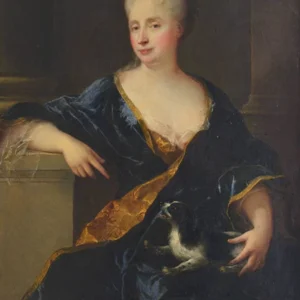
Anne Thérèse de Marguenat de Courcelles, marquise de Lambert
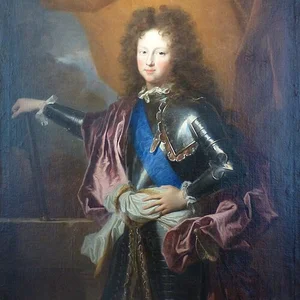
Philippe II d'Orléans
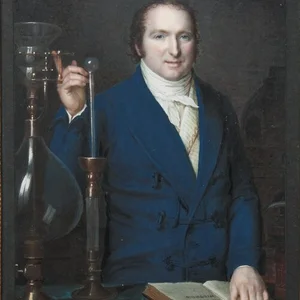
Antoine François de Fourcroy
1755 — 1809
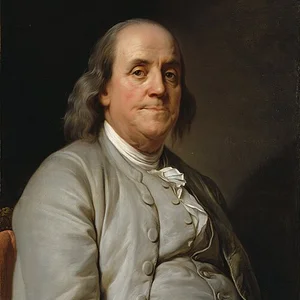
Benjamin Franklin
1706 — 1790
Fontenelle
1657 — 1757
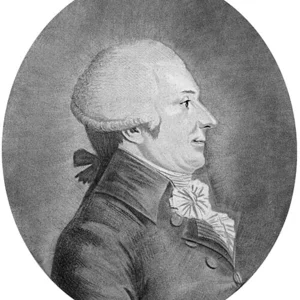
Louis-Bernard Guyton de Morveau
1737 — 1816