 flip
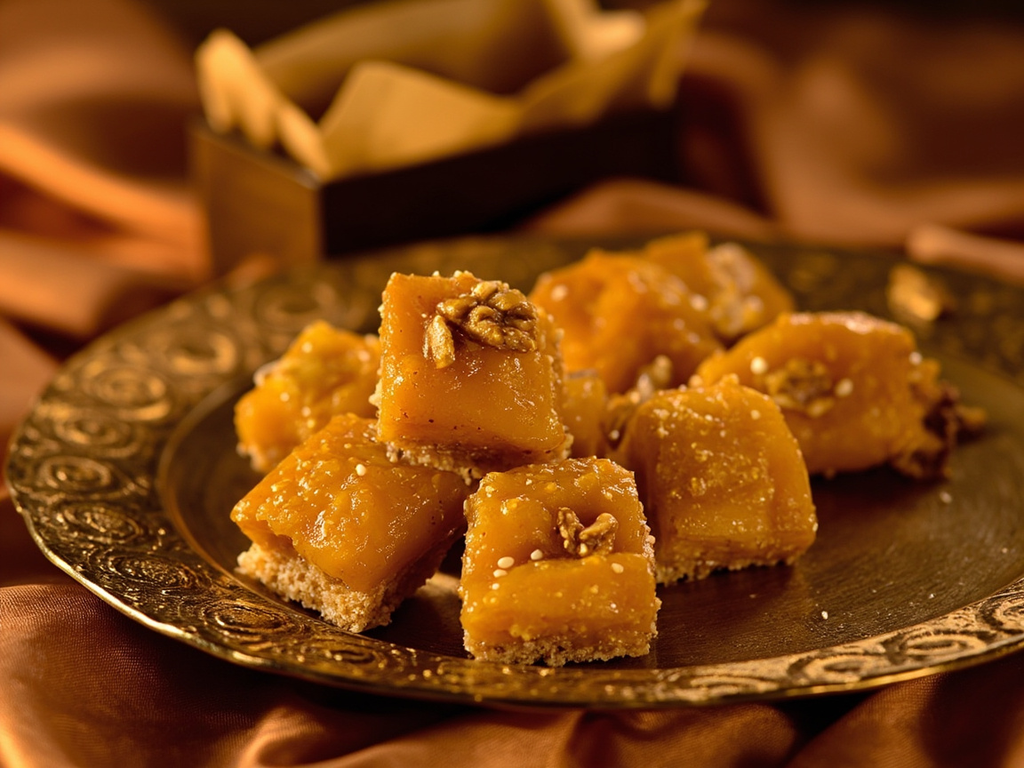
flipHalvaytar with walnuts and dried apricots (حلوایتر)
Halvaytar with walnuts and dried apricots (حلوایتر)
Why this dish? Sweets made from dried fruits, nuts, and honey were served at the Karakhanid court during receptions. The Fergana Valley and the oases of Samarkand and Kashgar produced apricots, walnuts, and grapes renowned along the entire Silk Road. Yusuf Balasaguni, who spent his later years honored at court, tasted these confections at festivals.
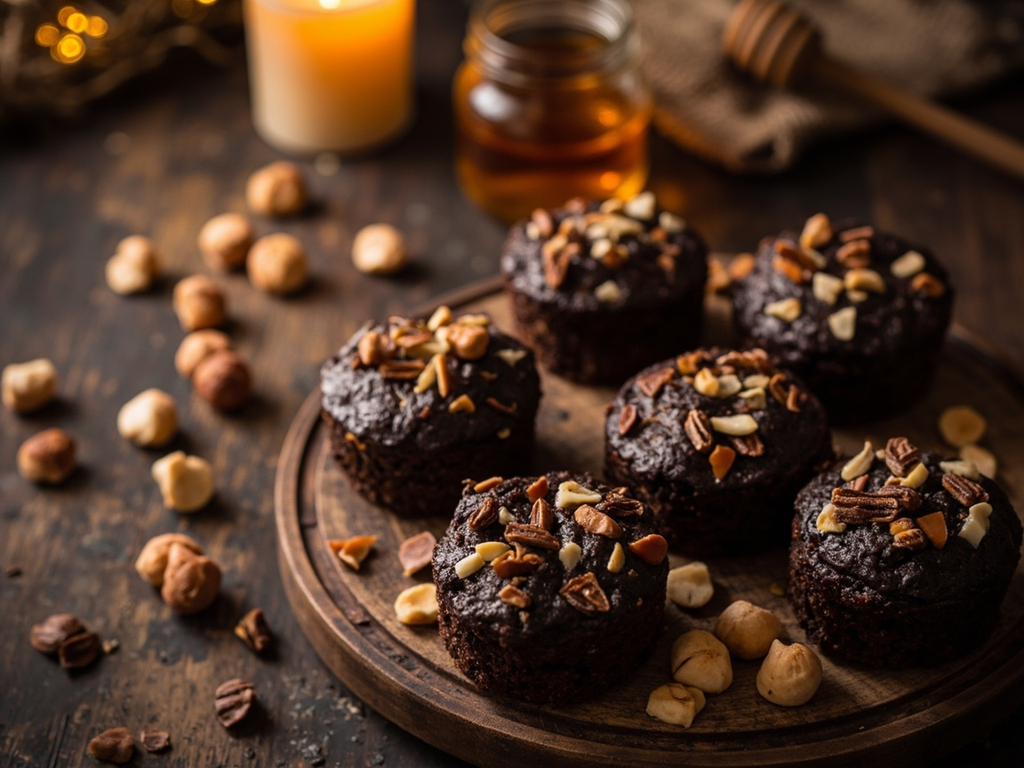
Dense confection of crushed walnuts, dried apricots, and sesame, bound with honey and scented with saffron. A rich, energizing sweet, typical of Central Asian oases.
After the feast, when the servants remove the great meat platters and the poets prepare to recite, the sweets are brought. The walnuts of our mountains, the apricots sun-dried in Fergana, golden honey, and a few threads of saffron — that is what these morsels are made of, which scholars nibble while listening to verses. The Kutadgu Bilig teaches that measure is virtue in all things, but before these halvaytar, I confess that virtue wavers.
- •Walnut kernels — two handfuls (base)
- •Dried apricots — a handful (fruit)
- •Sesame seeds — a handful (binder and texture)
- •Honey — enough to bind everything (sweetener and binder)
- •Saffron — a few threads (scent and color)
- •Clarified butter — a little (cooking)
Halvaytar with walnuts and dried apricots (حلوایتر)
Dense confection of crushed walnuts, dried apricots, and sesame, bound with honey and scented with saffron. A rich, energizing sweet, typical of Central Asian oases.
Why this dish? Sweets made from dried fruits, nuts, and honey were served at the Karakhanid court during receptions. The Fergana Valley and the oases of Samarkand and Kashgar produced apricots, walnuts, and grapes renowned along the entire Silk Road. Yusuf Balasaguni, who spent his later years honored at court, tasted these confections at festivals.
After the feast, when the servants remove the great meat platters and the poets prepare to recite, the sweets are brought. The walnuts of our mountains, the apricots sun-dried in Fergana, golden honey, and a few threads of saffron — that is what these morsels are made of, which scholars nibble while listening to verses. The Kutadgu Bilig teaches that measure is virtue in all things, but before these halvaytar, I confess that virtue wavers.
Ingredients (period version)
- Walnut kernels — two handfuls (base)
- Dried apricots — a handful (fruit)
- Sesame seeds — a handful (binder and texture)
- Honey — enough to bind everything (sweetener and binder)
- Saffron — a few threads (scent and color)
- Clarified butter — a little (cooking)
Ingredients
- Walnut kernels — 200 g (base)
- Soft dried apricots — 100 g (fruit)
- Sesame seeds — 50 g (texture)
- Liquid honey — 120 g (binder)
- Clarified butter (ghee) — 30 g (cooking)
- Saffron threads — a pinch (0.2 g) (scent)
- Ground cardamom — 1/2 tsp (spice)
- Flaky sea salt — a pinch (enhancer)
Method
- Infuse the saffron threads in a tablespoon of warm water for 10 minutes.
- Toast the sesame seeds in a dry pan over medium heat until golden. Set aside.
- Coarsely chop the walnuts with a knife or in a mortar (keep pieces).
- Cut the dried apricots into small dice.
- Melt the clarified butter in a saucepan over low heat. Add the honey and infused saffron. Stir until the mixture is homogeneous and begins to gently simmer.
- Add the chopped walnuts, apricot dice, sesame seeds, and cardamom. Stir vigorously over low heat for 3 to 4 minutes, until everything is well coated and slightly caramelized.
- Pour into a small mold or onto a sheet of parchment paper. Press down firmly with the back of an oiled spoon. Sprinkle with flaky salt.
- Let cool completely (at least 2 hours), then cut into small diamonds or squares.
How it was made : Confections based on nuts, honey, and dried fruits are attested throughout the medieval Islamic world. Ibn Sayyar al-Warraq (10th century, Baghdad) and al-Baghdadi (13th century) document many recipes for halva and similar sweets. Transoxiana was famous for its walnuts, almonds, and apricots. Saffron, imported from Iran, was a luxury reserved for court tables.
The contemporary twist : Cut into regular diamonds and present in a small wooden box, like a calligraphy case — each bite is a sweet verse.
Sources : Ibn Sayyar al-Warraq, Kitab al-Tabikh (10th century), trans. Nawal Nasrallah, Annals of the Caliph's Kitchens, 2007 · Charles Perry, 'What to Order in Ninth Century Baghdad', in Medieval Arab Cookery, 2001
Yusuf Balasaguni · Charactorium