 flip
flipSpelt Puls with Dates and Garum
Spelt Puls with Dates and Garum
Why this dish? Cereal porridge is the nourishing foundation of the entire Roman world, from legionary to palace. Even as queen, Zenobia knew the rigors of the camp: the Vita Aureliani describes her enduring the march like a soldier. This humble dish, elevated by a dash of garum and sweetened with dates from the palm grove, speaks to the alliance of military frugality and oasis wealth.
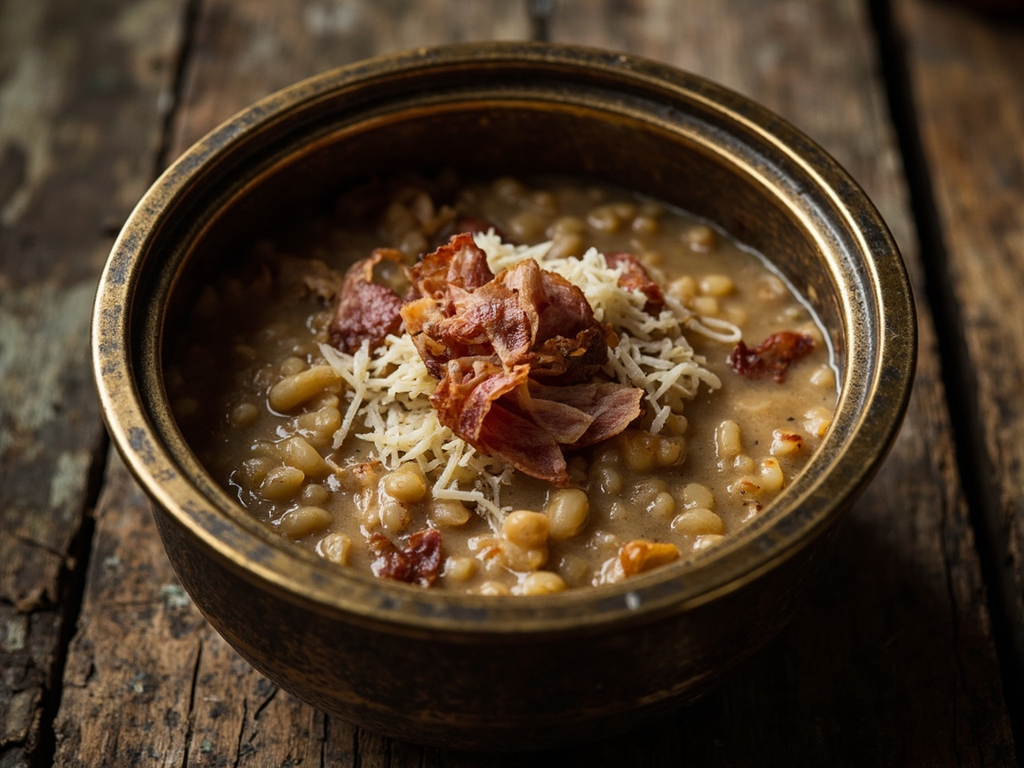
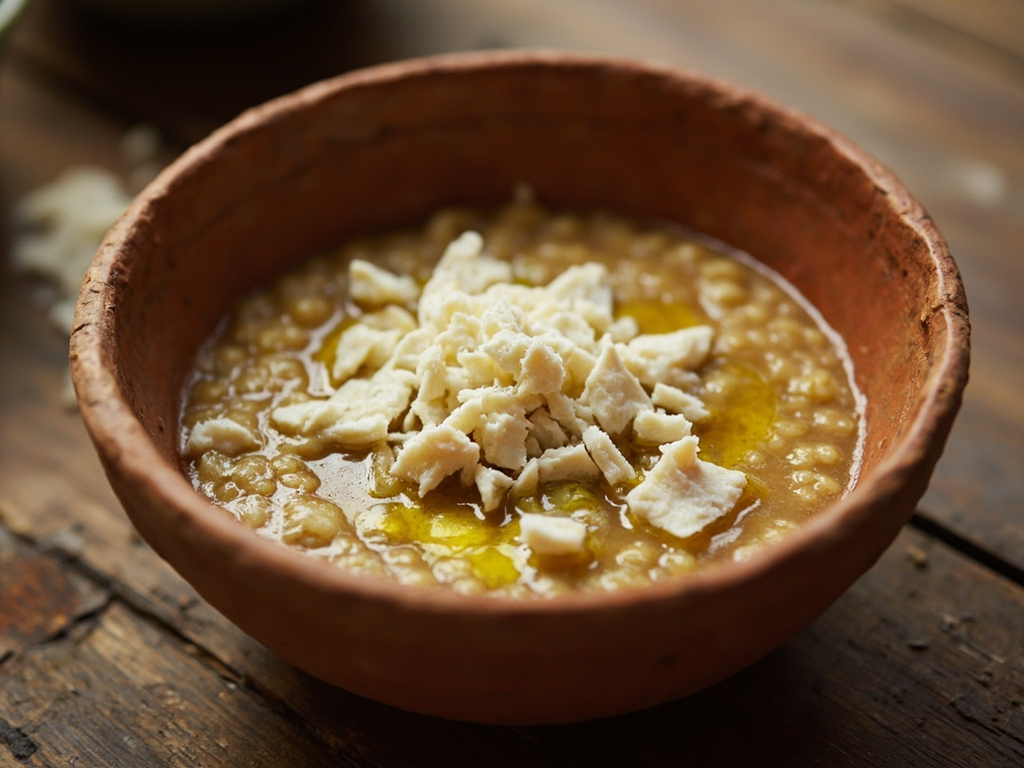
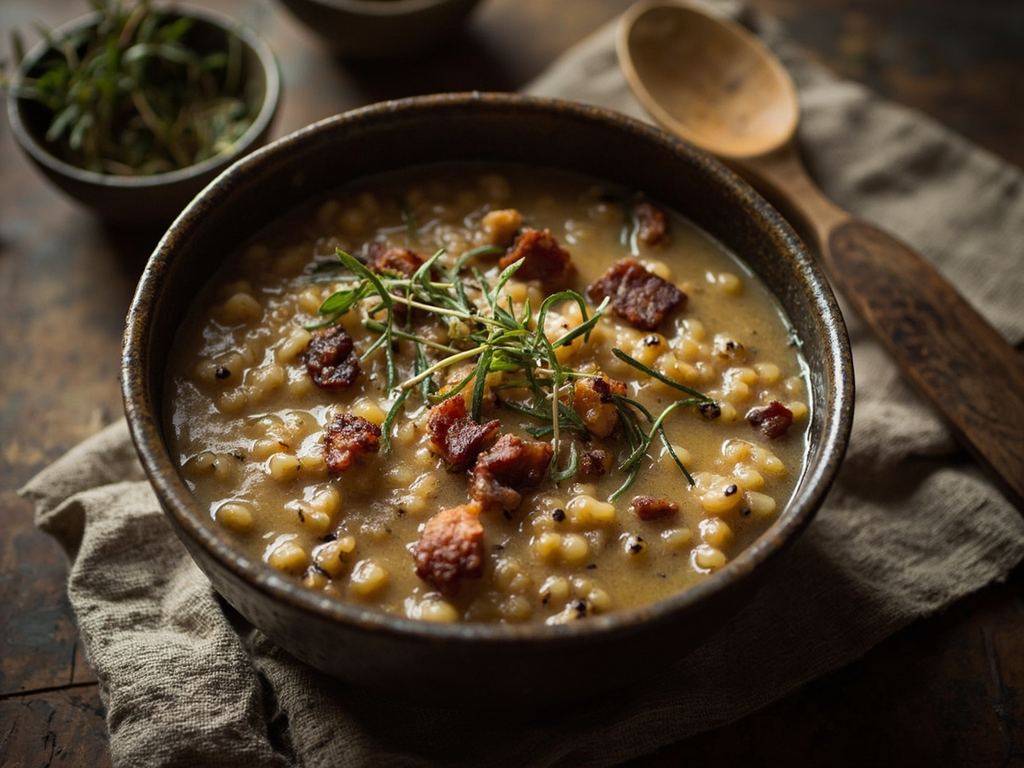
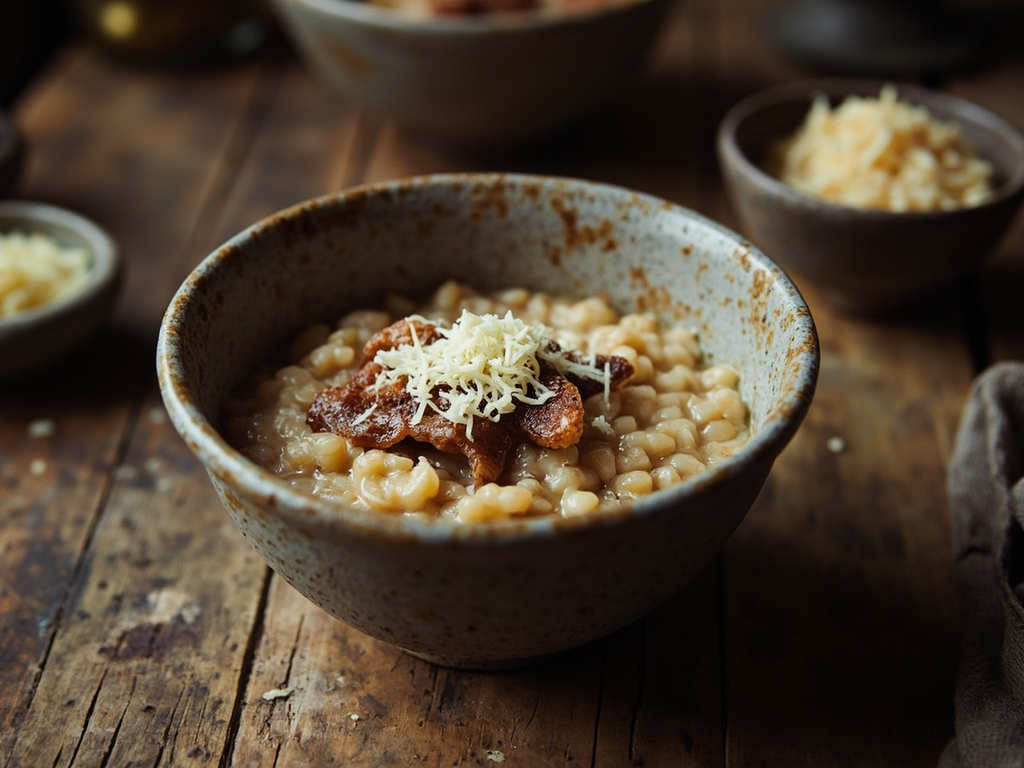
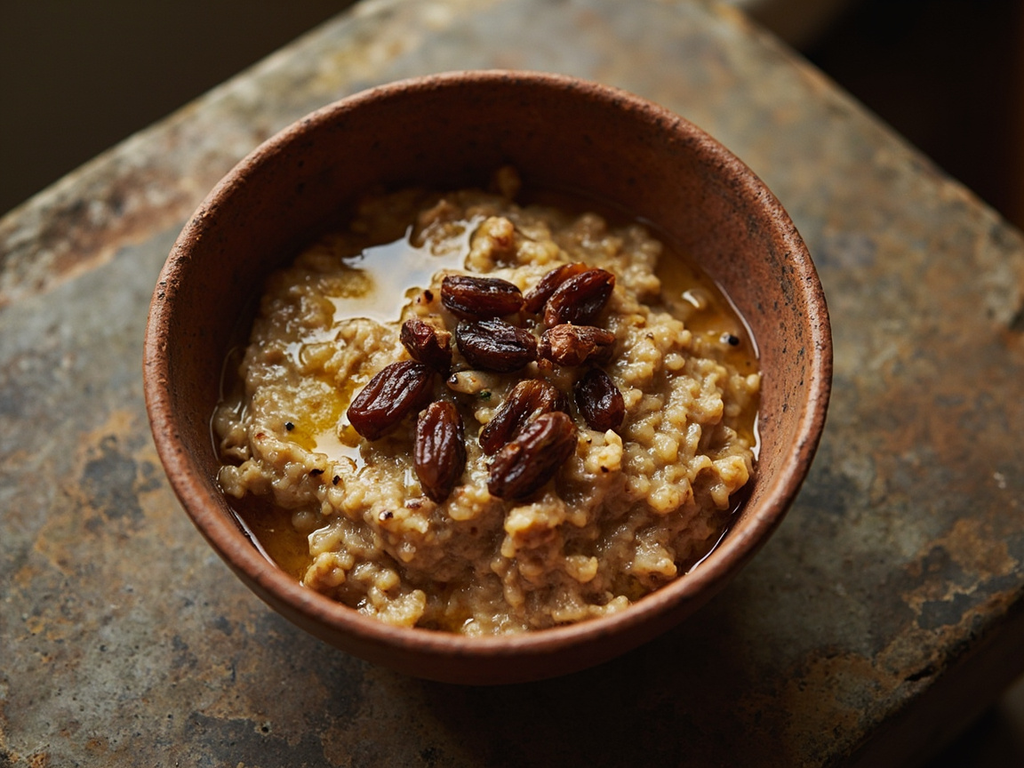
A thick spelt porridge simmered in water, salted with a little garum, enriched with melted dates and a drizzle of olive oil. Comforting, complete, ready in one pot.
Do not think a queen scorns the soldier's table: I have marched under the Syrian sun as my horsemen march, and it is this spelt porridge that kept me standing. You let it thicken slowly, salt it with a tear of garum, then drown a few dates from our palm grove so the harsh marries the sweet. Eat it hot, stranger, and you will understand why Palmyra bows to no one.
- •Crushed spelt (far) — a good handful per guest (base cereal)
- •Spring water — to cover generously (cooking liquid)
- •Garum (fermented fish sauce) — a dash (salt and umami)
- •Pitted Palmyra dates — a few (sweetness)
- •Olive oil — a drizzle (binding and richness)
Spelt Puls with Dates and Garum
A thick spelt porridge simmered in water, salted with a little garum, enriched with melted dates and a drizzle of olive oil. Comforting, complete, ready in one pot.
Why this dish? Cereal porridge is the nourishing foundation of the entire Roman world, from legionary to palace. Even as queen, Zenobia knew the rigors of the camp: the Vita Aureliani describes her enduring the march like a soldier. This humble dish, elevated by a dash of garum and sweetened with dates from the palm grove, speaks to the alliance of military frugality and oasis wealth.
Do not think a queen scorns the soldier's table: I have marched under the Syrian sun as my horsemen march, and it is this spelt porridge that kept me standing. You let it thicken slowly, salt it with a tear of garum, then drown a few dates from our palm grove so the harsh marries the sweet. Eat it hot, stranger, and you will understand why Palmyra bows to no one.
Ingredients (period version)
- Crushed spelt (far) — a good handful per guest (base cereal)
- Spring water — to cover generously (cooking liquid)
- Garum (fermented fish sauce) — a dash (salt and umami)
- Pitted Palmyra dates — a few (sweetness)
- Olive oil — a drizzle (binding and richness)
Ingredients
- Spelt (or farro) grains — 150 g (base cereal)
- Water or light broth — 700 ml (cooking liquid)
- Fish sauce (nuoc-mâm or colatura, failing garum) — 1 tsp (salt and umami)
- Soft pitted dates — 5, chopped (sweetness)
- Olive oil — 1 tbsp (binding and richness)
- Salt — to adjust (seasoning)
Method
- Rinse the spelt and soak for 1 hour to speed cooking.
- Bring water (or broth) to a boil, add the spelt, reduce heat, and simmer 40–50 minutes, stirring, until creamy.
- Add the chopped dates at the end of cooking; they will partially melt.
- Off the heat, stir in the fish sauce and olive oil; adjust salt.
- Serve hot, optionally topped with a few whole dates.
How it was made : Puls (porridge of far, the ancestor of spelt) was the daily food of Romans before bread, to the point that they were nicknamed pultiphagi, 'porridge-eaters.' It was made savory with garum or sweet with honey and fruits depending on means and occasion.
The contemporary twist : Serve it as 'savory porridge' in a deep bowl, with roasted dates and a drizzle of fruity olive oil: an ancient breakfast that sticks to the ribs.
Sources : Cato the Elder, De agricultura (puls recipes) · Pliny the Elder, Natural History, Book XVIII · Historia Augusta, Vita Aureliani / Tyranni Triginta (Zenobia)
Zenobia · Charactorium