Imaginary interview with Anne Thérèse de Marguenat de Courcelles, marquise de Lambert
by Charactorium · Anne Thérèse de Marguenat de Courcelles, marquise de Lambert · Literature · Sciences · Philosophy · Politics · 5 min read
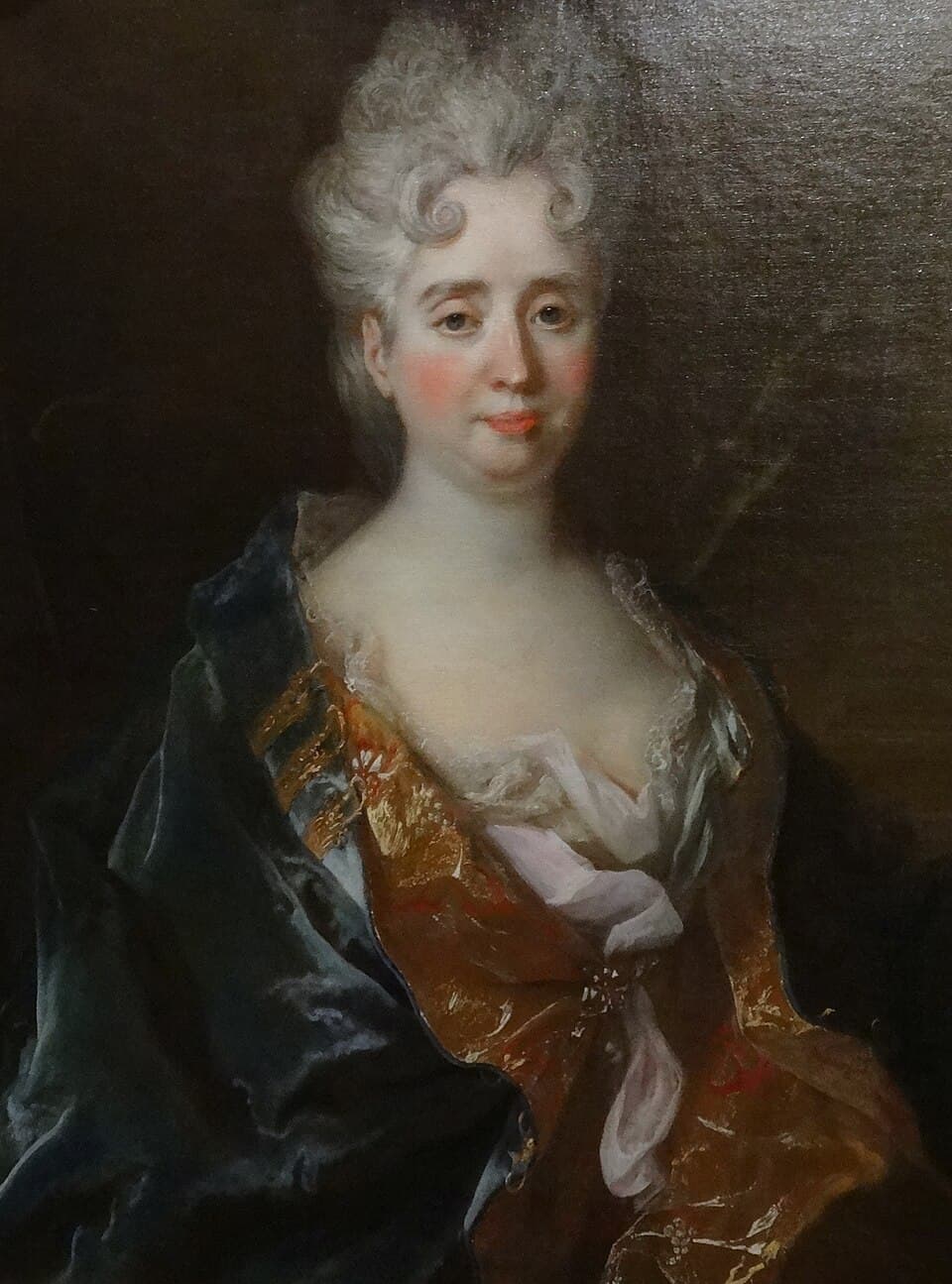
It is a Tuesday evening in the autumn of 1728, at the Hôtel de Nevers, rue de Richelieu. The candles still smoke in the chandeliers of the great hall that the last academicians have just left. The Marquise de Lambert, in a pearl-gray gown and Malines lace, receives us in her study, where an inlaid secretary keeps her papers in order.
—How did your salon earn the reputation of being 'the anteroom of the French Academy'?
I am credited with a power I never claimed, and yet I do not entirely deny it. Every Tuesday, in this very room where you are seated, Fontenelle, La Motte-Houdar, and a few others come to test their ideas before taking them higher. It so happens that a candidacy for the Academy — that body in which I will never sit because I was born a woman — benefits from first passing through my gilded armchair. Nothing could be more natural: I know men, I can tell those who think from those who strut. I do not make the elections, sir; I merely prepare minds not to disgrace themselves before their peers.
I will never sit in that body because I was born a woman, and yet no one enters it without first passing through my chair.
—Is there not some bitterness in shaping a glory from which you are excluded?
Bitterness is a feeling I have learned to dismiss, like snuffing out a candle that smokes. I prefer discreet influence to a noisy title. You see: those gentlemen of the Academy come to my home, rue de Richelieu, with their manuscripts under their arms and their vanities to be corrected. They leave better, and the world believes they made themselves. What does the name on the door matter, if the spirit that rules the house is mine? I have always held that true nobility lies neither in rank nor in official seat, but in what one cultivates within oneself. A woman can govern the Enlightenment without wearing its livery.
—Why did you devote your New Reflections on Women to denouncing their ignorance?
Because this ignorance, sir, is manufactured before being reproached. I wrote in those Reflections of 1727 what I think plainly: 'We deprive women of education and virtues, and then reproach them for having neither. This is a crying injustice.' That is the entire method of our century. We keep our daughters away from books, feed them on gallantry and lace, and then wonder that they know only how to embroider. As for me, I have read Descartes and Malebranche, bound in morocco in my library, and I am none the worse for being an educated honest woman.
We deprive women of education, and then wonder that they know only how to embroider.
—What advice do you give to young girls in your A Mother's Advice to Her Daughter?
I tell them a harsh truth, the one I wrote for my own child in 1728: 'Women have two options: either retreat and serious occupations, or society and coquetry. There is no middle ground that does not degrade them.' Do not misunderstand me: I am not preaching the convent. The retreat I speak of is that of study, of the cabinet, of patient reading in the early morning. A young girl who has learned only to please will be lost the day she ceases to please. She who has nourished her soul will have something to live on into old age, when graces depart but the mind remains.
—Do you remember the legal battle you fought after your husband's death?
I remember it as a harsher school than any book. In 1686, the Marquis de Lambert died, leaving me debts as his only inheritance, and my dowry swallowed up in his affairs. I had to litigate for years to recover what was rightfully mine. Consider the irony: a woman brings her possessions into marriage, they are called inalienable, yet the first creditor who comes along takes them. I learned before the judges what no treatise on morality would have taught me: that a woman without education or firmness is, in the eyes of the law, merely a minor who is politely stripped. That trial was the cradle of all my ideas.
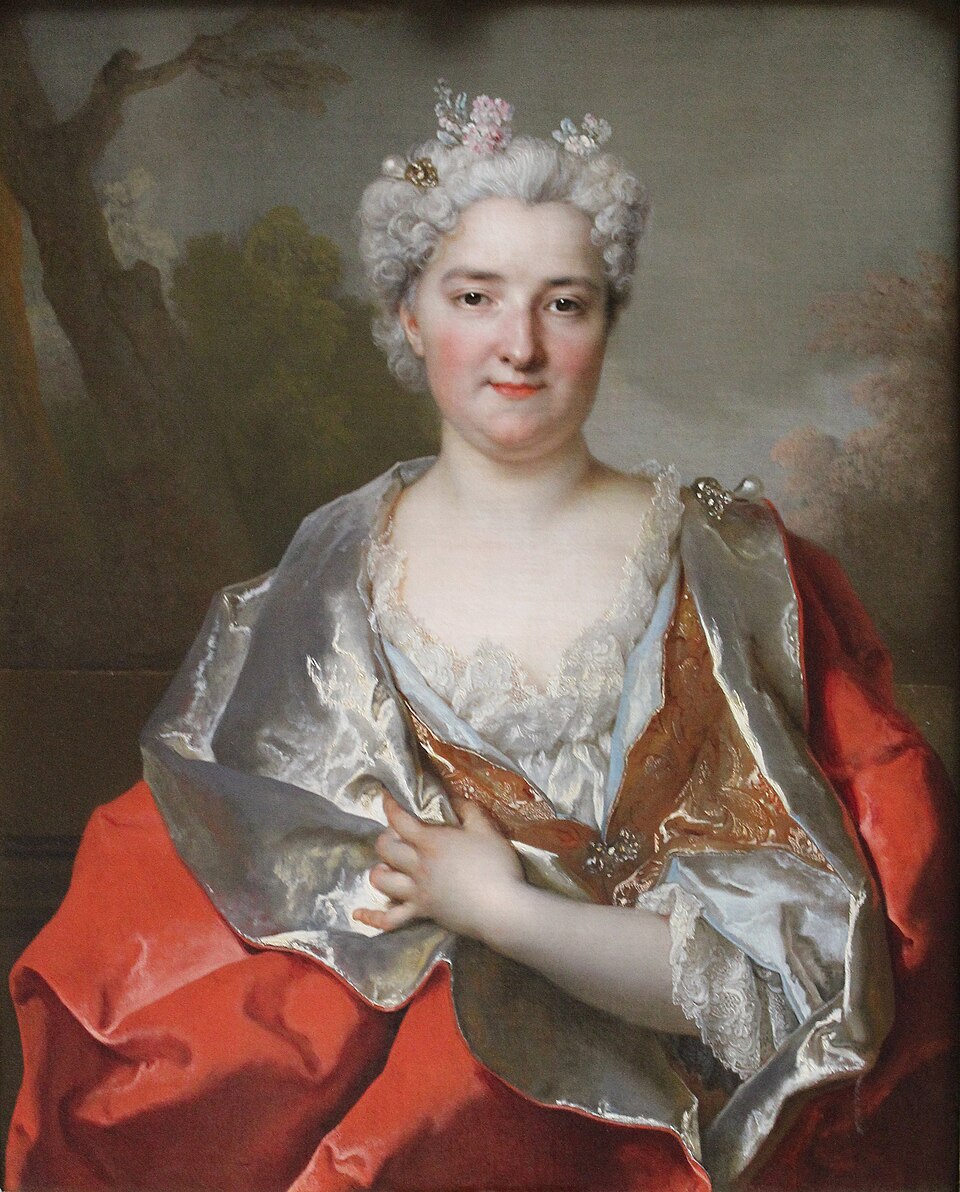
—What would you say to those who suffer the same dependence today?
I would tell them never to confuse gentleness with weakness. I spent entire mornings at that secretary, not writing gallant verses, but counting, understanding deeds, corresponding with my business agents as much as with Fontenelle. A woman must know the state of her fortune as she knows her face in the mirror. The legal dependence in which we are held is not a fatality of nature: it is a work of men, and what is made by human hands can be unmade. I recovered my property stone by stone. Let every woman learn to defend her own before it is taken from her.
The dependence in which we are held is a work of men, and what is made by human hands can be unmade.
—How did you react when you learned that your Reflections were printed without your knowledge?
With an annoyance I still admit to. I had let that text circulate in manuscript among my friends, as one lends a precious object while wishing to keep its use. But lo and behold, in 1727 a bookseller in The Hague printed it without my consent, exposed it to the light of day, left it open to ridicule. I had to publicly disavow that edition, not out of denial of my ideas — God forbid — but because a woman of my station cannot appear to chase after the printing press like a wit hungry for glory. Propriety, sir, is the gilded prison in which thinking women are kept.
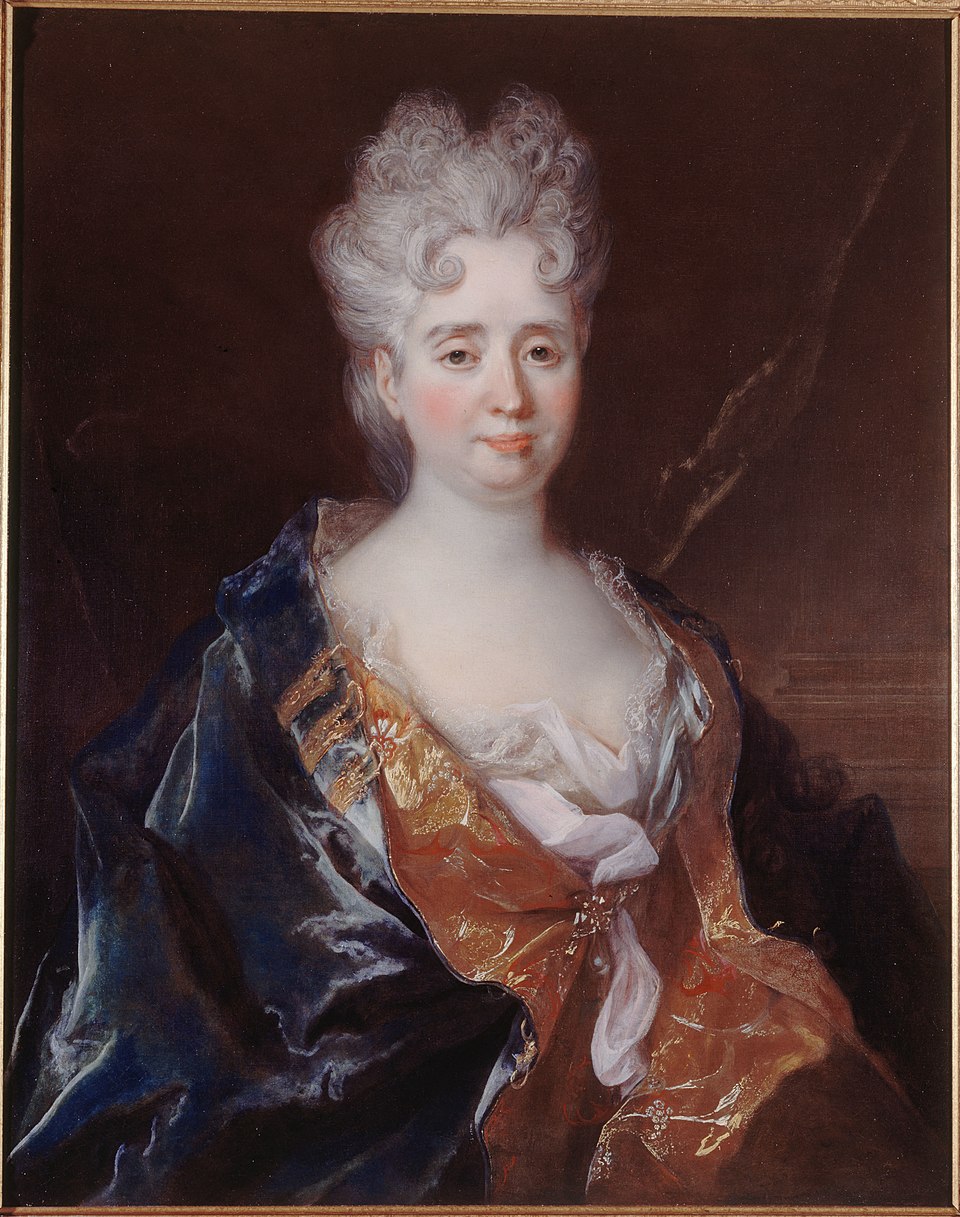
—Is it not cruel to have to publicly disavow what you privately believe?
Cruel, no; constraining, yes. There are two truths that coexist in a woman of my rank: that of the heart, which I entrust to my papers, and that of the world, which must be managed on pain of losing everything. I disavowed the form without ever disavowing the substance. Those who read me well knew that my pen had not changed one iota. That is the entire ruse imposed on learned women: to speak while appearing silent, to affirm while seeming to apologize. Fontenelle, who appreciated such subtleties, often told me that I wielded silence better than others wielded speech.
—You witnessed the birth of great works in this salon. Tell us about those evenings.
Ah, those are worth all the theaters! One evening, Montesquieu, then a young president from Bordeaux, read us pages from his Persian Letters — those Persians who look at Paris as one looks at a menagerie. We laughed and debated until the candles melted. Another time, Marivaux gave us the first scenes of The Game of Love and Chance, and I can tell you that I heard that play before Paris became intoxicated with it. That is my true luxury: not silks or Burgundy wines, but to witness the hatching of ideas, at that fragile hour when a work still belongs only to the one who dreamed it.
I heard these works at the fragile hour when they still belonged only to the one who dreamed them.
—What bound together all those minds you gathered on Tuesdays?
True friendship, sir, the kind about which I wrote a treatise. I wrote in it that 'friendship is a commerce of soul to soul; it can exist only between persons who have the same principles and the same sentiments regarding honor and virtue.' That is what held together Fontenelle, Marivaux, and the others, far better than a taste for wit or the vanity of salons. We did not flatter each other; we tested each other. A friend, in my house, was one who corrected you without wounding you and admired you without flattering you. It is this ethic, more than my ideas about women, that I would wish to be remembered for.
A friend was one who corrected you without wounding you and admired you without flattering you.

This imaginary interview was generated by artificial intelligence from sources documented in Anne Thérèse de Marguenat de Courcelles, marquise de Lambert's profile. It dramatises what the figure might have said based on what we know about them, but does not constitute attested historical testimony. For primary sources and factual documentation, refer to the full profile.