Kids interview Catherine II of Russia
by Charactorium · Catherine II of Russia (1729 — 1796) · Politics · 5 min read
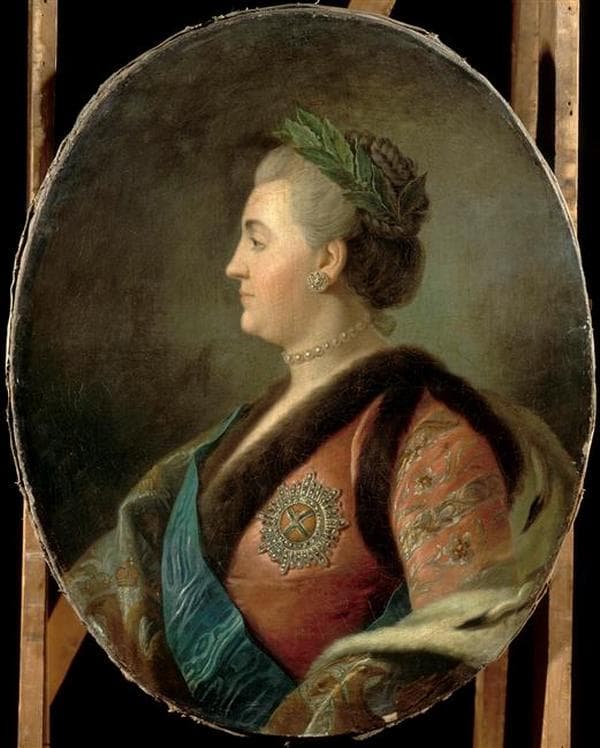
That morning, two young visitors of twelve years old, on a school trip, push open the gilded doors of the Winter Palace. An old lady in a silk dress awaits them, her eye sharp and her smile mischievous. It is Catherine, Empress of All the Russias — and she has a lot to tell them.
—How old were you when you arrived in Russia?
You know, I was only fourteen. My name was Sophie, and I came from a tiny German principality, near Stettin. Imagine a child arriving in a vast, icy country whose language she didn't speak a word of. I immediately wanted to please this people. So I learned Russian at night, in my nightgown, barefoot on the cold floor. Once, I caught pneumonia — I nearly died! But I converted to their religion and took the name Catherine. I wanted to become more Russian than the Russians themselves. That was my way of being accepted.
—What was it like, the night you became empress?
I was thirty-three, and I was afraid, I admit. My husband, Tsar Peter III, governed badly and everyone hated him. One night in June 1762, I made a crazy decision. I put on a green military uniform, mounted a horse, and presented myself before the soldiers of the Guard. Imagine the silence... then, suddenly, they acclaimed me empress! My husband abdicated a few days later. He died shortly after, in circumstances that were never really clarified. That morning, almost without bloodshed, a young foreign woman had become mistress of the greatest empire in the world.
—Were you afraid of being inoculated against smallpox?
Oh yes, I was afraid! Smallpox was a terrible disease that killed entire families and disfigured survivors. In my time, many people refused treatment. So in 1768, I summoned an English doctor, Thomas Dimsdale. He inoculated me: he introduced a bit of the disease into a small scratch, so that my body would learn to defend itself. The next day, I had my son Paul inoculated. You see, I wanted to set an example. If the empress dared, my subjects would dare too.
A sovereign does not ask for courage from his people; he shows it first.
—And did people listen to you after that?
Many, yes! You know, when a people sees its sovereign take a risk first, it gives them courage. My gesture caused a stir all the way to France, where my philosophe friends congratulated me. They said I was a true model of the Enlightenment — that great movement of ideas that wanted to cure the world through reason and science rather than fear. Imagine: an empress who believes in doctors rather than old superstitions! For me, governing was not just about making war. It was also about protecting my subjects' lives and showing them the way.
—Were you really friends with philosophers?
Yes! And it was the great pride of my life. I wrote letters — thousands of letters! — to French thinkers like Voltaire and Diderot. They were what were called philosophes: not boring professors, but men who used their reason to criticize injustices and imagine a better world. To Voltaire, I once wrote that I was “your most devoted pupil.” Imagine: the Empress of All the Russias calling herself the student of a writer! But I truly meant it. Their ideas illuminated my mind like a candle lights a dark room.
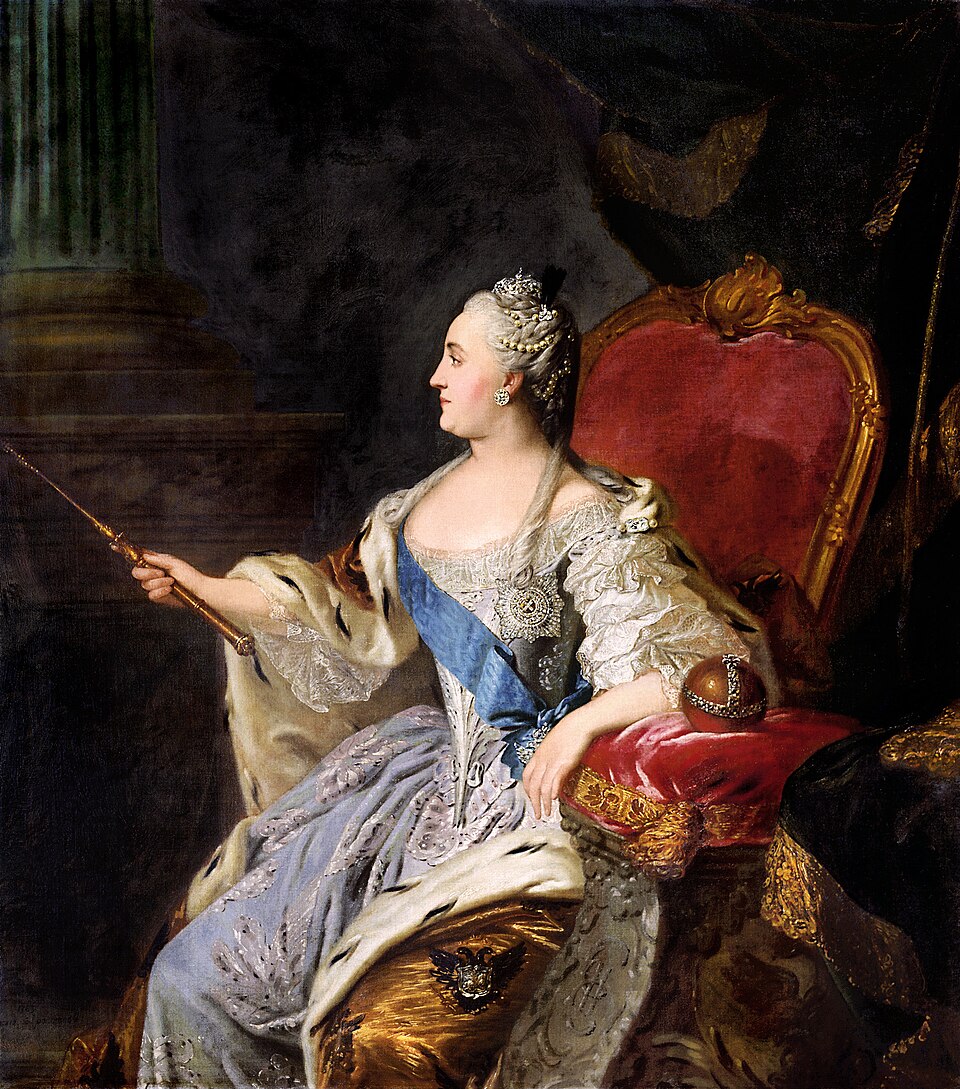
—Why did you buy Diderot's library?
Because my friend Diderot needed money, simply put. He had spent his life creating an immense book, the Encyclopédie, which gathered all the world's knowledge. But he was poor. So I bought his books... while letting him keep them at home until his death! That was my way of helping him without humiliating him. And in 1773, I invited him to Saint Petersburg. We would talk for hours, he and I. He got so excited that he would slap my knees while speaking! A bit too hard, actually — I ended up sliding a small table between us.
—What was your big law project?
Ah, my Nakaz! In 1767, I wrote a text of over five hundred articles to reform Russian justice. I had been inspired by great thinkers like Montesquieu. I proclaimed tolerance, humanity, and this idea I loved so much: “liberty is the right to do whatever the laws permit.” Imagine an all-powerful empress writing, in her own hand, that there must be just laws for all! Alas, my beautiful project changed almost nothing in reality.
Writing beautiful ideas is easy; making them live is another story.
—If you loved liberty, why were the peasants so unhappy?
You ask the hardest question, my child. And you are right to ask it. You see, I ruled as an autocrat: that means I held all power, with no one to contradict me. And to keep that power, I needed the nobles. So I gave them even more rights, with my Charter of the Nobility of 1785. But beneath them lived the serfs — peasants tied to the land, almost like slaves. During my reign, their lot worsened, not the opposite. I dreamed of the Enlightenment at night, and by day, I sometimes made choices that betrayed it. A sovereign must live with his own contradictions.
—How did you manage to expand your empire so much?
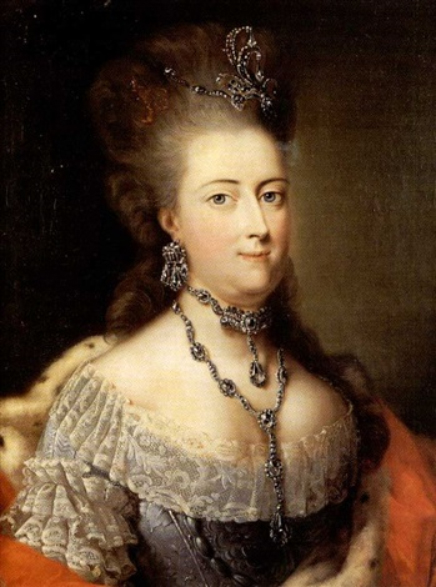
Through war and cunning, I won't lie to you. I waged two long wars against the Turkish Empire. In 1774, a treaty finally gave Russia what it had always sought: access to the Black Sea. Imagine a country frozen for much of the year, dreaming of a sunny port for its ships! Then, in 1783, I annexed Crimea, that beautiful peninsula. Four years later, I made a grand triumphal journey there to admire my new lands. At my death, Russia had become one of the greatest powers in the world.
—And Poland, is it true you made it disappear?
It is true, and it is a dark page. With two other sovereigns — the king of Prussia and the emperor of Austria — we shared Poland, like cutting a cake. It was called a partition. There were three: in 1772, then in 1793, and finally in 1795. In the end, Poland had completely disappeared from the map. An entire country, erased! I tell you this frankly, because history is not a fairy tale.
The powerful take, and the weak pay: that was the harsh law of my time.
—If we could see you at home one morning, what would we see?
You would see me up very early, around six o'clock, even in the dead of winter! And — this will surprise you — I made my own coffee, a very black coffee, so strong it would wake a bear. Then I would write my letters in the quiet, before the whole court awoke. I lived in the Winter Palace, in Saint Petersburg, a huge turquoise and gold building. Next to it, I had built the Hermitage to keep my paintings — I collected more than three thousand! Today it is one of the greatest museums in the world.
What I leave behind is not my wars, but my collected beauty.
Read further
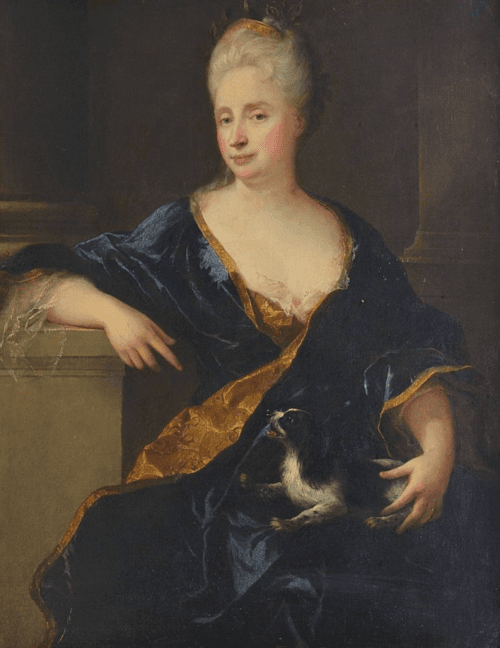
This imaginary interview was generated by artificial intelligence from sources documented in Catherine II of Russia's profile. It dramatises what the figure might have said based on what we know about them, but does not constitute attested historical testimony. For primary sources and factual documentation, refer to the full profile.