Imaginary interview with Sappho
by Charactorium · Sappho (650 av. J.-C. — 569 av. J.-C.) · Literature · 6 min read

Evening falls on Mytilene, and the sea of Lesbos takes on the color of dark wine. In a courtyard bordered by columns, a woman tunes a lyre while young girls walk away laughing. She agrees to answer, by lamplight, as one confides after a banquet.
—How would you describe the circle of young women you have gathered around you?
It is called a thiasos, and it is less a school than a living hearth. The daughters of good families of Lesbos are entrusted to me before their weddings, and I teach them what I know: to hold a lyre, to bend the voice to meter, to lead a dance without breaking the chorus. But one does not teach beauty as one teaches arithmetic. We sing for Aphrodite, sometimes for Artemis, and in those songs the girls discover their own hearts. When one of them leaves me to marry a man from another island, I feel a lack like a string that has been cut. I then compose for her, so that my memory may follow her where I cannot.
One does not teach beauty as one teaches arithmetic.
—Why did you choose to sing of intimate emotion rather than the exploits of heroes?
Others sing of armies, ships, helmeted kings. I hold my lyre and tell of the trembling of a single heart. In one of my songs I wrote: “Some say the most beautiful sight is a cavalry of horsemen, others a fleet, others an army. But I say it is the one you love.” That is my law. What moves a woman at dawn, the pang of seeing a friend depart, the breaking voice — these are worth the fall of a city. I shape for these things new meters, strophes that fold back on themselves like a wave. Song is not an ornament: it is the only way I know to keep alive what passes.
Others sing of armies; I tell of the trembling of a single heart.
—What happens inside you when you look at the beloved?
I put it into verse once, and I have never lied so accurately. “That man seems to me equal to the gods, he who sits facing you and listens to you speak softly and laugh a delicious laugh. Then my heart flutters in my chest.” What I describe there is not a thought, it is the body coming undone: the tongue breaks, a fire runs under the skin, the eyes see no more, the ear buzzes. The physicians of my time might call it a fever. I say it is Aphrodite passing by, and she does not ask permission. I have learned to seize that moment before it fades, to set it on papyrus as one presses a flower.
It is not a thought, it is the body coming undone.
—What does one of your days among these young girls look like?
The morning belongs to the household: we spin, we tidy, we watch the servants, as in any home of a woman of my rank. But the afternoon is ours. We gather in the shade, and the thiasos becomes a workshop of voices and steps. I tune the lyre, I correct a girl who presses the rhythm too fast, I invent for the wedding of one of them those marriage songs called epithalamia. In the evening, among ourselves, we share a little wine mixed with water, barley bread, figs, and tongues loosen. It is in these hours without men, under the patronage of Aphrodite, that my truest poems are born — not in solitude, but in the warmth of a circle that listens to me.
—Do you remember the circumstances that led you to leave Lesbos for Sicily?
Lesbos is not the peaceful island that songs suggest. The great families tear each other apart for power, and mine was not spared these quarrels. When one faction prevails, the vanquished take to the sea; thus was I driven to Syracuse, in Sicily, far from the court of Mytilene. I was not a mere singer to be forgotten: I was exiled because my name carried weight in the city. There I tasted the salt of another sea, the bitter taste of being kept far from my own. But a poetess carries her homeland with her: even in the harbor of Syracuse, it was still Lesbos that my lyre called out to.
A poetess carries her homeland with her.
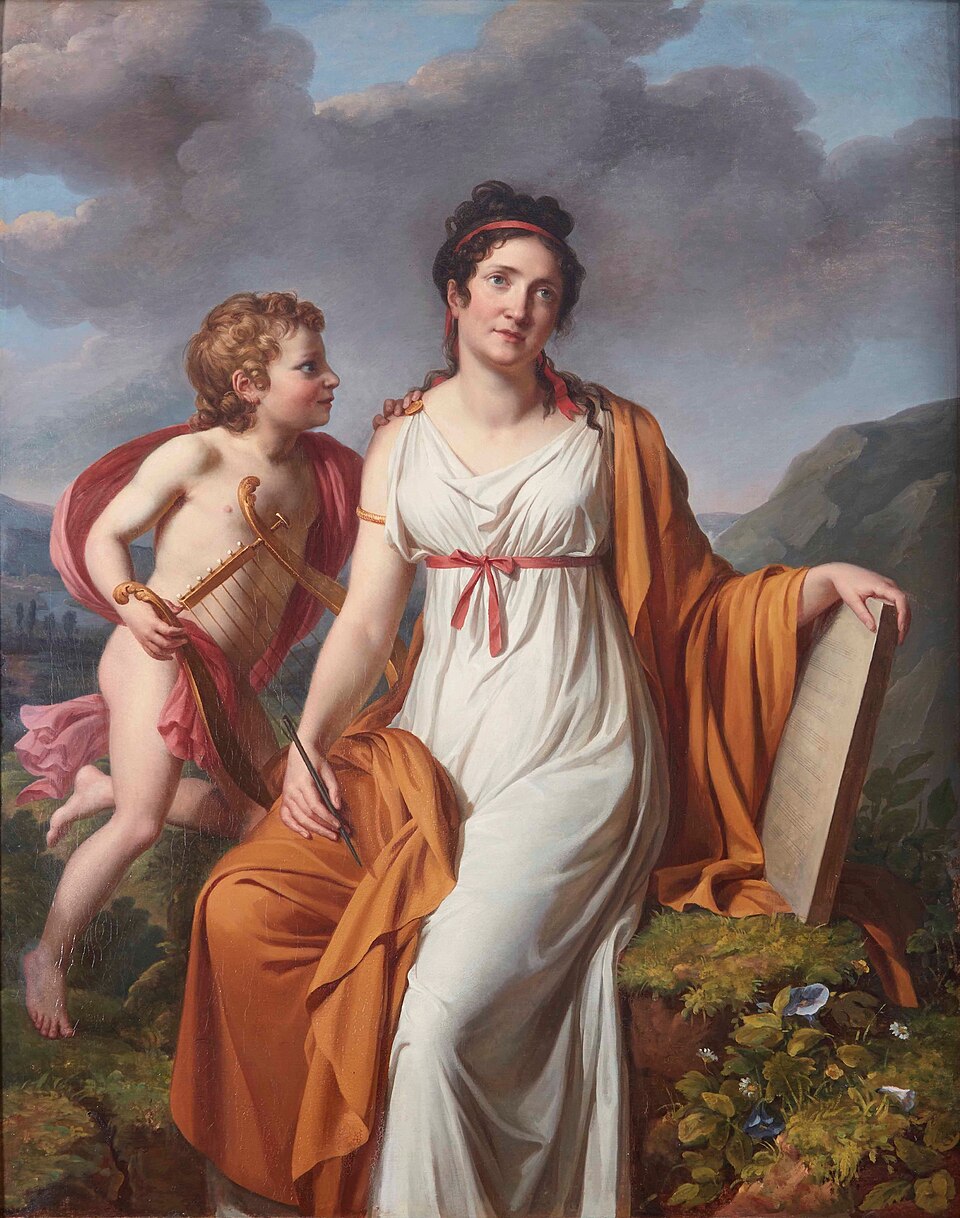
—How did you experience this return, after exile?
Returning to Mytilene was like finding a long-slackened string that finally gives its note again. The factions had calmed, or perhaps it was my turn to breathe. I took my place again in the thiasos, among the girls, under the Ionic columns that are the pride of our island. But one never returns quite the same: exile had taught me the fragility of everything one thinks one possesses — a house, a rank, faces. From then on I sang knowing that Aphrodite gives and takes back, that cities raise up and cast out. That shadow, I think, made my songs more serious. One tastes the sweetness of a banquet better when one has known the table of a stranger.
—Many stories are told about your love life, including the leap from the Leucadian rock for a certain Phaon. What do these tales inspire in you?
Phaon! A ferryman whom stories say was made beautiful by Aphrodite herself. That is the kind of fable that is pinned on women who have sung too much of love. They want my life to resemble my verses, that I throw myself from the Leucadian rock like a tragic heroine — when I have only leaped into the void of a stanza. I know this tendency of men: what a woman says of passion, they take for her biography. I sang of desire, so I must die spectacularly of it. I fear that long after me, people will still prefer these legends to my poems. Rumor is easier to carry than a papyrus.
I have only leaped into the void of a stanza.
—If you imagined being read and celebrated in centuries to come, what honor would you wish for?
You ask me to dream far, beyond my own ashes. Already in my lifetime my songs are copied from island to island, and scholars cite me as a model; that suffices for my pride. But if I could imagine that a sage, in a century I will not see, ranks me among the Muses — that he makes me a tenth sister of those nine daughters of Memory — then I would say that the lyre has kept its promise. Not out of vanity: because a poet survives only if his voice continues to awaken a heart he has never touched. I do not ask for a statue. I ask that a young girl, very long from now, shivers reading what another felt before her.
A poet survives only if his voice awakens a heart he has never touched.
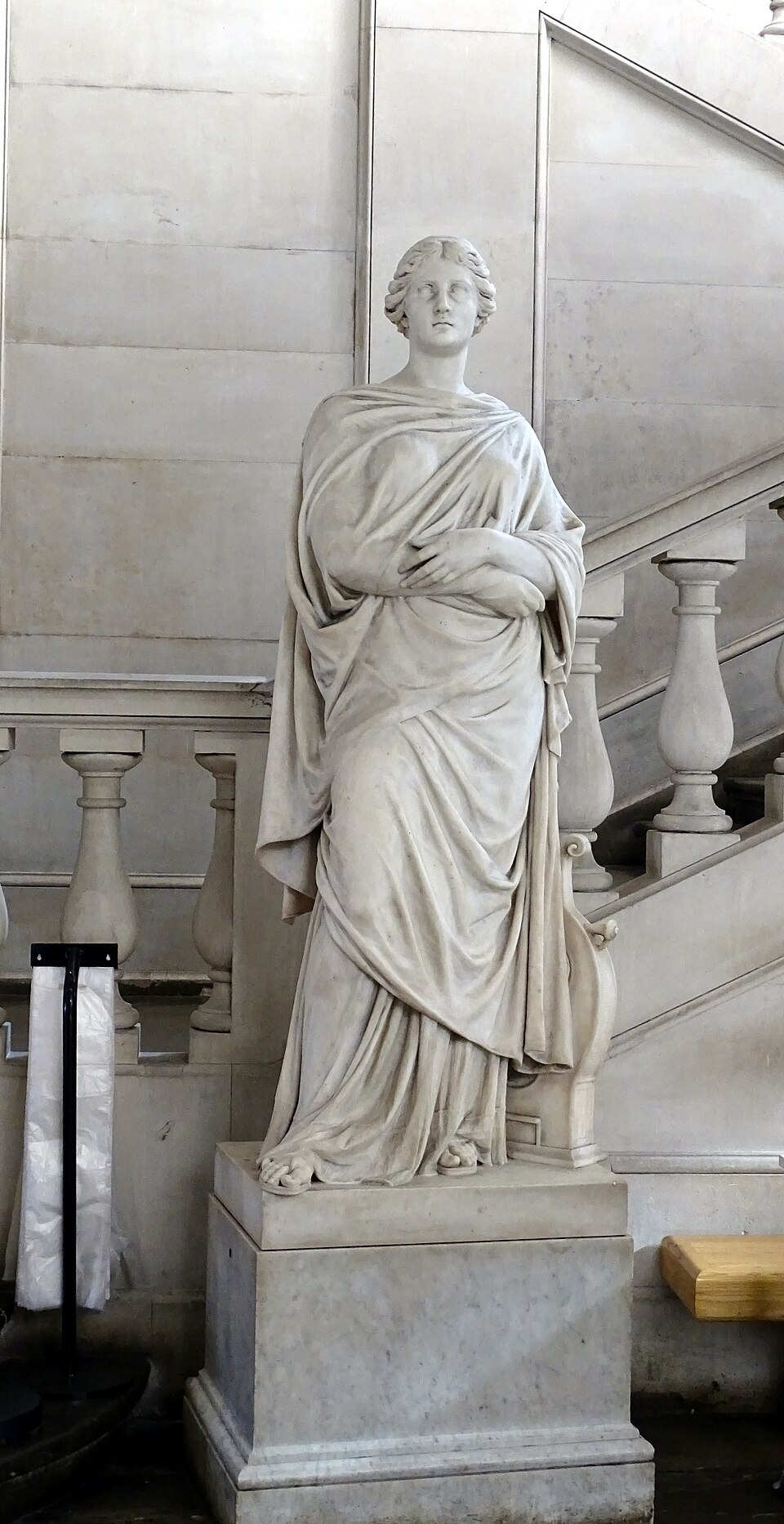
—How do you begin a song addressed to the goddess of love?
I call her by her titles, as one approaches a queen from whom one hopes a favor. My Hymn to Aphrodite opens thus: “Immortal Aphrodite on your richly-wrought throne, daughter of Zeus, weaver of wiles, I beg you, do not subdue my heart with pains and torments, but come here, if ever before you heard my voice from afar.” You see, I do not speak to her as a fearful suppliant: I remind her of our past meetings, I almost ask her for accounts as a friend. Lyric poetry allows this — to stand up to a god in a tone of confidence. My lyre accompanies every word, for these verses are not meant to be read in silence, but sung, breathless, before those who listen to me.
—You know that the voice is lost. How do you feel about the idea that your poems might not survive you intact?
I entrust my songs to papyrus and to the memory of the girls I train, but I am not ignorant of how fragile these two guardians are. A scroll burns, crumbles, gets lost at the bottom of a chest; a memory dies with the one who carried it. Perhaps one day only scraps of my nine books will remain, a few verses torn from a strophe, as one finds a sherd of a beautiful amphora. This thought does not sadden me as much as one might think. A fragment retains its warmth: even broken, a verse through which Aphrodite passes can make the one who picks it up tremble. Better a living shard than a long dead poem. I sow, and I leave it to time to sort.
Better a living shard than a long dead poem.
—Imagine one of your forgotten poems is rediscovered, long after you: what would you like it to say about you?
What a strange and sweet idea — that one of my songs might sleep for centuries in the sand of Egypt, then come to light in the hands of a stranger. I would not want it to speak of glory or the quarrels of Lesbos, nor even of the exile of Syracuse. I would want it to say a simple thing: the name of a friend, the color of a dawn on the sea, the pang of letting go of the one you love. Let the one who deciphers it immediately recognize what he himself has felt, and say to himself: “Look, a woman felt this before me, and knew how to say it.” If a single verse thus crosses time to touch a living being, then my lyre will not have sung in vain.
A woman felt this before me, and knew how to say it.
Read further
This imaginary interview was generated by artificial intelligence from sources documented in Sappho's profile. It dramatises what the figure might have said based on what we know about them, but does not constitute attested historical testimony. For primary sources and factual documentation, refer to the full profile.