 flip
flipMaza with olive oil and thyme, the everyday barley cake
Maza with olive oil and thyme, the everyday barley cake
Why this dish? Maza was the daily bread of the ordinary Greek and the unpretentious well-off citizen. Anaximander, a scholar absorbed by his maps and his gnomon, ate this simple barley cake like any Milesian: a plain base on which to place olives and cheese.
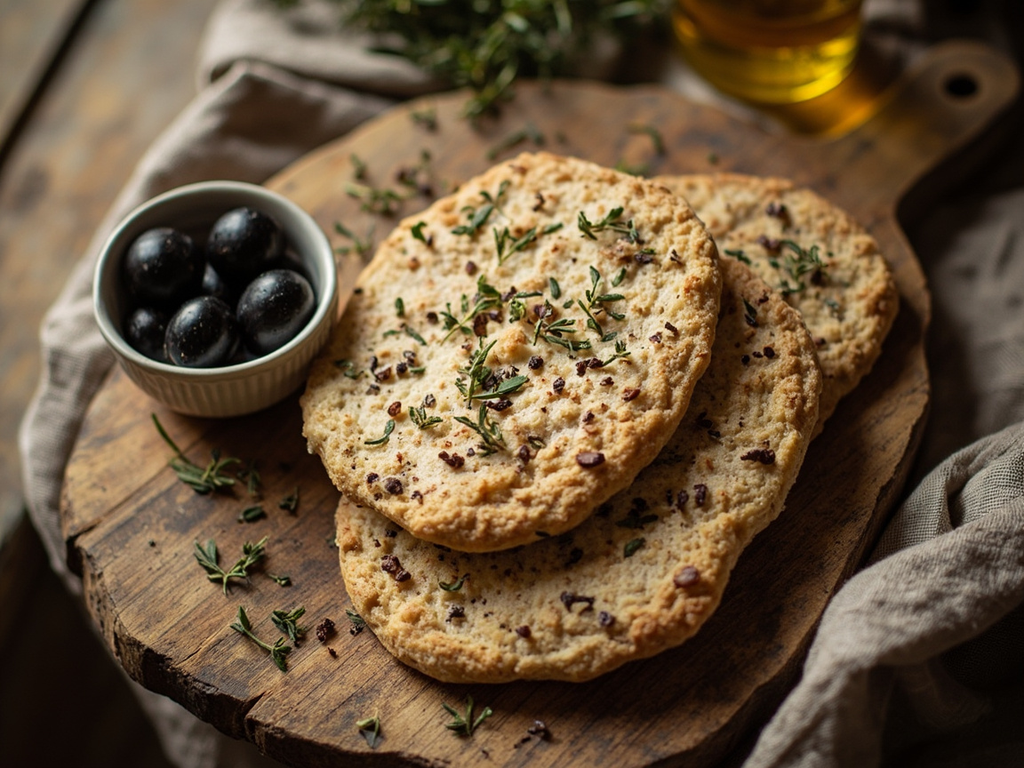
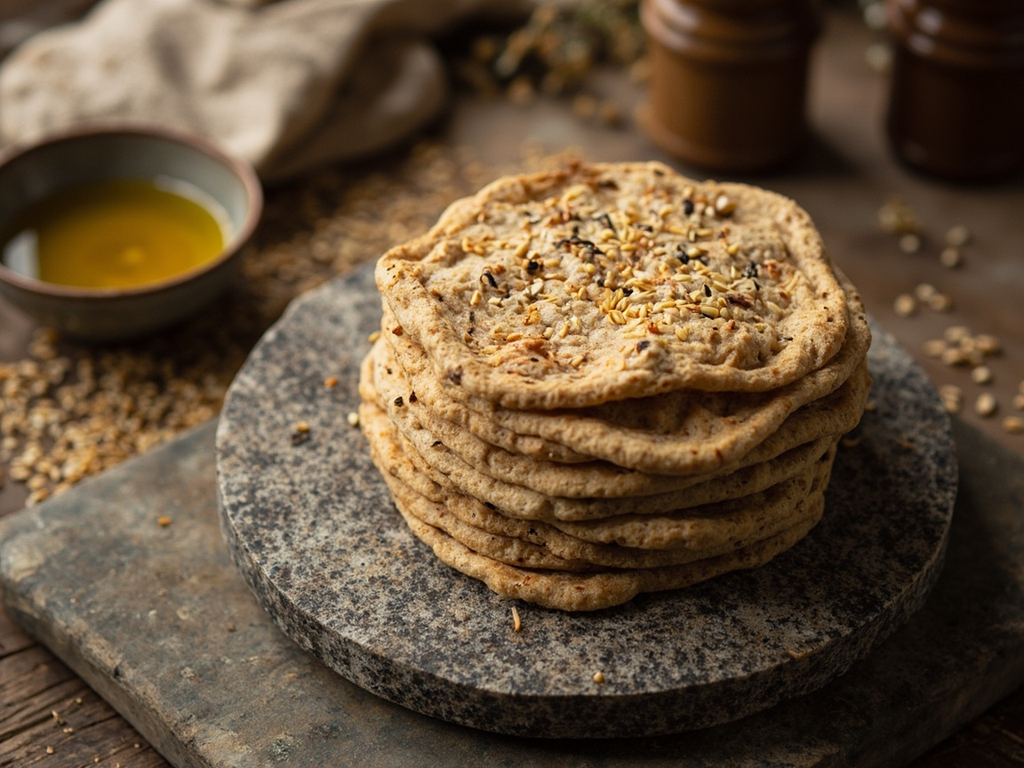
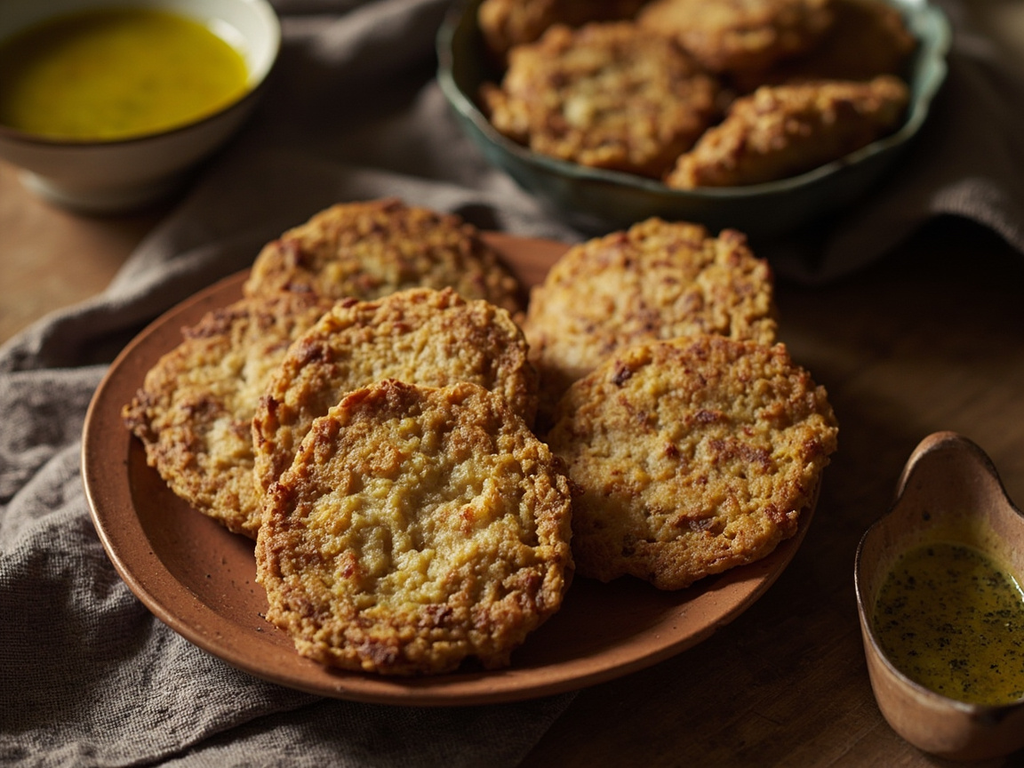
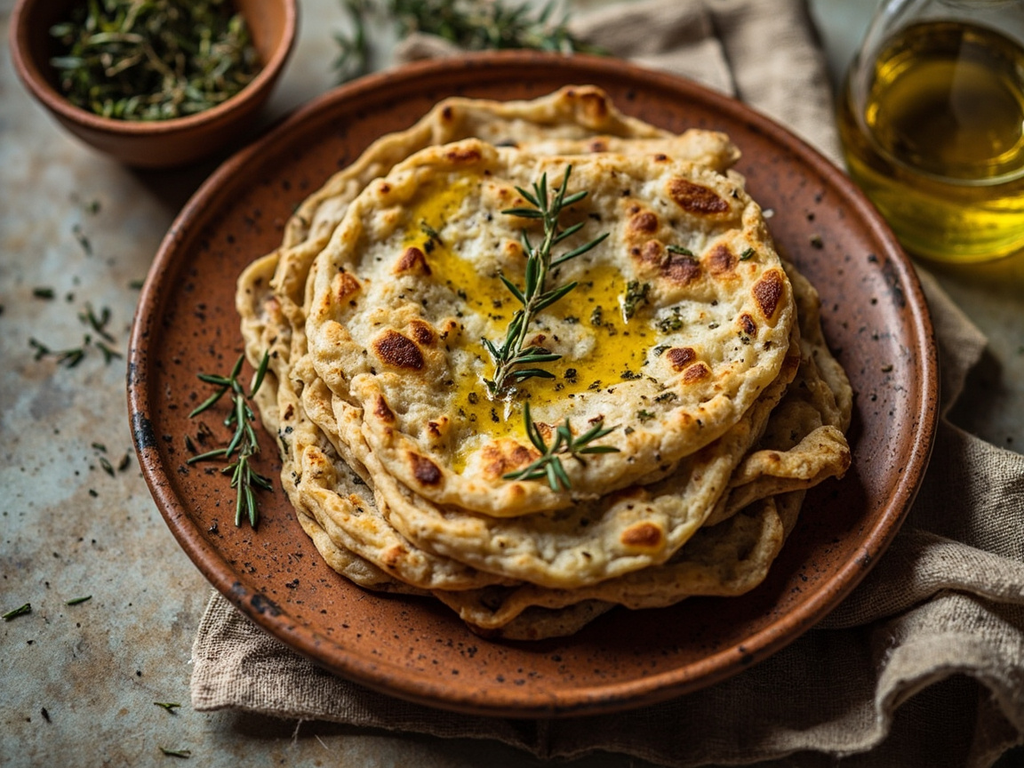
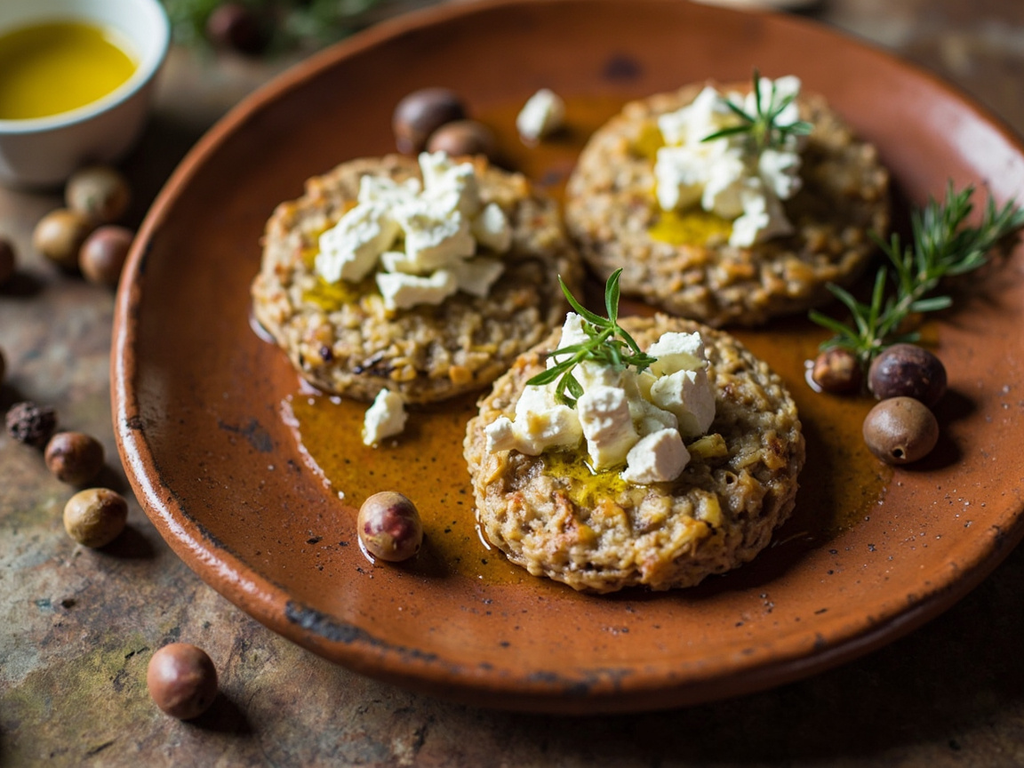
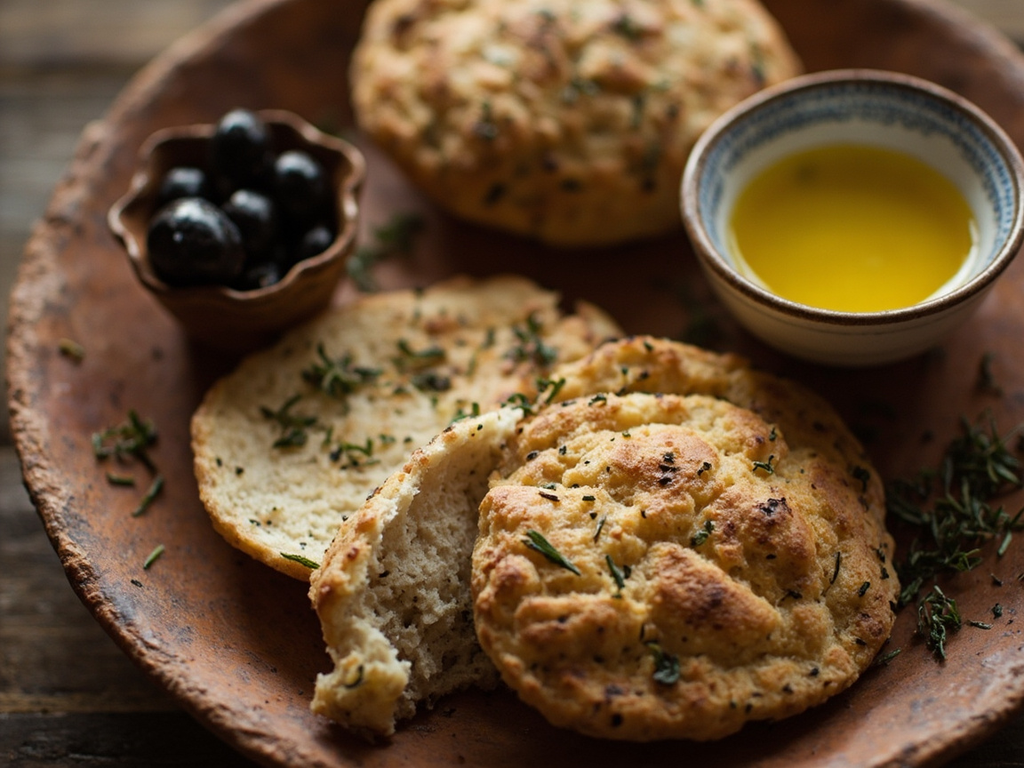
A dense, rustic cake of toasted barley, kneaded with olive oil and water, seasoned with wild thyme. Neither leavened nor truly oven-baked among the humble: it is the Ionian's reflex food, to be broken by hand and dipped in oil.
Listen well, you who pass by: before measuring the shadow of the gnomon, a man must fill his belly. I take the toasted barley that I have ground into flour, I pour a stream of oil from our olive trees and a little water, and with my fingers I work the dough until it holds. A pinch of thyme from the hill, and there—no complicated fire, no pride. The grain comes from the earth, the oil from the tree, and everything, one day, returns to the indefinite from which it came.
- •Toasted barley flour (alphita) — two handfuls per guest (base)
- •Olive oil — a good drizzle (binder and flavor)
- •Water — as needed (bind the dough)
- •Wild thyme — a pinch (aroma)
- •Sea salt — a pinch (seasoning)
Maza with olive oil and thyme, the everyday barley cake
A dense, rustic cake of toasted barley, kneaded with olive oil and water, seasoned with wild thyme. Neither leavened nor truly oven-baked among the humble: it is the Ionian's reflex food, to be broken by hand and dipped in oil.
Why this dish? Maza was the daily bread of the ordinary Greek and the unpretentious well-off citizen. Anaximander, a scholar absorbed by his maps and his gnomon, ate this simple barley cake like any Milesian: a plain base on which to place olives and cheese.
Listen well, you who pass by: before measuring the shadow of the gnomon, a man must fill his belly. I take the toasted barley that I have ground into flour, I pour a stream of oil from our olive trees and a little water, and with my fingers I work the dough until it holds. A pinch of thyme from the hill, and there—no complicated fire, no pride. The grain comes from the earth, the oil from the tree, and everything, one day, returns to the indefinite from which it came.
Ingredients (period version)
- Toasted barley flour (alphita) — two handfuls per guest (base)
- Olive oil — a good drizzle (binder and flavor)
- Water — as needed (bind the dough)
- Wild thyme — a pinch (aroma)
- Sea salt — a pinch (seasoning)
Ingredients
- Barley flour (or ground hulled barley) — 200 g (base)
- Extra virgin olive oil — 4 tbsp (binder and flavor)
- Warm water — 80–100 ml (bind the dough)
- Dried thyme — 1 tsp (aroma)
- Salt — 1/2 tsp (seasoning)
Method
- If starting from barley grains, toast them dry in a pan for a few minutes until nutty-smelling, then grind finely.
- Mix barley flour, salt, and thyme in a bowl.
- Add olive oil, then warm water little by little, kneading until you have a firm, non-sticky dough.
- Shape flat cakes about half a centimeter thick.
- Cook 3–4 minutes per side on a hot dry griddle or pan until golden.
- Serve warm, to be broken by hand and dipped in a bowl of olive oil.
How it was made : Maza (μᾶζα) was the dietary staple of archaic Greece, made from alphita, toasted barley flour. Among the poorest, it remained raw or barely cooked; among wealthy city-dwellers, it was baked more thoroughly, and leavened wheat bread (artos) competed with it for better days. Barley was more rustic and cheaper than wheat.
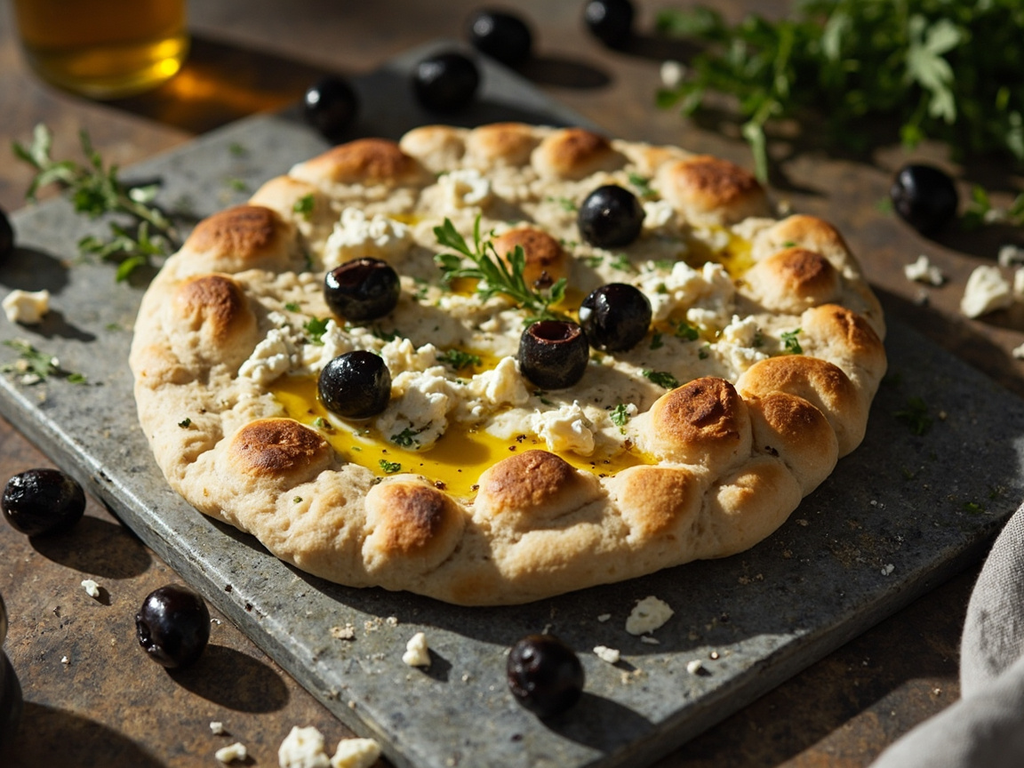
The contemporary twist : Serve the maza warm as an accompaniment to a trio of olives and crumbled feta, "presocratic apero" board style—everyone assembles their own opson.
Sources : Andrew Dalby, Siren Feasts: A History of Food and Gastronomy in Greece, Routledge, 1996 · Hesiod, Works and Days (on barley and peasant bread)
Anaximander · Charactorium