 flip
flipMiso Soup with Tofu and Wakame (Misoshiru)
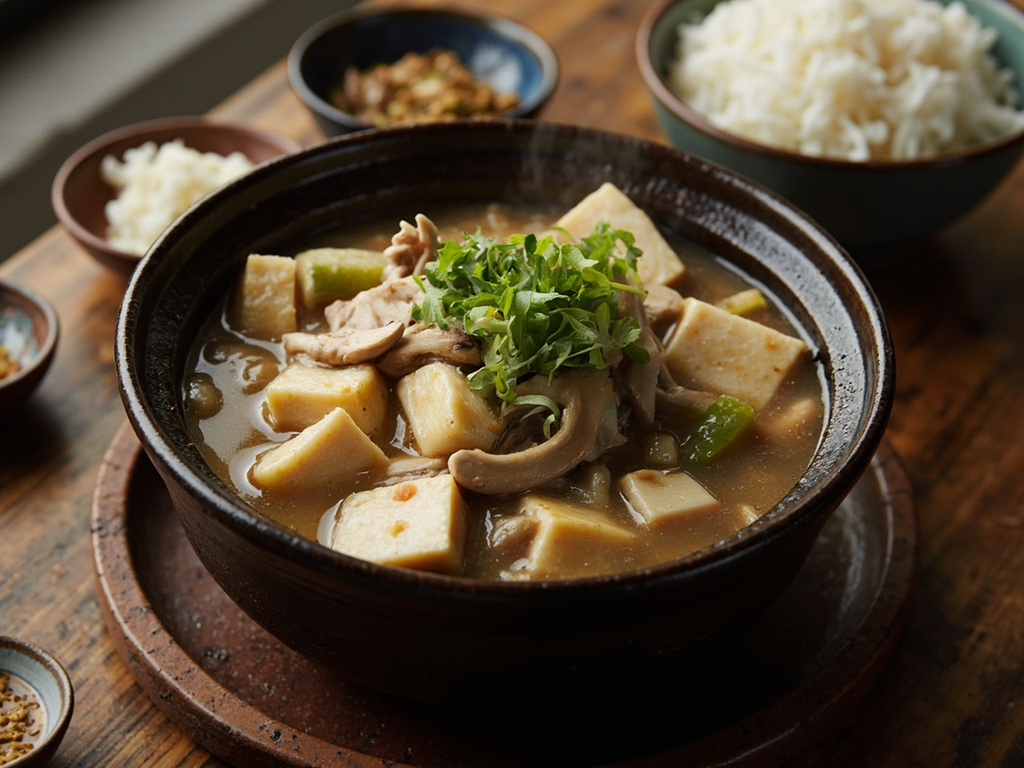
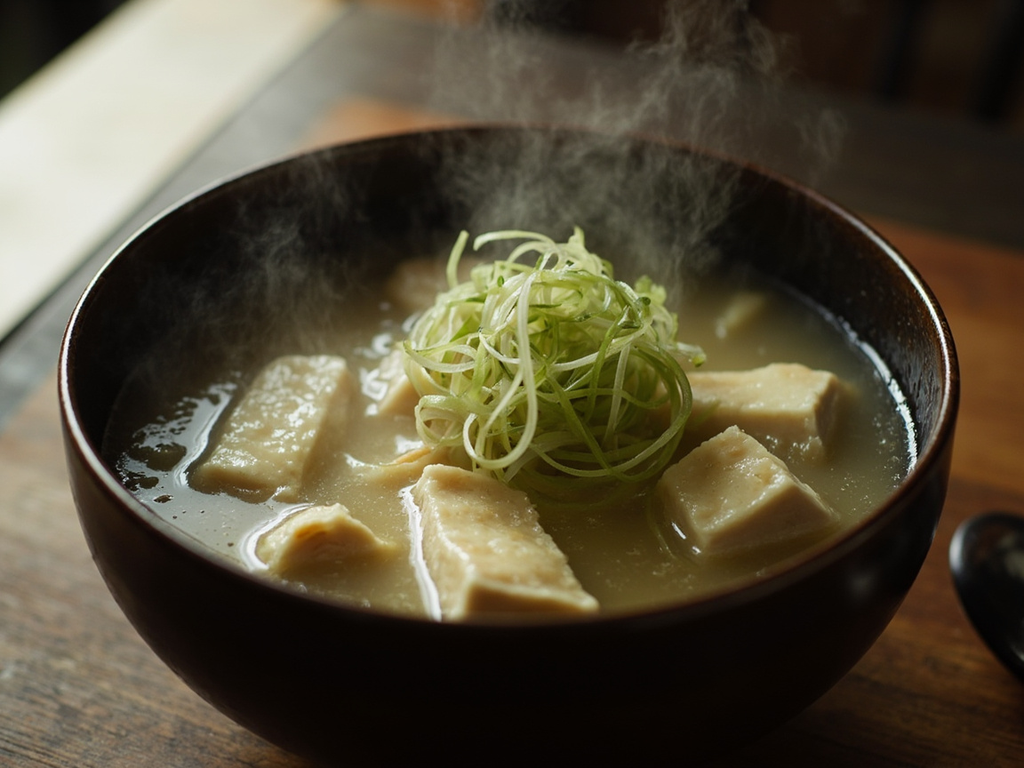
Miso Soup with Tofu and Wakame (Misoshiru)
Why this dish? Yoshimoto herself says cooking is a meditative act for her. Miso soup, made almost without thinking every morning, is exactly that regenerative gesture — the silent foundation of all her Japanese tables.
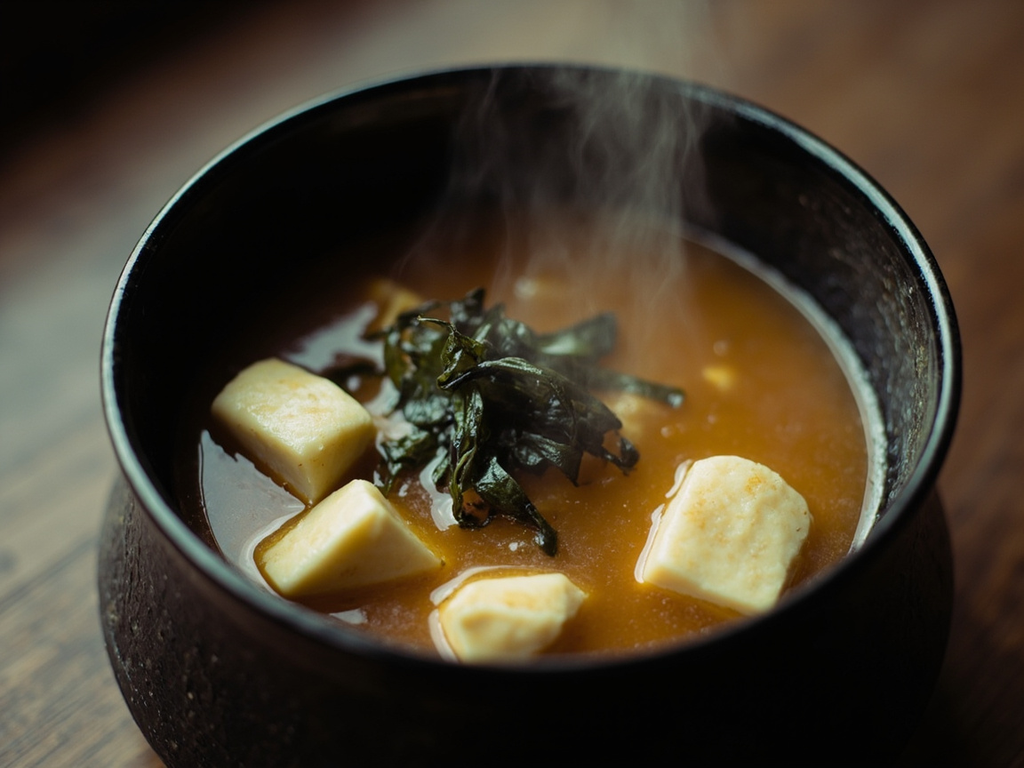
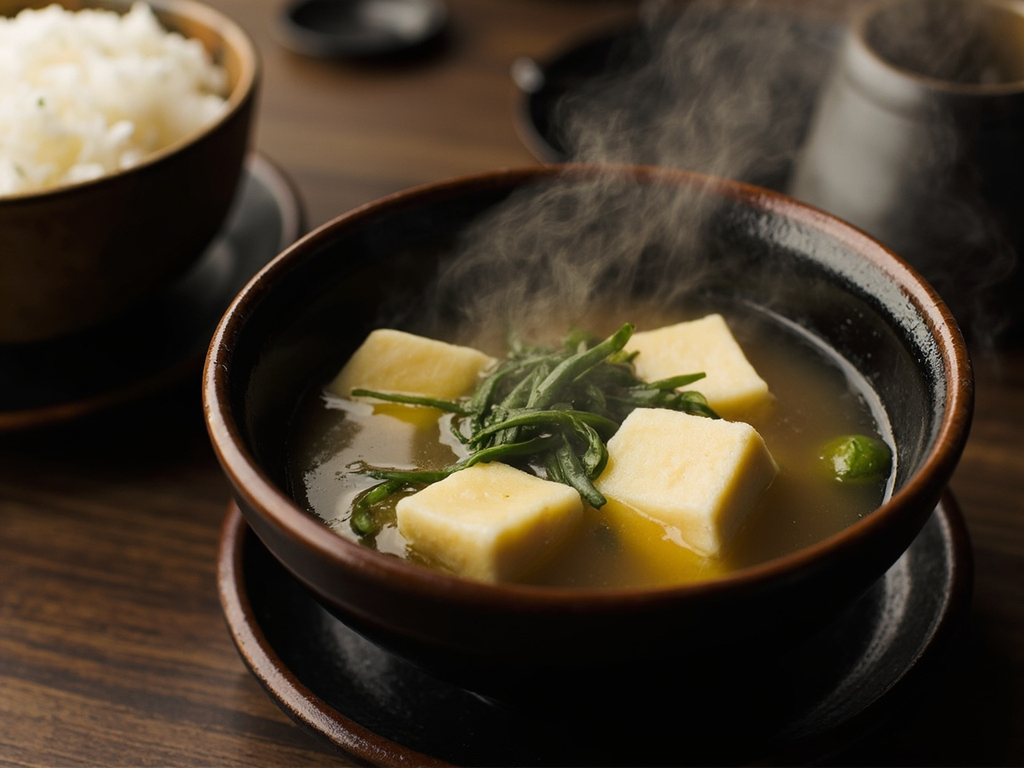
A fragrant dashi broth in which a spoonful of miso is dissolved, with cubes of silken tofu and wakame seaweed that unfurl like flowers. Simple, warm, comforting: a bowl held in both hands.
I make this soup almost with my eyes closed, in the morning, while the city awakens outside the window. The secret is to take the pot off the heat before dissolving the miso — otherwise you kill what's alive in it, and it turns bitter. I love feeling the aroma rise; it tells me the day can begin, that everything will be fine. A soup like this isn't shown off, it's received.
- •Dashi (kombu and katsuobushi broth) — one bowl per person (umami base)
- •Miso — a good spoonful (fermented seasoning)
- •Silken tofu — a few cubes (softness)
- •Dried wakame — a pinch (seaweed)
- •Scallion (negi) — a little (freshness)
Miso Soup with Tofu and Wakame (Misoshiru)
A fragrant dashi broth in which a spoonful of miso is dissolved, with cubes of silken tofu and wakame seaweed that unfurl like flowers. Simple, warm, comforting: a bowl held in both hands.
Why this dish? Yoshimoto herself says cooking is a meditative act for her. Miso soup, made almost without thinking every morning, is exactly that regenerative gesture — the silent foundation of all her Japanese tables.
I make this soup almost with my eyes closed, in the morning, while the city awakens outside the window. The secret is to take the pot off the heat before dissolving the miso — otherwise you kill what's alive in it, and it turns bitter. I love feeling the aroma rise; it tells me the day can begin, that everything will be fine. A soup like this isn't shown off, it's received.
Ingredients (period version)
- Dashi (kombu and katsuobushi broth) — one bowl per person (umami base)
- Miso — a good spoonful (fermented seasoning)
- Silken tofu — a few cubes (softness)
- Dried wakame — a pinch (seaweed)
- Scallion (negi) — a little (freshness)
Ingredients
- Water — 800 ml (base)
- Kombu — 1 piece (10 cm) (umami)
- Katsuobushi (dried bonito flakes) — 10 g (umami)
- Miso paste — 3 tbsp (seasoning)
- Silken tofu — 150 g cubed (softness)
- Dried wakame — 2 tsp (seaweed)
- Thinly sliced scallion — 1 stalk (finish)
Method
- Soak the kombu in cold water for 20 minutes, then heat gently without boiling; remove the kombu just before the boil.
- Turn off the heat, add the katsuobushi, let steep for 2 minutes then strain: that's the dashi.
- Rehydrate the wakame in a little water for 5 minutes, drain.
- Reheat the dashi, add the tofu cubes and wakame without boiling.
- Off the heat, dissolve the miso in a ladleful of broth then stir it in.
- Sprinkle with scallion and serve immediately, very hot.
How it was made : Miso soup has accompanied the Japanese meal since the Muromachi period, and by the 20th century it became the unchanging ritual of the family breakfast. Before instant dashi packets, every household made its broth from kombu seaweed and hand-shaved dried bonito flakes.
The contemporary twist : For a quick morning version, you can keep homemade "miso balls" in the freezer: miso, dashi powder and wakame rolled into portions, to be dropped directly into hot water.
Sources : Banana Yoshimoto, Kitchen (1988) · Shizuo Tsuji, Japanese Cooking: A Simple Art (1980)
Banana Yoshimoto · Charactorium