 flip
flipSikbāj (Sweet-and-Sour Stew with Vinegar and Honey)
Sikbāj (Sweet-and-Sour Stew with Vinegar and Honey)
Why this dish? Sikbāj was the prestige dish of the Abbasid court, served at caliphal banquets. Al-Farghānī, a protégé of caliphs al-Maʾmūn and al-Mutawakkil, participated in scholarly circles at the palace where this refined sweet-and-sour dish embodied the sophistication of high cuisine in Baghdad and Samarra.
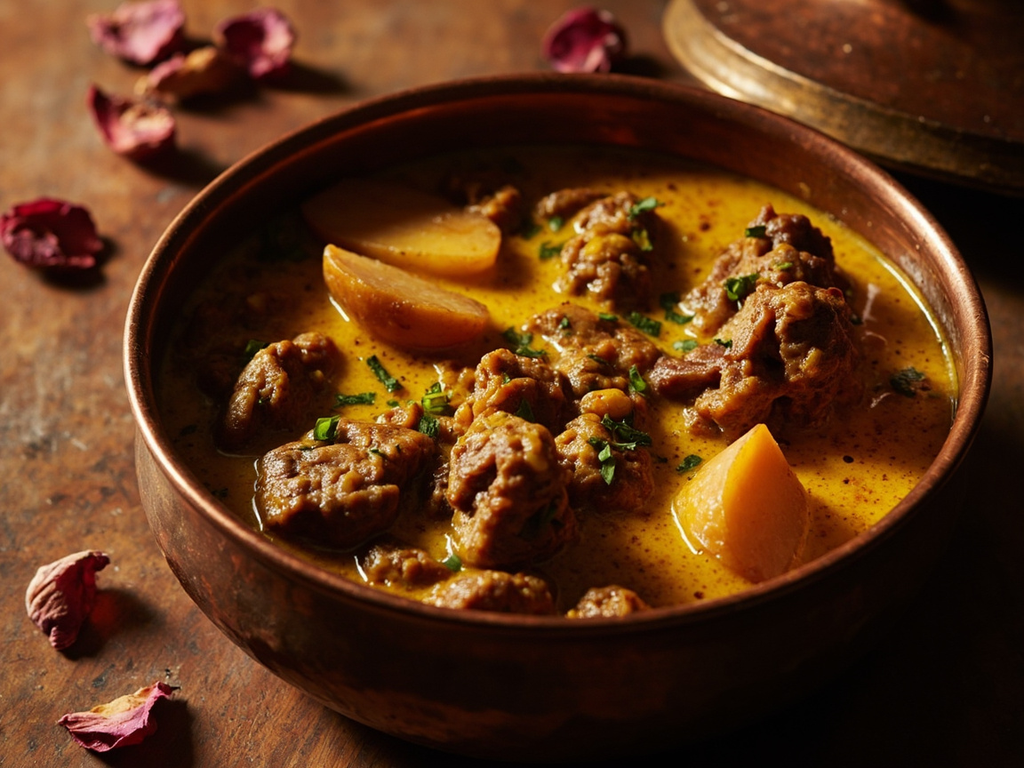
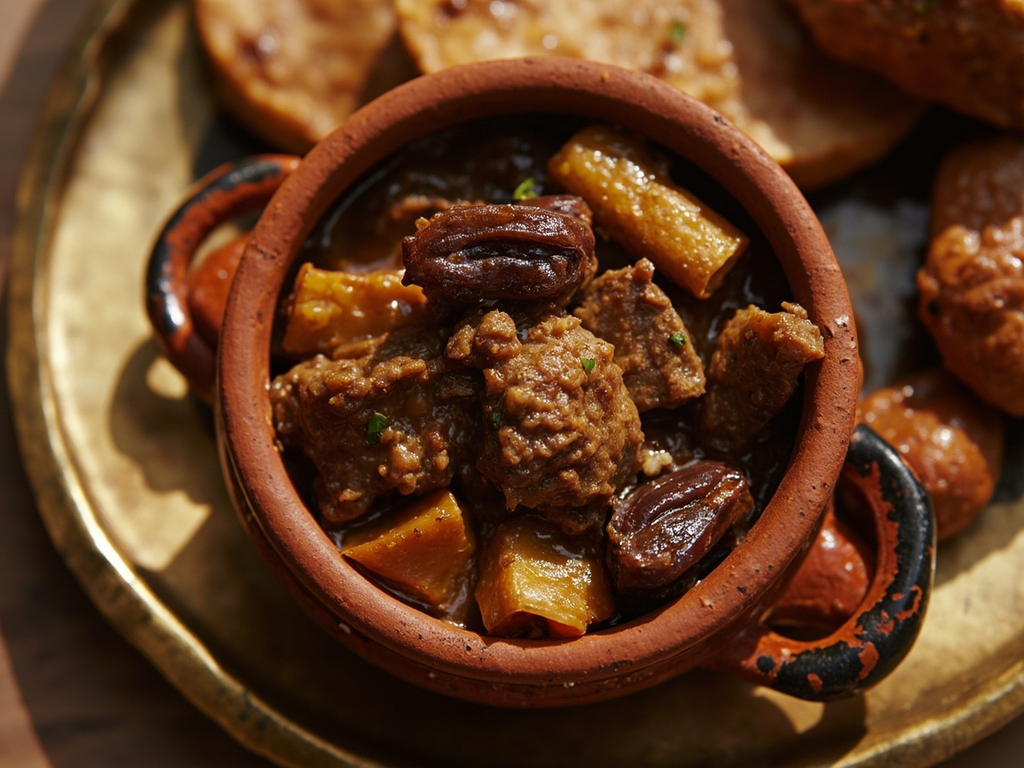
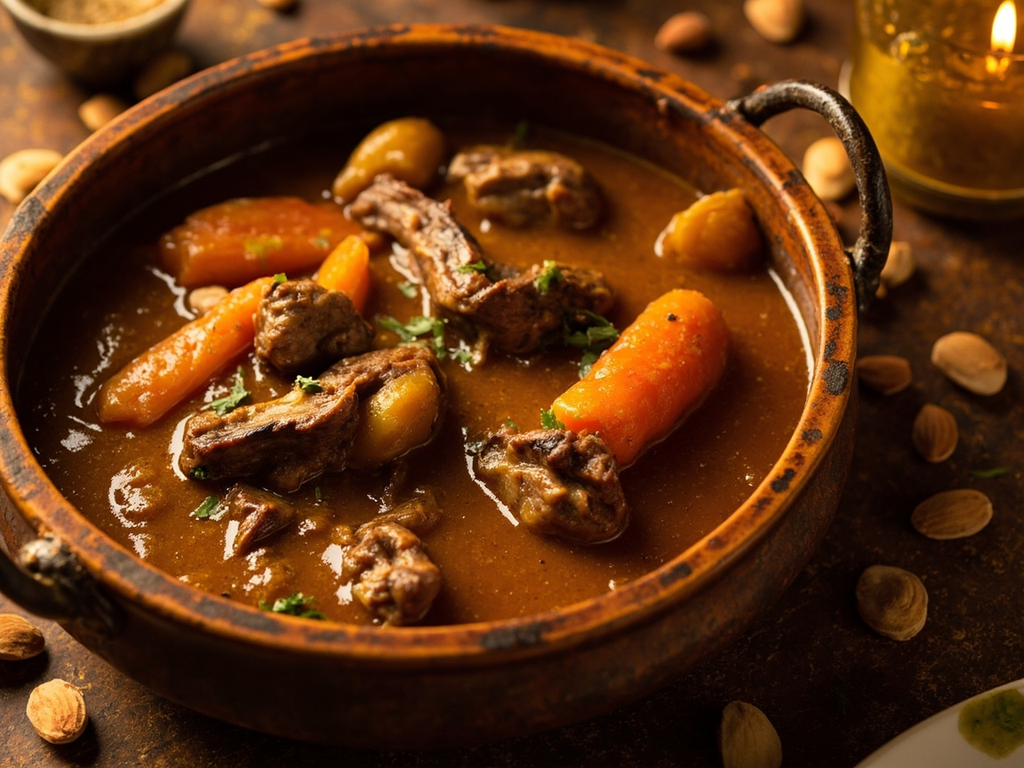
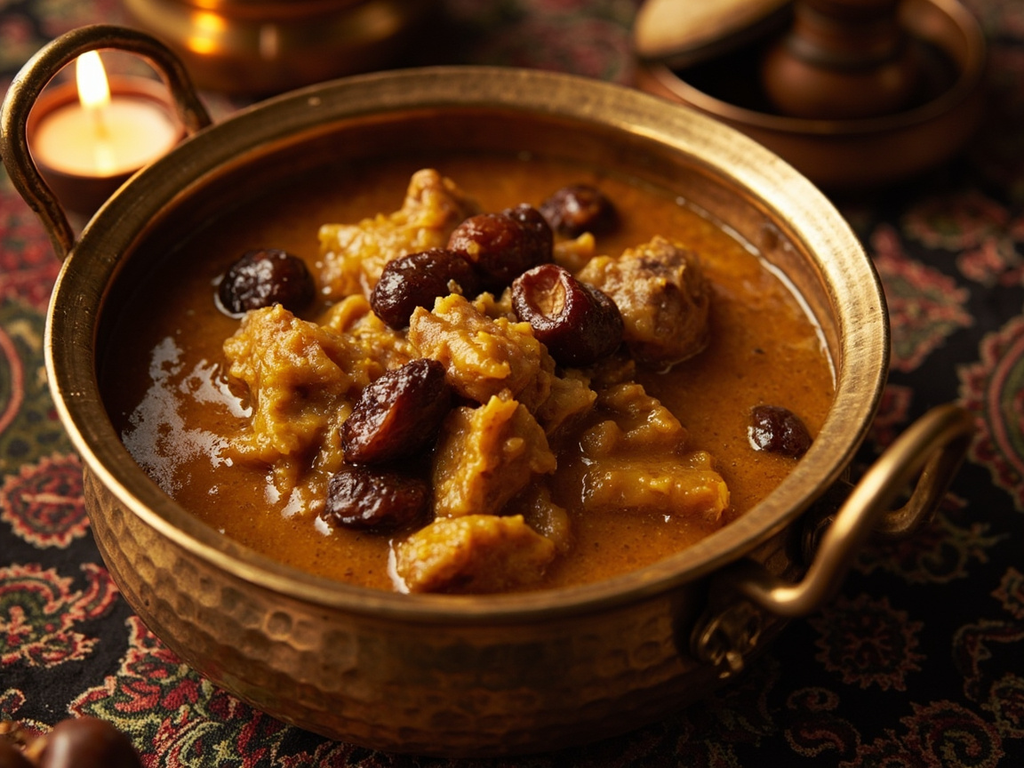
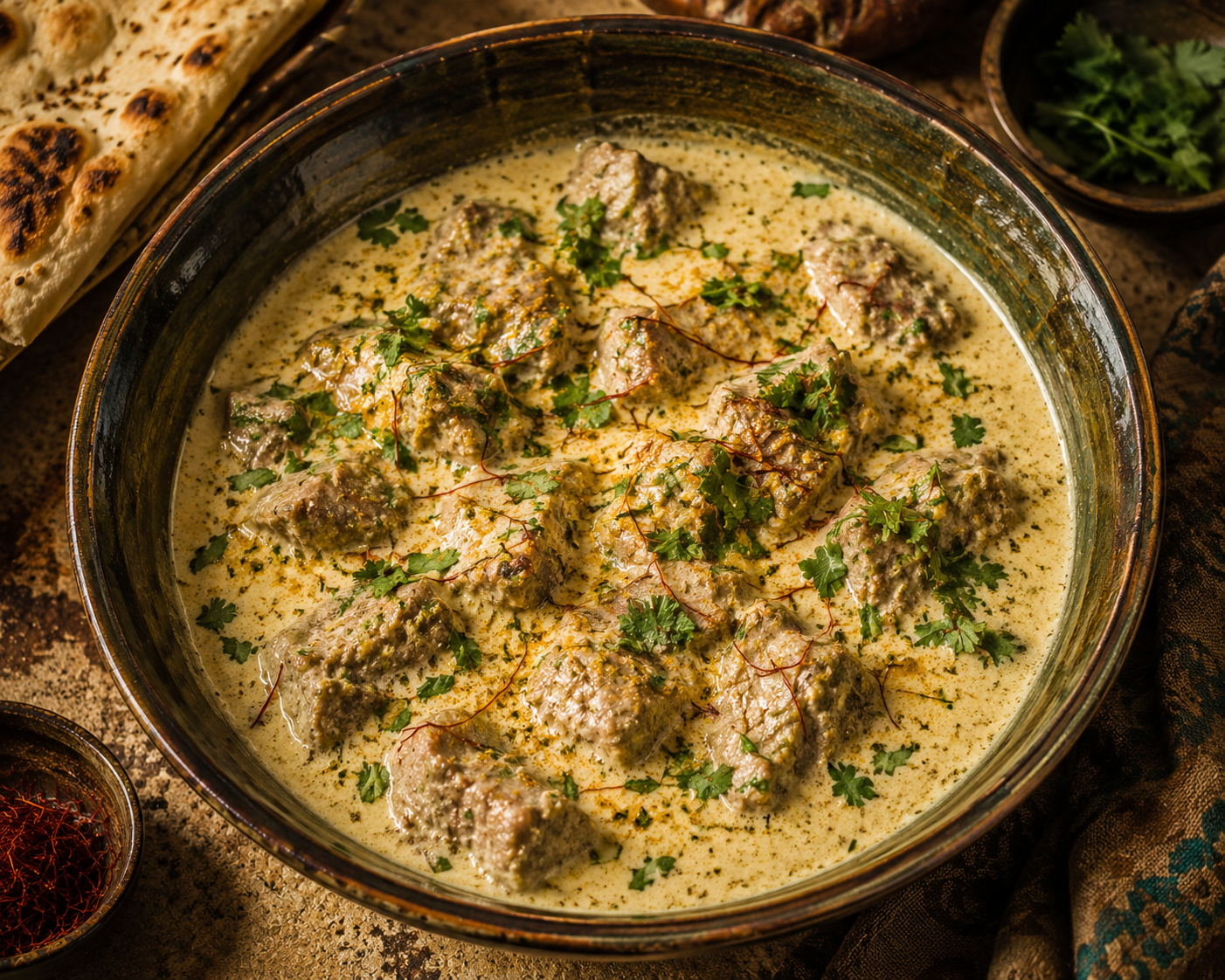
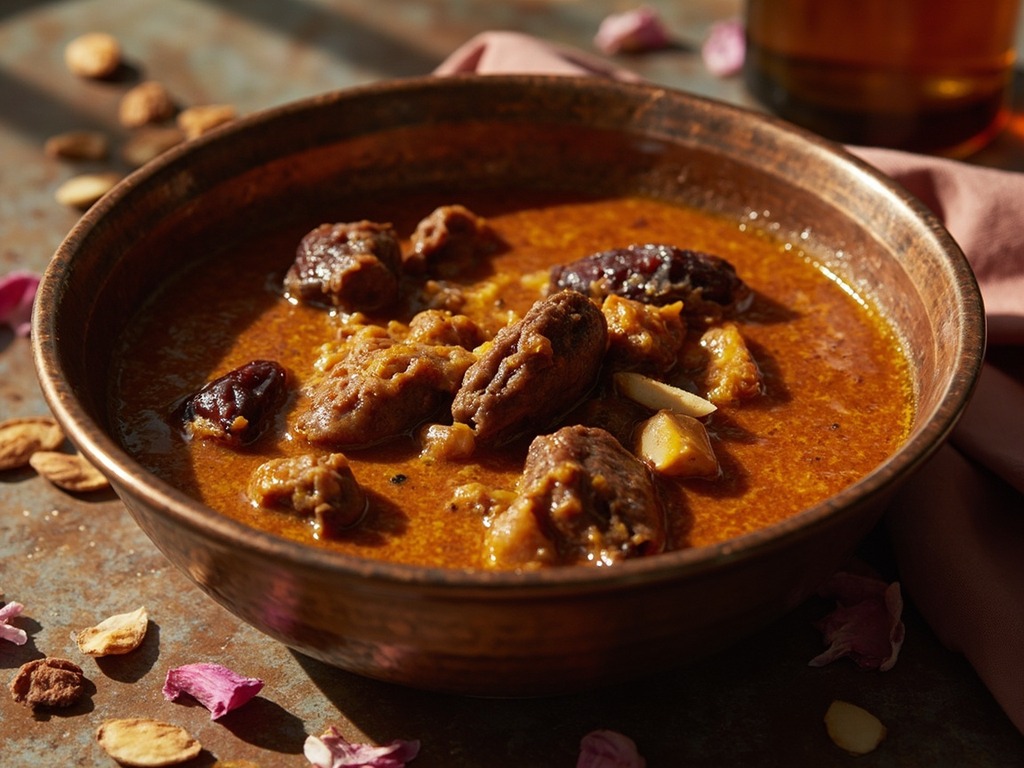
Lamb stew cooked in a mixture of date vinegar and honey, with eggplants, perfumed with saffron and cinnamon. The sweet-and-sour contrast is the absolute signature of Abbasid palace cuisine. A showpiece dish, often mentioned as the favorite of caliphs.
When the caliph — may Allāh prolong his reign — gathers the scholars at the palace of Samarra, sikbāj is served to us in ceramic dishes with golden reflections. The date vinegar first bites the tongue, then the honey soothes it, and the saffron colors everything a gold like the sun at its zenith. I have observed that this dish follows the very principle of astronomy: the balance of opposites produces harmony. The palace cook cuts the eggplant into long wedges, and the cinnamon perfumes the breath when one speaks after the meal.
- •Fatty lamb — a fine piece (main meat)
- •Date vinegar — a good glass (acid agent)
- •Pure honey — half the vinegar (sweet agent)
- •Eggplants — two or three, in wedges (melting vegetable)
- •Saffron — a pinch (color and noble aroma)
- •Cinnamon stick — a piece (warm spice)
- •Salt and murri — to taste (seasoning)
- •Sesame oil — a drizzle (cooking fat)
Sikbāj (Sweet-and-Sour Stew with Vinegar and Honey)
Lamb stew cooked in a mixture of date vinegar and honey, with eggplants, perfumed with saffron and cinnamon. The sweet-and-sour contrast is the absolute signature of Abbasid palace cuisine. A showpiece dish, often mentioned as the favorite of caliphs.
Why this dish? Sikbāj was the prestige dish of the Abbasid court, served at caliphal banquets. Al-Farghānī, a protégé of caliphs al-Maʾmūn and al-Mutawakkil, participated in scholarly circles at the palace where this refined sweet-and-sour dish embodied the sophistication of high cuisine in Baghdad and Samarra.
When the caliph — may Allāh prolong his reign — gathers the scholars at the palace of Samarra, sikbāj is served to us in ceramic dishes with golden reflections. The date vinegar first bites the tongue, then the honey soothes it, and the saffron colors everything a gold like the sun at its zenith. I have observed that this dish follows the very principle of astronomy: the balance of opposites produces harmony. The palace cook cuts the eggplant into long wedges, and the cinnamon perfumes the breath when one speaks after the meal.
Ingredients (period version)
- Fatty lamb — a fine piece (main meat)
- Date vinegar — a good glass (acid agent)
- Pure honey — half the vinegar (sweet agent)
- Eggplants — two or three, in wedges (melting vegetable)
- Saffron — a pinch (color and noble aroma)
- Cinnamon stick — a piece (warm spice)
- Salt and murri — to taste (seasoning)
- Sesame oil — a drizzle (cooking fat)
Ingredients
- Lamb shank or neck — 600 g, in pieces (main meat)
- Apple cider vinegar — 80 ml (acid agent (substitute for date vinegar))
- Honey — 3 tbsp (sweet agent)
- Eggplant — 1 large, cut into thick wedges (melting vegetable)
- Saffron — 1 generous pinch, infused in 2 tbsp hot water (color and aroma)
- Cinnamon stick — 1 (warm spice)
- Sesame oil — 2 tbsp (cooking fat)
- Salt — to taste (seasoning)
- Fresh mint — a few leaves (garnish)
Method
- Sear the lamb pieces in sesame oil over high heat in a pot. Set aside.
- In the same pot, brown the eggplant wedges on each side. Set aside.
- Return the lamb, pour in the cider vinegar and 300 ml water. Add the cinnamon stick and salt.
- Bring to a boil, then cook covered over low heat for 1 hour.
- Add the honey and infused saffron. Return the eggplants. Continue cooking for 30 minutes.
- Taste and adjust the sweet-and-sour balance (add more vinegar or honey to your liking).
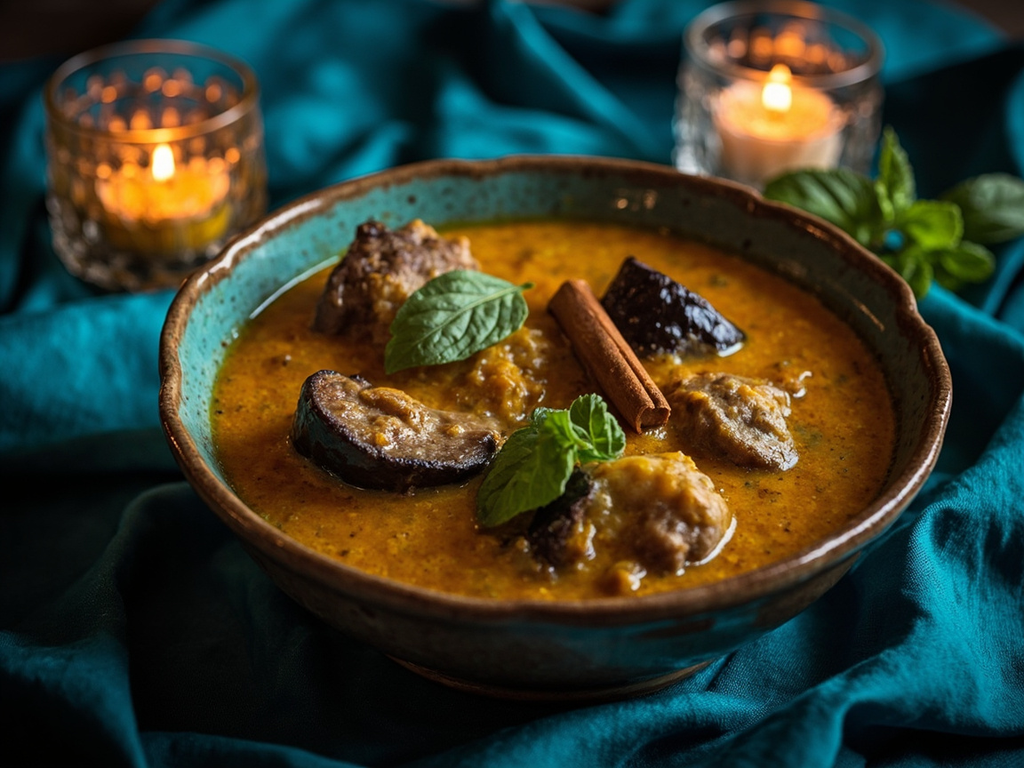
- Serve in a deep dish, the sauce reduced and glossy, sprinkled with fresh mint.
How it was made : Sikbāj is attested from the 8th century and abundantly described in al-Warrāq's Kitāb al-Ṭabīkh. Caliph Hārūn al-Rashīd is said to have made it his favorite dish. Date vinegar, produced in Iraq, was the acid of choice. This dish shows Persian influence on Abbasid cuisine, where the sweet-and-sour taste (māst-o-khūresh) is an ancient tradition.
The contemporary twist : Plate each portion in a turquoise-glazed ceramic bowl, like Abbasid ceramics from Samarra, with a spiral of golden honey drizzled over the stew.
Sources : Ibn Sayyār al-Warrāq, Kitāb al-Ṭabīkh — sikbāj recipes (chapter on sweet-and-sour stews) · Nawal Nasrallah, Annals of the Caliphs' Kitchens, Brill, 2007 · David Waines, In a Caliph's Kitchen, Riad El-Rayyes Books, 1989
Al-Farghani · Charactorium