 flip
flipPalaw with Quince and Lamb
Palaw with Quince and Lamb
Why this dish? Pilaf is the honor dish of Khwarezm, served at feasts and receptions. Al-Zamakhshari, despite his asceticism, frequented the scholarly circles of Gurgandj (capital of Khwarezm) and Bukhara, where learned banquets included a fruit palaw. Quince, abundant in Central Asian orchards, brings an autumnal, fragrant note that distinguishes this pilaf from more austere versions.
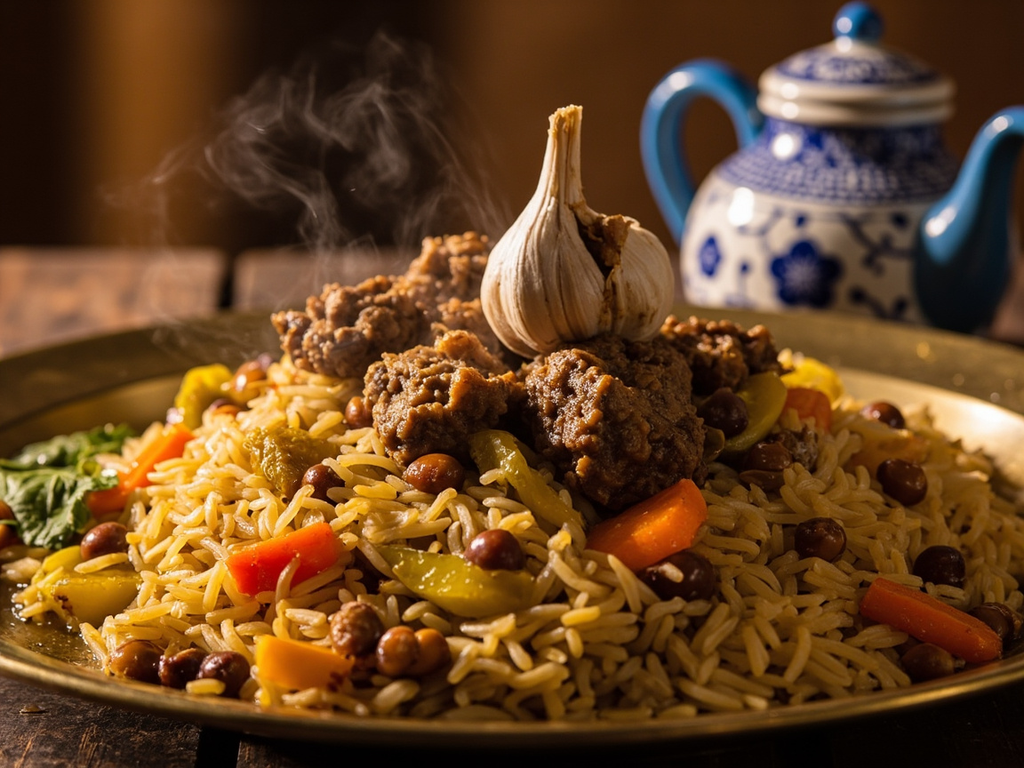
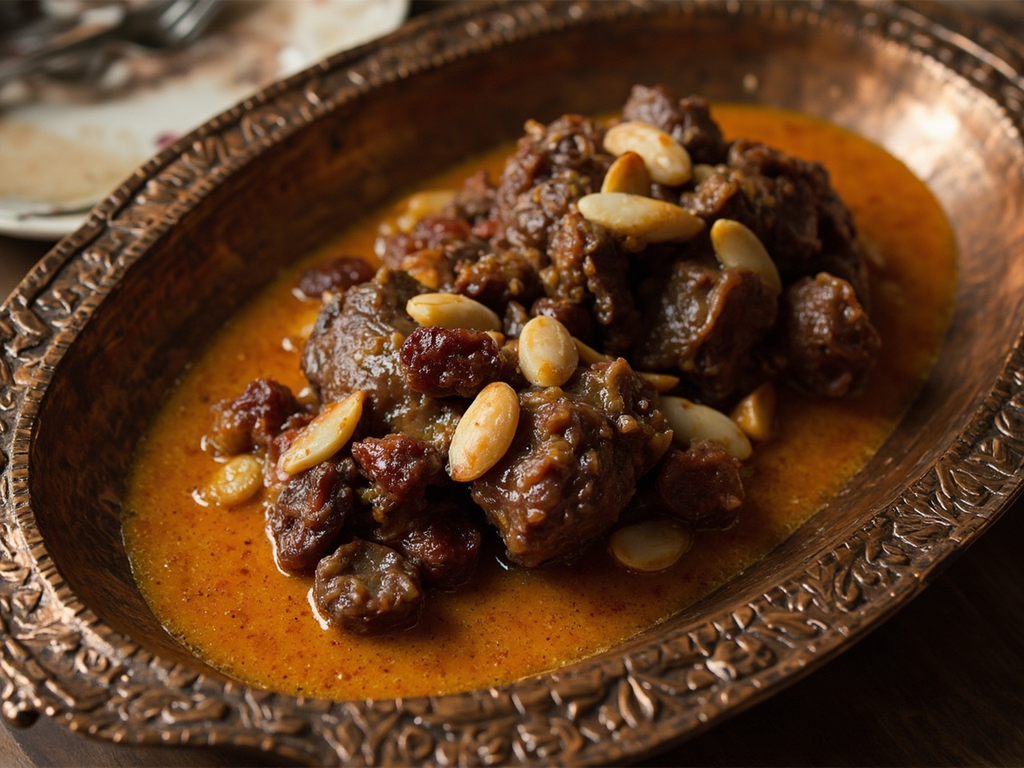
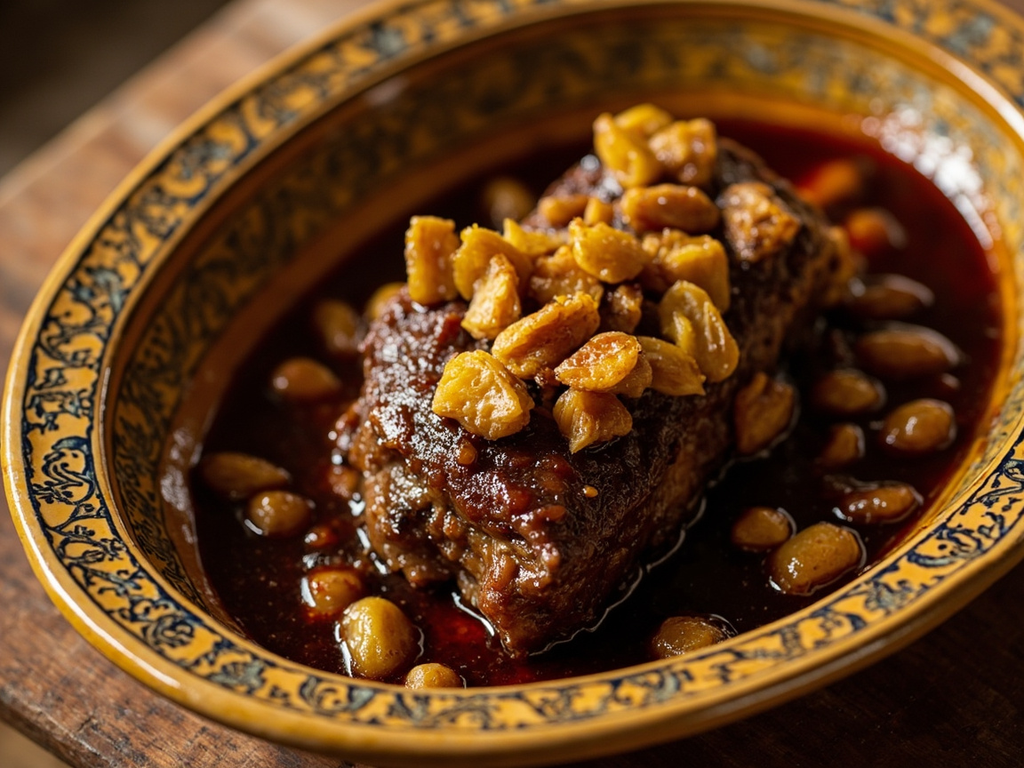
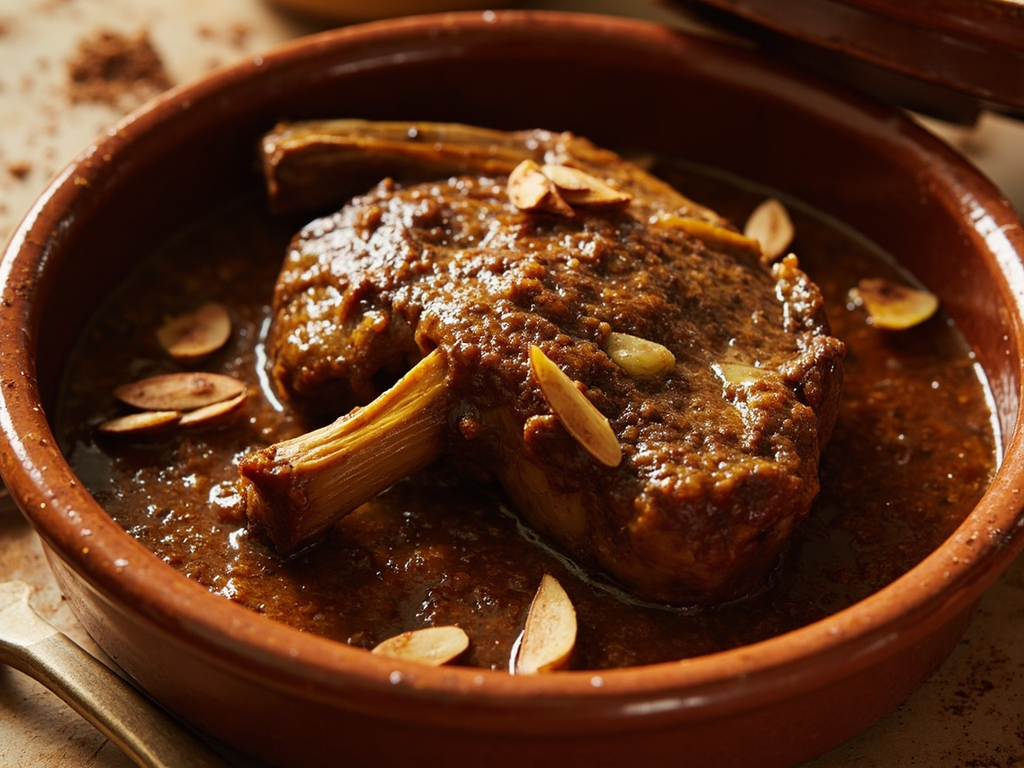
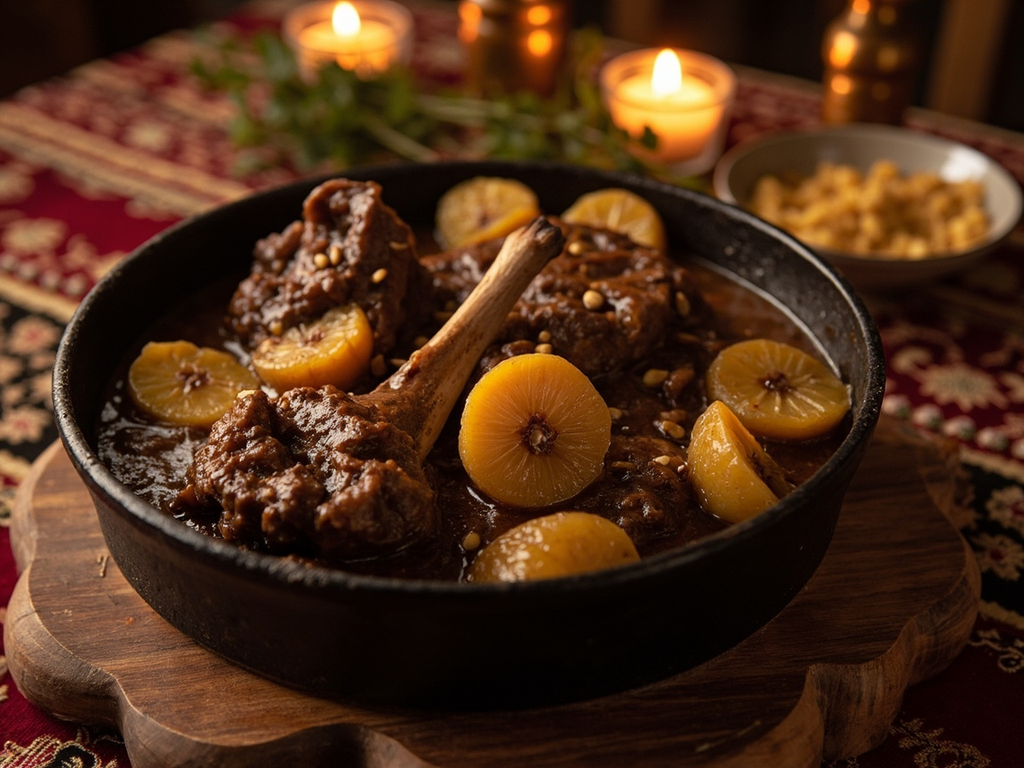
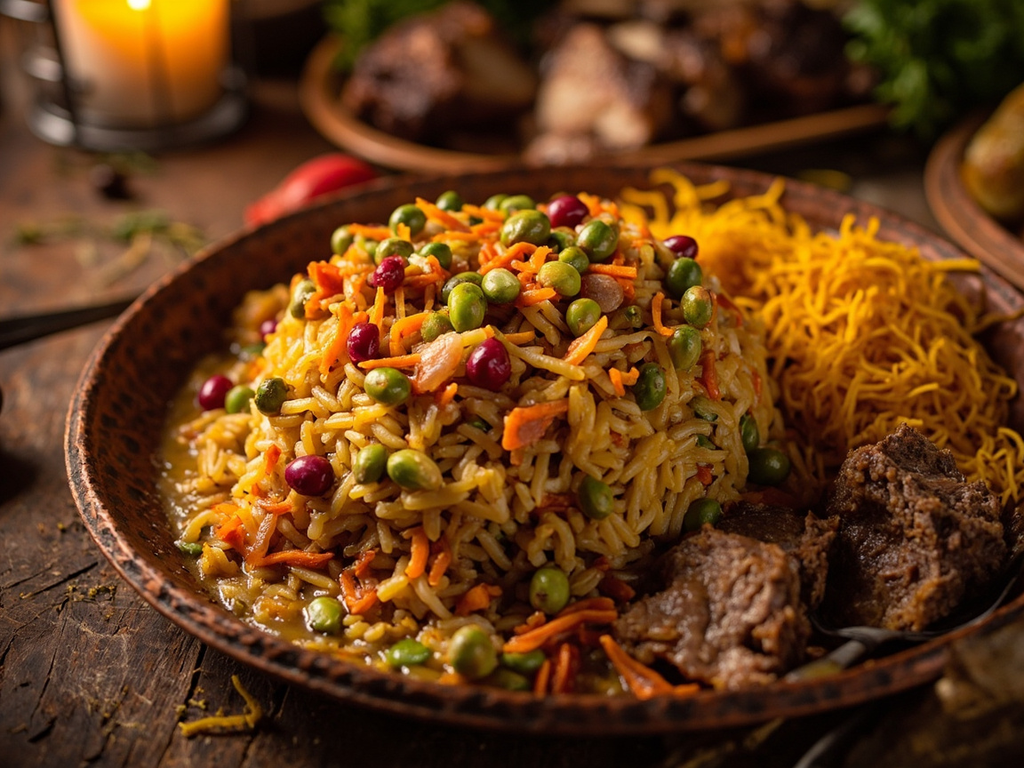
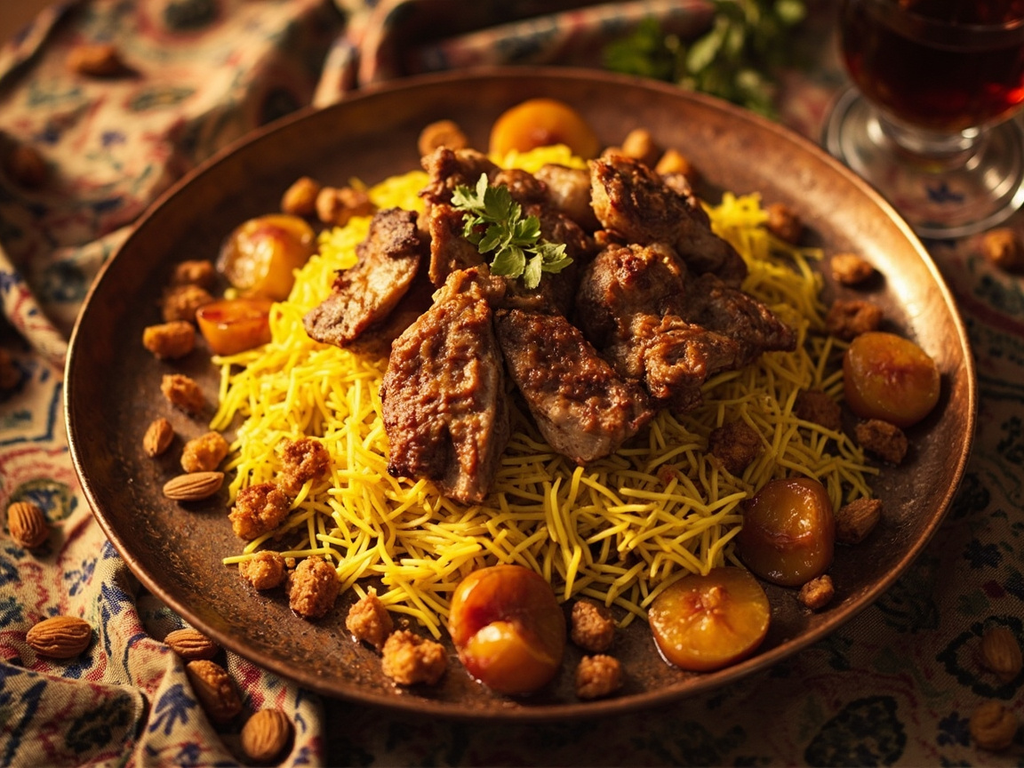
Saffron-scented rice cooked with seared lamb, caramelized quinces, raisins, and almonds, all seasoned with cumin and coriander. A golden, generous celebratory dish worthy of the Khwarezm-shahid court receptions.
When the master of Gurgandj invites the grammarians to his table — and he does, for princes love to adorn their banquets with fine wit — the palaw is served in a copper dish as wide as a shield. The rice must be dry, each grain separate from the other like the letters of a well-calligraphed word. The quinces, you cut them into thick quarters and sweat them in roghan until they turn golden — it is their natural honey that perfumes the whole pot. I have tasted this palaw in Gurgandj, in Bukhara, and as far as the gates of Baghdad; nowhere does it have the same sweetness as at home, in Khwarezm, where the quinces come from the gardens of the river.
- •Long-grain rice — a generous measure (base)
- •Lamb shoulder or leg — a fine piece, cut up (meat)
- •Quinces — two ripe fruits (seasonal fruit)
- •Raisins (kishmish) — a handful (sweetness)
- •Whole almonds — a handful (crunch)
- •Onion — one large (aromatic base)
- •Cumin (zira) — a good pinch (signature spice)
- •Coriander seeds — a pinch (aroma)
- •Saffron — a few threads (color and aroma)
- •Clarified butter (roghan) — one ladle (cooking)
- •Salt — to taste (seasoning)
- •Water or broth — sufficient (rice cooking)
Palaw with Quince and Lamb
Saffron-scented rice cooked with seared lamb, caramelized quinces, raisins, and almonds, all seasoned with cumin and coriander. A golden, generous celebratory dish worthy of the Khwarezm-shahid court receptions.
Why this dish? Pilaf is the honor dish of Khwarezm, served at feasts and receptions. Al-Zamakhshari, despite his asceticism, frequented the scholarly circles of Gurgandj (capital of Khwarezm) and Bukhara, where learned banquets included a fruit palaw. Quince, abundant in Central Asian orchards, brings an autumnal, fragrant note that distinguishes this pilaf from more austere versions.
When the master of Gurgandj invites the grammarians to his table — and he does, for princes love to adorn their banquets with fine wit — the palaw is served in a copper dish as wide as a shield. The rice must be dry, each grain separate from the other like the letters of a well-calligraphed word. The quinces, you cut them into thick quarters and sweat them in roghan until they turn golden — it is their natural honey that perfumes the whole pot. I have tasted this palaw in Gurgandj, in Bukhara, and as far as the gates of Baghdad; nowhere does it have the same sweetness as at home, in Khwarezm, where the quinces come from the gardens of the river.
Ingredients (period version)
- Long-grain rice — a generous measure (base)
- Lamb shoulder or leg — a fine piece, cut up (meat)
- Quinces — two ripe fruits (seasonal fruit)
- Raisins (kishmish) — a handful (sweetness)
- Whole almonds — a handful (crunch)
- Onion — one large (aromatic base)
- Cumin (zira) — a good pinch (signature spice)
- Coriander seeds — a pinch (aroma)
- Saffron — a few threads (color and aroma)
- Clarified butter (roghan) — one ladle (cooking)
- Salt — to taste (seasoning)
- Water or broth — sufficient (rice cooking)
Ingredients
- Basmati rice — 300 g (base)
- Lamb (shoulder or shank), cubed — 500 g (meat)
- Quinces — 2 medium (fruit)
- Golden raisins — 50 g (sweetness)
- Blanched whole almonds — 40 g (garnish)
- Yellow onion — 1 large (base)
- Ground cumin — 1.5 tsp (spice)
- Ground coriander — 1 tsp (aroma)
- Saffron threads — a pinch (0.2 g) (color)
- Ghee or vegetable oil — 3 tbsp (cooking)
- Salt — 1.5 tsp (seasoning)
- Hot water — 500 ml (rice cooking)
Method
- Rinse the basmati rice in cold water until clear, then soak for 30 minutes. Drain.
- Infuse the saffron in 3 tbsp hot water.
- Peel the quinces, cut into thick wedges, and remove the core.
- In a heavy-bottomed pot, heat the ghee. Brown the lamb pieces on all sides, then set aside.
- In the same pot, sauté the sliced onion until golden. Add cumin and coriander, stir for 30 seconds.
- Return the lamb, add the quince wedges and raisins. Pour in hot water, salt, bring to a boil, then cover and simmer for 40 minutes.
- Remove the meat, quinces, and raisins with a slotted spoon. Keep warm.
- Bring the broth to a boil, spread the drained rice evenly on top. Pour the saffron water over. Cook on high heat uncovered until the water is absorbed.
- Reduce heat to minimum, arrange the meat and quinces on the rice, cover tightly (place a towel under the lid), and steam for 25 minutes.
- Toast the almonds in a dry pan until golden. To serve, mound the rice in a dome, arrange meat and quinces around, and sprinkle with toasted almonds.
How it was made : Pilaf (palaw) is attested in Central Asia well before the 12th century. Medieval Arabic and Persian sources mention rice with fruits (quince, pomegranate, apricot) served at princely banquets. The steaming technique (dam) is characteristic of Central Asian tradition. Quince, cultivated since antiquity in the region, was a prestigious fruit in Persianate cuisine.
The contemporary twist : Serve as individual domes by inverting a small bowl onto each plate, with a caramelized quince wedge as a crown and a visible saffron thread.
Sources : Al-Baghdadi, Muhammad ibn al-Hasan, Kitab al-Tabikh, 13th century · Mazzaoui, Michel, 'Food and Foodways in Medieval Central Asia', in A Taste of Thyme, 2000 · Zubaida, Sami & Tapper, Richard (eds.), A Taste of Thyme: Culinary Cultures of the Middle East, 2000
Al-Zamakhshari · Charactorium