 flip
flipPea and Leek Pulmentum
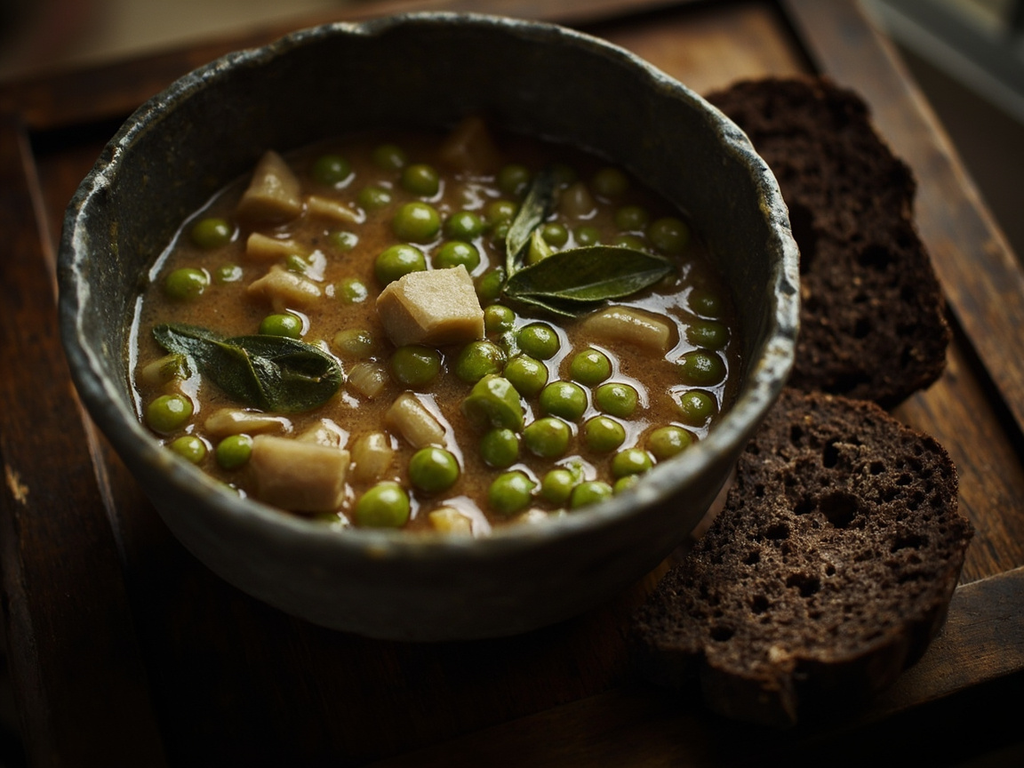
Pea and Leek Pulmentum
Why this dish? This was the everyday fare of a Dominican friar: an economical and filling legume porridge that sustained Albert and his students through the evening between lectures in Paris or Cologne. With the rule restricting meat, dried peas were the great source of strength for monks.
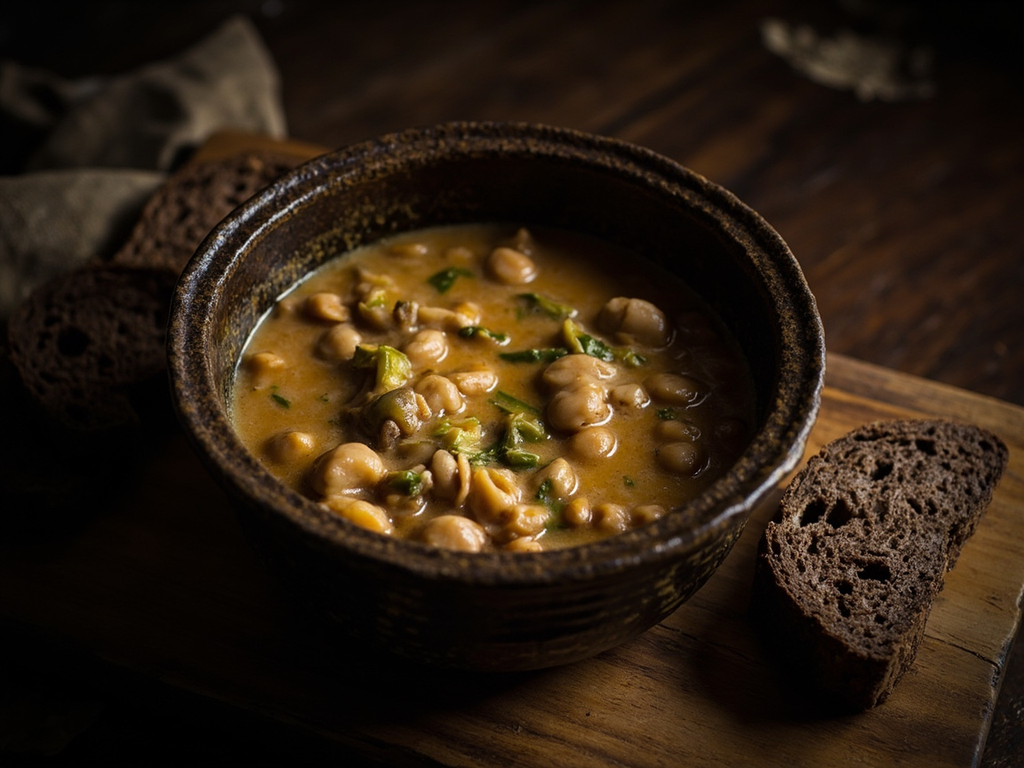
A thick purée of split peas simmered with leeks, onion, and garden herbs, bound with a drizzle of oil and spiced with pepper. Simple, warm, comforting: the daily dish on lean days.
Draw near, and see what the sobriety of our Order puts in the bowl. The pea, you see, is of a warm and temperate nature: it restores the body's strength without weighing it down toward base things, which suits the mind that wishes to study. We soak it from Vespers, then let it melt slowly with the leek from our garden and a sprig of sage, until it falls apart like a paste. Eat it hot, in silence, while the brother reader nourishes your soul: for with the belly appeased, the intellect rises more easily toward Him who ordered all things.
- •Dried peas (whole or split) — two handfuls per diner (nourishing base)
- •Leeks — a few (aromatic vegetable)
- •Onion — one (base)
- •Oil or rendered bacon fat (depending on the day) — a drizzle (fat binder)
- •Sage, parsley, lovage — a bunch from the garden (flavor)
- •Pepper, salt — to taste (seasoning)
Pea and Leek Pulmentum
A thick purée of split peas simmered with leeks, onion, and garden herbs, bound with a drizzle of oil and spiced with pepper. Simple, warm, comforting: the daily dish on lean days.
Why this dish? This was the everyday fare of a Dominican friar: an economical and filling legume porridge that sustained Albert and his students through the evening between lectures in Paris or Cologne. With the rule restricting meat, dried peas were the great source of strength for monks.
Draw near, and see what the sobriety of our Order puts in the bowl. The pea, you see, is of a warm and temperate nature: it restores the body's strength without weighing it down toward base things, which suits the mind that wishes to study. We soak it from Vespers, then let it melt slowly with the leek from our garden and a sprig of sage, until it falls apart like a paste. Eat it hot, in silence, while the brother reader nourishes your soul: for with the belly appeased, the intellect rises more easily toward Him who ordered all things.
Ingredients (period version)
- Dried peas (whole or split) — two handfuls per diner (nourishing base)
- Leeks — a few (aromatic vegetable)
- Onion — one (base)
- Oil or rendered bacon fat (depending on the day) — a drizzle (fat binder)
- Sage, parsley, lovage — a bunch from the garden (flavor)
- Pepper, salt — to taste (seasoning)
Ingredients
- Split peas — 250 g (nourishing base)
- Leeks — 2 (aromatic vegetable)
- Onion — 1 (base)
- Olive oil — 3 tbsp (fat binder)
- Fresh sage — 4 leaves (flavor)
- Parsley and lovage (or celery) — 1 small bunch (flavor)
- Pepper and salt — to taste (seasoning)
Method
- Soak the split peas for 1 to 2 hours (optional but speeds cooking).
- Slice the onion and leeks; sweat them gently in the oil without browning.
- Add the drained peas and cover with water by three fingers. Bring to a simmer.
- Let simmer for 45 min to 1 h, stirring, until the peas break down into a thick purée.
- Add the chopped sage, parsley, and lovage at the end of cooking. Season generously with salt and pepper.
- Serve very hot, optionally with a drizzle of oil and brown bread.
How it was made : In medieval convents, legume porridges (peas, broad beans, lentils) formed the basis of the lean diet. They were cooked for hours in large copper cauldrons, without the precision of our scales: the amount of water and herbs was judged by eye and feel. Bacon fat appeared only on permitted meat days.
The contemporary twist : A drizzle of sage-fried oil and some toasted spelt bread croutons transform the humble pitance into a bistro-style velouté.
Sources : Humbert de Romans, Instructions pour les frères convers et la vie au réfectoire (13th c.) · Albert le Grand, De vegetabilibus et plantis (ca. 1260)
Albert the Great · Charactorium