 flip
flipWhite Leek and Almond Porée for a Lean Day
White Leek and Almond Porée for a Lean Day
Why this dish? The pontificate of Alexander IV was marked by the fasts that the Church imposed on everyone, and first of all on its leader. On lean days, his table forwent milk and meat: the leek porée bound with almond milk was the learned staple of a prelate who wished to set an example of abstinence without sacrificing refinement.
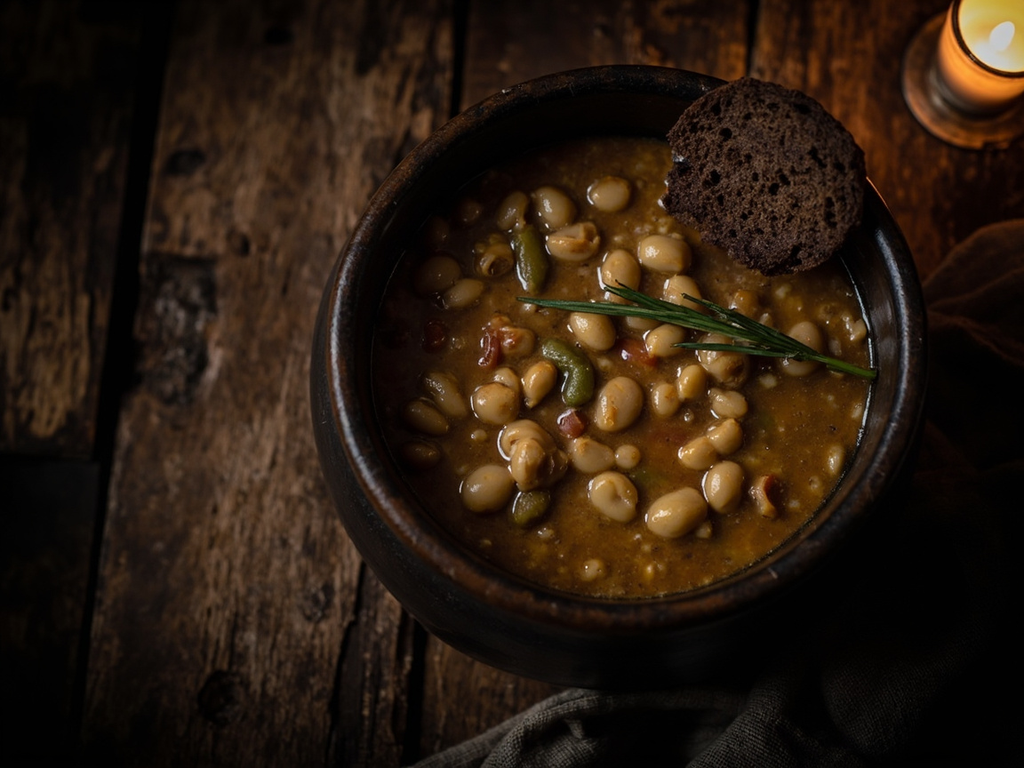
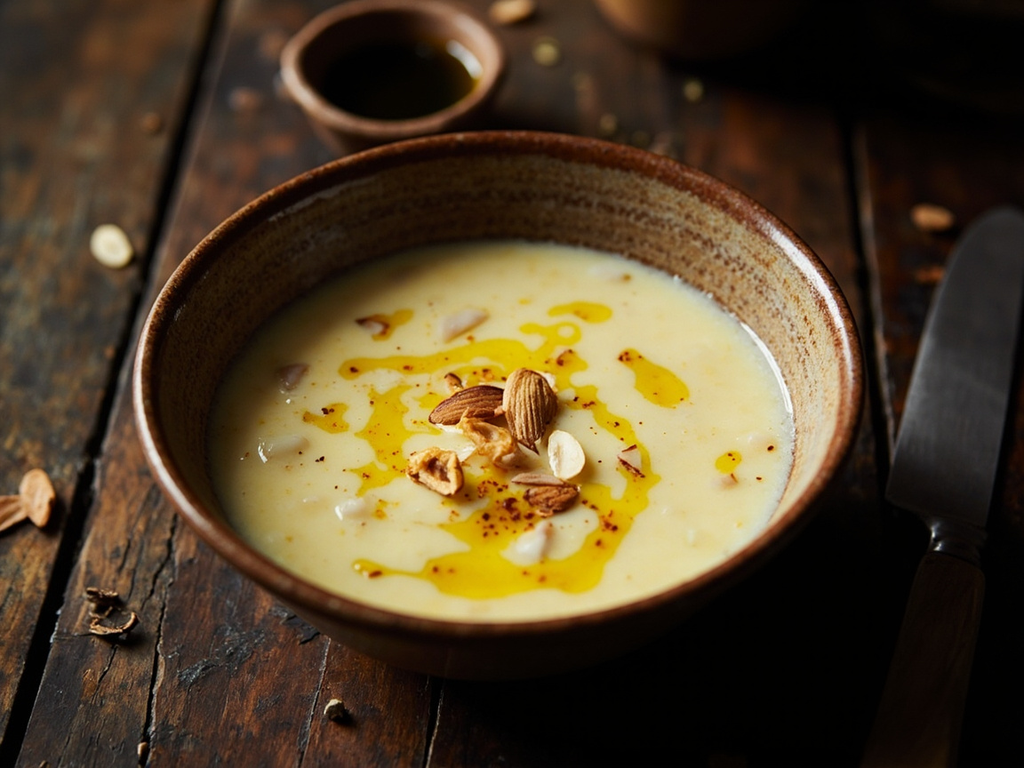
A mild, white pottage of melted leeks, bound not with cream — forbidden during Lent — but with pounded almond milk. Simple, nourishing, and compliant with abstinence, it warms the long winter offices.
Approach, and fear not the simplicity of this dish. On the days when Holy Church commands lean fare, We set aside the milk of beasts and flesh, but not measure nor good taste: let the almonds be pounded in the mortar until they yield their milk, and let the leeks melt therein gently, without haste, as the soul humbles itself before God. A pinch of saffron lends it the color of altar gold. Eat, and let this pottage remind you that fasting nourishes the spirit as much as it deprives the body.
- •Leeks (especially the white part) — a good bunch (base vegetable, melting)
- •Sweet almonds — two handfuls (binding almond milk (lean substitute for milk))
- •White breadcrumbs — a crust (thickener)
- •Saffron — a few threads (color and fragrance, mark of rank)
- •Salt — to taste (seasoning)
- •Olive oil — a drizzle (Lenten fat)
White Leek and Almond Porée for a Lean Day
A mild, white pottage of melted leeks, bound not with cream — forbidden during Lent — but with pounded almond milk. Simple, nourishing, and compliant with abstinence, it warms the long winter offices.
Why this dish? The pontificate of Alexander IV was marked by the fasts that the Church imposed on everyone, and first of all on its leader. On lean days, his table forwent milk and meat: the leek porée bound with almond milk was the learned staple of a prelate who wished to set an example of abstinence without sacrificing refinement.
Approach, and fear not the simplicity of this dish. On the days when Holy Church commands lean fare, We set aside the milk of beasts and flesh, but not measure nor good taste: let the almonds be pounded in the mortar until they yield their milk, and let the leeks melt therein gently, without haste, as the soul humbles itself before God. A pinch of saffron lends it the color of altar gold. Eat, and let this pottage remind you that fasting nourishes the spirit as much as it deprives the body.
Ingredients (period version)
- Leeks (especially the white part) — a good bunch (base vegetable, melting)
- Sweet almonds — two handfuls (binding almond milk (lean substitute for milk))
- White breadcrumbs — a crust (thickener)
- Saffron — a few threads (color and fragrance, mark of rank)
- Salt — to taste (seasoning)
- Olive oil — a drizzle (Lenten fat)
Ingredients
- Leeks — 4 large, white parts sliced (base vegetable)
- Blanched almonds — 120 g (homemade almond milk)
- Hot water — 600 ml (for almond milk)
- Country breadcrumbs — 2 slices (thickener)
- Saffron — 1 generous pinch (color and fragrance)
- Olive oil — 3 tbsp (fat)
- Salt — to taste (seasoning)
Method
- Blend the almonds with hot water, let steep 20 min, then strain: you have almond milk.
- Gently sweat the sliced leeks in olive oil without browning, 15 min.
- Infuse the saffron in a little warm almond milk.
- Pour the almond milk over the leeks, add the crumbled bread and saffron, season with salt.
- Simmer for 15 min, then blend or coarsely mash for a rustic texture. Serve very hot.
How it was made : Almond milk was the king ingredient of medieval Lenten kitchens: it kept better than animal milk and replaced it on days of abstinence. The porée (of leeks or chard) appears in almost all medieval cookbooks as a staple dish.
The contemporary twist : A few toasted slivered almonds and a drizzle of new olive oil at plating: the monastic whiteness enhanced by a golden crunch.
Sources : Liber de coquina (cuisine of Angevin southern Italy, late 13th–early 14th c.) · Regimen sanitatis Salernitanum (health regimen of the Salerno School)
Alexander IV · Charactorium