 flip
flipPane e acqua — black penitential bread
Pane e acqua — black penitential bread
Why this dish? Angela often lived on bread and water, as penance and to unite herself with Christ's suffering. This dark bread, with its dense crumb and bitter bran, is the companion of her most austere days, the one she dipped in the fountain water when she wanted no other table.
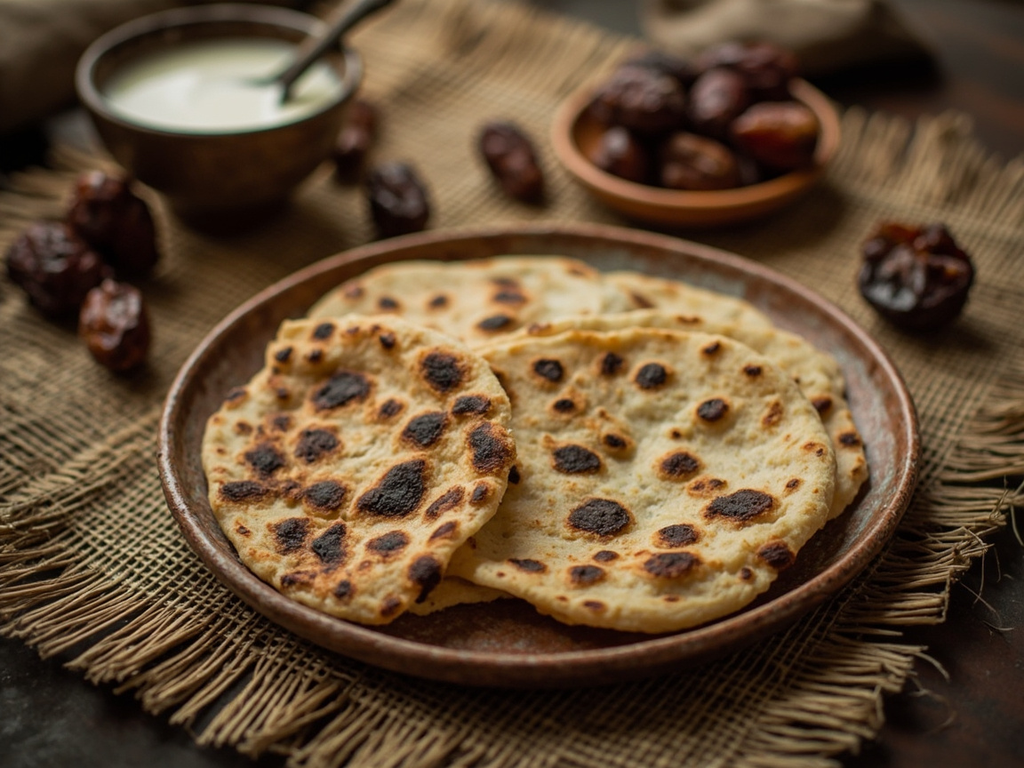
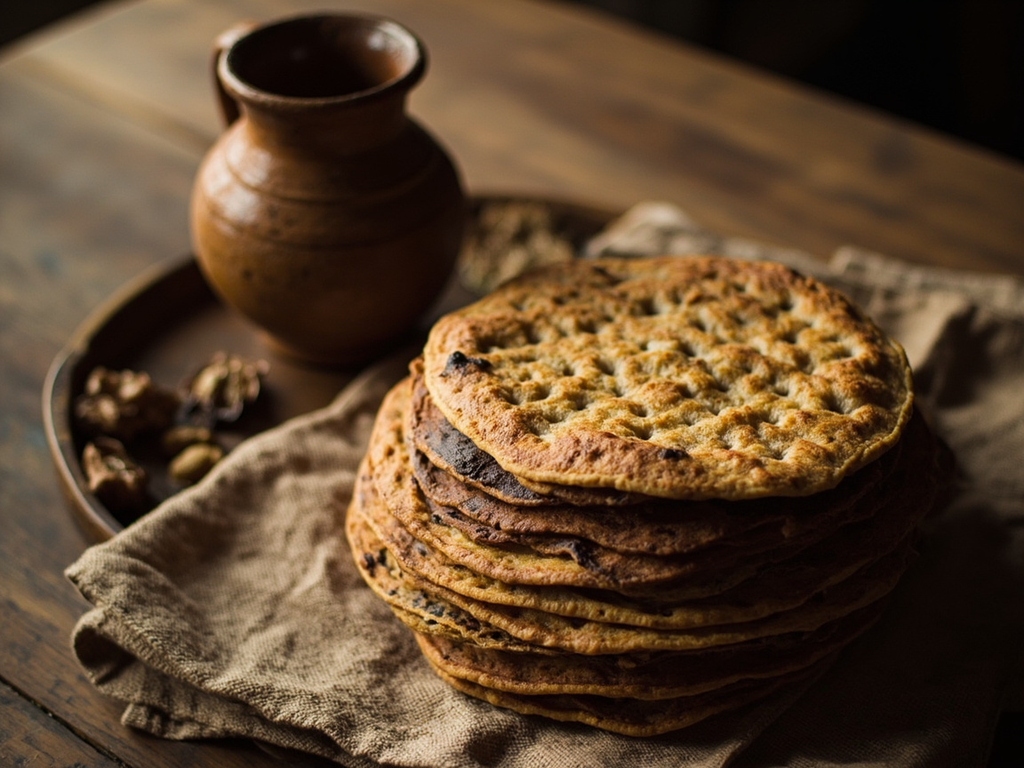
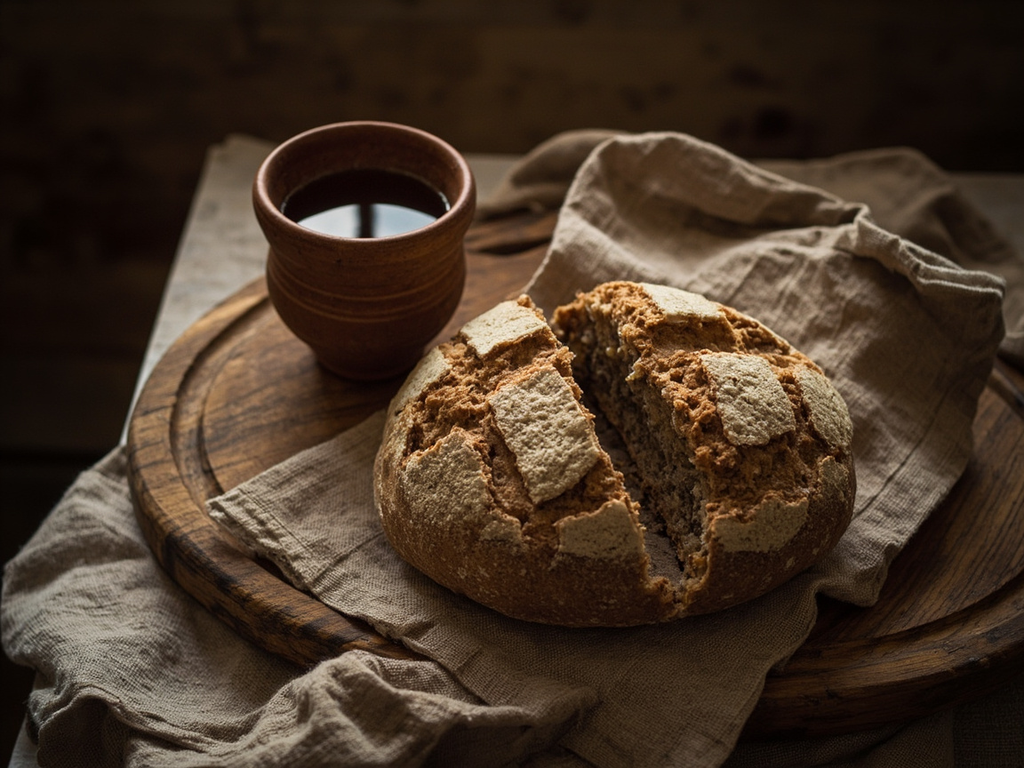
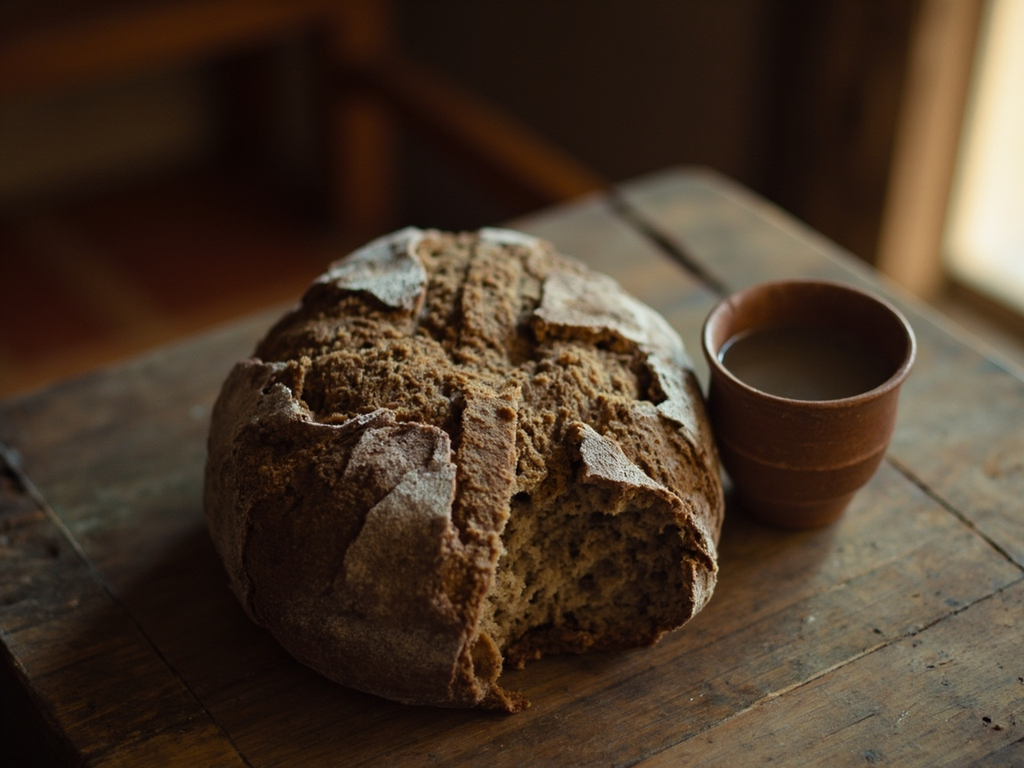
A rustic bread of whole wheat and rye, with nothing but flour, sourdough, salt, and water. Baked into a thick round loaf, it keeps for several days and is eaten as is or softened in water. Frugality made food.
See, this dark bread is all my table on penitential days, and I want no other. I would break it into small pieces, let them soften in the fountain water, and each mouthful was a remembrance of Christ's hunger on the cross. Do not think, soul, that this is misery: whoever is content with little tastes a sweetness that the rich ignore at their banquet. Eat slowly, give thanks, and let your hunger become prayer.
- •Stone-ground whole wheat flour — the bulk of the dough (base)
- •Rye flour — one part to three (color and bitterness)
- •Sourdough starter — a good piece saved from the oven (leavening)
- •Salt — a measured pinch (seasoning)
- •Fountain water — as needed (binding)
Pane e acqua — black penitential bread
A rustic bread of whole wheat and rye, with nothing but flour, sourdough, salt, and water. Baked into a thick round loaf, it keeps for several days and is eaten as is or softened in water. Frugality made food.
Why this dish? Angela often lived on bread and water, as penance and to unite herself with Christ's suffering. This dark bread, with its dense crumb and bitter bran, is the companion of her most austere days, the one she dipped in the fountain water when she wanted no other table.
See, this dark bread is all my table on penitential days, and I want no other. I would break it into small pieces, let them soften in the fountain water, and each mouthful was a remembrance of Christ's hunger on the cross. Do not think, soul, that this is misery: whoever is content with little tastes a sweetness that the rich ignore at their banquet. Eat slowly, give thanks, and let your hunger become prayer.
Ingredients (period version)
- Stone-ground whole wheat flour — the bulk of the dough (base)
- Rye flour — one part to three (color and bitterness)
- Sourdough starter — a good piece saved from the oven (leavening)
- Salt — a measured pinch (seasoning)
- Fountain water — as needed (binding)
Ingredients
- Whole wheat flour (T150) — 300 g (base)
- Rye flour — 150 g (color and bitterness)
- Active sourdough starter — 100 g (leavening)
- Fine salt — 9 g (seasoning)
- Warm water — 320 ml (binding)
Method
- Mix the two flours in a large bowl, make a well, and dissolve the starter with the warm water.
- Add the salt, then knead for 10 minutes until a supple, slightly sticky dough forms.
- Cover with a damp cloth and let rise 4 to 6 hours at room temperature, until doubled.
- Gently deflate, shape into a tight ball, place on a floured baking sheet, and let rest for 1 hour 30 minutes.
- Score a cross on top, bake at 230 °C with a pan of water for steam, for 40 to 45 minutes.
- Cool completely on a wire rack before slicing: the crumb firms up as it cools.
How it was made : In the Middle Ages, white bread was reserved for the rich; the poor, monks, and penitents ate dark bread, mixed with bran and rye, more nutritious and cheaper. It was baked in the communal oven of the village or convent, in large loaves meant to last the week. Stale, it was revived in water, broth, or watered wine — the origin of panades and bread soups.
The contemporary twist : Served as thin grilled slices, rubbed with a garlic clove and drizzled with new olive oil: the humblest bruschetta in the world, a direct homage to the saint's bread.
Sources : Massimo Montanari, La faim et l'abondance. Histoire de l'alimentation en Europe · Le Livre des visions et instructions d'Angèle de Foligno
Angela of Foligno · Charactorium