 flip
flipPitance of Leeks and Broad Beans
Pitance of Leeks and Broad Beans
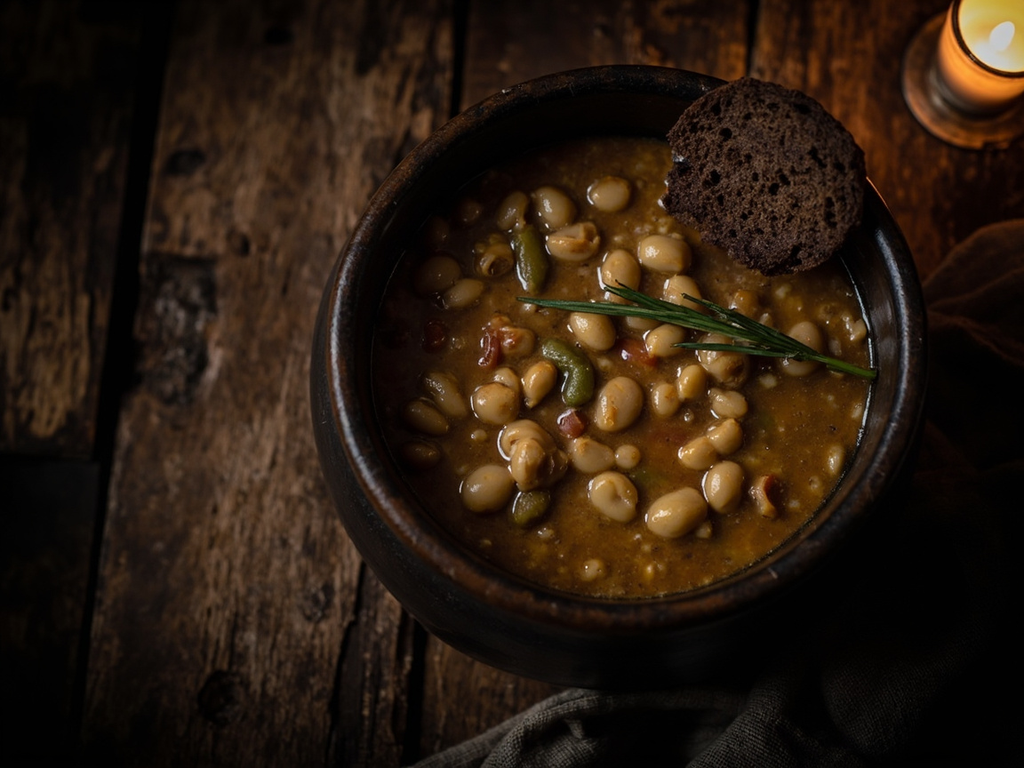
Why this dish? This is the very daily fare of Beatrice's life: a pottage of garden vegetables, sober and without meat, served in silence at the Nazareth refectory. Her Vita shows her fasting beyond the rule; but on ordinary days, this bowl of leeks and broad beans nourishes the community.
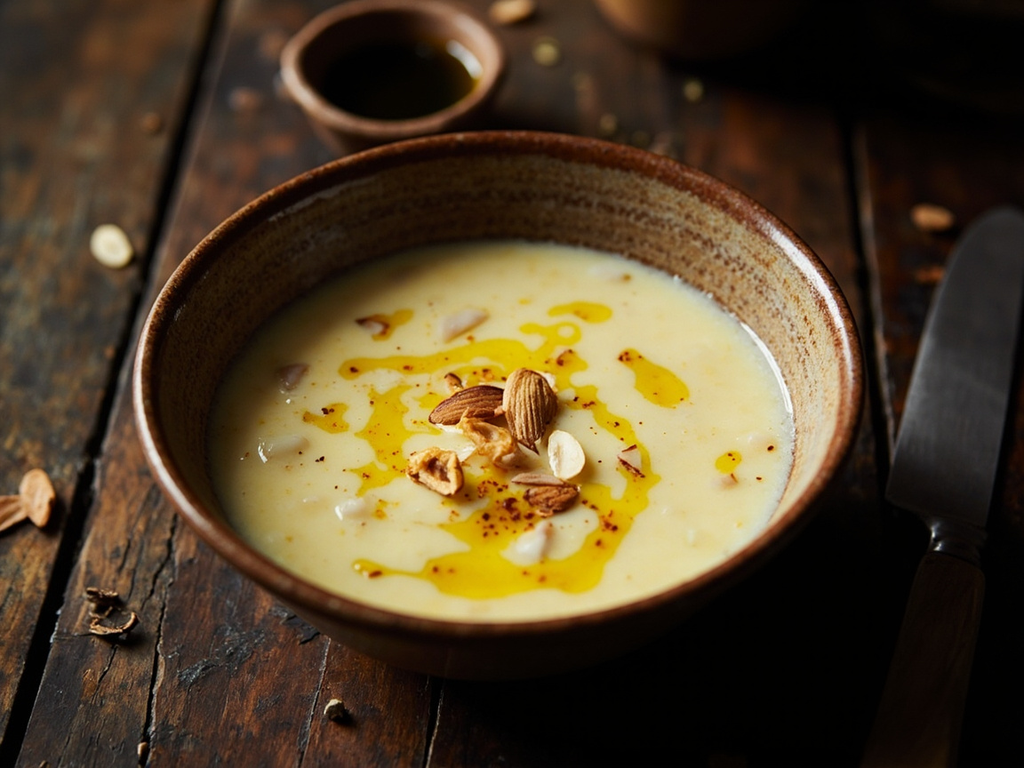
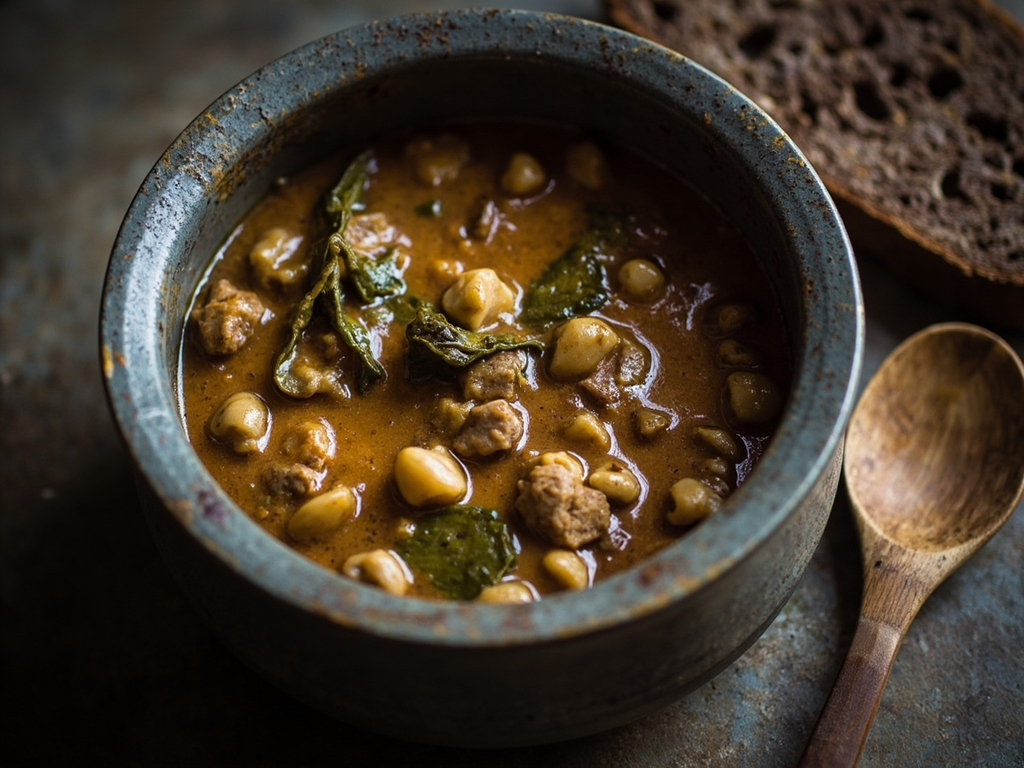
A thick pottage of leeks, soaked broad beans, and a few cabbage leaves, bound with rye breadcrumbs and perfumed with herbs from the cloister. Strengthening, humble, perfectly monastic.
In God's name, come and look at my bowl: you will find neither flesh nor animal fat there, for our Rule reserves them for bedridden sisters. I have the garden leeks split, the beans soaked since before compline, and everything cooks gently while terce rings. A handful of sage, a little rye crumbs to thicken, and here is enough to last until vespers. Eat in silence, my child, and let your hunger remind you of Him who satisfies you.
- •Garden leeks — a good armful (sweet and melting base)
- •Dried broad beans — a full bowl, soaked overnight (body and protein)
- •Green cabbage leaves — a few (greens and bite)
- •Stale rye breadcrumbs — two slices (thickener)
- •Walnut oil — a drizzle (lean fat, outside Lent)
- •Cloister sage and parsley — a handful (flavor)
- •Salt — to taste (seasoning)
Pitance of Leeks and Broad Beans
A thick pottage of leeks, soaked broad beans, and a few cabbage leaves, bound with rye breadcrumbs and perfumed with herbs from the cloister. Strengthening, humble, perfectly monastic.
Why this dish? This is the very daily fare of Beatrice's life: a pottage of garden vegetables, sober and without meat, served in silence at the Nazareth refectory. Her Vita shows her fasting beyond the rule; but on ordinary days, this bowl of leeks and broad beans nourishes the community.
In God's name, come and look at my bowl: you will find neither flesh nor animal fat there, for our Rule reserves them for bedridden sisters. I have the garden leeks split, the beans soaked since before compline, and everything cooks gently while terce rings. A handful of sage, a little rye crumbs to thicken, and here is enough to last until vespers. Eat in silence, my child, and let your hunger remind you of Him who satisfies you.
Ingredients (period version)
- Garden leeks — a good armful (sweet and melting base)
- Dried broad beans — a full bowl, soaked overnight (body and protein)
- Green cabbage leaves — a few (greens and bite)
- Stale rye breadcrumbs — two slices (thickener)
- Walnut oil — a drizzle (lean fat, outside Lent)
- Cloister sage and parsley — a handful (flavor)
- Salt — to taste (seasoning)
Ingredients
- Leeks — 4 medium (base)
- Dried split broad beans — 200 g, soaked 12 h (body)
- Green cabbage — 4 leaves (greens)
- Stale rye bread — 2 slices (thickener)
- Walnut oil — 2 tbsp (fat)
- Fresh sage — 6 leaves (flavor)
- Flat-leaf parsley — 1 small bunch (flavor)
- Salt — to taste (seasoning)
Method
- Rinse the soaked beans, cover with cold water, and cook 40 min until they crush easily.
- Slice the leeks and cabbage, sweat them gently in walnut oil without browning.
- Combine vegetables and beans with their cooking water, add crumbled rye bread, and simmer 20 min.
- Mash roughly with a fork for a rustic pottage, season with salt, add chopped sage and parsley.
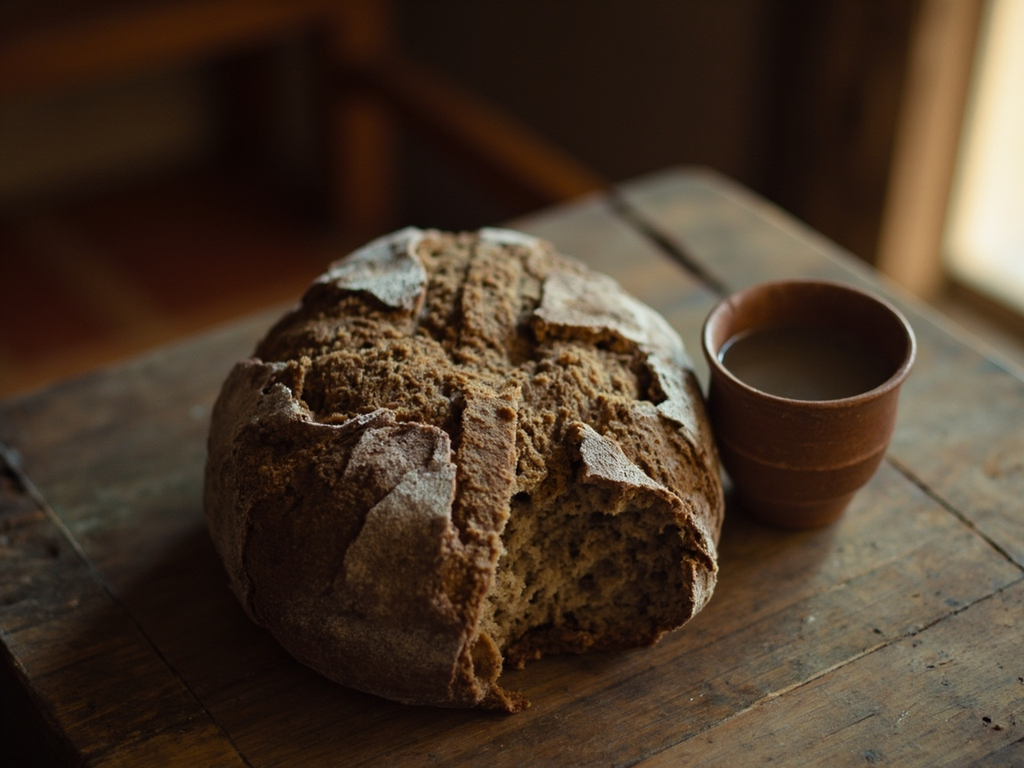
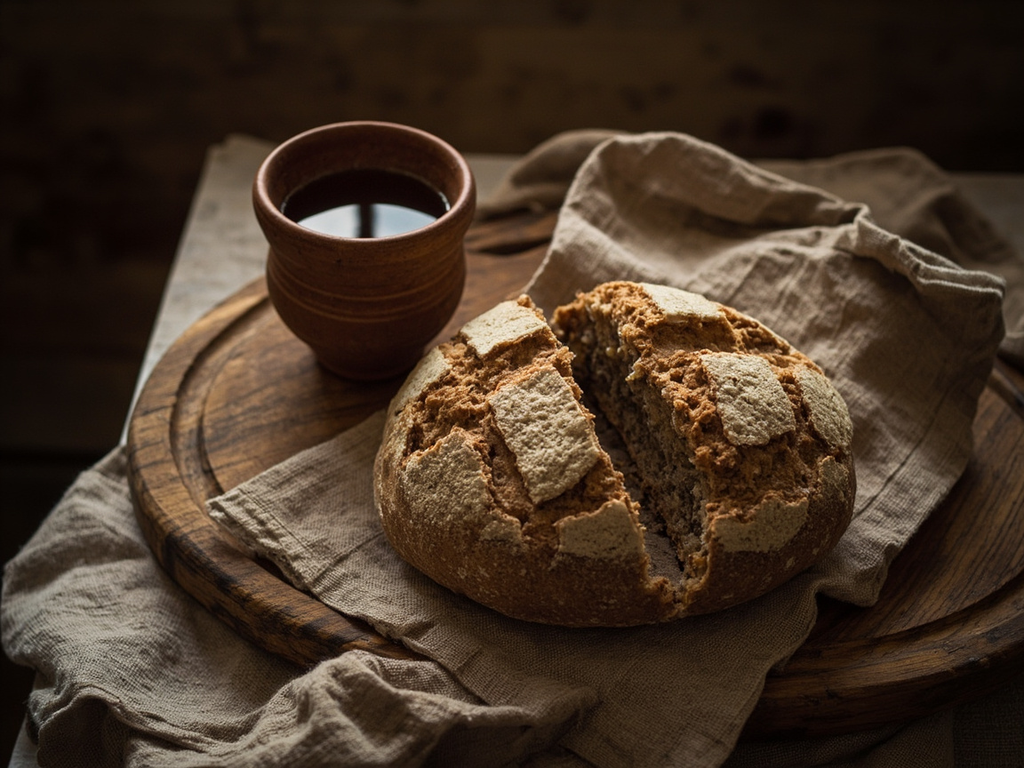
- Serve very hot, with a slice of rye bread.
How it was made : The Cistercian customary (Ecclesiastica Officia) regulates the pitance: one or two cooked vegetables, bread, no quadruped meat except in the infirmary. Broad beans, cabbage, and leeks were the pillars of the monastic garden in Brabant. The pottage was thickened with stale bread rather than flour, and flavored with herbs from the cloister garden, for lack of Eastern spices.
The contemporary twist : A drizzle of toasted walnut oil and a few oven-crisped rye croutons turn this humble dish into a winter bistro plate, without betraying anything.
Sources : Ecclesiastica Officia (Cistercian customary, 12th-13th c.) · Vita Beatricis (13th c.)
Beatrice of Nazareth · Charactorium