 flip
flipMeatless Pottage of the Scriptoria with Rue
Meatless Pottage of the Scriptoria with Rue
Why this dish? It was in the scriptoria of England and France, in the 12th-14th centuries, that copyist monks fixed my legend by illuminating bestiaries. Between pages, they ate this meatless refectory pottage, seasoned with an herb they knew well for being the basilisk's enemy: rue.
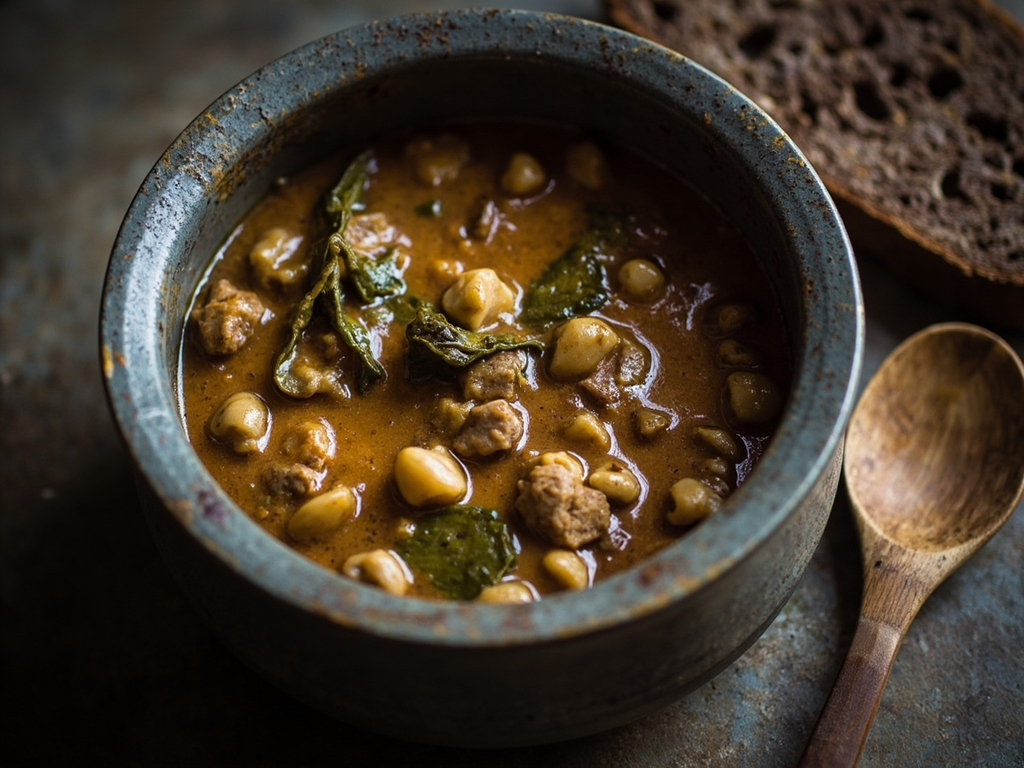
A thick soup of garden vegetables and broad beans, bound with barley, scented with a sprig of bitter rue. The daily, meatless dish of religious communities, humble but nourishing.
Approach, mortal, and lower your eyes — it's safer. See these monks bent over vellum: they trace my portrait in gold and minium, and come evening they have only this broth of leeks and beans for a feast. They throw in a sprig of rue, believing the bitterness of this herb keeps them from me. Let them believe. Eat it hot, slowly, as one copies a page: one gesture, then the next.
- •Leeks and green cabbage — a good armful (base vegetables)
- •Dried broad beans (Vicia faba) — a bowlful (protein, body)
- •Hulled barley — a handful (cereal binder)
- •Fresh rue — a single sprig (bitter signature)
- •Sage and parsley — a few leaves (herbs)
- •Salt and lard (or oil on meatless days) — according to the day (seasoning)
Meatless Pottage of the Scriptoria with Rue
A thick soup of garden vegetables and broad beans, bound with barley, scented with a sprig of bitter rue. The daily, meatless dish of religious communities, humble but nourishing.
Why this dish? It was in the scriptoria of England and France, in the 12th-14th centuries, that copyist monks fixed my legend by illuminating bestiaries. Between pages, they ate this meatless refectory pottage, seasoned with an herb they knew well for being the basilisk's enemy: rue.
Approach, mortal, and lower your eyes — it's safer. See these monks bent over vellum: they trace my portrait in gold and minium, and come evening they have only this broth of leeks and beans for a feast. They throw in a sprig of rue, believing the bitterness of this herb keeps them from me. Let them believe. Eat it hot, slowly, as one copies a page: one gesture, then the next.
Ingredients (period version)
- Leeks and green cabbage — a good armful (base vegetables)
- Dried broad beans (Vicia faba) — a bowlful (protein, body)
- Hulled barley — a handful (cereal binder)
- Fresh rue — a single sprig (bitter signature)
- Sage and parsley — a few leaves (herbs)
- Salt and lard (or oil on meatless days) — according to the day (seasoning)
Ingredients
- Leeks — 2 (base vegetable)
- Curly kale — 1/4 cabbage (base vegetable)
- Dried split broad beans — 200 g (soaked overnight) (protein)
- Pearl barley — 60 g (binder)
- Fresh rue — 1 small sprig (3-4 leaves, no more) (bitter signature)
- Sage and parsley — a few leaves (herbs)
- Olive oil or lard, salt — 2 tbsp, salt to taste (seasoning)
Method
- Gently sweat the sliced leeks and chopped cabbage in the fat, without browning.
- Add the drained broad beans and barley, cover with water (1.5 L) and bring to a simmer.
- Simmer for 1 hour until beans and barley are tender; season with salt.
- At the very end of cooking, add the sprig of rue and the herbs, let infuse 5 minutes then remove the rue.
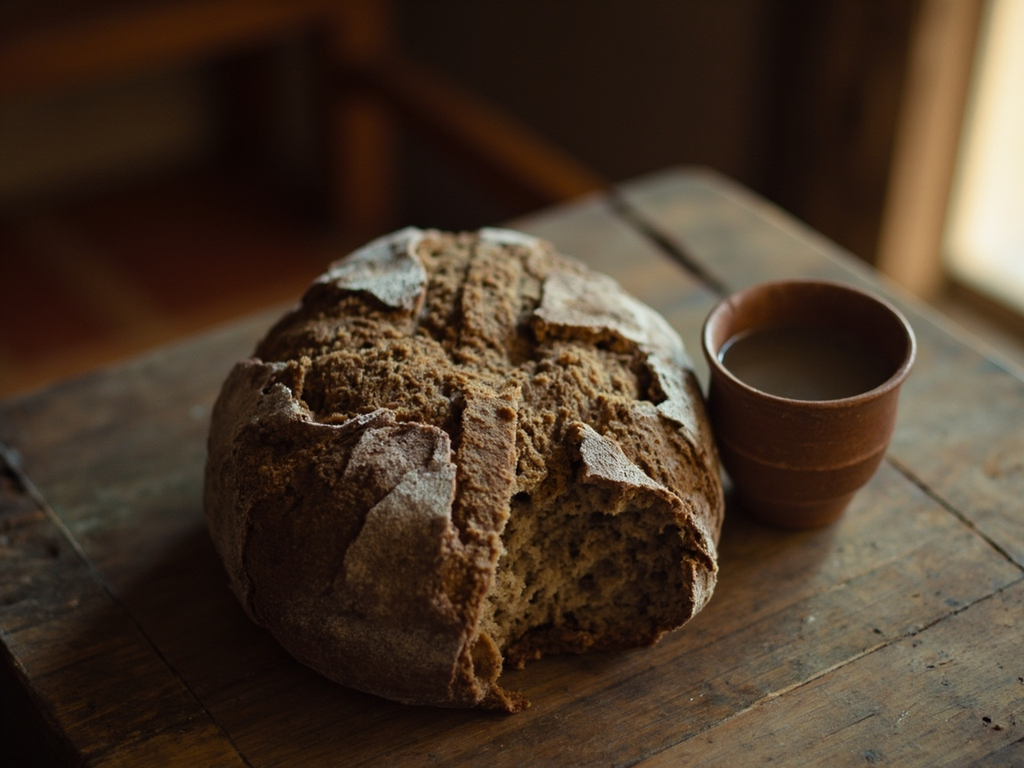
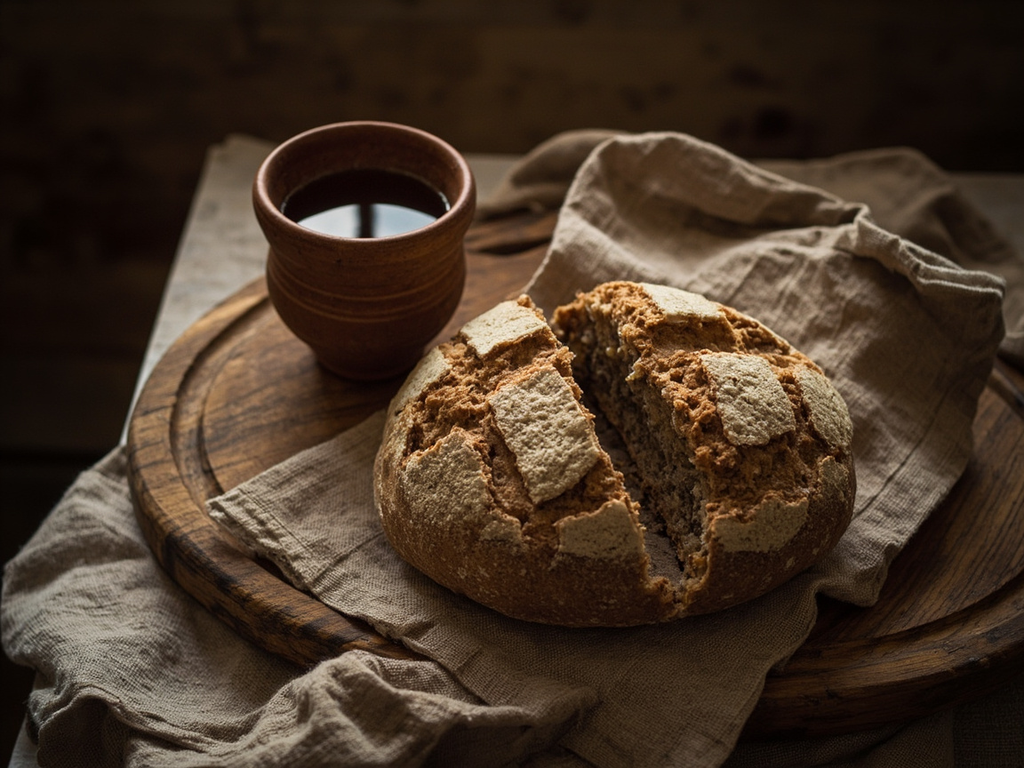
- Serve very hot in a bowl, with a hunk of dark bread.
How it was made : In abbeys, meatless pottage (without meat) was the staple of the diet, especially during Lent and on abstinence days. Rue, grown in the physic garden, served as both condiment and remedy; it was used sparingly because its bitterness is powerful. A very small amount suffices (rue is not recommended in large quantities and for pregnant women).
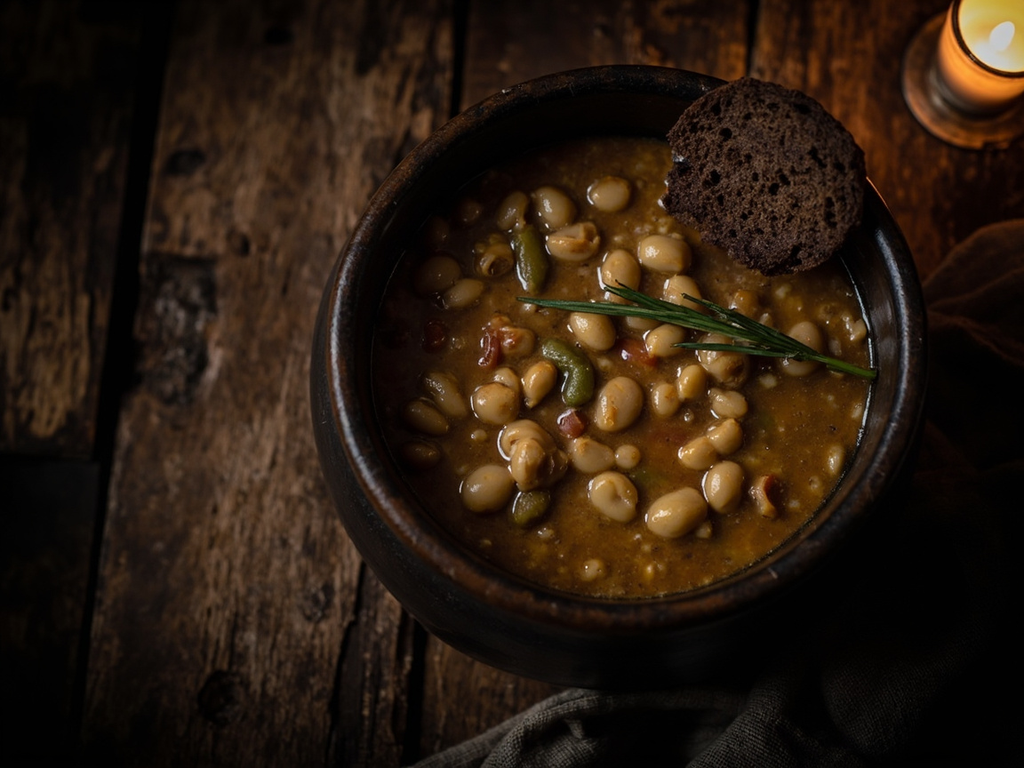
The contemporary twist : Served in a black stoneware bowl, a drizzle of green oil and a rue leaf placed as a signature: 'the copyist's broth'.
Sources : Le Ménagier de Paris (c. 1393) · Rule of Saint Benedict, ch. 39 (on monastic meals) · Pliny the Elder, Natural History (rue and the weasel facing the basilisk)
Basilisk · Charactorium