 flip
flipKhubz al-sha'ir — Barley Bread
Khubz al-sha'ir — Barley Bread
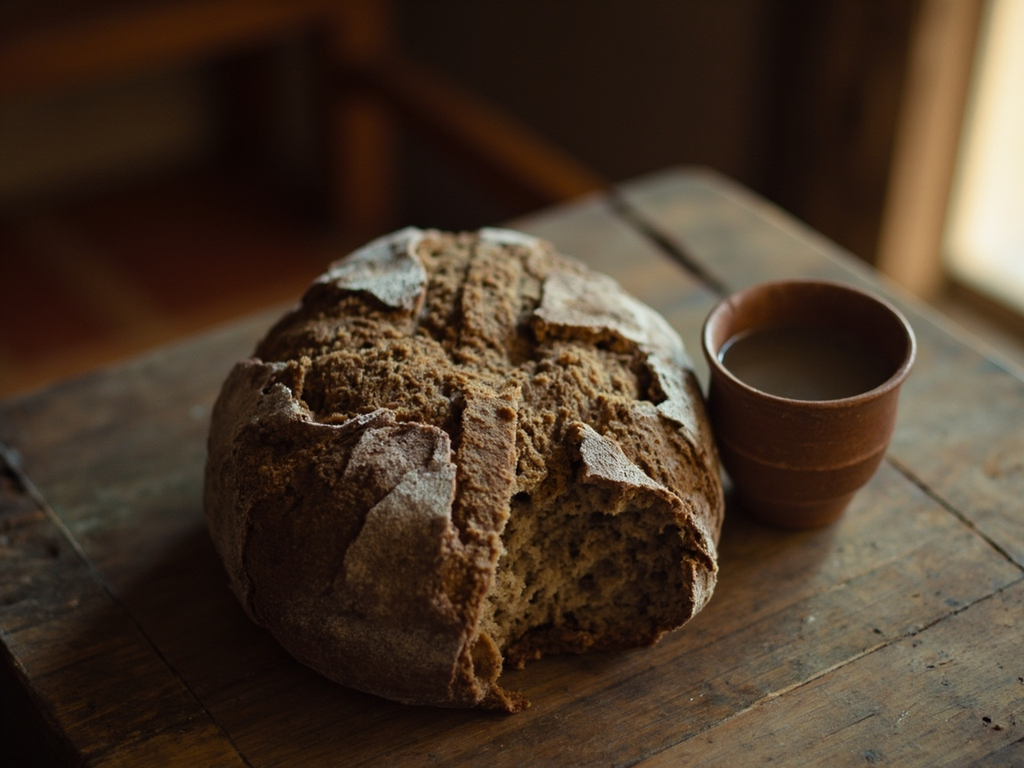
Why this dish? Al-Ghazali describes in the *Ihya' 'ulum al-din* his ascetic diet: barley bread, water, and frugality. Barley bread, coarser and more bitter than the wheat bread of the powerful in Baghdad, was the staple food of the humble and the renunciants — exactly the regimen he imposed on himself during his spiritual retreat in Damascus.
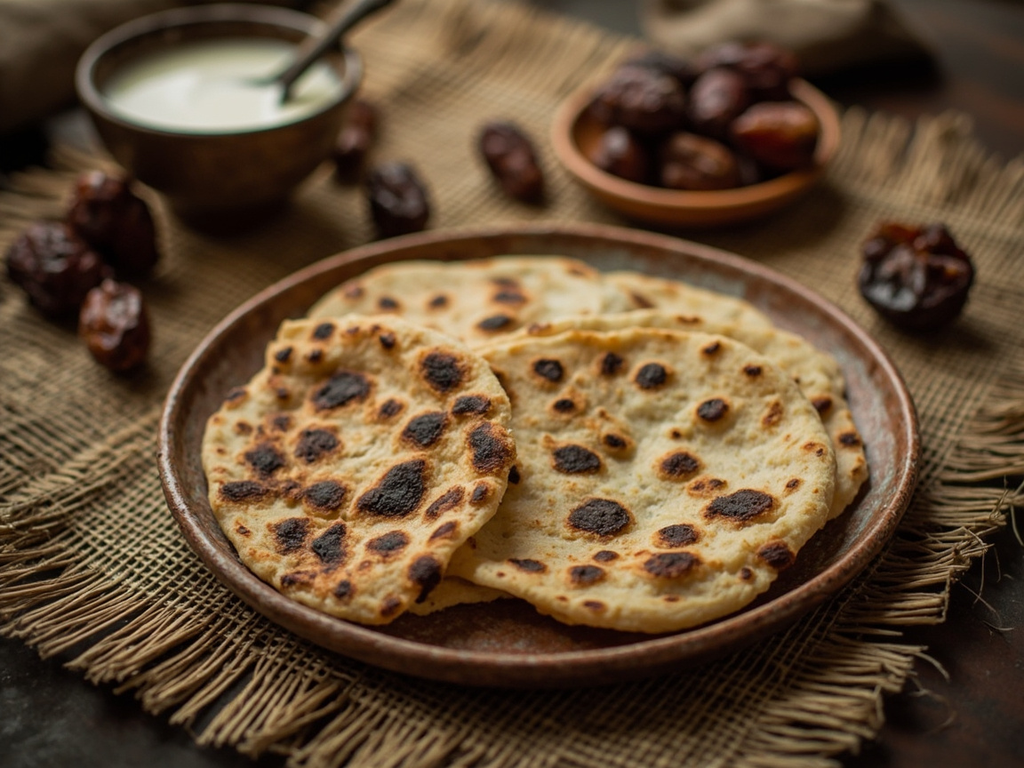
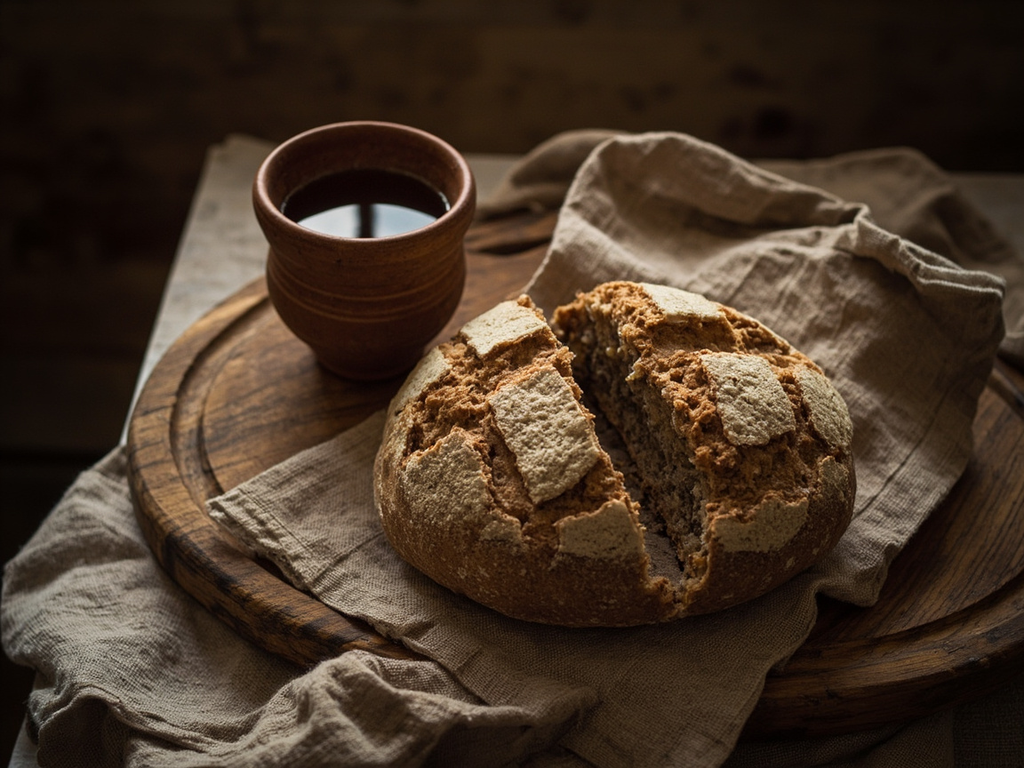
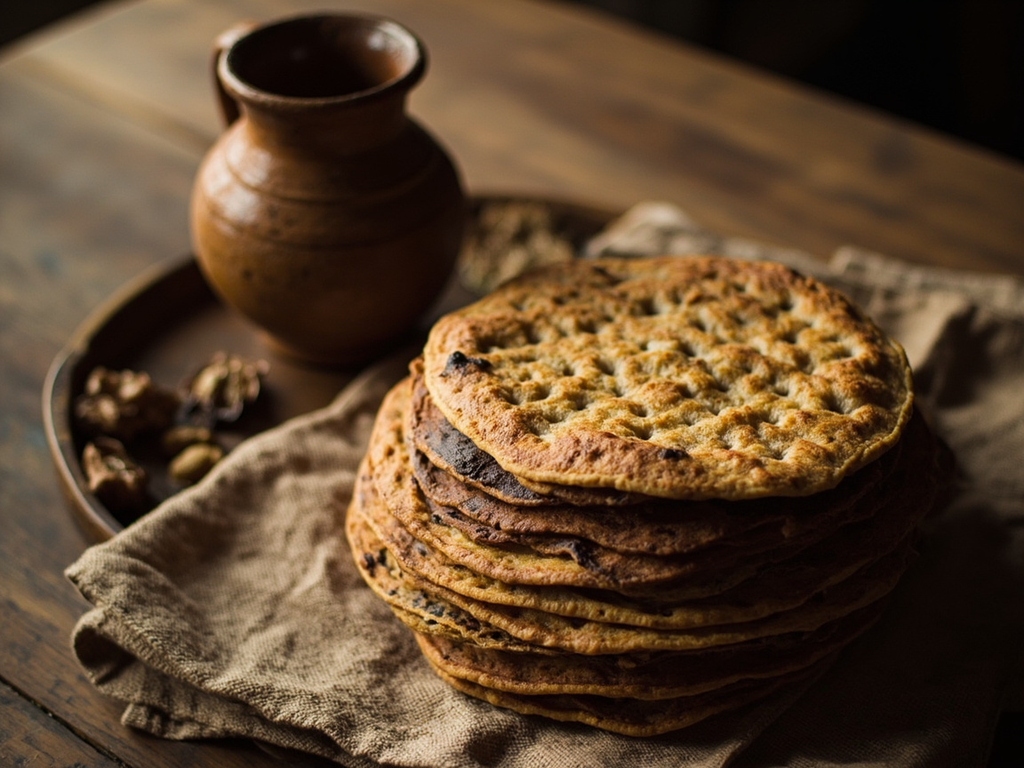
A flatbread baked on a hot griddle or against the wall of a clay oven. Dense, slightly bitter, it is broken by hand to scoop up the rest of the meal. This is the bread that accompanies everything, from morning to night.
O you who read these lines, know that this barley bread nourished my days of retreat better than the meats of emirs. I kneaded the gray flour with a little water and salt, then let the dough rest for the time of a prayer, and baked it on a hot stone. Do not seek in it the sweetness of wheat: its very bitterness is a reminder that the belly is the enemy of the soul, and that he who eats little sees clearly. Break it with your right hand, and praise the Provider.
- •Barley flour — two measures (base)
- •Well water — as needed for dough (binder)
- •Salt — a pinch (seasoning)
- •Sourdough starter from the day before — a piece (optional) (light fermentation)
Khubz al-sha'ir — Barley Bread
A flatbread baked on a hot griddle or against the wall of a clay oven. Dense, slightly bitter, it is broken by hand to scoop up the rest of the meal. This is the bread that accompanies everything, from morning to night.
Why this dish? Al-Ghazali describes in the *Ihya' 'ulum al-din* his ascetic diet: barley bread, water, and frugality. Barley bread, coarser and more bitter than the wheat bread of the powerful in Baghdad, was the staple food of the humble and the renunciants — exactly the regimen he imposed on himself during his spiritual retreat in Damascus.
O you who read these lines, know that this barley bread nourished my days of retreat better than the meats of emirs. I kneaded the gray flour with a little water and salt, then let the dough rest for the time of a prayer, and baked it on a hot stone. Do not seek in it the sweetness of wheat: its very bitterness is a reminder that the belly is the enemy of the soul, and that he who eats little sees clearly. Break it with your right hand, and praise the Provider.
Ingredients (period version)
- Barley flour — two measures (base)
- Well water — as needed for dough (binder)
- Salt — a pinch (seasoning)
- Sourdough starter from the day before — a piece (optional) (light fermentation)
Ingredients
- Barley flour — 300 g (base)
- Whole wheat flour — 100 g (helps structure (barley has little gluten))
- Warm water — about 250 ml (binder)
- Salt — 1 tsp (seasoning)
- Sourdough starter or 5 g yeast — optional (fermentation)
Method
- Mix the flours and salt, gradually add warm water, and knead for 10 minutes until a soft but firm dough forms.
- Cover and let rest for 1 to 2 hours (resting is sufficient even without yeast for a dense period-style flatbread).
- Divide into balls and roll out into discs about 1 cm thick.
- Heat a cast iron griddle or heavy pan over high heat, dry.
- Cook each flatbread for 3 to 4 minutes per side until it puffs and browns in spots.
- Stack under a cloth to keep them soft and serve warm.
How it was made : Barley grew where wheat failed: poor soils, little water. Barley bread was therefore the bread of the poor, the soldier, and the ascetic. It was baked in the tannur, a cylindrical clay oven, by slapping the flatbread against the glowing wall.
The contemporary twist : Serve it warm with a drizzle of olive oil and fresh thyme — a nod to the za'atar of the Levant that Al-Ghazali crossed.
Al-Ghazali · Charactorium