 flip
flipHalva-ye asl
Halva-ye asl
Why this dish? Tamerlane's court in Samarkand was deeply steeped in Persian culture, and sweets made from flour, honey, and nuts were served at great feasts. Clavijo reports that banquets ended with sweets and fruits. This halva, a dense, perfumed confection, embodies the Persian refinement Tamerlane cultivated to rival the greatest courts of the Islamic world.
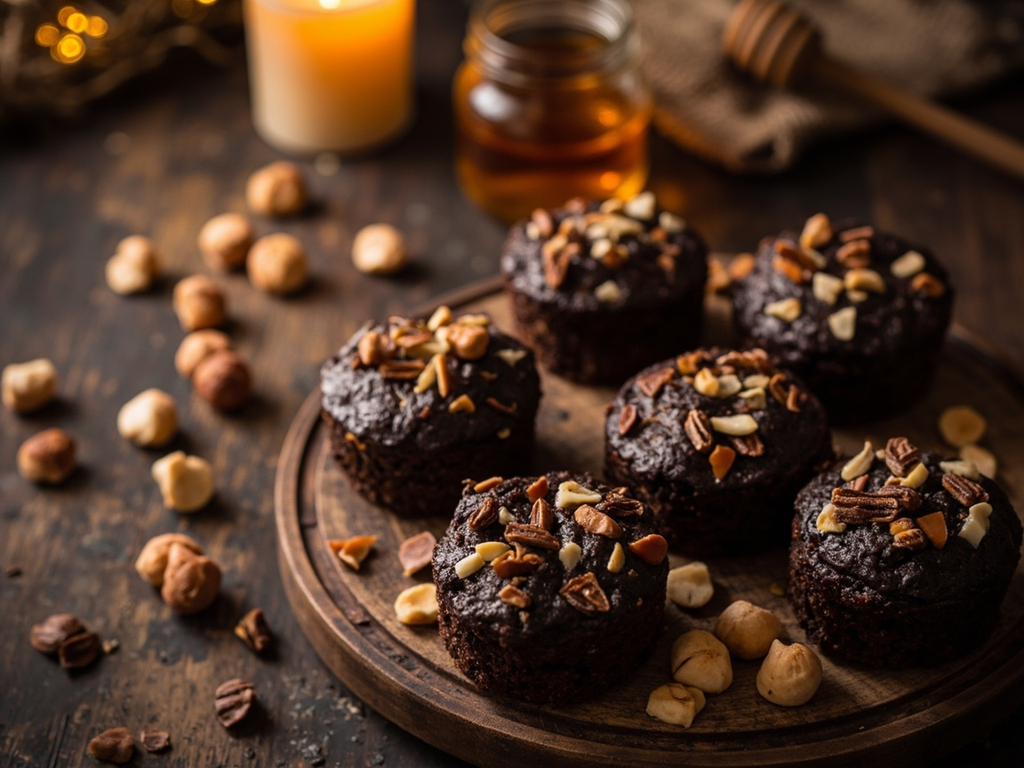
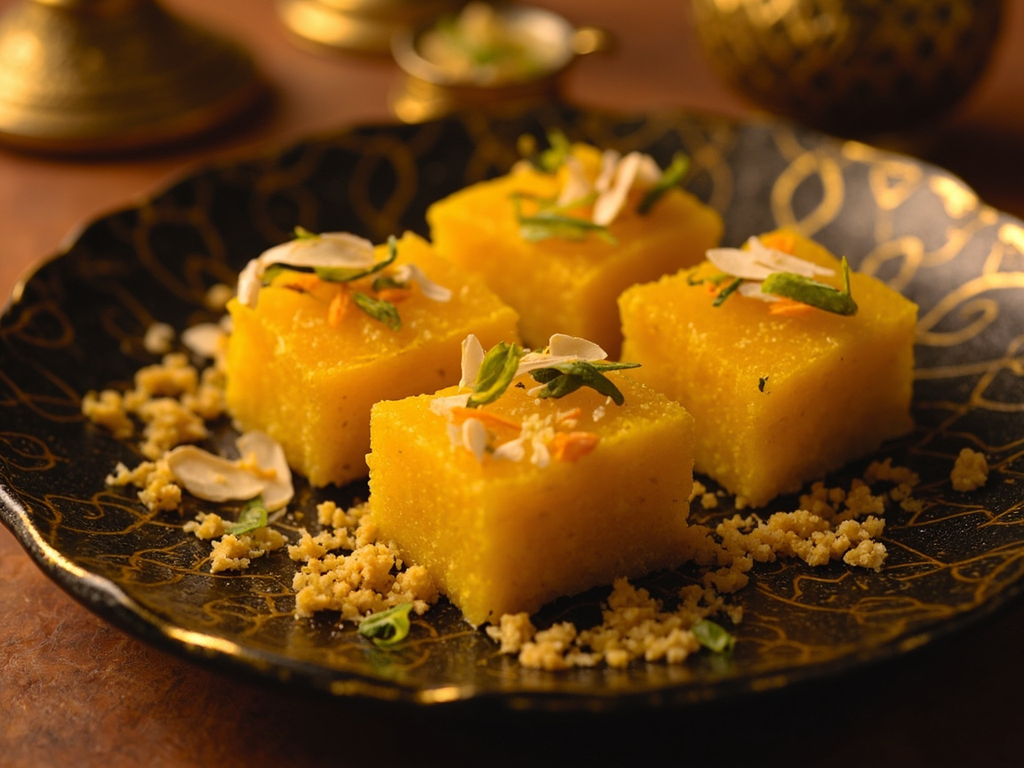
Dense halva made from wheat flour toasted in clarified butter, bound with honey and perfumed with saffron and cardamom, sprinkled with pistachios and almonds. A rich sweet served in small portions.
I am not only a man of war — Samarkand is my glory, and my table must dazzle ambassadors as much as my victories. When the Castilian came to my court, I had mountains of sweets served — golden halva with Khorasan saffron, with pistachios my caravans bring from Persia. The flour must toast long in butter until it smells of hazelnut, that is where everything is decided. A conqueror who does not know how to honor his guests at table does not deserve his throne.
- •Wheat flour — a good measure (Base)
- •Clarified butter (roghan) — generously (Cooking fat)
- •Honey — as much as the flour (Sweetener)
- •Saffron — a few filaments (Fragrance and color)
- •Cardamom — a few crushed seeds (Spice)
- •Pistachios and almonds — a handful of each (Garnish)
- •Rose water — a dash (Fragrance)
Halva-ye asl
Dense halva made from wheat flour toasted in clarified butter, bound with honey and perfumed with saffron and cardamom, sprinkled with pistachios and almonds. A rich sweet served in small portions.
Why this dish? Tamerlane's court in Samarkand was deeply steeped in Persian culture, and sweets made from flour, honey, and nuts were served at great feasts. Clavijo reports that banquets ended with sweets and fruits. This halva, a dense, perfumed confection, embodies the Persian refinement Tamerlane cultivated to rival the greatest courts of the Islamic world.
I am not only a man of war — Samarkand is my glory, and my table must dazzle ambassadors as much as my victories. When the Castilian came to my court, I had mountains of sweets served — golden halva with Khorasan saffron, with pistachios my caravans bring from Persia. The flour must toast long in butter until it smells of hazelnut, that is where everything is decided. A conqueror who does not know how to honor his guests at table does not deserve his throne.
Ingredients (period version)
- Wheat flour — a good measure (Base)
- Clarified butter (roghan) — generously (Cooking fat)
- Honey — as much as the flour (Sweetener)
- Saffron — a few filaments (Fragrance and color)
- Cardamom — a few crushed seeds (Spice)
- Pistachios and almonds — a handful of each (Garnish)
- Rose water — a dash (Fragrance)
Ingredients
- Wheat flour — 200 g (Base)
- Clarified butter (ghee) — 150 g (Cooking fat)
- Honey — 200 g (Sweetener)
- Water — 150 ml (Syrup)
- Saffron threads — a good pinch (Fragrance and color)
- Green cardamom — 4 pods (seeds crushed) (Spice)
- Unsalted pistachios — 50 g (Garnish)
- Almonds — 30 g (Garnish)
- Rose water — 1 tbsp (Fragrance)
Method
- Infuse the saffron in 2 tablespoons of hot water for 10 minutes.
- In a heavy saucepan, melt the clarified butter over medium heat. Add the flour and stir constantly with a wooden spoon for 15 to 20 minutes, until it turns a beautiful golden color and gives off a nutty aroma.
- Meanwhile, heat the honey with water in a small saucepan, add the crushed cardamom and saffron water. Bring to a simmer.
- Pour the hot honey syrup over the toasted flour, stirring vigorously. The mixture will thicken quickly.
- Add the rose water and mix. Continue stirring over low heat for 2 to 3 minutes, until the paste pulls away from the sides.
- Pour into an oiled dish, smooth the surface, and sprinkle with crushed pistachios and almonds. Press lightly.
- Let cool completely, then cut into diamonds or squares. Serve at room temperature.
How it was made : Flour halva (halva-ye ard) is one of the oldest confections in the Persian and Arab world, mentioned in medieval cookbooks like the Kitab al-Tabikh. At the Timurid court, the tradition of shirinlik (sweets) blended Persian, Arab, and Central Asian influences. Khorasan saffron and Persian pistachios were luxury goods transported along the caravan routes Tamerlane controlled.
The contemporary twist : Arrange the halva diamonds on a black plate with a golden honey drizzle, evoking the geometric patterns of Timurid faience.
Sources : Kitab al-Tabikh (The Cookbook), al-Baghdadi, 13th century · Ruy González de Clavijo, Embajada a Tamorlán (1406)
Tamerlane · Charactorium