 flip
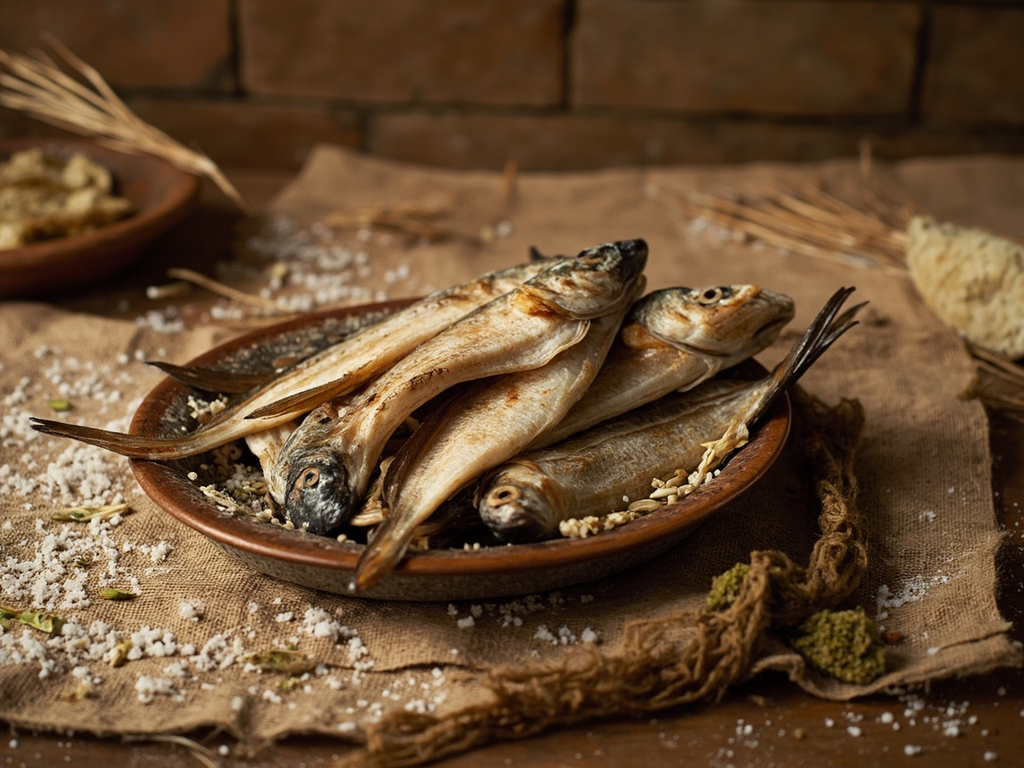
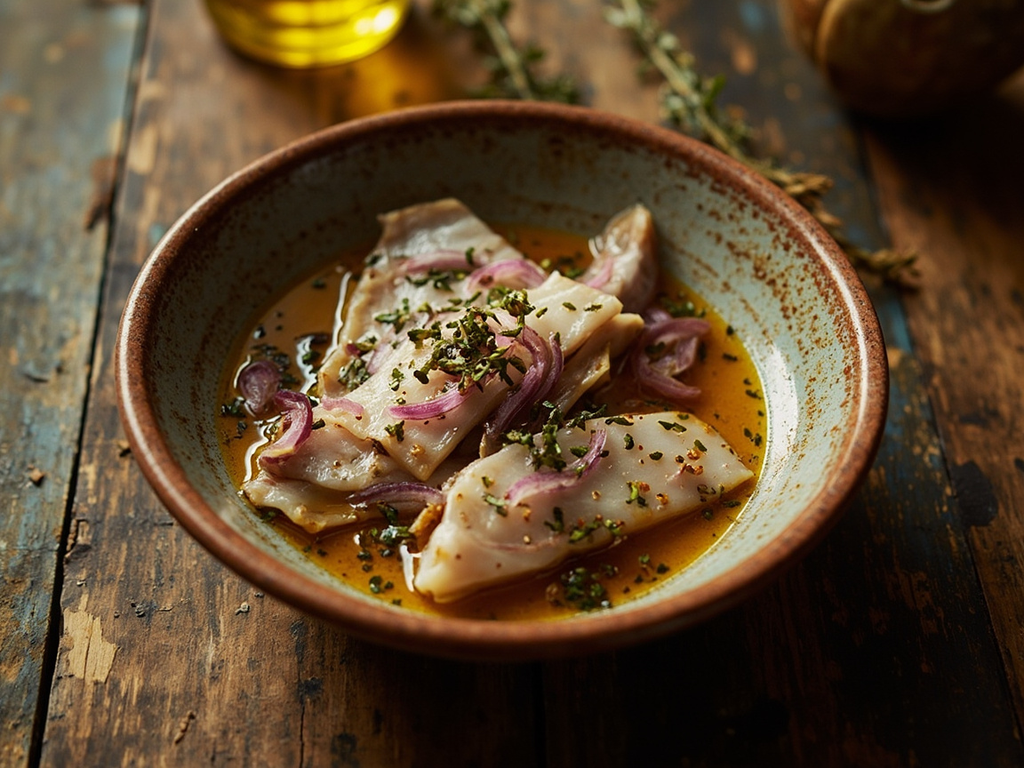
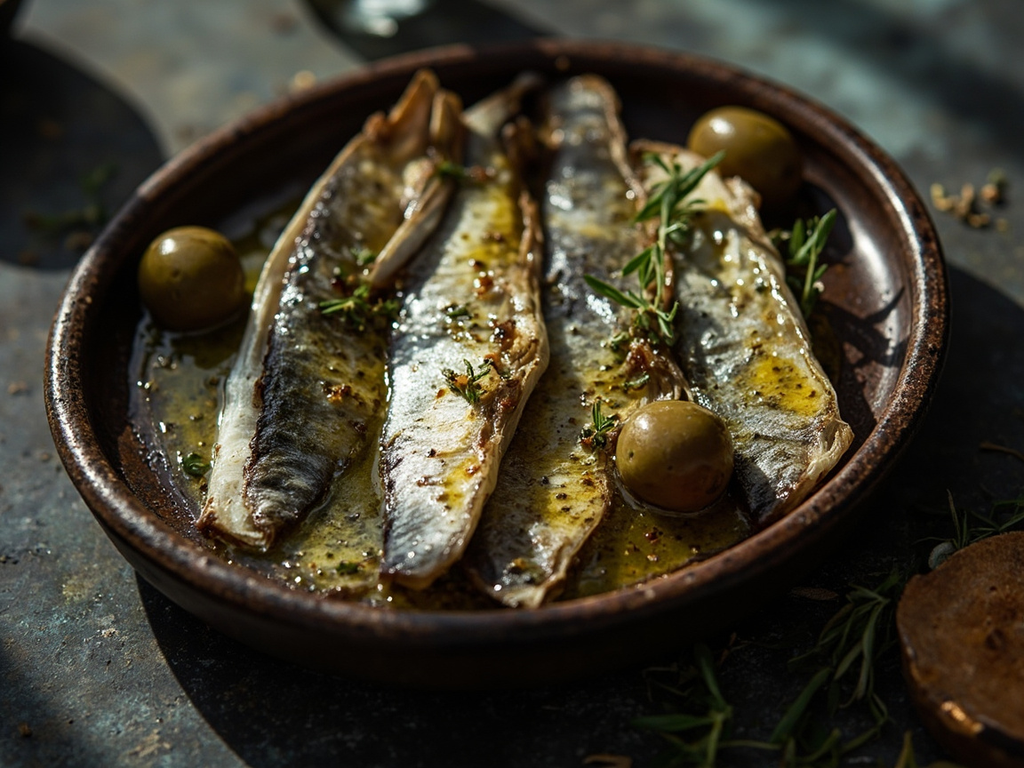
flipTarichos of Miletus—salted and dried fish fillets, served with oil
Tarichos of Miletus—salted and dried fish fillets, served with oil
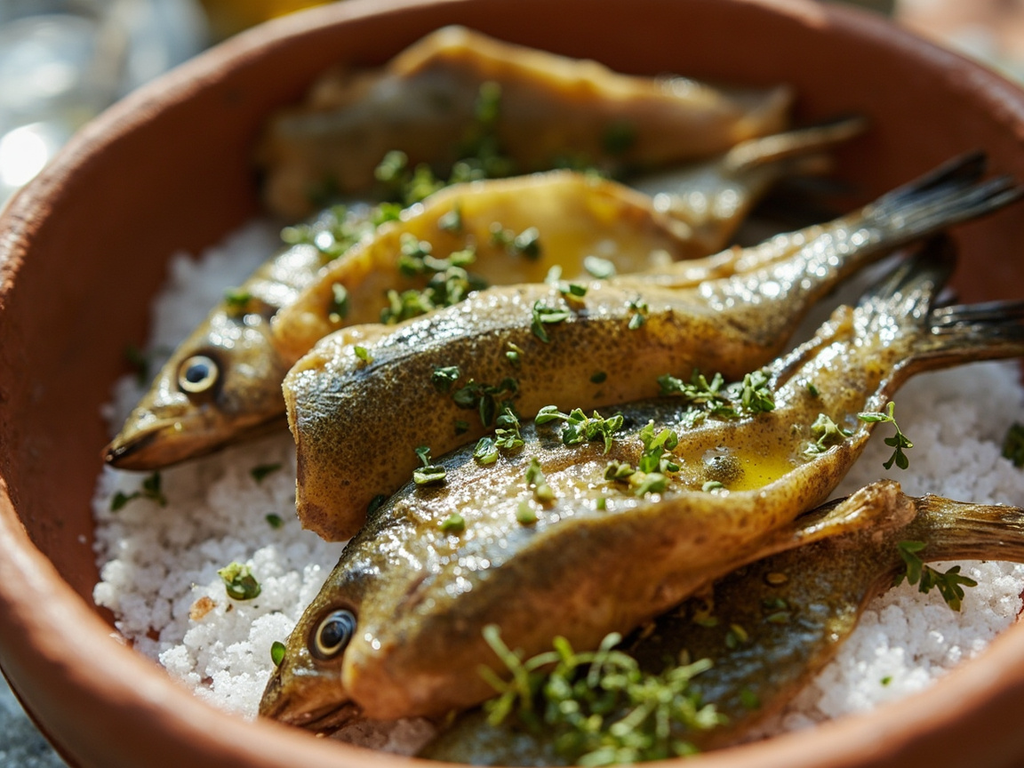
Why this dish? Miletus is a major Aegean port, and its Black Sea colonies—such as Apollonia Pontica, founded in Anaximander's time—exported salted fish throughout the Greek world. Tarichos, preserved fish, fed sailors and traveled in ship holds: a food-map, like the man who drew the first map of the world.
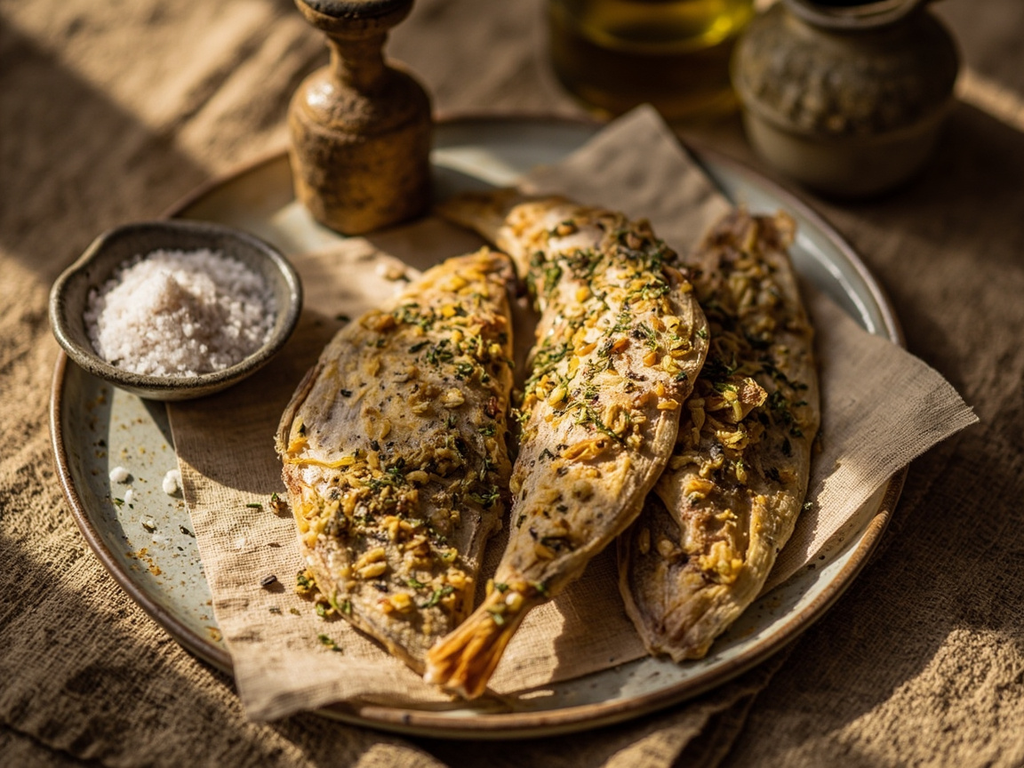
Fillets of oily fish, salted then dried, desalted and served in strips drizzled with olive oil and oregano. Salty, deep, iodized: it is the preserved opson that allows one to eat the sea in deep winter, far from the shore.
See our ships departing for the Pontus, up there, where I helped found a city: they return with holds full of salted fish. The salt draws the moisture from the flesh and keeps it from rotting—all things pass, but salt holds back for a time what would otherwise dissolve. I desalt my fillets in clear water, I lay them in oil with oregano from our hills, and I hold there, on my table, a piece of the distant sea that my map draws.
- •Oily fish (mackerel, tuna, sardine) — according to the catch (opson)
- •Sea salt — in abundance (preservation)
- •Olive oil — to coat (seasoning)
- •Dried oregano — a pinch (aroma)
- •Wine vinegar (optional) — a few drops (enhance)
Tarichos of Miletus—salted and dried fish fillets, served with oil
Fillets of oily fish, salted then dried, desalted and served in strips drizzled with olive oil and oregano. Salty, deep, iodized: it is the preserved opson that allows one to eat the sea in deep winter, far from the shore.
Why this dish? Miletus is a major Aegean port, and its Black Sea colonies—such as Apollonia Pontica, founded in Anaximander's time—exported salted fish throughout the Greek world. Tarichos, preserved fish, fed sailors and traveled in ship holds: a food-map, like the man who drew the first map of the world.
See our ships departing for the Pontus, up there, where I helped found a city: they return with holds full of salted fish. The salt draws the moisture from the flesh and keeps it from rotting—all things pass, but salt holds back for a time what would otherwise dissolve. I desalt my fillets in clear water, I lay them in oil with oregano from our hills, and I hold there, on my table, a piece of the distant sea that my map draws.
Ingredients (period version)
- Oily fish (mackerel, tuna, sardine) — according to the catch (opson)
- Sea salt — in abundance (preservation)
- Olive oil — to coat (seasoning)
- Dried oregano — a pinch (aroma)
- Wine vinegar (optional) — a few drops (enhance)
Ingredients
- Fresh mackerel fillets — 4 fillets (opson)
- Coarse sea salt — 300 g (for salting) (preservation)
- Extra virgin olive oil — 4 tbsp (seasoning)
- Dried oregano — 1 tsp (aroma)
- Red wine vinegar — 1 tsp (enhance)
Method
- Cover the mackerel fillets on all sides with coarse salt in a shallow dish.
- Refrigerate for 8 to 12 hours: the salt will firm the flesh and draw out water.
- Rinse the fillets thoroughly, then soak them in fresh water for 30 minutes to desalt.
- Pat dry and cut into thin strips.
- Arrange the strips in a dish, drizzle with olive oil, sprinkle with oregano, and if you like, a few drops of vinegar.
- Marinate for 1 hour in the fridge before serving with maza or bread.
How it was made : Tarichos (τάριχος) referred to any fish preserved by salting and/or drying, a pillar of Greek trade. The Pontus Euxinus cities, including Milesian colonies, were major suppliers. In antiquity, fish was salted whole in jars and dried in the sun and wind; today's version shortens the salting for the modern palate.
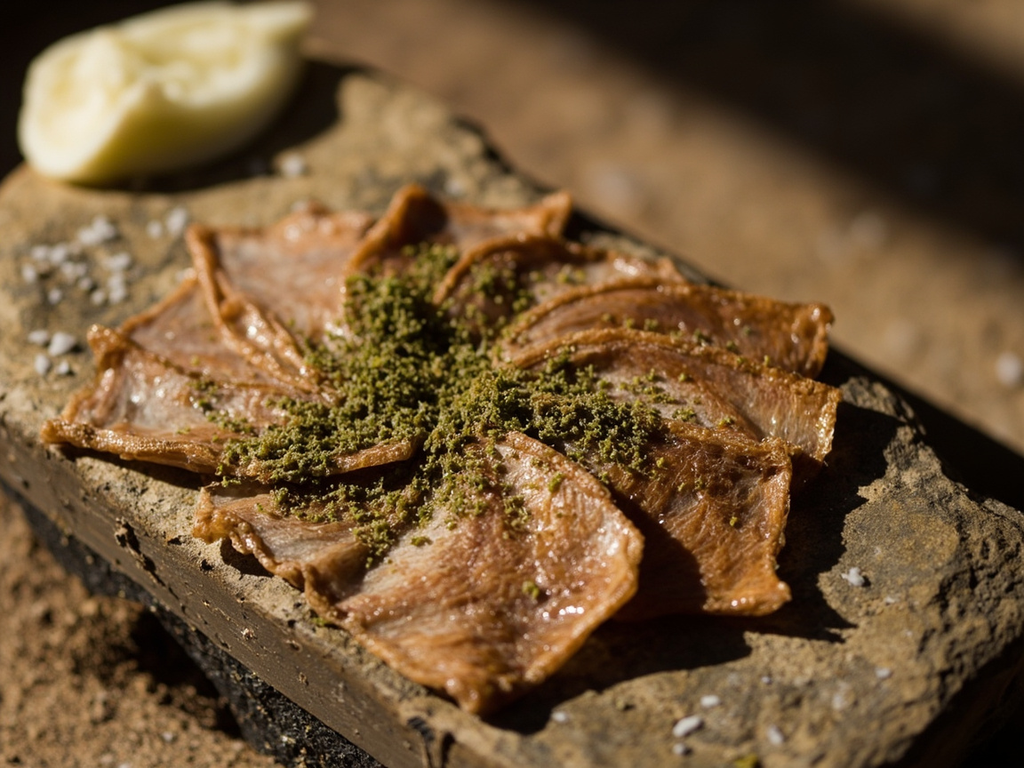
The contemporary twist : Arrange the strips in a fan on a slate board, with microgreens and lemon zest—an "Ionian gravlax" ahead of its time, without sugar or Nordic dill.
Sources : Andrew Dalby, Food in the Ancient World from A to Z, Routledge, 2003 (entry "tarichos") · Robert I. Curtis, Garum and Salsamenta: Production and Commerce in Materia Medica, Brill, 1991
Anaximander · Charactorium