 flip
flipTarichos, the salted fish of Miletus port
Tarichos, the salted fish of Miletus port
Why this dish? Miletus lives from the sea: fish is the opson par excellence. Tarichos — salted fish to last — was the protein reserve of Ionian cities, the food kept and traded in the port where Anaximenes watched ships pass.
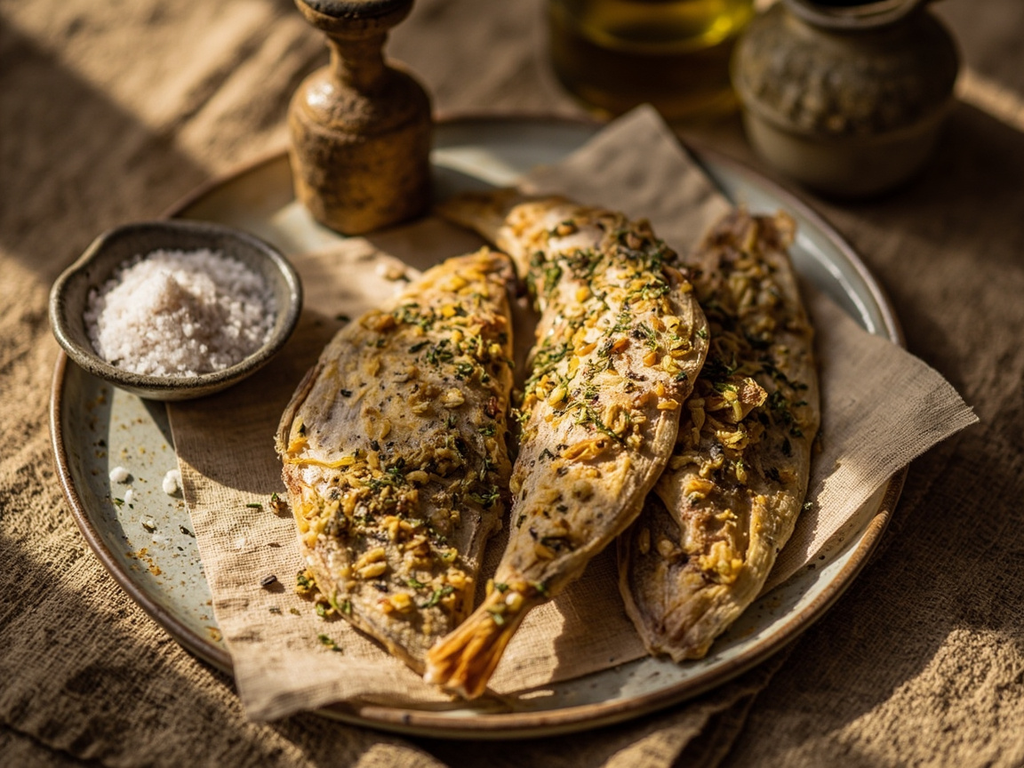
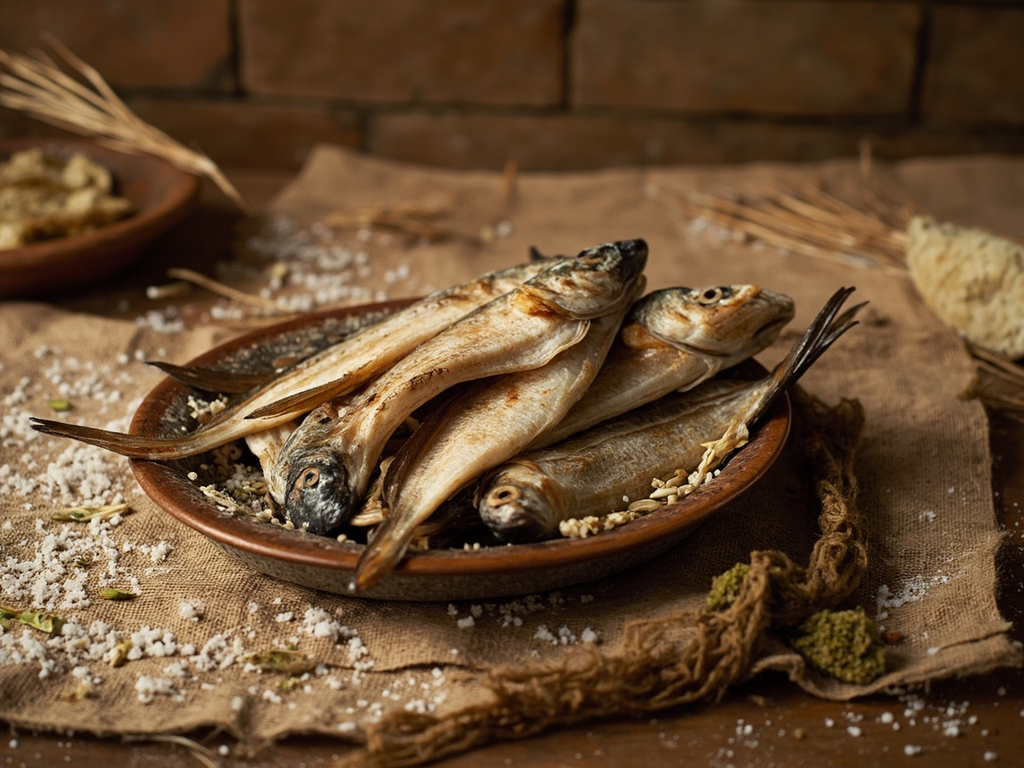
Fish fillets preserved in salt, dried then desalted before cooking, intensely flavorful. It was the great preservation technique of the Greek world, allowing consumption of the catch long after the boats returned.
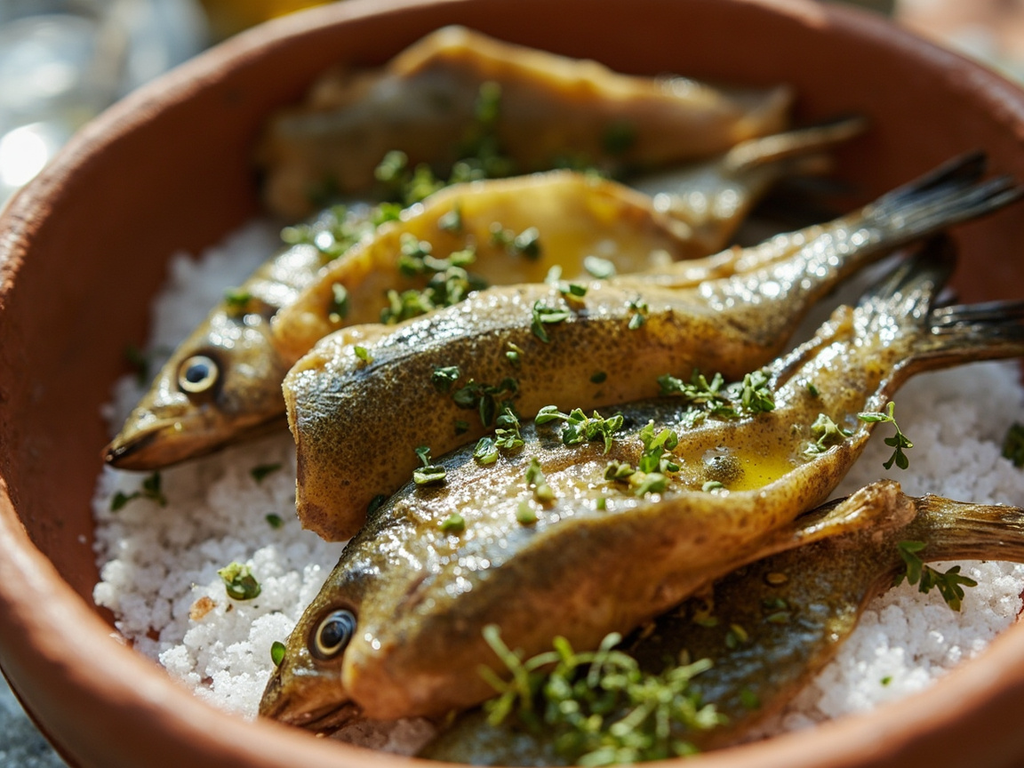
The sea gives more than the day can eat: so we imprison the fish in salt, as one holds water when air condenses. Layer of salt, layer of flesh, and time does the rest — after a moon, it keeps all winter. Before cooking, I bathe it long in fresh water to remove the excess sea. On the agora of Miletus, the tarichos merchant shouts as loud as the philosopher, and feeds as many mouths.
- •Fresh fish (mackerel, tuna or sardine) — according to the catch (base)
- •Sea salt — in abundance (preservation)
- •Olive oil — a drizzle (finish)
- •Wild oregano — a few sprigs (herb)
Tarichos, the salted fish of Miletus port
Fish fillets preserved in salt, dried then desalted before cooking, intensely flavorful. It was the great preservation technique of the Greek world, allowing consumption of the catch long after the boats returned.
Why this dish? Miletus lives from the sea: fish is the opson par excellence. Tarichos — salted fish to last — was the protein reserve of Ionian cities, the food kept and traded in the port where Anaximenes watched ships pass.
The sea gives more than the day can eat: so we imprison the fish in salt, as one holds water when air condenses. Layer of salt, layer of flesh, and time does the rest — after a moon, it keeps all winter. Before cooking, I bathe it long in fresh water to remove the excess sea. On the agora of Miletus, the tarichos merchant shouts as loud as the philosopher, and feeds as many mouths.
Ingredients (period version)
- Fresh fish (mackerel, tuna or sardine) — according to the catch (base)
- Sea salt — in abundance (preservation)
- Olive oil — a drizzle (finish)
- Wild oregano — a few sprigs (herb)
Ingredients
- Mackerel fillets (or sardines) — 4 fillets (base)
- Coarse sea salt — 500 g (for covering) (preservation)
- Extra virgin olive oil — 3 tbsp (finish)
- Dried oregano — 1 tsp (herb)
- Wine vinegar (optional) — 1 tbsp (balance)
Method
- Place the fish fillets in a dish, cover completely with coarse salt and refrigerate for 24 to 36 hours.
- Rinse thoroughly, then desalt the fillets in cold water for 2 to 4 hours, changing the water several times.
- Pat dry, then cut into pieces.
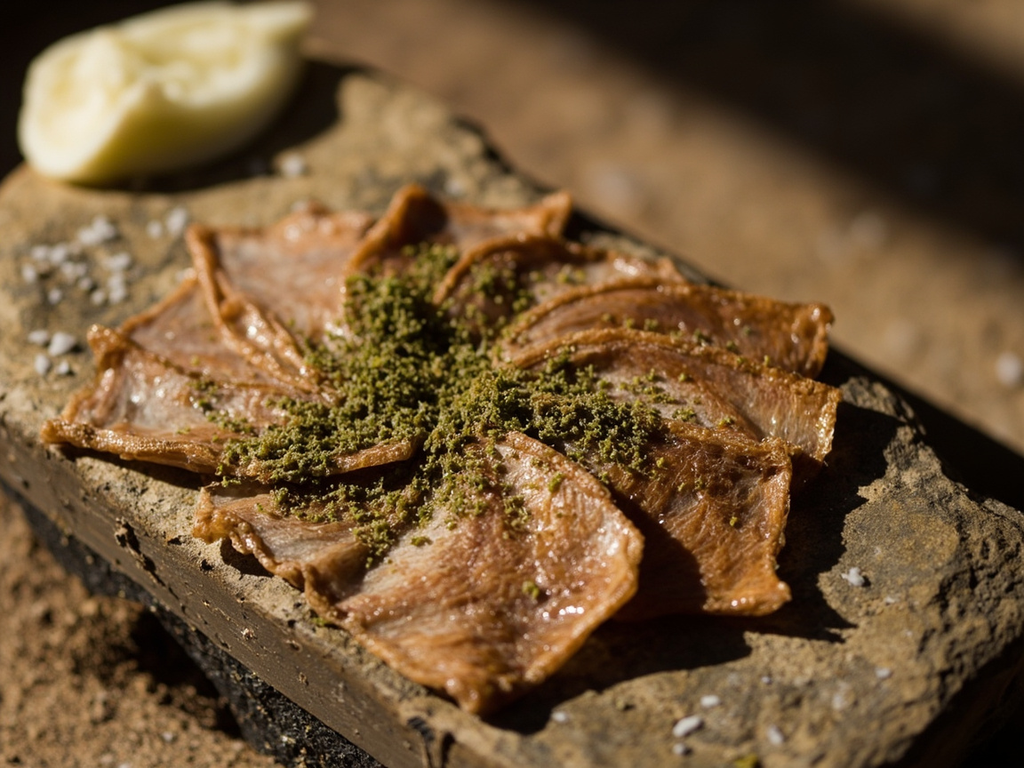
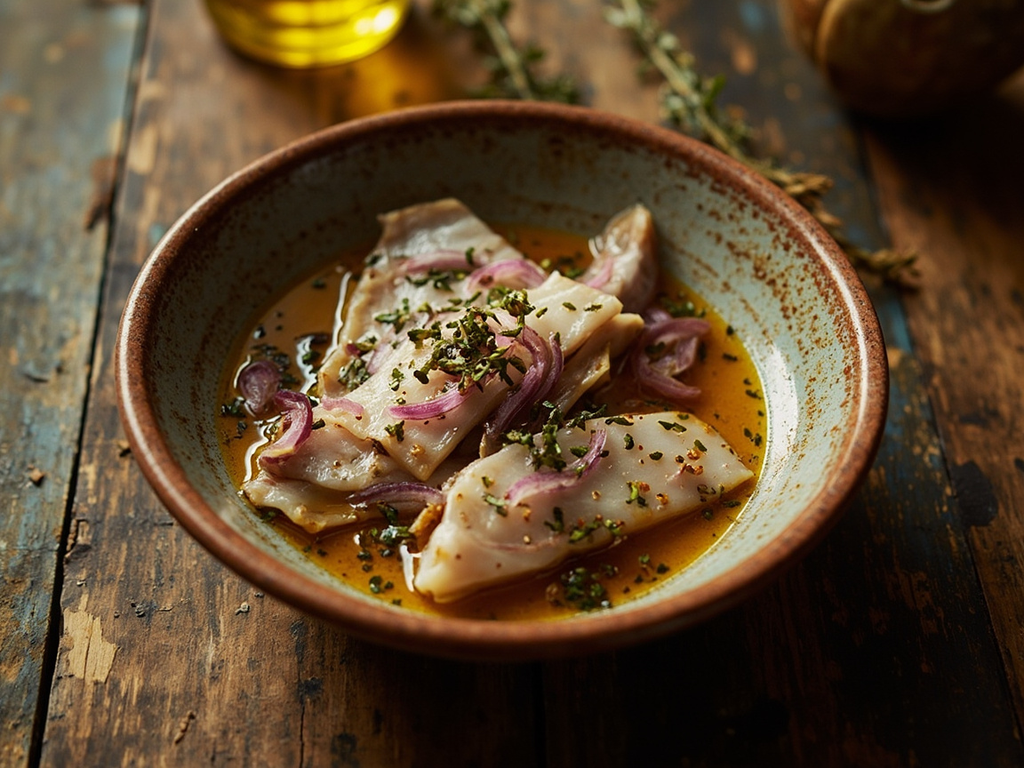
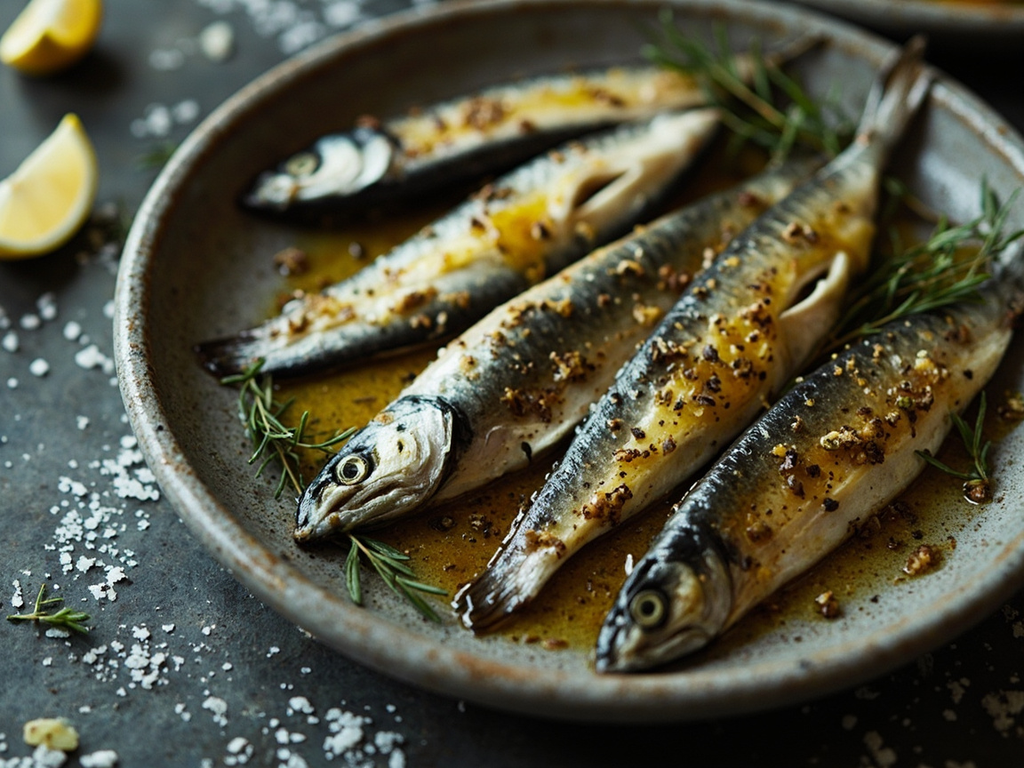
- Briefly pan-fry in olive oil, or serve raw marinated in oil and vinegar.
- Sprinkle with oregano and drizzle with oil; enjoy with maza or leavened bread.
How it was made : Tarichos was a pillar of Greek diet and trade: the Black Sea and Ionian coasts exported their salted fish throughout the Mediterranean. Salting and drying were the only ways to preserve marine protein without cold. The lower classes ate small pieces as opson on their barley cake.
The contemporary twist : Served as an "Ionian tartine" on a thin grilled maza, with a dash of vinegar and fresh oregano — a philosopher's anchovy spread.
Sources : Robert I. Curtis, Garum and Salsamenta: Production and Commerce in Materia Medica, Brill, 1991 · Andrew Dalby, Siren Feasts, Routledge, 1996
Anaximenes · Charactorium