 flip
flipShchi of Fresh Cabbage with Smetana
Shchi of Fresh Cabbage with Smetana
Why this dish? Shchi, cabbage soup, is the immemorial "first course" of the Russian table — "shchi and kasha, that is our food," says the proverb. For Akhmatova, raised near Tsarskoye Selo and living in Leningrad, it was the everyday soup, content with a cabbage and a root when meat was lacking.
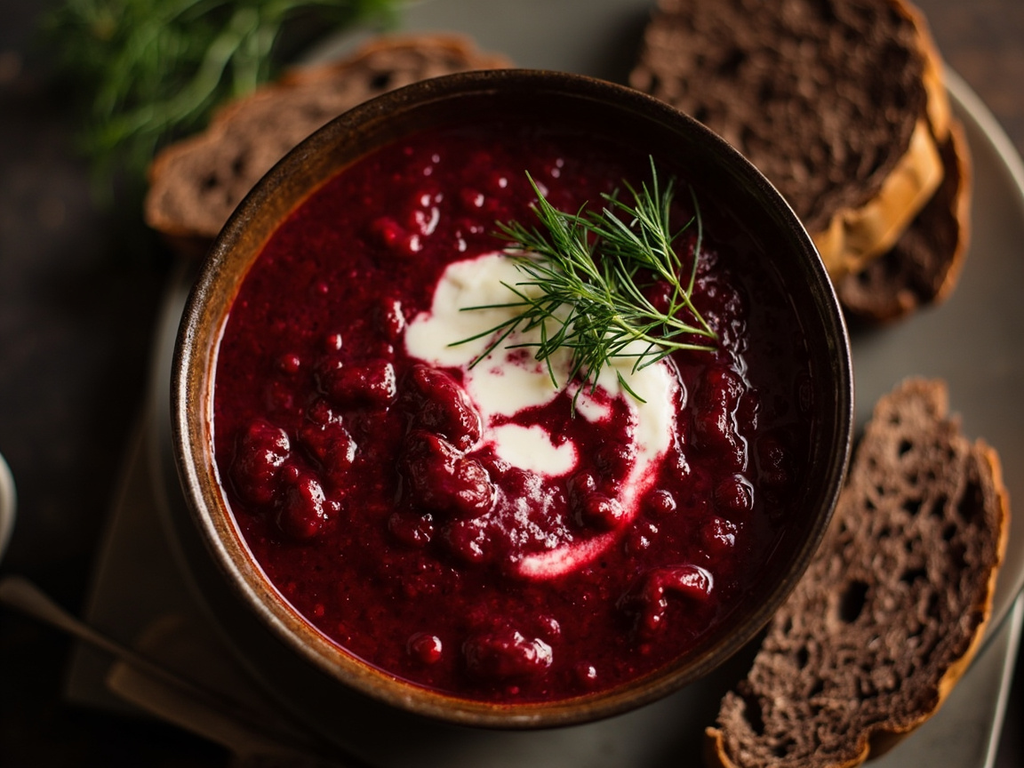
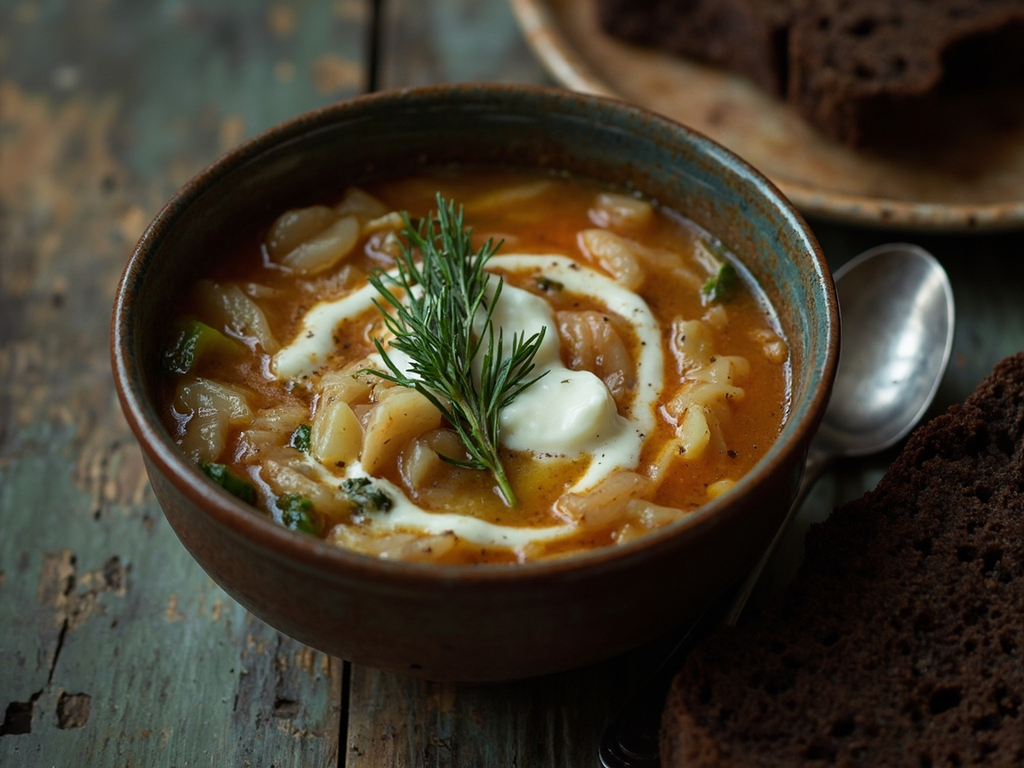
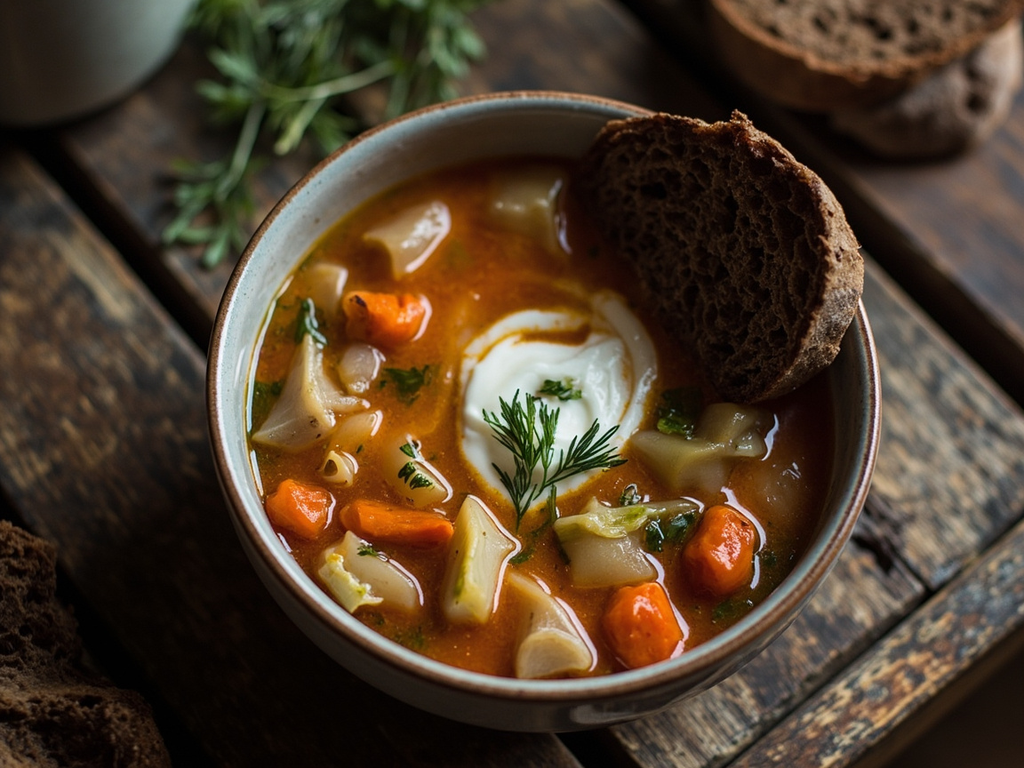
A simmered cabbage soup, slightly tangy, scented with dill and bay leaf, bound with a generous spoonful of *smetana* at serving. Clear and comforting, it needs only a hunk of rye bread.
Shchi, you see, is the very soul of our poor house; it forgives everything, even a nearly empty pot. I would sweat the onion and carrot, then the cabbage, gently, and let it all whisper on the fire while I wrote. A bay leaf, a few peppercorns, and at the end — always — the spoonful of *smetana* that whitens the surface like snow on the Neva. With a crust of black bread, it was a queen's meal for one who still knew how to be hungry.
- •Fresh cabbage — half a head (main vegetable)
- •Onion — one (aromatic)
- •Carrot — one (aromatic, sweetness)
- •Water or broth — a large pot (liquid base)
- •Bay leaf, pepper — a few (aromatics)
- •Smetana — as desired (final binder)
- •Dill — a bunch (freshness)
Shchi of Fresh Cabbage with Smetana
A simmered cabbage soup, slightly tangy, scented with dill and bay leaf, bound with a generous spoonful of *smetana* at serving. Clear and comforting, it needs only a hunk of rye bread.
Why this dish? Shchi, cabbage soup, is the immemorial "first course" of the Russian table — "shchi and kasha, that is our food," says the proverb. For Akhmatova, raised near Tsarskoye Selo and living in Leningrad, it was the everyday soup, content with a cabbage and a root when meat was lacking.
Shchi, you see, is the very soul of our poor house; it forgives everything, even a nearly empty pot. I would sweat the onion and carrot, then the cabbage, gently, and let it all whisper on the fire while I wrote. A bay leaf, a few peppercorns, and at the end — always — the spoonful of *smetana* that whitens the surface like snow on the Neva. With a crust of black bread, it was a queen's meal for one who still knew how to be hungry.
Ingredients (period version)
- Fresh cabbage — half a head (main vegetable)
- Onion — one (aromatic)
- Carrot — one (aromatic, sweetness)
- Water or broth — a large pot (liquid base)
- Bay leaf, pepper — a few (aromatics)
- Smetana — as desired (final binder)
- Dill — a bunch (freshness)
Ingredients
- Green cabbage — 400 g, shredded (main vegetable)
- Onion — 1 medium (aromatic)
- Carrot — 1 medium (aromatic, sweetness)
- Vegetable or beef broth — 1.2 L (liquid base)
- Bay leaf — 1 (aromatic)
- Black peppercorns — 5 (aromatic)
- Sour cream (smetana) — 4 tbsp (final binder)
- Fresh dill — 1/2 bunch (freshness)
- Oil, salt — to taste (cooking, seasoning)
Method
- Shred onion and carrot, sweat them in a little oil in a large pot for 5 minutes.
- Add the shredded cabbage and cook for 5 minutes, stirring.
- Pour in the broth, add bay leaf and pepper, salt lightly.
- Simmer covered for 25–30 minutes, until the cabbage is tender.
- Adjust salt, remove bay leaf, sprinkle with dill.
- Serve hot with a large spoonful of *smetana* melting into each bowl and rye bread.
How it was made : There were two *shchi*: the "rich" (*bogatye*), with meat and fermented sour cabbage in winter, and the "poor" or "empty" (*pustye shchi*), with water and fresh cabbage. It was said that good *shchi* could rest overnight to improve in flavor. In Russian stoves, it simmered for hours in an earthenware pot.
The contemporary twist : Serve *shchi* with a slice of toasted rye bread rubbed with garlic laid across the bowl, like a "poet's lifebuoy."
Sources : Elena Molokhovets, A Gift to Young Housewives, 1861 · Darra Goldstein, Beyond the North Wind: Russia in Recipes and Lore, 2020
Anna Akhmatova · Charactorium