 flip
flipGolden Bohemian Beer (Pilsner-style Lager)
Golden Bohemian Beer (Pilsner-style Lager)
Why this dish? Dvořák was a noted beer enthusiast: he frequented Prague taverns and insisted on his daily mug. His life coincides with the birth, in Plzeň in 1842, of the clear golden beer (the "pilsner") that would conquer the world — the drink of all Bohemia in his time.
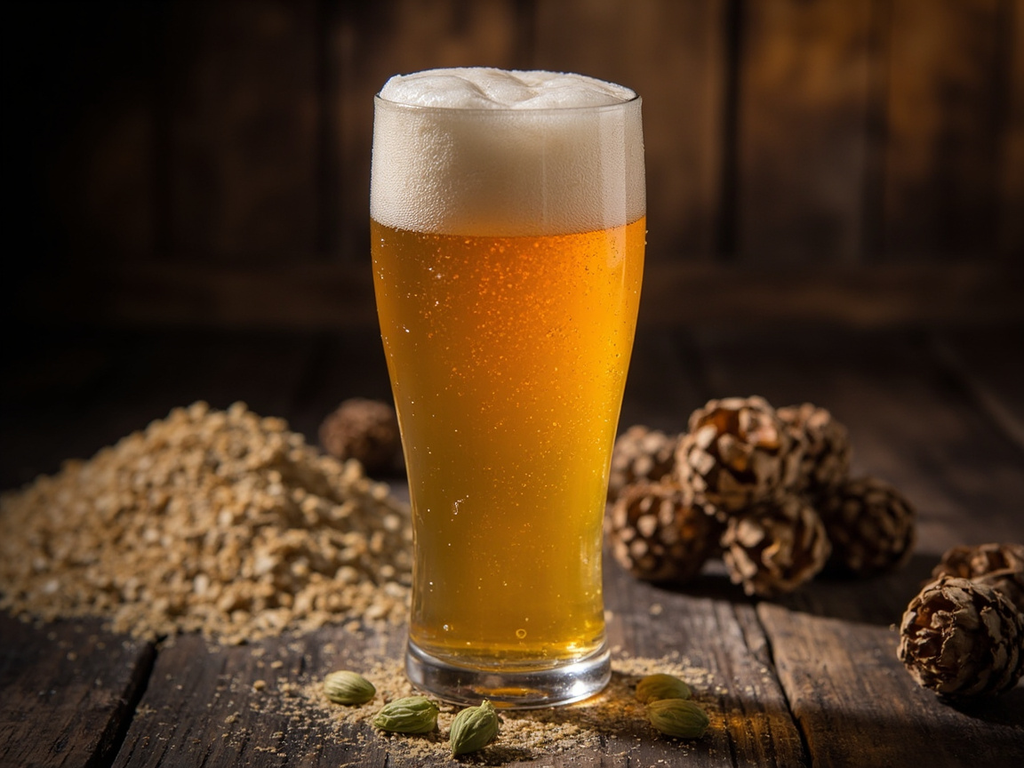
Not a cooking recipe but the ritual of a Bohemian beer: pale barley malt, delicately bitter Žatec (Saaz) hops, very soft local water, and cool, slow bottom fermentation. The result is golden, frothy, crisp, and refreshing.
You can't make good music with a dry throat! The beer from home, since they made it clear and golden in Plzeň, has no equal in the world — I searched in vain for anything like it in New York. You need our soft water, our Žatec hops that bite just right, and patience: the vat rests in the cold for long weeks before you draw the first mug. A good pivo and a bit of caraway bread, and you can keep a conversation going till evening.
- •Pale malted barley — a lot (fermentable sugars)
- •Žatec (Saaz) hops — by hand (bitterness and aroma)
- •Soft Bohemian water — as needed (base (very low mineral content))
- •Bottom-fermenting yeast — a culture from the vat (slow, cold fermentation)
Golden Bohemian Beer (Pilsner-style Lager)
Not a cooking recipe but the ritual of a Bohemian beer: pale barley malt, delicately bitter Žatec (Saaz) hops, very soft local water, and cool, slow bottom fermentation. The result is golden, frothy, crisp, and refreshing.
Why this dish? Dvořák was a noted beer enthusiast: he frequented Prague taverns and insisted on his daily mug. His life coincides with the birth, in Plzeň in 1842, of the clear golden beer (the "pilsner") that would conquer the world — the drink of all Bohemia in his time.
You can't make good music with a dry throat! The beer from home, since they made it clear and golden in Plzeň, has no equal in the world — I searched in vain for anything like it in New York. You need our soft water, our Žatec hops that bite just right, and patience: the vat rests in the cold for long weeks before you draw the first mug. A good pivo and a bit of caraway bread, and you can keep a conversation going till evening.
Ingredients (period version)
- Pale malted barley — a lot (fermentable sugars)
- Žatec (Saaz) hops — by hand (bitterness and aroma)
- Soft Bohemian water — as needed (base (very low mineral content))
- Bottom-fermenting yeast — a culture from the vat (slow, cold fermentation)
Ingredients
- Pilsner malt — 4.5 kg (for ~20 L) (sugar base)
- Saaz hops — 60 g, divided (bitterness and aroma)
- Low-mineral water — ~25 L (soft brewing water)
- Lager yeast (bottom-fermenting) — 1 packet (cold fermentation)
Method
- Mash: hold crushed malt in water at around 65°C for about 1 hour to convert starch to sugars.
- Filter the wort, rinse the grains, then bring to a boil.
- Add hops in several additions during the hour-long boil (bitterness early, aroma late).
- Cool the wort quickly, transfer, pitch the lager yeast.
- Ferment cool (~10°C) then lager for several weeks near 0°C (the "lagerung").
- Bottle with a pinch of sugar for carbonation; serve well chilled.
How it was made : Pilsner was born in Plzeň in 1842 thanks to pale malt, the city's exceptionally soft water, Saaz hops, and bottom fermentation imported from Bavaria — a cold, long brew that produced a clear, stable beer. In the village, people also drank cloudier beers brewed locally; beer was a common table beverage, safer than many waters.
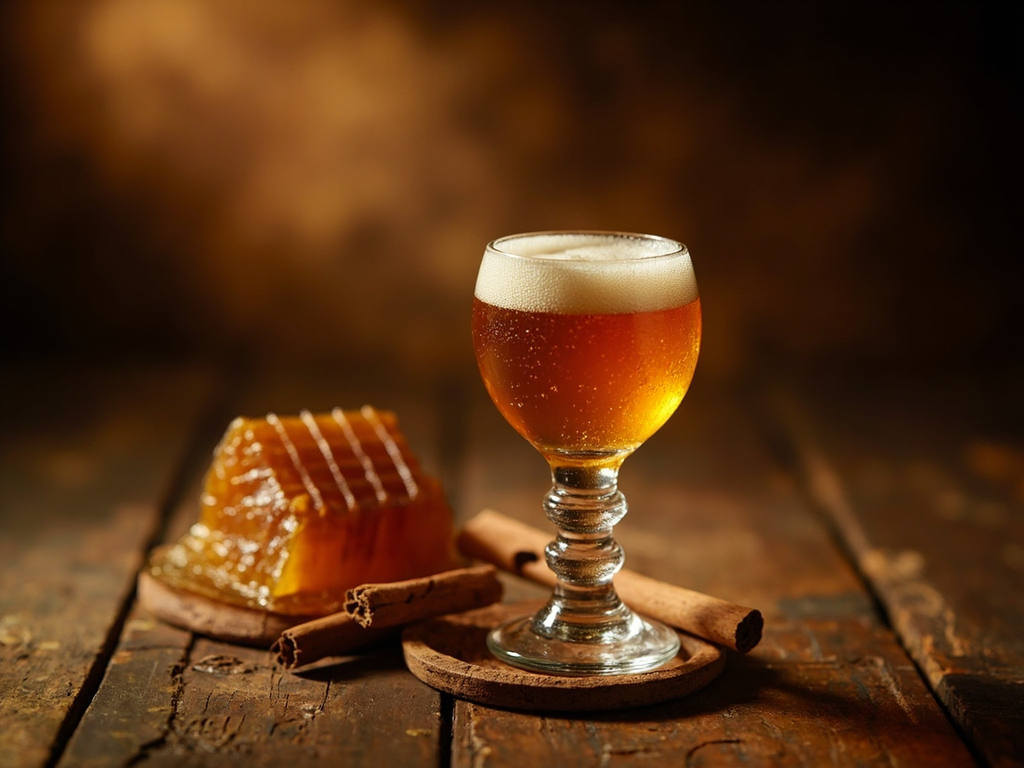
The contemporary twist : Serve in a tall, typically Czech glass with a thick "drawn" foam (hladinka); a possible nod: serve alongside a recording of the New World Symphony.
Antonín Dvořák · Charactorium