 flip
flipIpocrasso (mulled spiced wine, hippocras)
Ipocrasso (mulled spiced wine, hippocras)
Why this dish? De Beatis noted in his journal the wines of each region he crossed. Ipocrasso, spiced and sweetened wine served at the close of meals, was the prestige beverage of the courts he frequented — the perfect meeting of his traveler's curiosity and the refinement of princely tables.
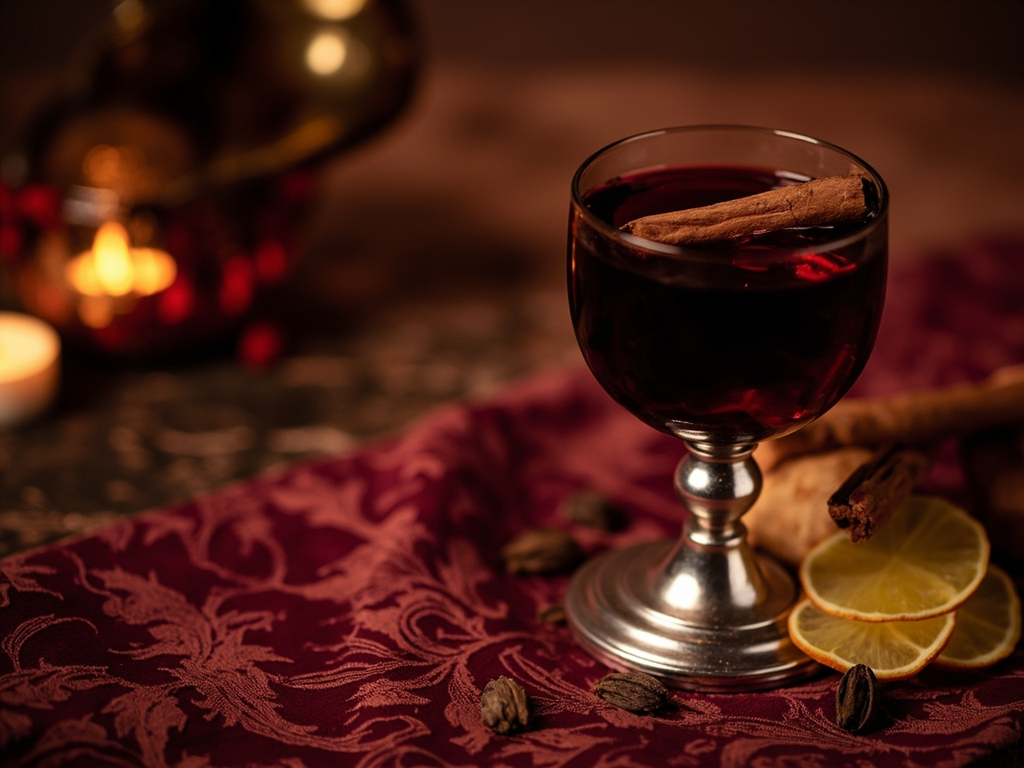
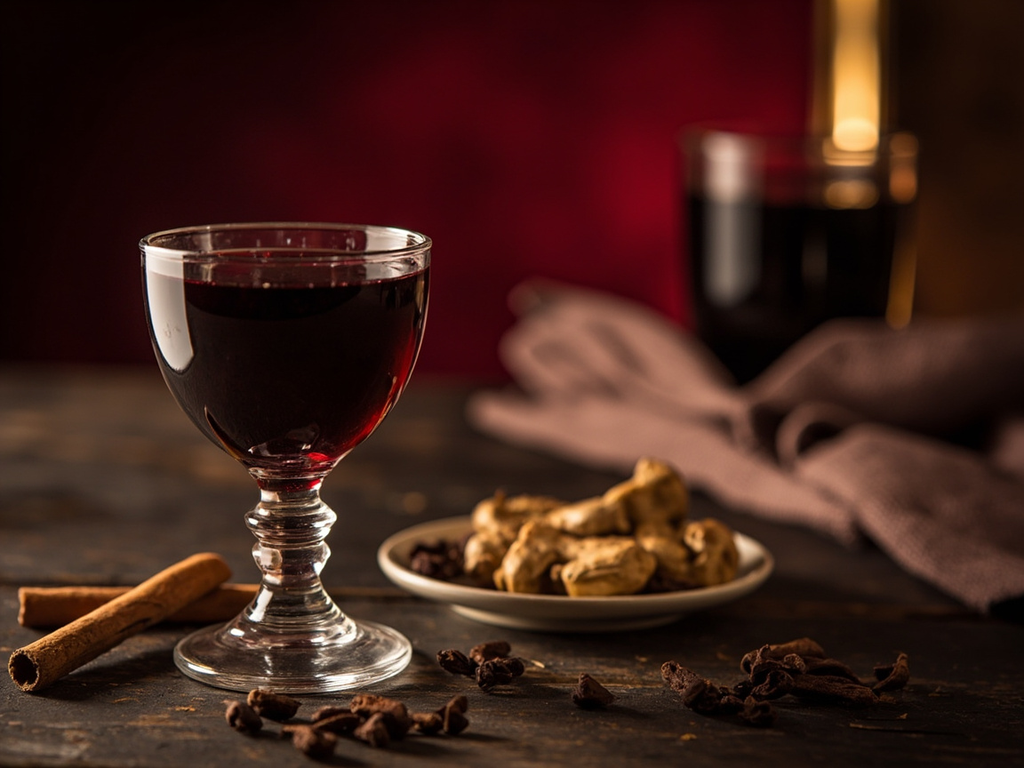
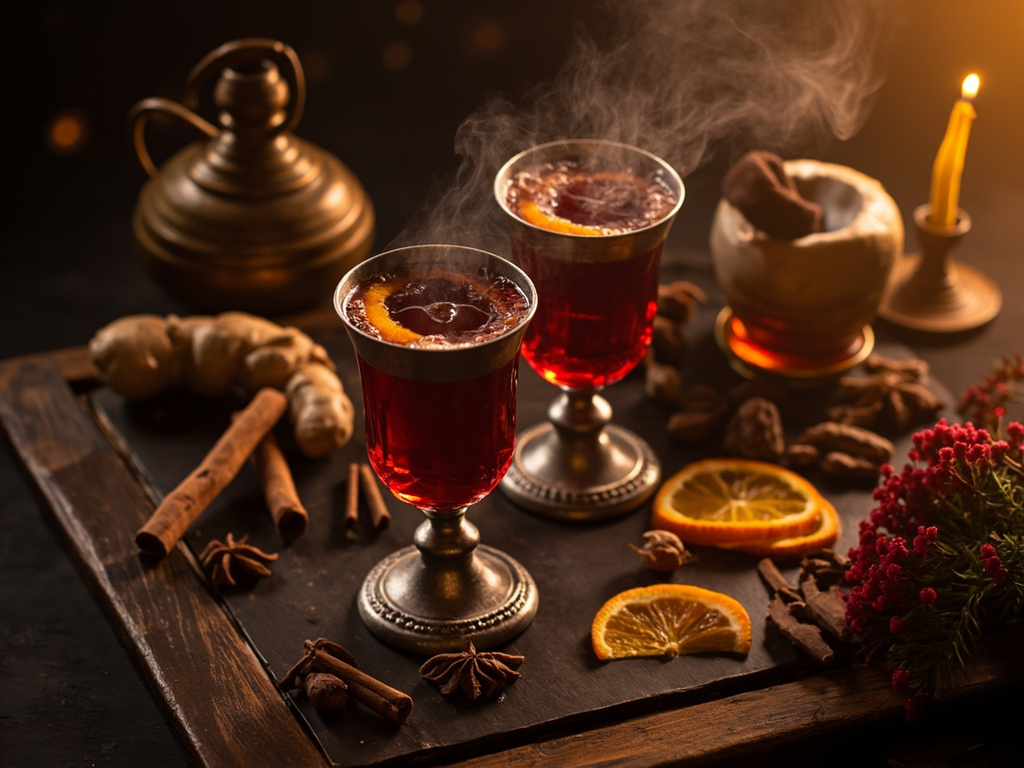
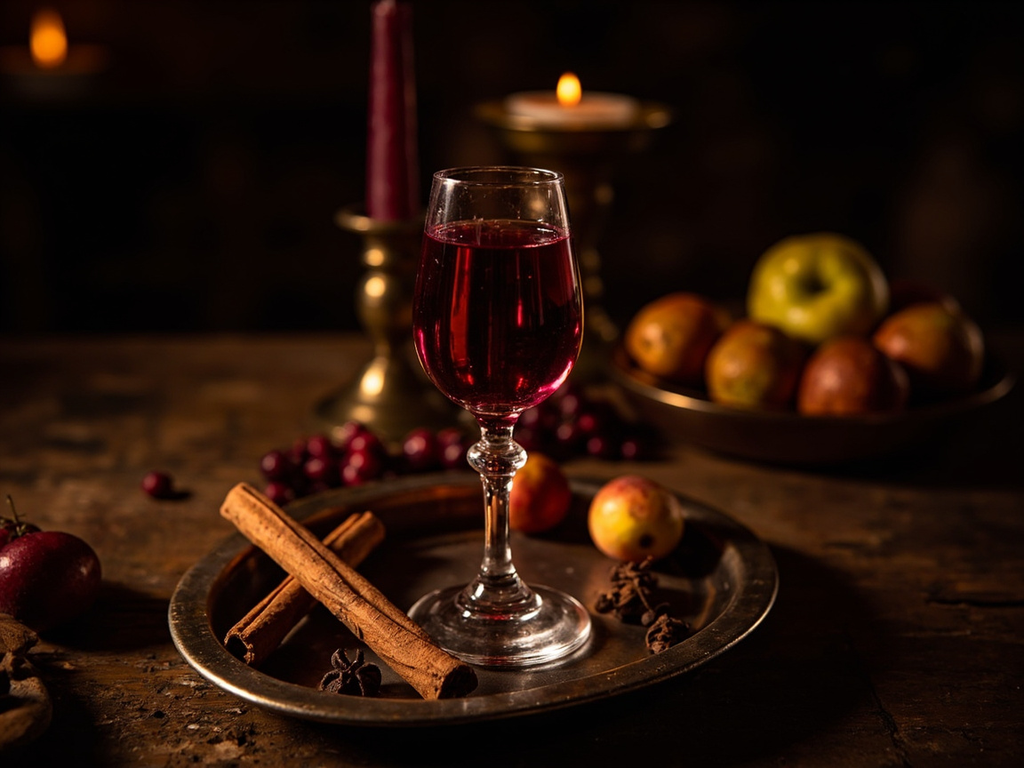
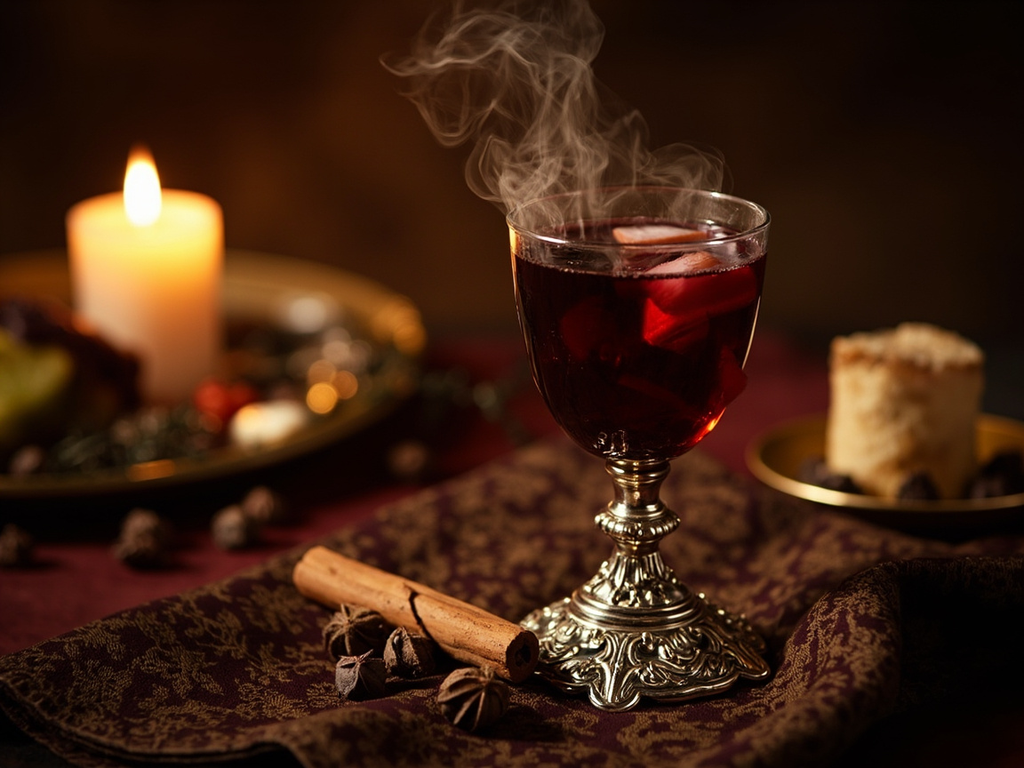
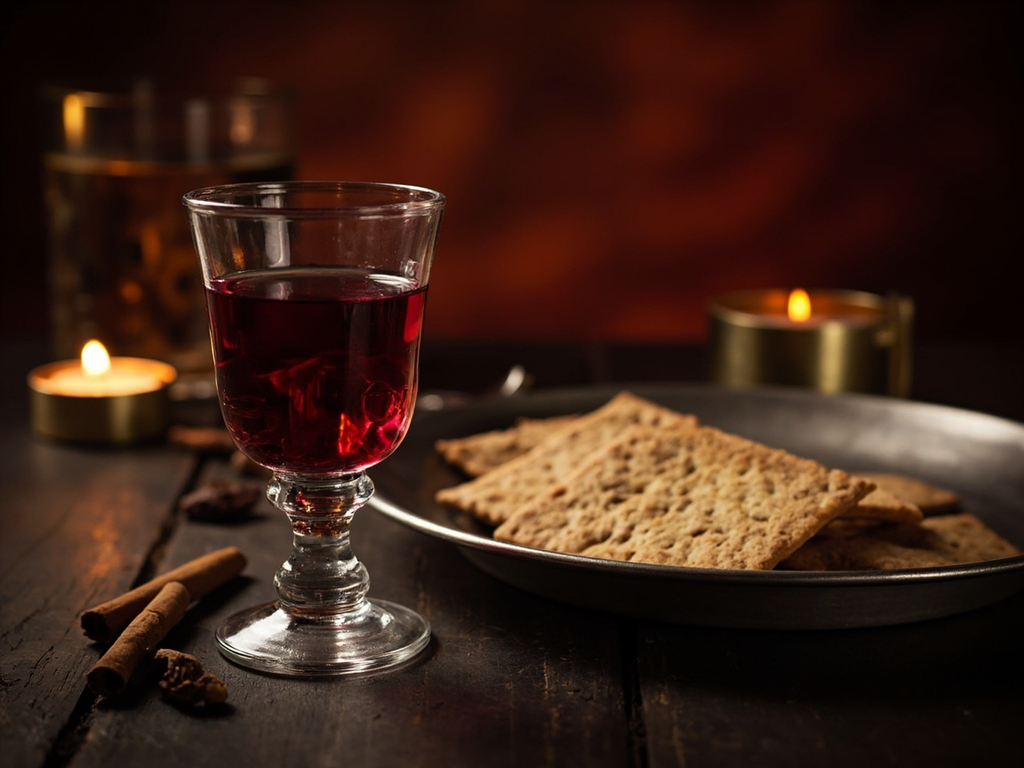
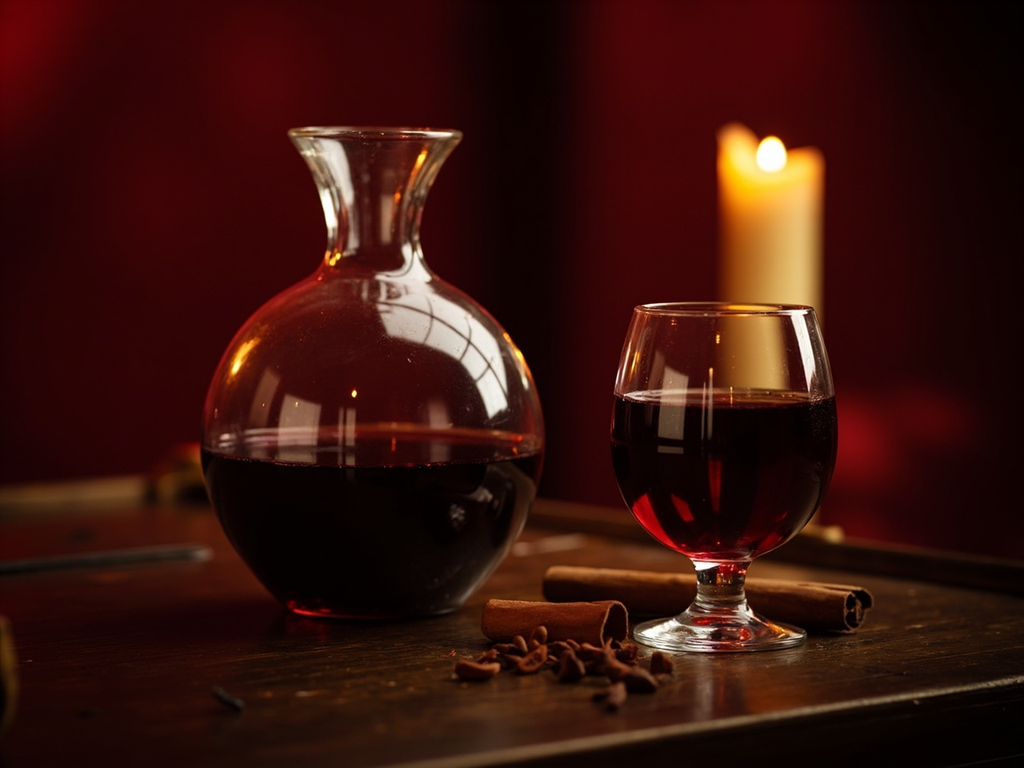
A wine perfumed with sweet spices and sugar, filtered until clear through a cloth (the "Hippocrates sleeve" that gives it its name). It is served in small quantities at the end of the meal, with dry biscuits.
To close a meal worthily, reader, they present ipocrasso. One takes good wine, throws in cinnamon, ginger, a few cloves and grains of paradise, enough sugar, then passes it all through a cloth bag until it runs clear as ruby. I tasted at each court the wine of the country, and believe me, I noted everything in my register; but thus spiced, the simplest vintage became worthy of a cardinal's table.
- •Good wine (red or white) — a pint (base)
- •Cinnamon, ginger, clove, grain of paradise — ground spices (flavor)
- •Sugar (or honey) — sufficient (sweetness)
Ipocrasso (mulled spiced wine, hippocras)
A wine perfumed with sweet spices and sugar, filtered until clear through a cloth (the "Hippocrates sleeve" that gives it its name). It is served in small quantities at the end of the meal, with dry biscuits.
Why this dish? De Beatis noted in his journal the wines of each region he crossed. Ipocrasso, spiced and sweetened wine served at the close of meals, was the prestige beverage of the courts he frequented — the perfect meeting of his traveler's curiosity and the refinement of princely tables.
To close a meal worthily, reader, they present ipocrasso. One takes good wine, throws in cinnamon, ginger, a few cloves and grains of paradise, enough sugar, then passes it all through a cloth bag until it runs clear as ruby. I tasted at each court the wine of the country, and believe me, I noted everything in my register; but thus spiced, the simplest vintage became worthy of a cardinal's table.
Ingredients (period version)
- Good wine (red or white) — a pint (base)
- Cinnamon, ginger, clove, grain of paradise — ground spices (flavor)
- Sugar (or honey) — sufficient (sweetness)
Ingredients
- Fruity red wine (or semi-sweet white) — 75 cl (base)
- Cinnamon — 1 stick (dominant spice)
- Fresh ginger — 3 thin slices (pungency)
- Clove — 3 (deep spice)
- Grains of paradise (or long pepper, if unavailable) — 1 pinch (aromatic heat)
- Sugar — 60 to 80 g (sweetness)
Method
- Pour the wine into a container, add the sugar, and stir to dissolve.
- Lightly crush the spices and add to the wine.
- Let infuse cold for 1 to 2 h (or heat very gently without boiling, then let rest), to preserve the wine's aroma.
- Filter carefully through a fine cloth or coffee filter until clear.
- Serve chilled or slightly warm, in small quantities, with mostaccioli.
How it was made : Hippocras (ipocrasso) takes its name from the "Hippocrates sleeve", the conical cloth bag used to clarify it. A highly prized closing beverage from the Middle Ages to the Renaissance, its recipes appear in many collections; costly spices signaled the host's rank. It was often prepared cold by maceration to avoid killing the wine.
The contemporary twist : Served over frozen grape berries as ice cubes, ipocrasso becomes a surprising festive aperitif (also non-alcoholic if using grape juice).
Sources : Le Ménagier de Paris, c. 1393 (hippocras recipe) · Bartolomeo Platina, De honesta voluptate et valetudine, 1474
Antonio de Beatis · Charactorium