 flip
flipBarley and Olive Maza — the spinner's flatbread
Barley and Olive Maza — the spinner's flatbread
Why this dish? Arachne is a humble mortal of Lydia, daughter of the dyer Idmon of Colophon, not a princess. Her daily life as a worker at the loom is the *maza*: the cold-kneaded barley flatbread, the staple food of the common Greek people, which is nibbled with one hand without leaving the work of the other.
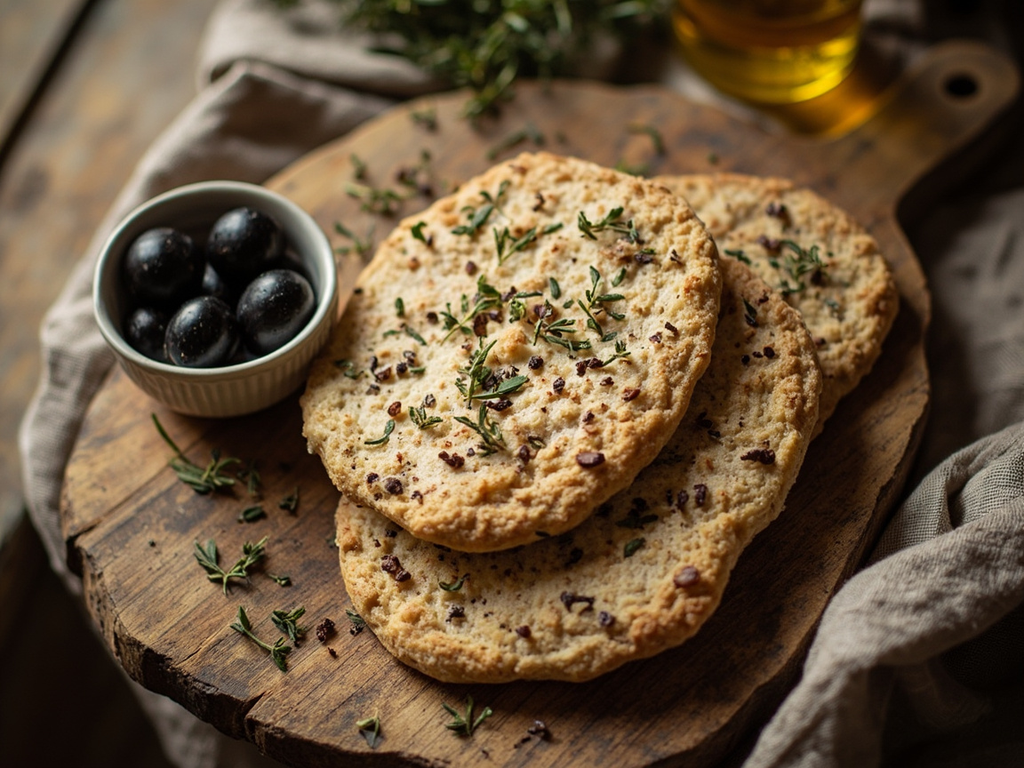
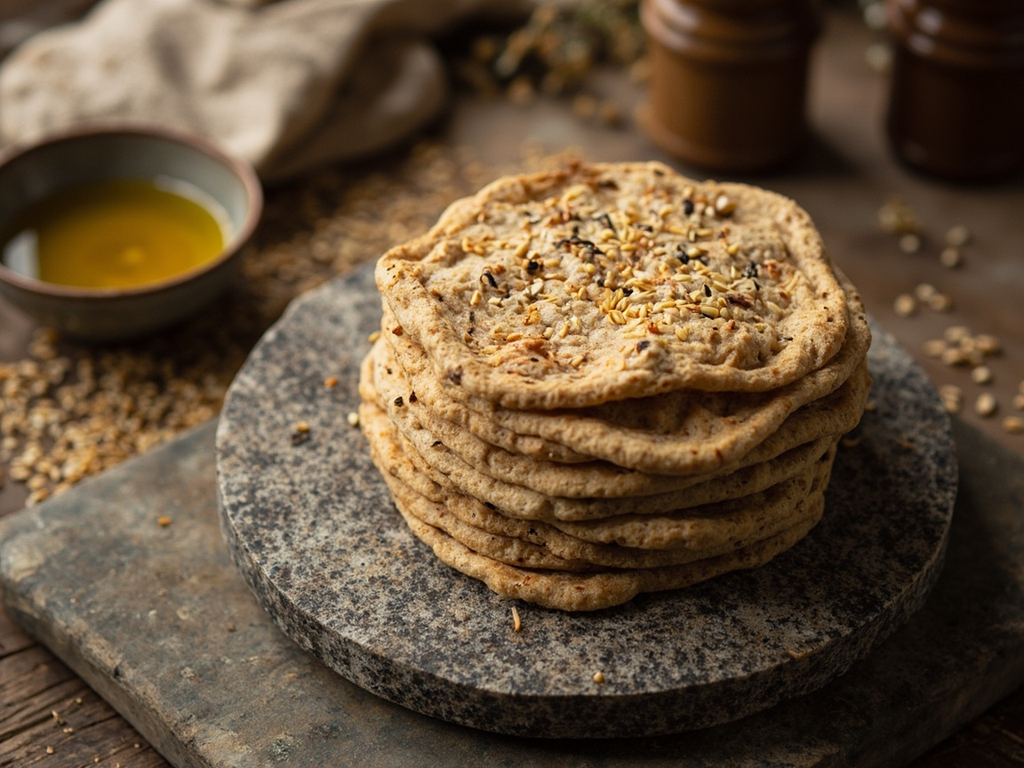
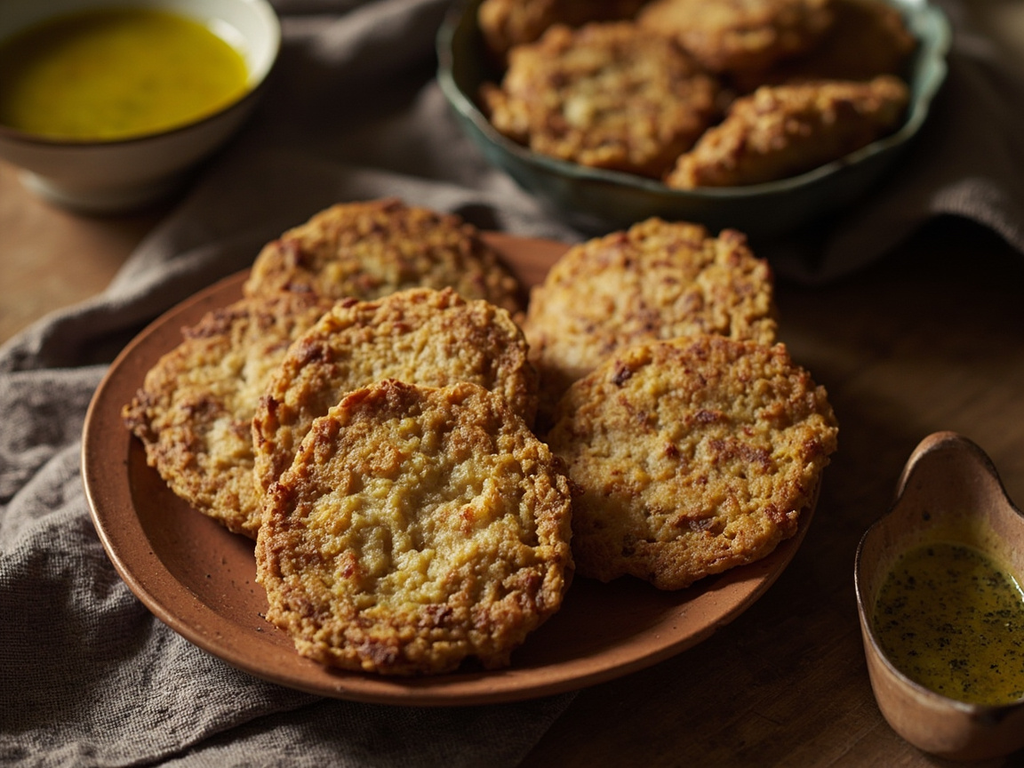
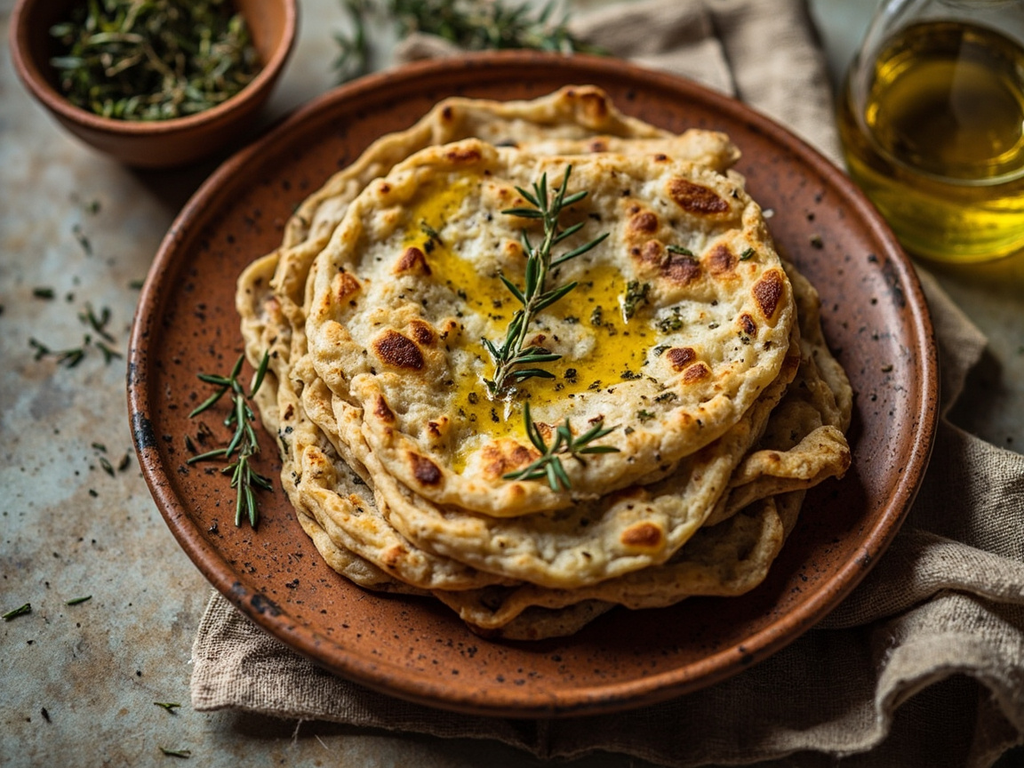
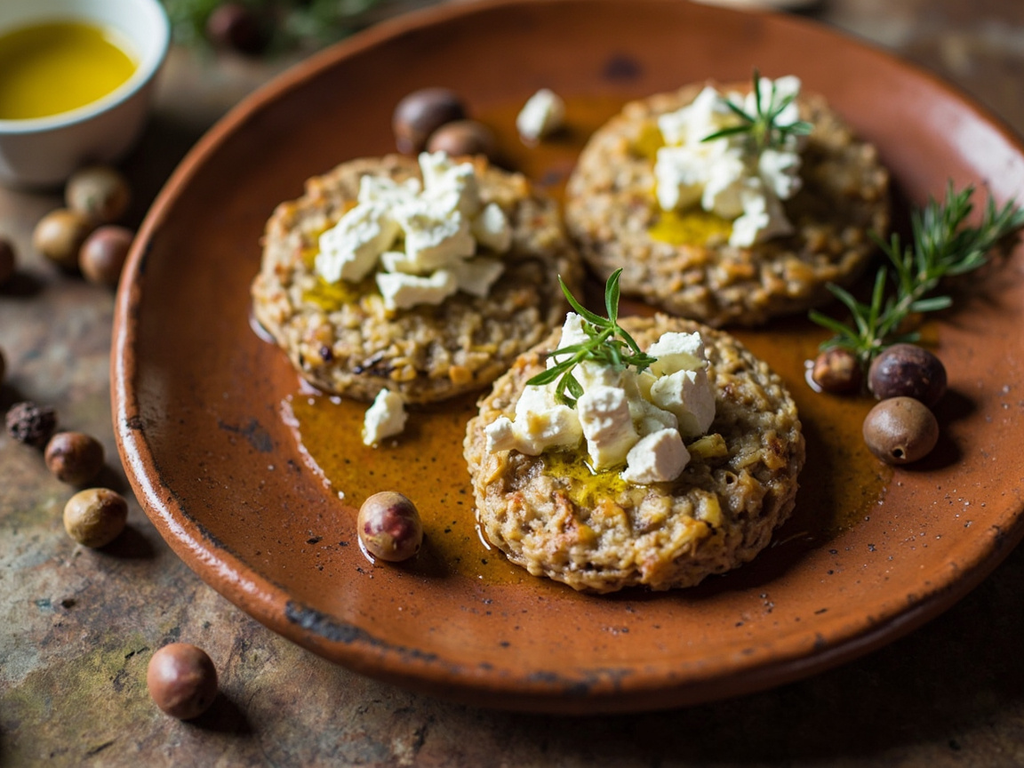
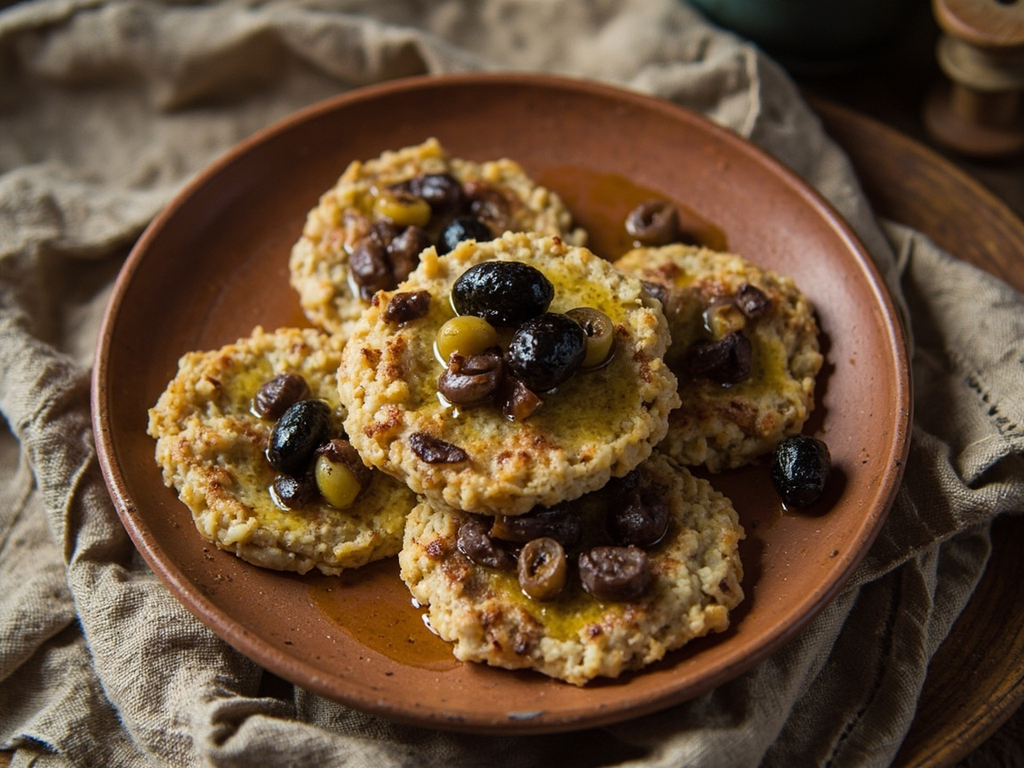
An unleavened barley flatbread, dense and rustic, flavored with crushed olives and a drizzle of oil. The bread of artisans: nourishing, simple, made to sustain the body during long hours of weaving.
You think me too proud to knead? Look at my hands: they know flour as well as wool. I grind my own barley, moisten it with a little water and oil, crush a handful of black olives into it, and eat it cold, standing, near my *histos*. Athena eats the ambrosia of the gods; I eat what the land of Lydia gives me, and I am ashamed of neither — my work is as good as hers.
- •Toasted barley flour (alphita) — two handfuls (base of the flatbread)
- •Black olives — a small handful (salty and bitter accent)
- •Olive oil — a drizzle (binder and fat)
- •Water — as needed (hydration)
- •Sea salt — a pinch (seasoning)
Barley and Olive Maza — the spinner's flatbread
An unleavened barley flatbread, dense and rustic, flavored with crushed olives and a drizzle of oil. The bread of artisans: nourishing, simple, made to sustain the body during long hours of weaving.
Why this dish? Arachne is a humble mortal of Lydia, daughter of the dyer Idmon of Colophon, not a princess. Her daily life as a worker at the loom is the *maza*: the cold-kneaded barley flatbread, the staple food of the common Greek people, which is nibbled with one hand without leaving the work of the other.
You think me too proud to knead? Look at my hands: they know flour as well as wool. I grind my own barley, moisten it with a little water and oil, crush a handful of black olives into it, and eat it cold, standing, near my *histos*. Athena eats the ambrosia of the gods; I eat what the land of Lydia gives me, and I am ashamed of neither — my work is as good as hers.
Ingredients (period version)
- Toasted barley flour (alphita) — two handfuls (base of the flatbread)
- Black olives — a small handful (salty and bitter accent)
- Olive oil — a drizzle (binder and fat)
- Water — as needed (hydration)
- Sea salt — a pinch (seasoning)
Ingredients
- Barley flour — 150 g (base of the flatbread)
- Pitted black olives — 60 g (salty and bitter accent)
- Extra virgin olive oil — 3 tbsp (binder and fat)
- Warm water — 80 to 100 ml (hydration)
- Salt — 1 pinch (seasoning)
Method
- Lightly toast the barley flour in a dry pan for 2-3 minutes until fragrant (period gesture: barley was toasted before grinding).
- Coarsely chop the olives.
- Mix flour, salt, olives, oil, then add water little by little to form a soft, non-sticky dough.
- Shape two flat cakes 1 cm thick.
- Cook on a hot stone or pan for 4-5 minutes per side, without fat, until colored.
- Eat warm or cold, drizzled with a final splash of oil.
How it was made : The barley *maza* was the daily food of modest Greeks, as opposed to *artos* (leavened wheat bread), which was more expensive. Barley was often toasted before grinding, giving *alphita*; some *maza* were not even cooked but simply kneaded and eaten raw, as a thick porridge.
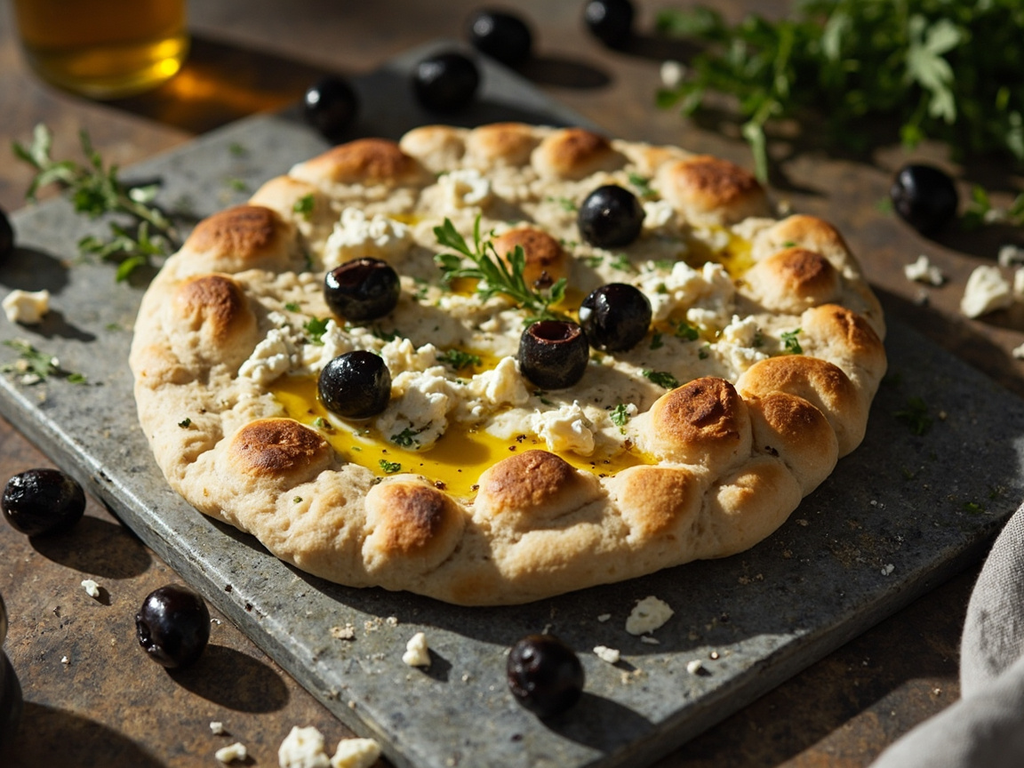
The contemporary twist : Served as crispy wafers on a slate board, with a Lydian-style olive tapenade and a veil of lemon zest — a nod to the thread stretched on the loom.
Sources : Andrew Dalby, Siren Feasts: A History of Food and Gastronomy in Greece, Routledge, 1996 · Solon Olynthus / passages from Athenaeus, Deipnosophistae, book III (on maza and alphita)
Arachne · Charactorium