 flip
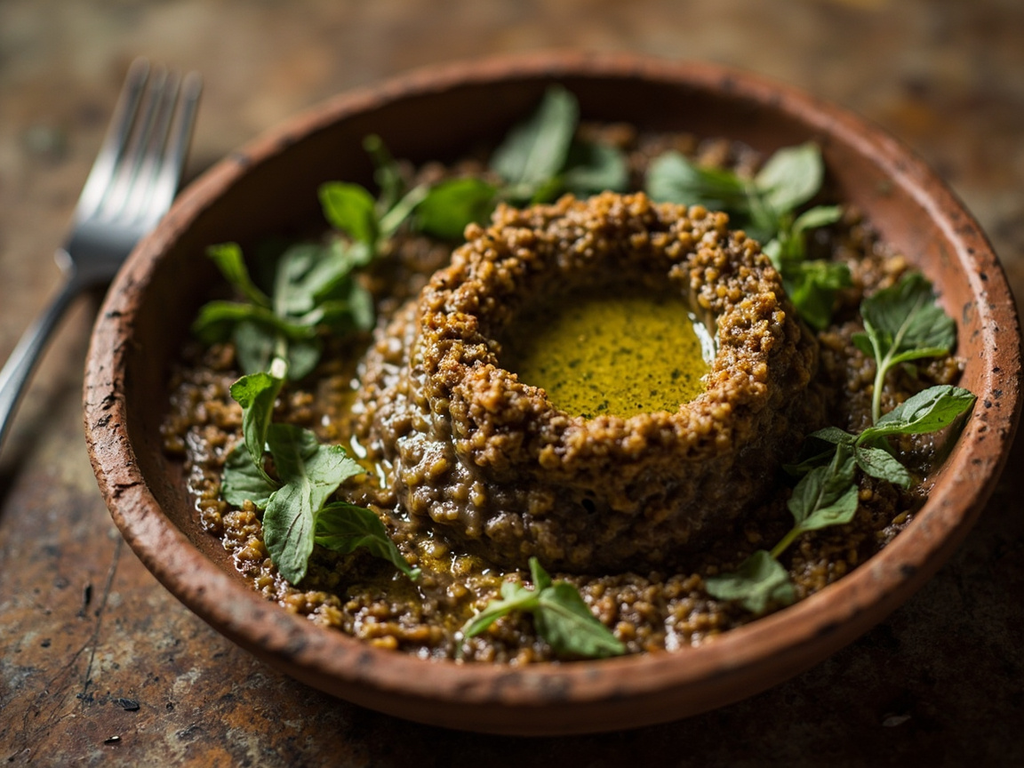
flipPhakē — Lentil Purée with Oil and Garos
Phakē — Lentil Purée with Oil and Garos
Why this dish? Justinian was said to be surprisingly sober for an emperor: he contented himself with vegetables, bread, and water, and fasted out of devotion. *Phakē*, the dish of monks and common people, perfectly matches this penitential table he imposed on himself, far from the splendors of his court.
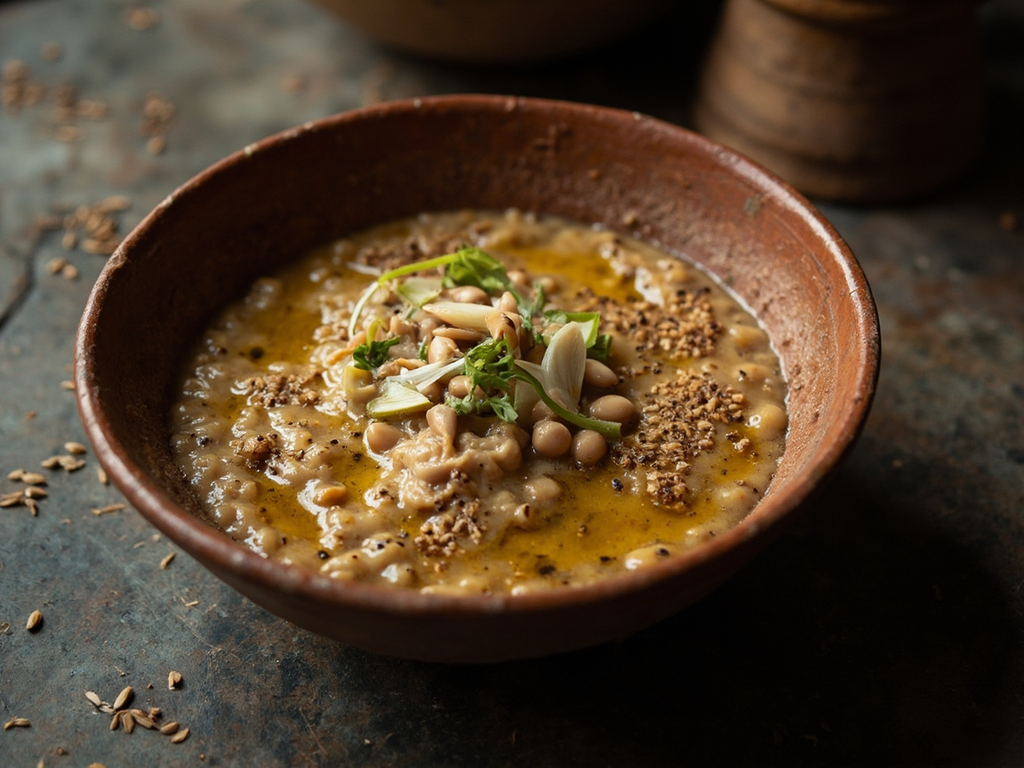
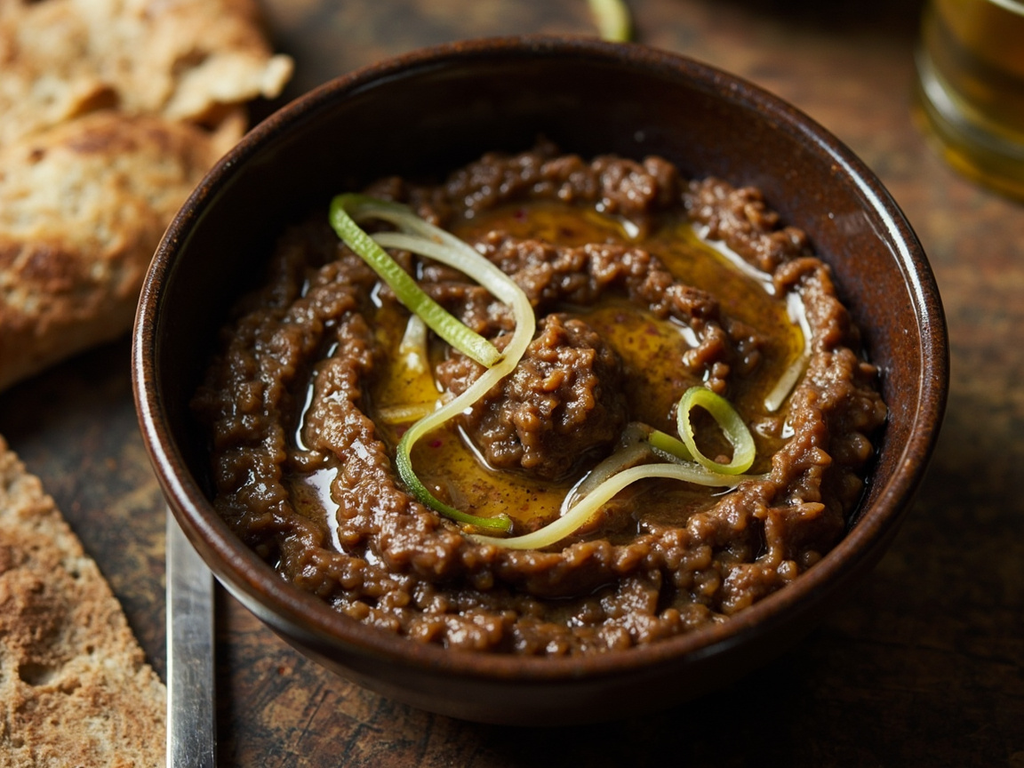
A lentil purée long-simmered with leek and onion, bound with olive oil, awakened with a dash of vinegar and a few drops of *garos*. Comforting, simple, deeply Byzantine.
Approach, and do not be surprised that an emperor offers you so little. The purple I wear does not nourish the soul; these humble lentils do. At my table, they are cooked with leek until they lose their shape, then oil is drizzled in, followed by a hint of *garos* and a tear of vinegar—that is the whole secret. I fast often, for he whom God has made guardian of the laws must first govern himself. Eat, and remember that a poor dish suffices for a righteous heart.
- •Brown lentils — a good bowlful (base)
- •Leek — one white part (aromatic)
- •Onion — one small (aromatic)
- •Olive oil — as needed (binder and fat)
- •Garos (garum) — a few drops (umami seasoning)
- •Wine vinegar — a dash (acidity)
- •Coriander and cumin — a pinch (spices)
Phakē — Lentil Purée with Oil and Garos
A lentil purée long-simmered with leek and onion, bound with olive oil, awakened with a dash of vinegar and a few drops of *garos*. Comforting, simple, deeply Byzantine.
Why this dish? Justinian was said to be surprisingly sober for an emperor: he contented himself with vegetables, bread, and water, and fasted out of devotion. *Phakē*, the dish of monks and common people, perfectly matches this penitential table he imposed on himself, far from the splendors of his court.
Approach, and do not be surprised that an emperor offers you so little. The purple I wear does not nourish the soul; these humble lentils do. At my table, they are cooked with leek until they lose their shape, then oil is drizzled in, followed by a hint of *garos* and a tear of vinegar—that is the whole secret. I fast often, for he whom God has made guardian of the laws must first govern himself. Eat, and remember that a poor dish suffices for a righteous heart.
Ingredients (period version)
- Brown lentils — a good bowlful (base)
- Leek — one white part (aromatic)
- Onion — one small (aromatic)
- Olive oil — as needed (binder and fat)
- Garos (garum) — a few drops (umami seasoning)
- Wine vinegar — a dash (acidity)
- Coriander and cumin — a pinch (spices)
Ingredients
- Brown or green lentils — 250 g (base)
- Sliced leek — 1 white part (aromatic)
- Chopped onion — 1 small (aromatic)
- Olive oil — 4 tbsp (binder and fat)
- Fish sauce (nuoc-mam or reconstituted garum) — 1 tsp (umami)
- Red wine vinegar — 1 tbsp (acidity)
- Ground coriander and cumin — 1/2 tsp each (spices)
- Water — 750 ml (cooking liquid)
Method
- Sweat the leek and onion in 2 tbsp olive oil without browning.
- Add the rinsed lentils, water, and spices; simmer for 35–40 minutes until the lentils fall apart.
- Mash roughly with a fork or blend briefly for a rustic purée.
- Off the heat, stir in the fish sauce and vinegar; adjust salt.
- Serve warm, drizzled with the remaining olive oil, with bread.
How it was made : *Phakē* is attested since Greek antiquity and remained the quintessential popular and monastic dish in Byzantium. It was boiled in an earthenware pot, bound with oil, and *garos* replaced refined salt, which was too costly for the common people.
The contemporary twist : Served as a quenelle glazed with new olive oil, sprinkled with crispy fried leek: imperial poverty in a gastro version.
Sources : Andrew Dalby, *Flavours of Byzantium* (Prospect Books, 2003) · Apicius, *De re coquinaria*, Book V (lentils)
Justinian · Charactorium