 flip
flipTarichos with Olives, Preserved Fish
Tarichos with Olives, Preserved Fish
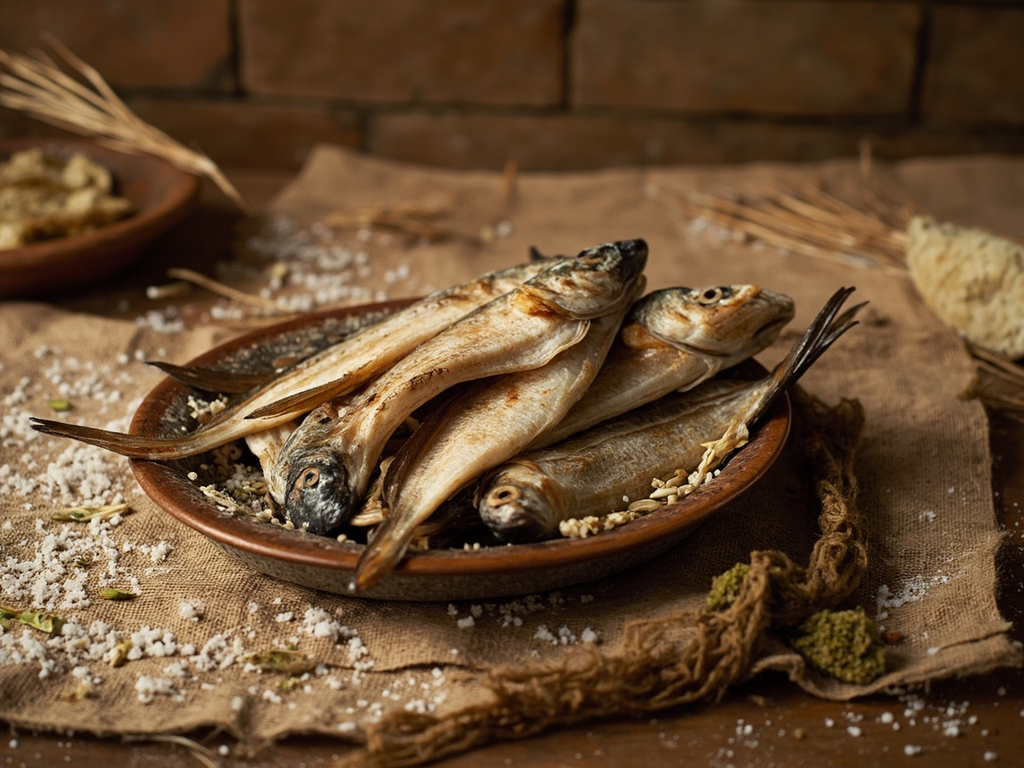
Why this dish? Dried and salted fish, tarichos, was an imported staple that every Athenian kept in reserve — Aristophanes mocks it in his plays where merchants from the Pontus hawk their salted fish. For a city dweller without a refrigerator, it was the safest opson, lasting all winter and adding flavor to bland maza.
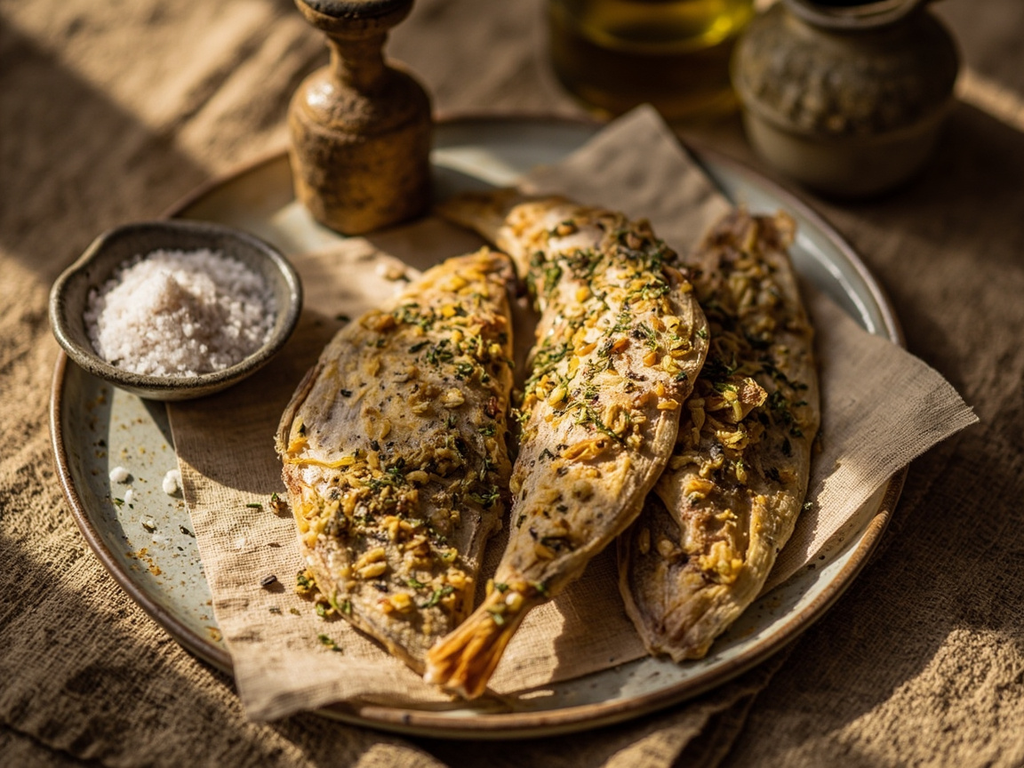
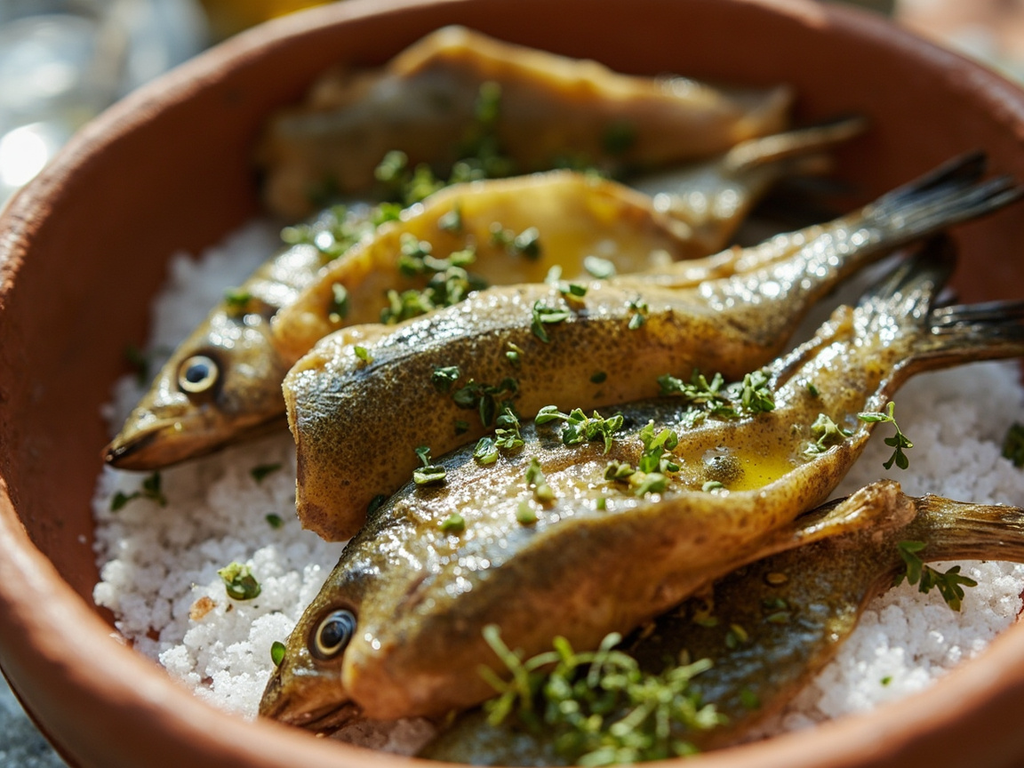
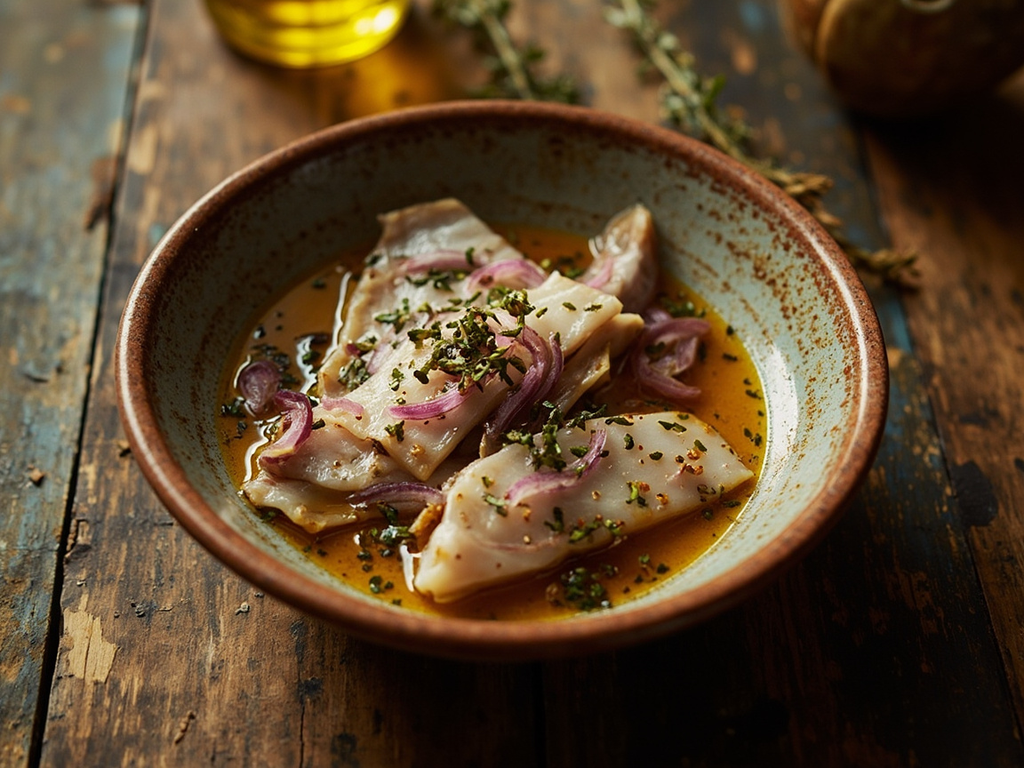
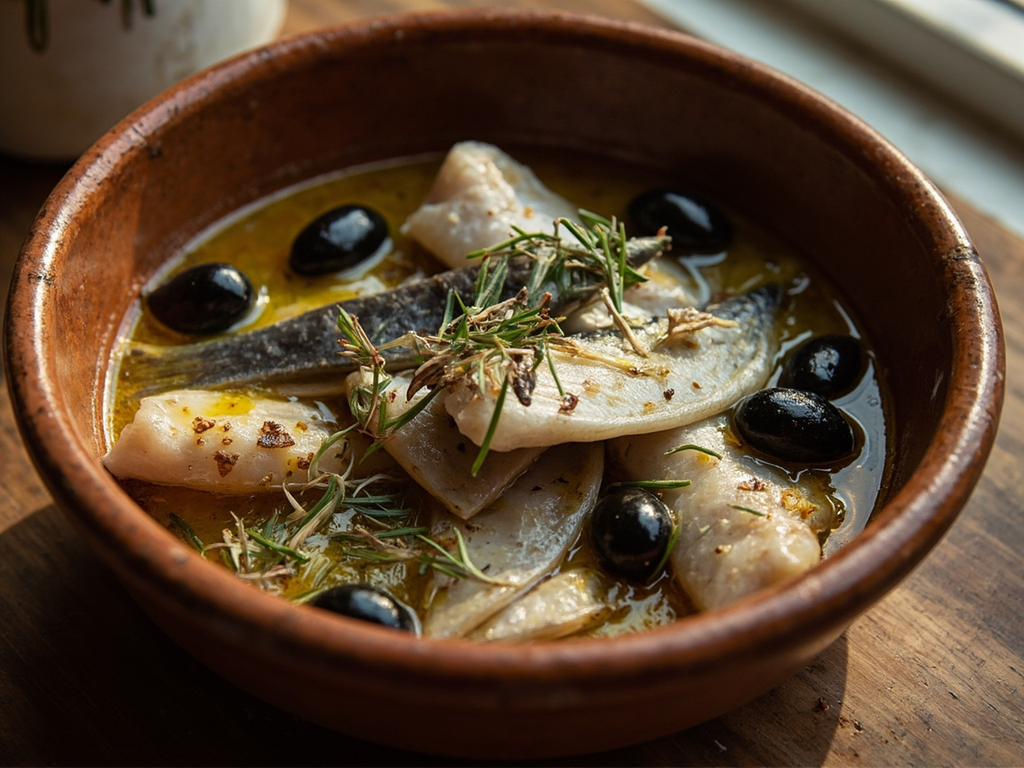
Salt-preserved fish, desalted then served with olives, oil, and a splash of vinegar. Salting concentrated the flavors into a powerful, deeply umami taste that enlivened the simplest meal.
Ah, tarichos! Go to the Agora and listen to those merchants from the Euxine Pontus shouting the price of their salted fish as if they were selling gold! I desalt my pieces in clear water for a whole night, then drown them in oil, vinegar, and black olives. It's the fare of sailors and jurors, and I tell you: with a cup of wine, it beats all the rich feasts I mock on stage!
- •Salted fish (tuna or mackerel, tarichos) — a few pieces (umami base)
- •Black olives — a handful (accompaniment)
- •Olive oil — generously (binder and smoothness)
- •Wine vinegar — a splash (acidity)
- •Dried oregano — a pinch (herb)
Tarichos with Olives, Preserved Fish
Salt-preserved fish, desalted then served with olives, oil, and a splash of vinegar. Salting concentrated the flavors into a powerful, deeply umami taste that enlivened the simplest meal.
Why this dish? Dried and salted fish, tarichos, was an imported staple that every Athenian kept in reserve — Aristophanes mocks it in his plays where merchants from the Pontus hawk their salted fish. For a city dweller without a refrigerator, it was the safest opson, lasting all winter and adding flavor to bland maza.
Ah, tarichos! Go to the Agora and listen to those merchants from the Euxine Pontus shouting the price of their salted fish as if they were selling gold! I desalt my pieces in clear water for a whole night, then drown them in oil, vinegar, and black olives. It's the fare of sailors and jurors, and I tell you: with a cup of wine, it beats all the rich feasts I mock on stage!
Ingredients (period version)
- Salted fish (tuna or mackerel, tarichos) — a few pieces (umami base)
- Black olives — a handful (accompaniment)
- Olive oil — generously (binder and smoothness)
- Wine vinegar — a splash (acidity)
- Dried oregano — a pinch (herb)
Ingredients
- Mackerel or tuna in brine (or desalted salted anchovies) — 200 g (umami base)
- Black olives (Kalamata type) — 80 g (accompaniment)
- Extra virgin olive oil — 4 tbsp (binder and smoothness)
- Wine vinegar — 1 tbsp (acidity)
- Dried oregano — 1 tsp (herb)
Method
- If the fish is very salty, desalt in cold water for a few hours (or overnight), changing the water once.
- Drain and cut into pieces or strips.
- Arrange in a bowl with the black olives.
- Drizzle generously with olive oil, add the vinegar and oregano.
- Mix gently and let rest 15 minutes for flavors to meld. Serve with maza or bread.
How it was made : Without refrigeration, salting was THE way to preserve fish caught far away (Black Sea, Spain). Tarichos traveled in amphorae and was a major trade item for Athens. The Greek *garos* (fermented fish sauce, ancestor of Roman garum) served the same umami register to enhance dishes.
The contemporary twist : Assemble as a 'Greek bruschetta' on toasted barley flatbread, antique style, with a lemon zest — citrus arrived in the Mediterranean later, but a wink is allowed.
Aristophanes · Charactorium