 flip
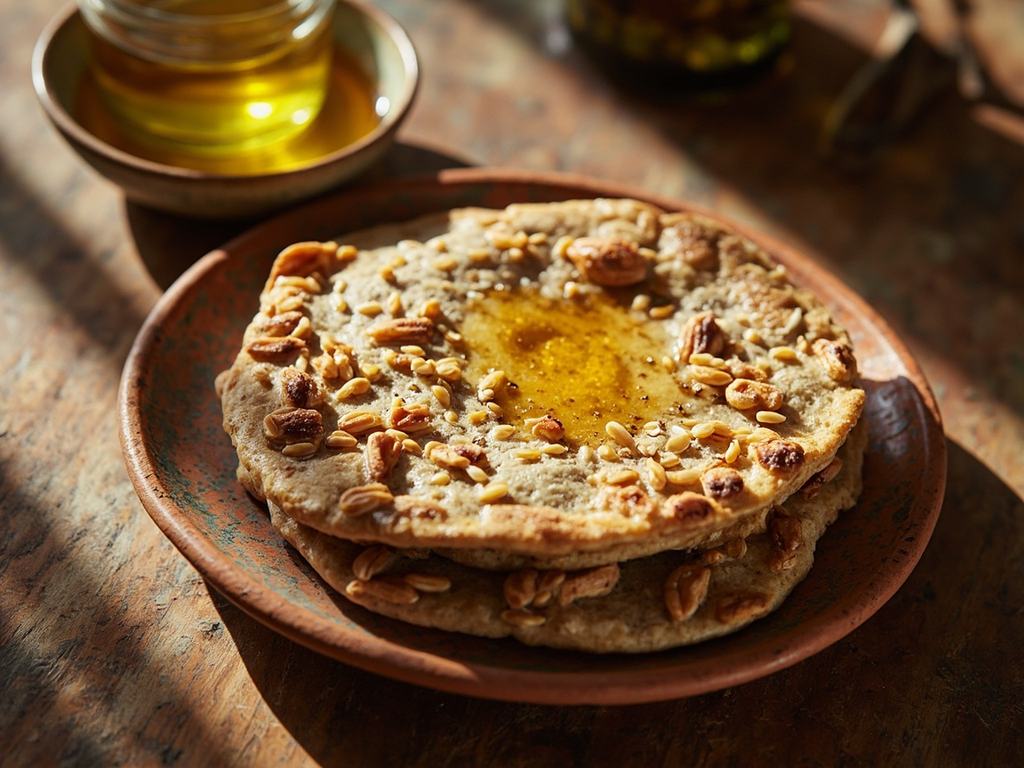
flipMaza with honey and sesame, the daily bread of the Greeks of Alexandria
Maza with honey and sesame, the daily bread of the Greeks of Alexandria
Why this dish? A Macedonian princess transplanted to Egypt, Arsinoë kept Greek eating habits. Maza—unleavened barley flatbread—was the ordinary bread of the Greeks, even on the wealthy tables of Alexandria, where sesame and honey from the Fayyum (later renamed Arsinoite after her) were enjoyed.
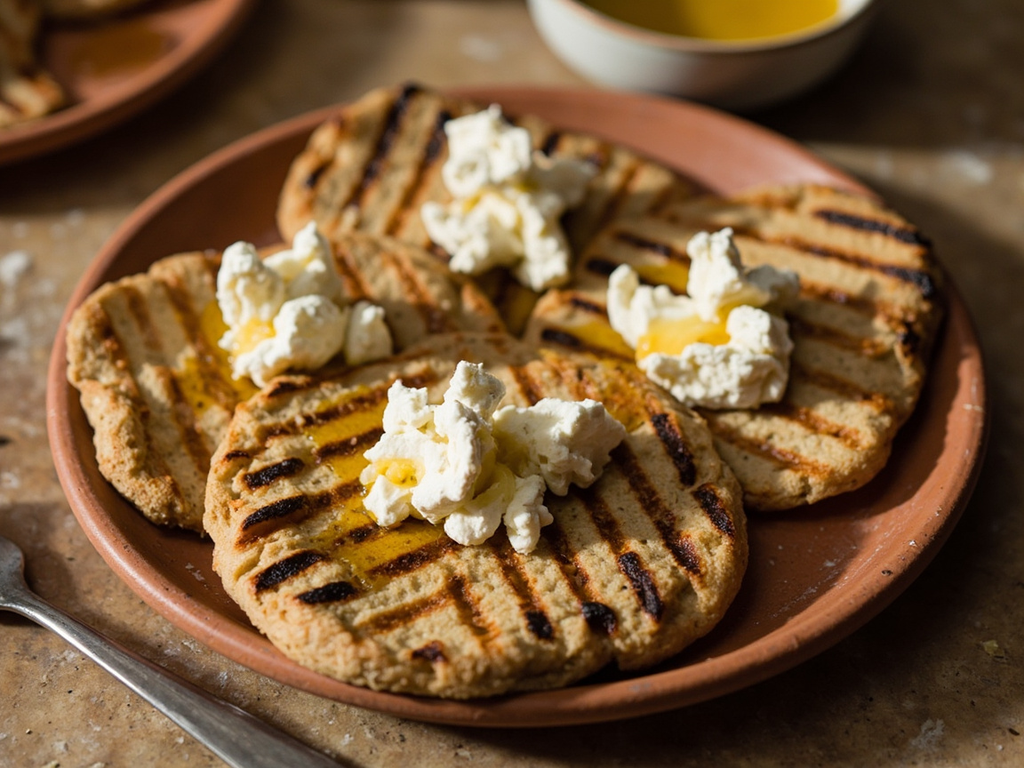
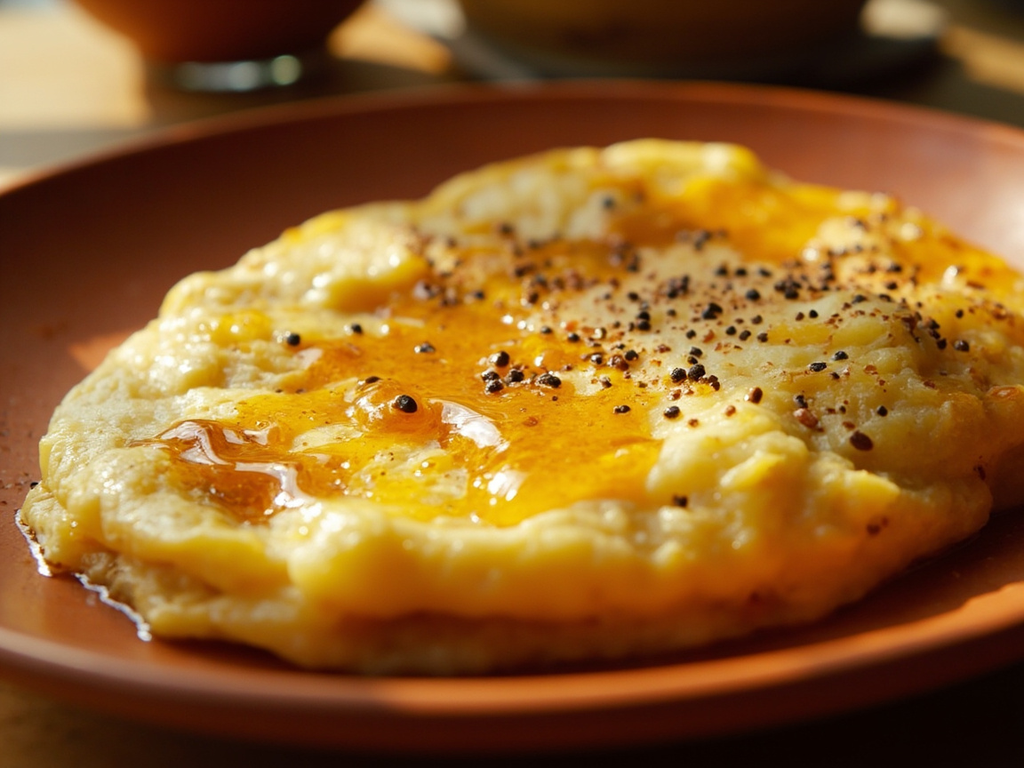
A dense, nourishing barley flatbread, enhanced with honey and toasted sesame seeds. The sitos, the staple of the Greek meal, eaten dipped in oil, fresh cheese, or olives.
Know, traveler, that even as queen of Egypt I have not renounced the bread of my Macedonian fathers. My servants grind the barley on the millstone, moisten it with water and honey from the Fayyum, and bake it on the hot stone. They sprinkle toasted sesame, whose fragrance delights the palate. Dip it in olive oil from Greece: thus we broke the morning fast, simply, before the evening's splendor.
- •Barley flour — two generous handfuls (cereal base)
- •Honey — a drizzle (binder and sweetness)
- •Sesame seeds — a handful (signature, crunch)
- •Water — as needed for dough (hydration)
- •Sea salt — a pinch (seasoning)
Maza with honey and sesame, the daily bread of the Greeks of Alexandria
A dense, nourishing barley flatbread, enhanced with honey and toasted sesame seeds. The sitos, the staple of the Greek meal, eaten dipped in oil, fresh cheese, or olives.
Why this dish? A Macedonian princess transplanted to Egypt, Arsinoë kept Greek eating habits. Maza—unleavened barley flatbread—was the ordinary bread of the Greeks, even on the wealthy tables of Alexandria, where sesame and honey from the Fayyum (later renamed Arsinoite after her) were enjoyed.
Know, traveler, that even as queen of Egypt I have not renounced the bread of my Macedonian fathers. My servants grind the barley on the millstone, moisten it with water and honey from the Fayyum, and bake it on the hot stone. They sprinkle toasted sesame, whose fragrance delights the palate. Dip it in olive oil from Greece: thus we broke the morning fast, simply, before the evening's splendor.
Ingredients (period version)
- Barley flour — two generous handfuls (cereal base)
- Honey — a drizzle (binder and sweetness)
- Sesame seeds — a handful (signature, crunch)
- Water — as needed for dough (hydration)
- Sea salt — a pinch (seasoning)
Ingredients
- Barley flour — 200 g (cereal base)
- Liquid honey — 2 tbsp (binder and sweetness)
- Sesame seeds — 40 g (signature, crunch)
- Warm water — about 120 ml (hydration)
- Salt — 1/2 tsp (seasoning)
- Olive oil — for serving (dipping)
Method
- Toast the sesame seeds in a dry pan until golden and fragrant.
- Mix the barley flour and salt, then add the honey and warm water gradually until a firm but pliable dough forms.
- Knead in half the sesame seeds.
- Shape into flat cakes about 1 cm thick and sprinkle the remaining sesame seeds on top, pressing lightly.
- Cook on a hot stone, griddle, or dry pan for 4-5 minutes per side, until browned.
- Serve warm, to dip in olive oil.
How it was made : Maza, an unleavened barley flatbread, was the most common Greek food, distinct from the more prestigious wheat bread (artos). It was often kneaded with water, milk, oil, or honey. In Ptolemaic Egypt, Greek settlers continued to eat it while also adopting local wheat bread.
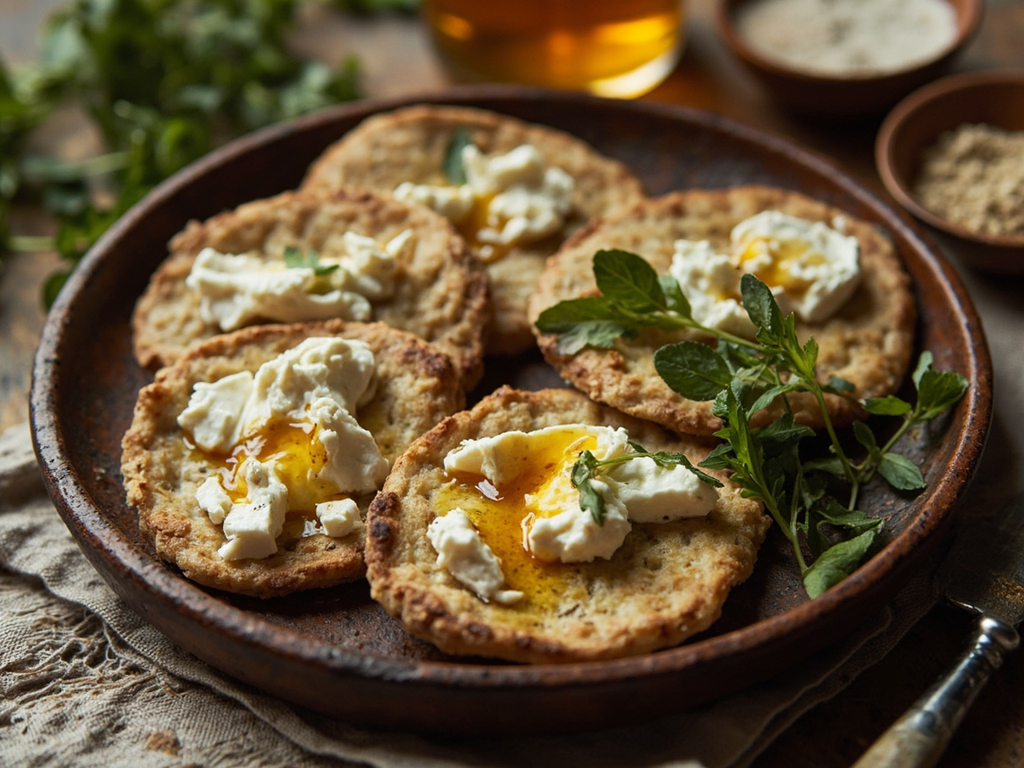
The contemporary twist : Serve as appetizer bites with fresh sheep's cheese and a drizzle of oregano-scented olive oil: a 'maza-tapas' that links Athens and Alexandria.
Arsinoe II · Charactorium