 flip
flipBarley Maza with Honey and Fresh Cheese
Barley Maza with Honey and Fresh Cheese
Why this dish? Maza, an unleavened barley cake, is the daily bread in Boeotia, a grain-rich land. On the table of a king of besieged Thebes, it is the food that holds the city: the barley from the granaries, rationed and guarded during the siege of the Seven against Thebes.
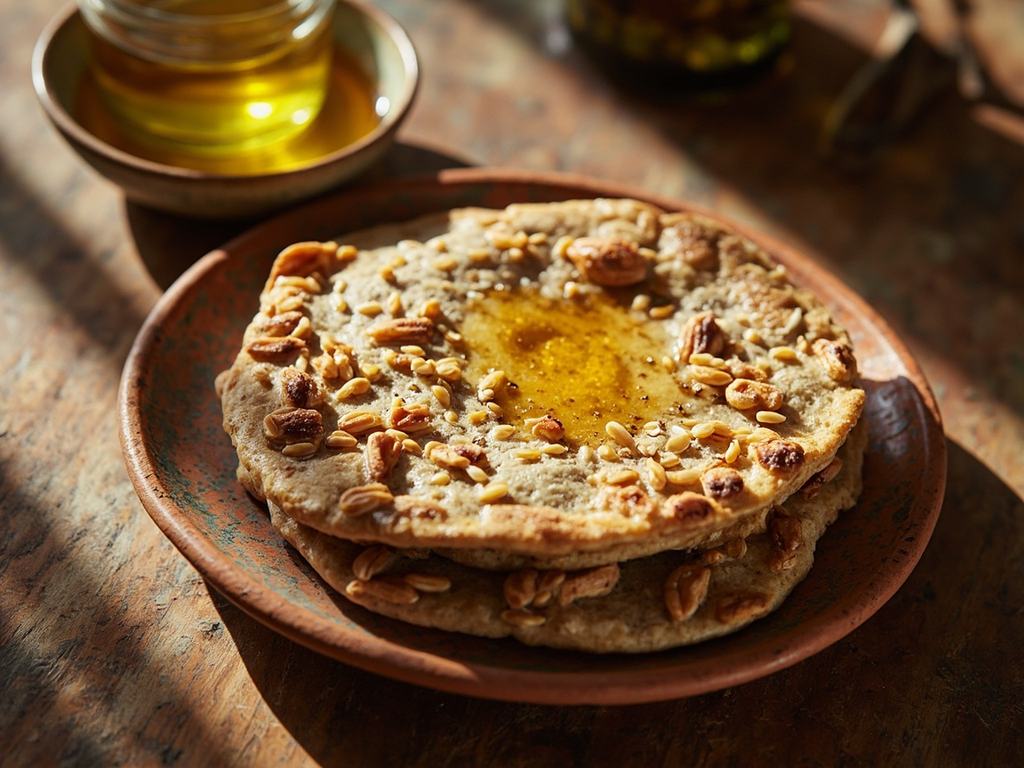
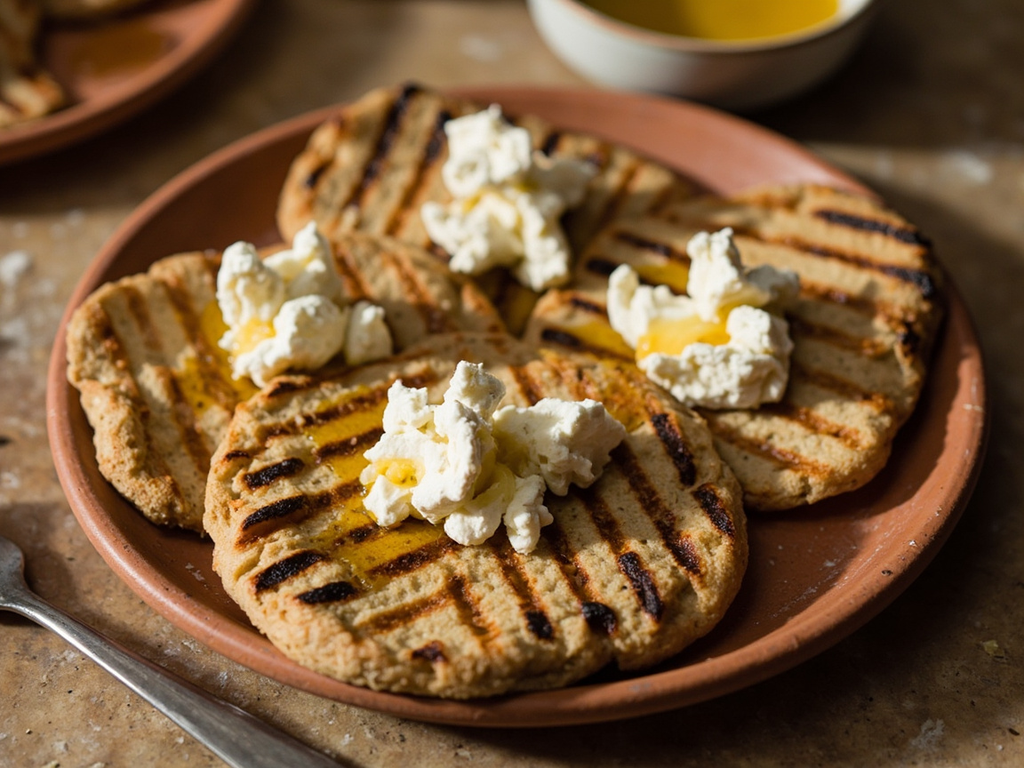
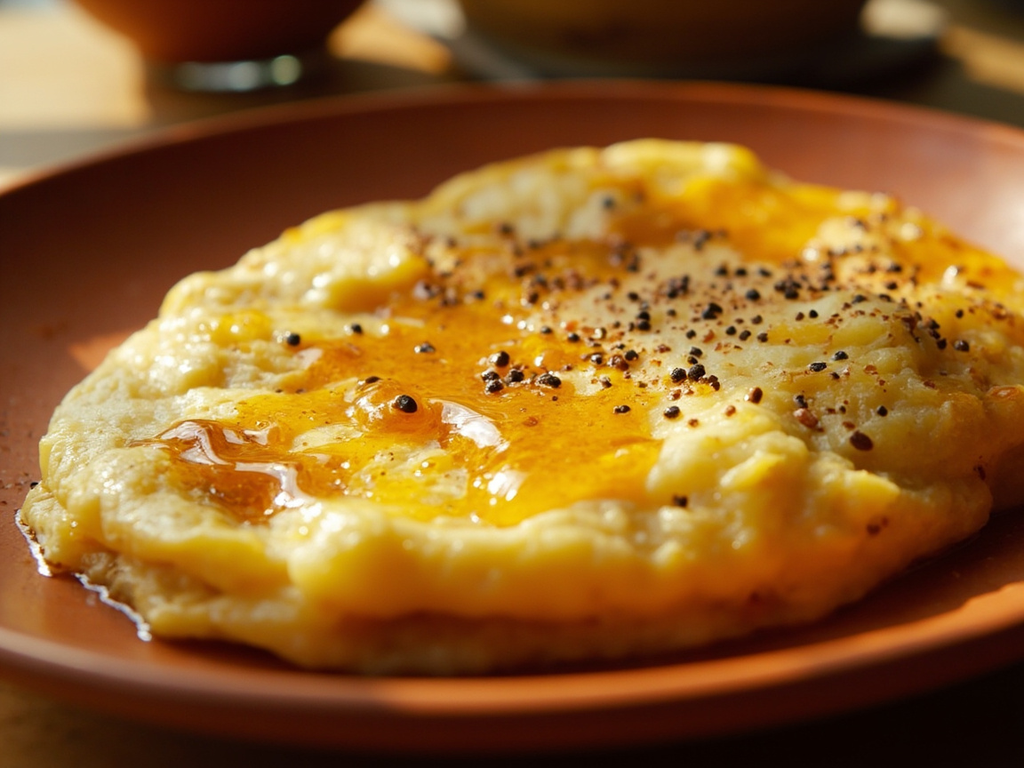
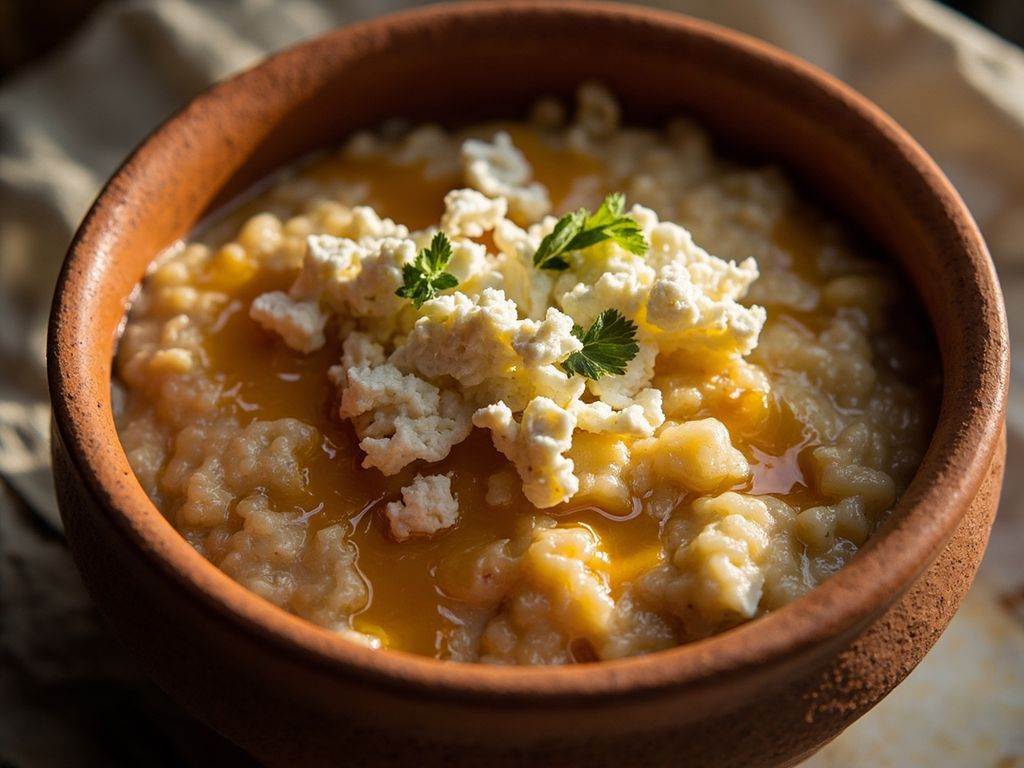
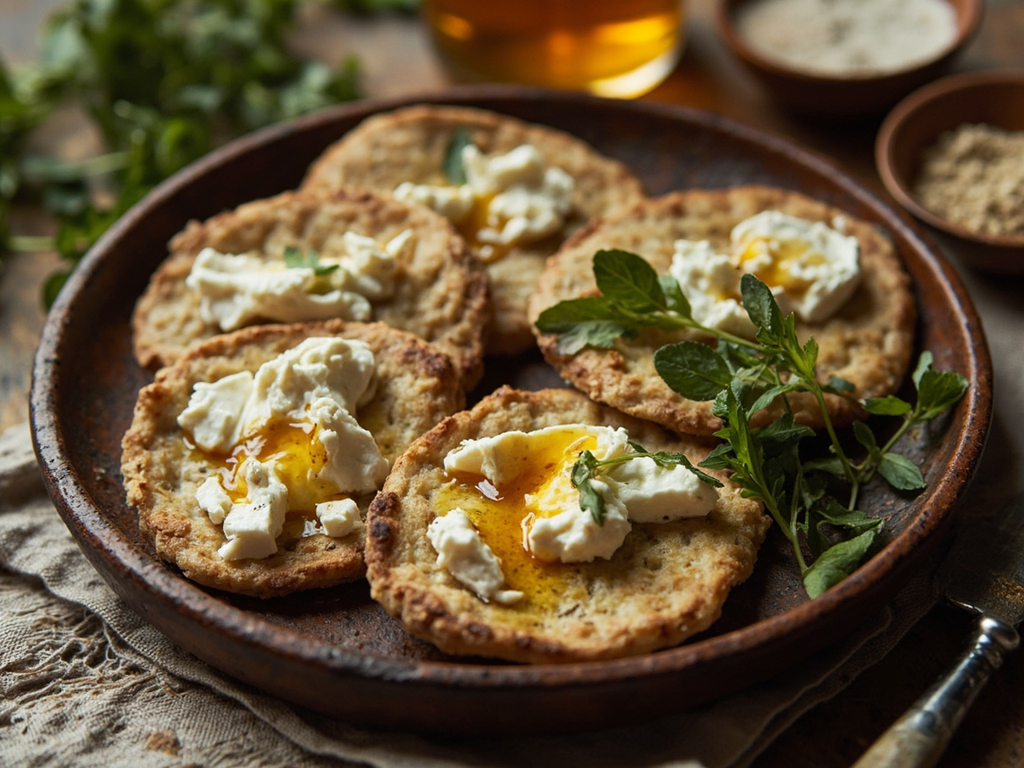
A dense cake of toasted and kneaded barley, barely cooked, topped with fresh cheese and a drizzle of honey. The ordinary bread of the ancient Greek, simple and nourishing.
Approach, and see what a king eats when his city is encircled by enemies. This barley cake — we knead it from the grain of our granaries, the very ones I have counted and guarded gate by gate. We toast the barley, crush it, bind it with a little water and oil, and do not wait for it to rise — a king at war does not wait. Break off a piece, dip it in the honey of Cithaeron: this is the bread of my people, and as long as there is barley in Thebes, Thebes stands.
- •Toasted barley flour — two full handfuls (base of the sitos)
- •Spring water — enough to bind (binder)
- •Olive oil — a drizzle (softness)
- •Fresh goat cheese — a portion (opson, accompaniment)
- •Honey — a drizzle (sweetness)
- •Sea salt — a pinch (seasoning)
Barley Maza with Honey and Fresh Cheese
A dense cake of toasted and kneaded barley, barely cooked, topped with fresh cheese and a drizzle of honey. The ordinary bread of the ancient Greek, simple and nourishing.
Why this dish? Maza, an unleavened barley cake, is the daily bread in Boeotia, a grain-rich land. On the table of a king of besieged Thebes, it is the food that holds the city: the barley from the granaries, rationed and guarded during the siege of the Seven against Thebes.
Approach, and see what a king eats when his city is encircled by enemies. This barley cake — we knead it from the grain of our granaries, the very ones I have counted and guarded gate by gate. We toast the barley, crush it, bind it with a little water and oil, and do not wait for it to rise — a king at war does not wait. Break off a piece, dip it in the honey of Cithaeron: this is the bread of my people, and as long as there is barley in Thebes, Thebes stands.
Ingredients (period version)
- Toasted barley flour — two full handfuls (base of the sitos)
- Spring water — enough to bind (binder)
- Olive oil — a drizzle (softness)
- Fresh goat cheese — a portion (opson, accompaniment)
- Honey — a drizzle (sweetness)
- Sea salt — a pinch (seasoning)
Ingredients
- Barley flour (or hulled barley, ground) — 200 g (base)
- Warm water — about 120 ml (binder)
- Olive oil — 2 tbsp (softness)
- Fresh goat cheese (like brousse) — 100 g (accompaniment)
- Liquid honey — 2 tbsp (sweetness)
- Salt — 1 pinch (seasoning)
Method
- Lightly toast the barley flour in a dry pan for 2-3 minutes, until it smells nutty, then let cool slightly.
- Mix the flour with the salt, olive oil, and warm water little by little until a soft, non-sticky dough forms.
- Shape into flat cakes about 1 cm thick.
- Cook on a baking sheet or hot pan for 3-4 minutes per side, without fat, until golden.
- Serve warm, spread with fresh cheese and drizzled with honey.
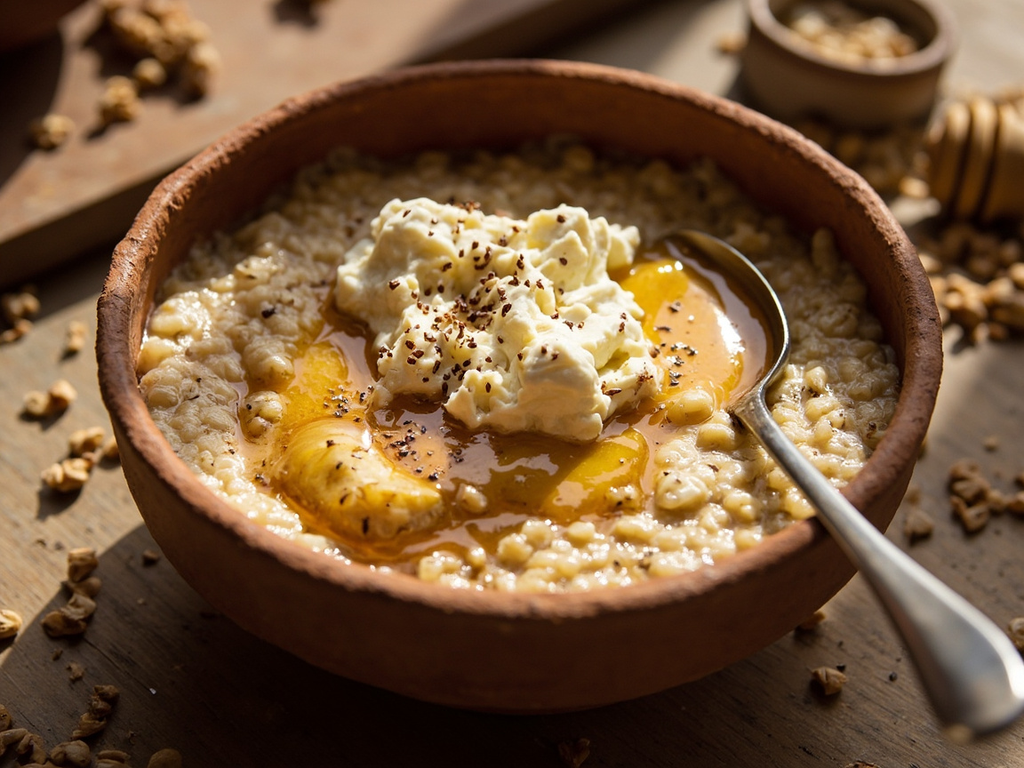
How it was made : Maza was often not even cooked: toasted barley flour was mixed with water, milk, or oil to form a paste eaten raw, faster than wheat bread which required an oven and leaven. It was the food of soldiers, peasants, and ordinary tables.
The contemporary twist : Serve as small sharing cakes with honey and goat cheese, like a "cursed kings' bread" — a bite that tells a whole siege.
Sources : Homer, Iliad and Odyssey (mentions of maza and barley) · Athenaeus of Naucratis, The Deipnosophists, Book III (on maza and its preparations)
Eteocles · Charactorium