 flip
flipPunic Porridge with Fresh Cheese and Honey (puls punica)
Punic Porridge with Fresh Cheese and Honey (puls punica)
Why this dish? Early Carthage lived on its fields of barley and spelt as much as on the sea. This porridge, which the Romans themselves called "Punic" because they knew it was Carthaginian, is the hearth dish that Dido shared with her people of Phoenician colonists, between two decisions of a builder queen.
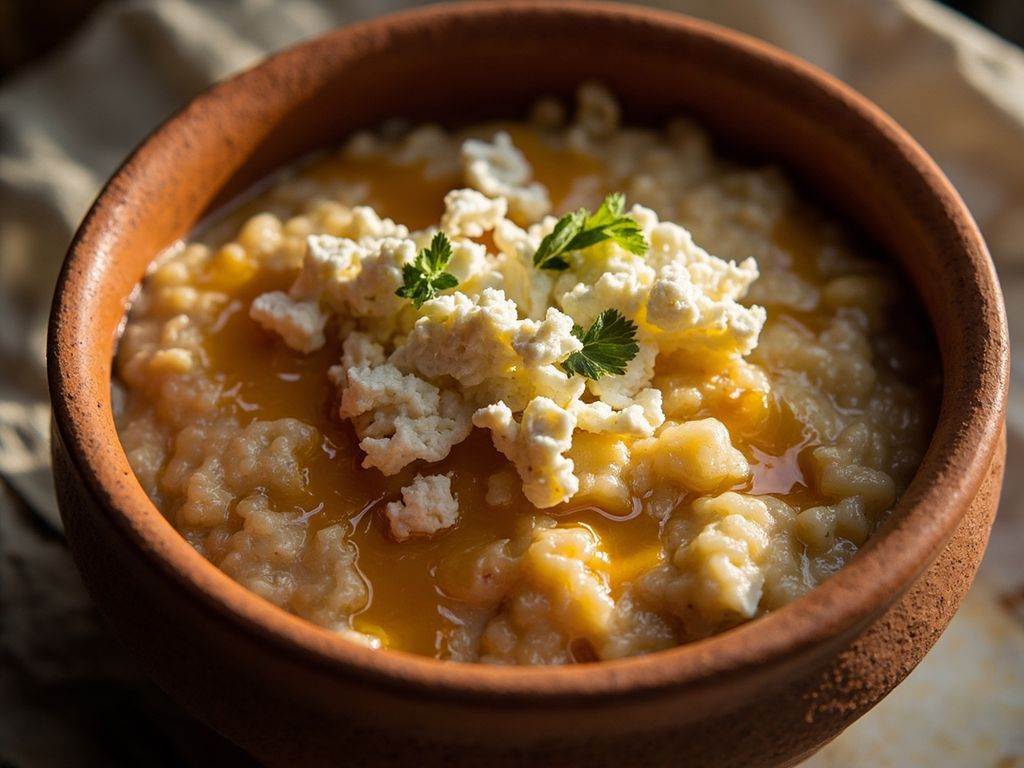
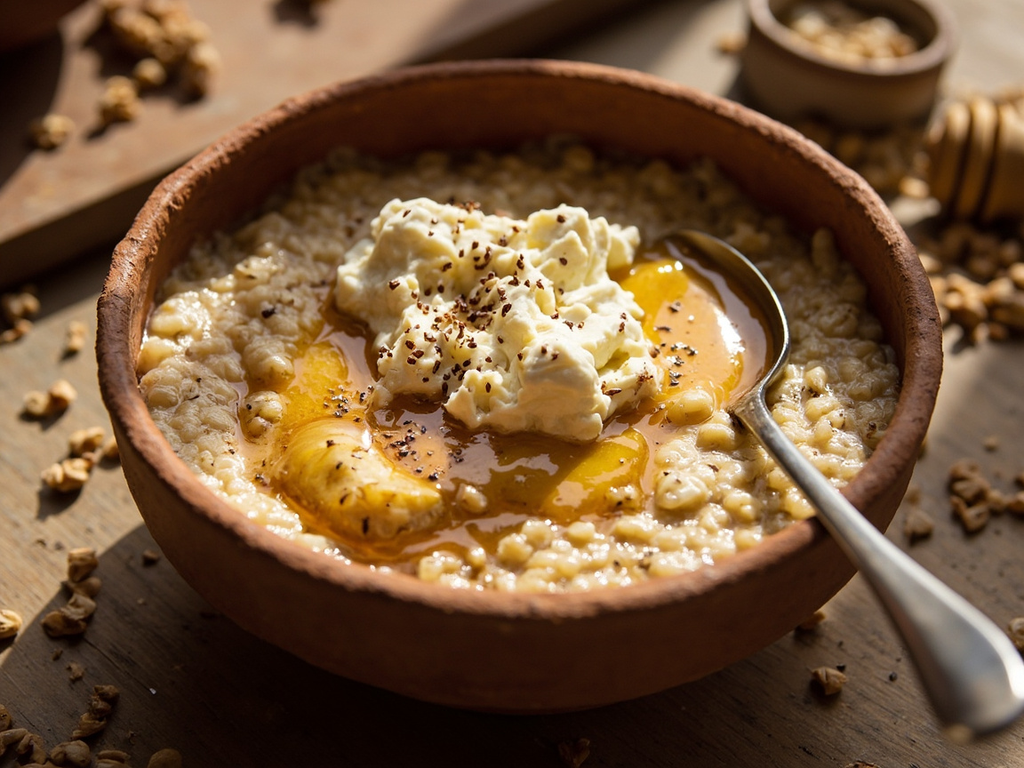
A creamy porridge of crushed spelt grains, enriched with fresh cheese and sweetened with honey, bound with an egg. Comforting, both sweet and salty, it is the breakfast of builders and kings alike.
Approach, stranger, and do not be deceived by its simplicity. When my Tyrians landed on this hill that would become Carthage, it was this porridge that kept us standing, bellies full before the work. We soak the grain in water until it becomes soft as a cloud, then we drown it in fresh cheese and honey from our hills, and we throw in an egg to bind it. Taste: the sweet and the salty kiss, as the new land kisses the sea that carried me here.
- •Crushed spelt grain (alica) — a good handful per person (nourishing base)
- •Fresh sheep or goat cheese — a few pieces (richness and binder)
- •Honey — to taste (sweetness)
- •Egg — one (binder)
- •Spring water — as needed for cooking (cooking liquid)
Punic Porridge with Fresh Cheese and Honey (puls punica)
A creamy porridge of crushed spelt grains, enriched with fresh cheese and sweetened with honey, bound with an egg. Comforting, both sweet and salty, it is the breakfast of builders and kings alike.
Why this dish? Early Carthage lived on its fields of barley and spelt as much as on the sea. This porridge, which the Romans themselves called "Punic" because they knew it was Carthaginian, is the hearth dish that Dido shared with her people of Phoenician colonists, between two decisions of a builder queen.
Approach, stranger, and do not be deceived by its simplicity. When my Tyrians landed on this hill that would become Carthage, it was this porridge that kept us standing, bellies full before the work. We soak the grain in water until it becomes soft as a cloud, then we drown it in fresh cheese and honey from our hills, and we throw in an egg to bind it. Taste: the sweet and the salty kiss, as the new land kisses the sea that carried me here.
Ingredients (period version)
- Crushed spelt grain (alica) — a good handful per person (nourishing base)
- Fresh sheep or goat cheese — a few pieces (richness and binder)
- Honey — to taste (sweetness)
- Egg — one (binder)
- Spring water — as needed for cooking (cooking liquid)
Ingredients
- Spelt or hulled small spelt — 120 g (base)
- Ricotta or sheep's brousse — 150 g (richness and binder)
- Honey (thyme or orange blossom) — 2 tbsp (sweetness)
- Egg — 1 (binder)
- Water — 700 ml (cooking liquid)
- Salt — 1 pinch (balance)
Method
- Rinse the spelt, cover with salted water, and cook over low heat for 40-50 minutes, stirring, until you get a tender porridge.
- Off the heat but still very hot, whisk in the ricotta to melt it into the grains.
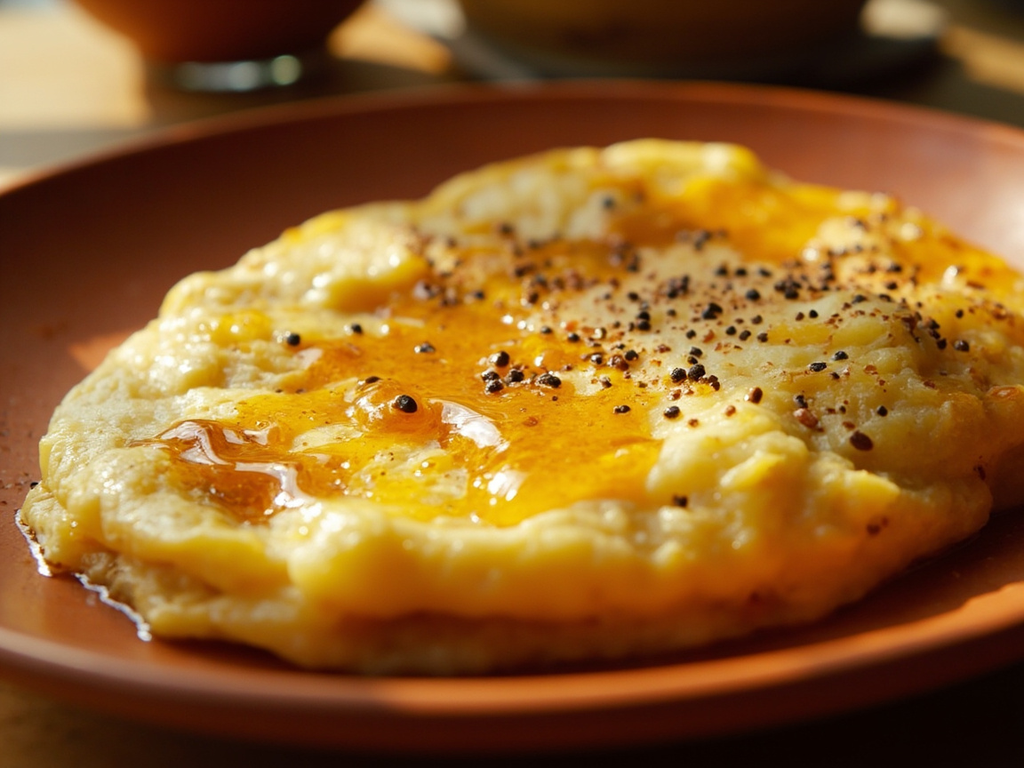
- Add the honey, then the beaten egg in a stream, stirring vigorously so it binds without cooking into lumps.
- Return to very low heat for 1-2 minutes until creamy and thickened.
- Serve warm in an earthenware bowl, with a drizzle of honey on top.
How it was made : Cato the Elder, in his De Agricultura (2nd century BC), gives the recipe for puls punica: soak alica (crushed spelt), add fresh cheese, honey, and an egg. The very name "Punic" betrays its Carthaginian origin — Rome copied the cuisine of its enemy as much as it fought it.
The contemporary twist : Serve it in a small pot as a morning dessert, with a few roasted figs and toasted almond flakes: an ancient porridge for a contemporary table.
Sources : Cato the Elder, De Agricultura, LXXXV (puls punica)
Dido · Charactorium