 flip
flipBarley Maza with Honey and Fresh Cheese
Barley Maza with Honey and Fresh Cheese
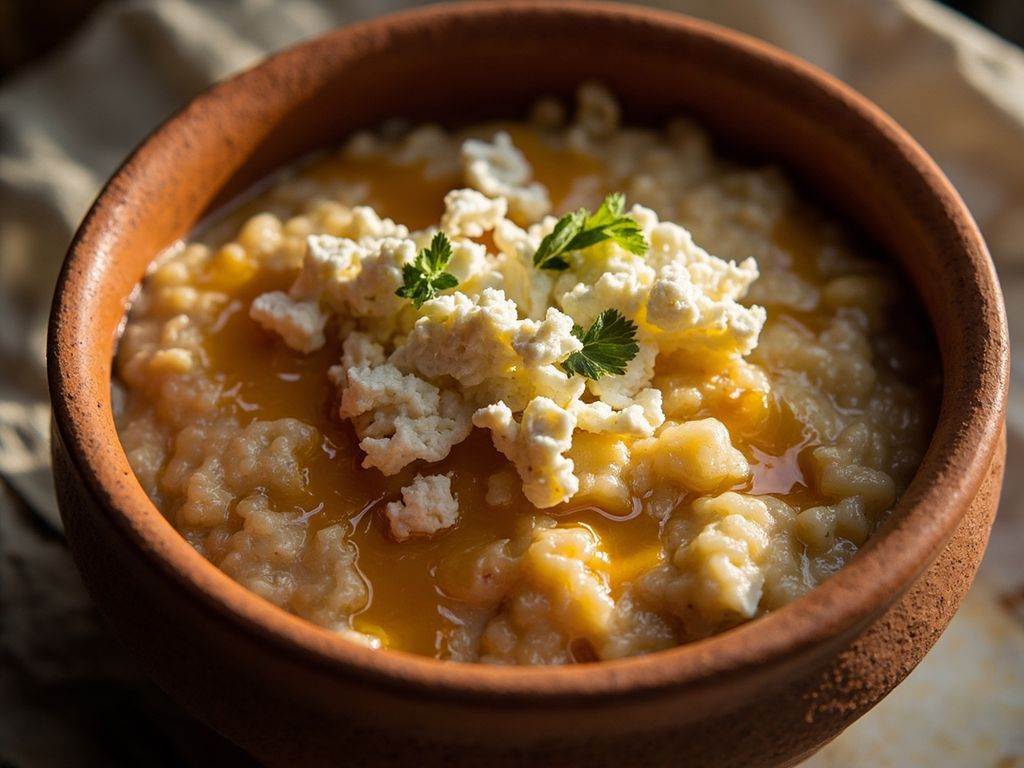
Why this dish? Born in Macedonia, Berenice grew up in a kitchen where barley prevailed over wheat. Maza, an unleavened barley flatbread or porridge, remained the staple food of Greeks even after settling in the wheat-rich Egypt: a taste of childhood that a queen from Pella could keep at her table.
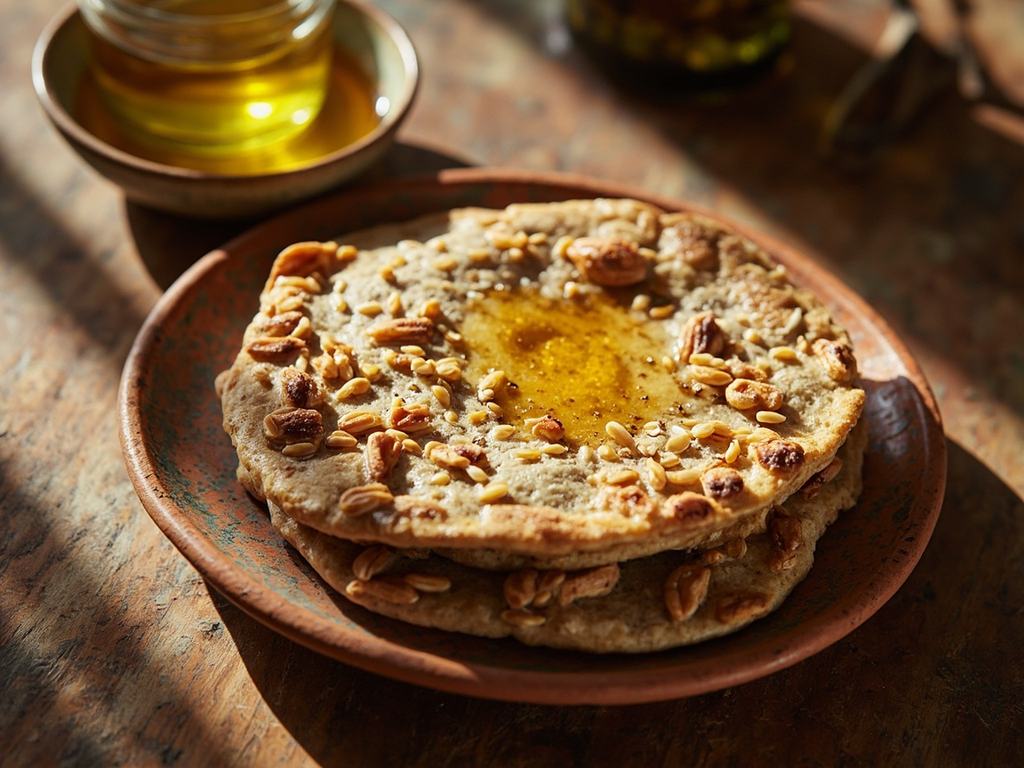
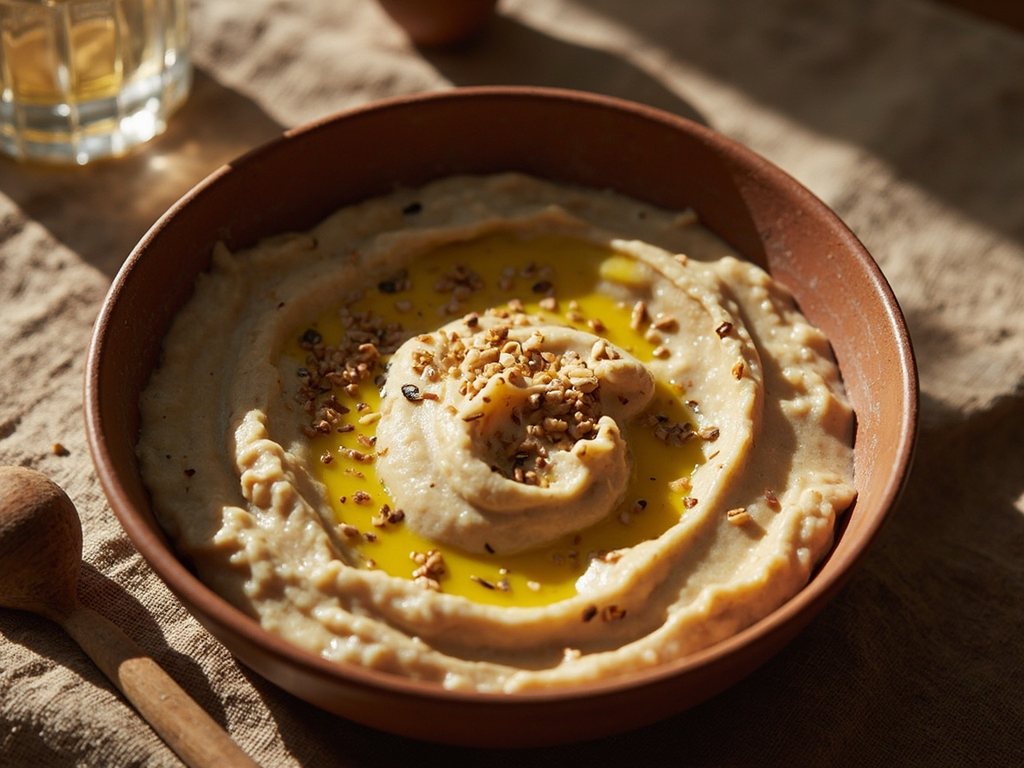
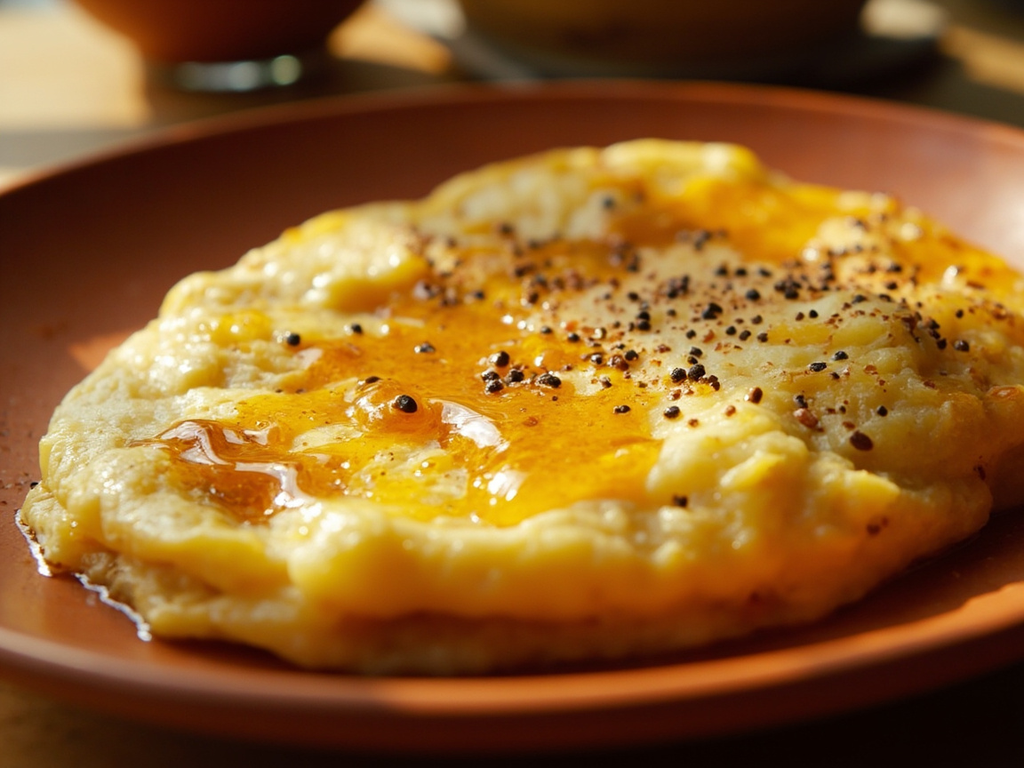
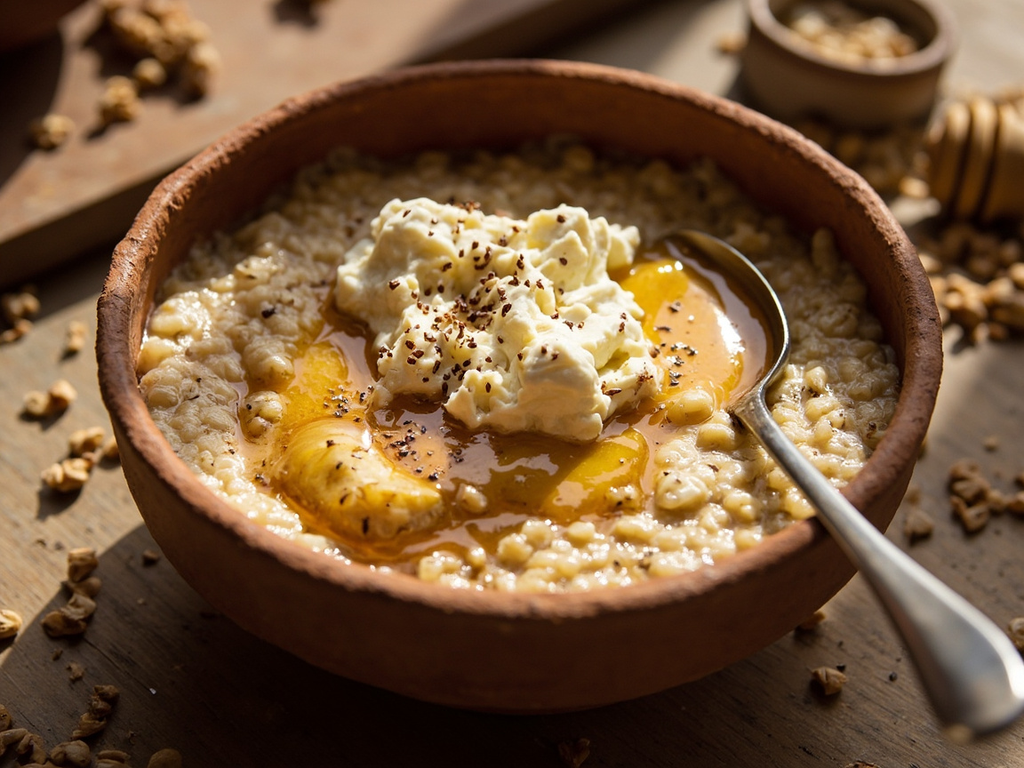
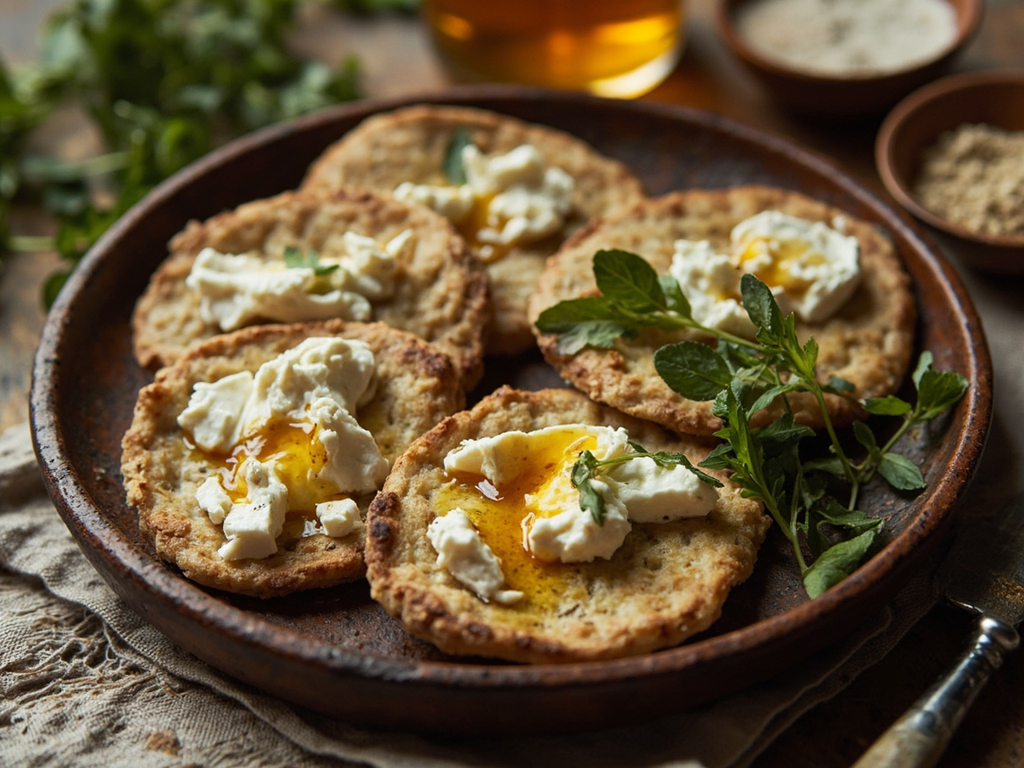
A dense and nourishing barley flatbread, kneaded without leavening, drizzled with honey and topped with fresh cheese. The daily bread of the Greeks, simple and fortifying, dipped in wine or oil.
Do you see, child, in Pella we never swore by the wheat of the Egyptians: it was barley that gave us strength. I toast it, then grind it, and knead it with my fingertips with a little water, without waiting for it to rise. On the warm flatbread I pour honey and crumble fresh cheese, as my nurse taught me before I crossed the sea. Keep this custom: a queen who forgets the bread of her fathers forgets where her crown comes from.
- •Toasted barley flour — two full handfuls (base)
- •Spring water — as needed (binder)
- •Thyme honey — a drizzle (sweetness)
- •Fresh goat cheese — a handful (topping)
- •Sea salt — a pinch (seasoning)
Barley Maza with Honey and Fresh Cheese
A dense and nourishing barley flatbread, kneaded without leavening, drizzled with honey and topped with fresh cheese. The daily bread of the Greeks, simple and fortifying, dipped in wine or oil.
Why this dish? Born in Macedonia, Berenice grew up in a kitchen where barley prevailed over wheat. Maza, an unleavened barley flatbread or porridge, remained the staple food of Greeks even after settling in the wheat-rich Egypt: a taste of childhood that a queen from Pella could keep at her table.
Do you see, child, in Pella we never swore by the wheat of the Egyptians: it was barley that gave us strength. I toast it, then grind it, and knead it with my fingertips with a little water, without waiting for it to rise. On the warm flatbread I pour honey and crumble fresh cheese, as my nurse taught me before I crossed the sea. Keep this custom: a queen who forgets the bread of her fathers forgets where her crown comes from.
Ingredients (period version)
- Toasted barley flour — two full handfuls (base)
- Spring water — as needed (binder)
- Thyme honey — a drizzle (sweetness)
- Fresh goat cheese — a handful (topping)
- Sea salt — a pinch (seasoning)
Ingredients
- Barley flour — 200 g (base)
- Warm water — 100 to 120 ml (binder)
- Thyme honey — 2 tbsp (sweetness)
- Fresh goat cheese (like brousse) — 100 g (topping)
- Olive oil — 1 tbsp (binder)
- Salt — 1 pinch (seasoning)
Method
- If starting from grains, dry-toast them for a few minutes in a pan before grinding: this toasting gives maza its nutty flavor.
- Mix barley flour and salt, then gradually add warm water and oil until you have a supple dough, neither sticky nor dry.
- Shape flat discs half a centimeter thick.
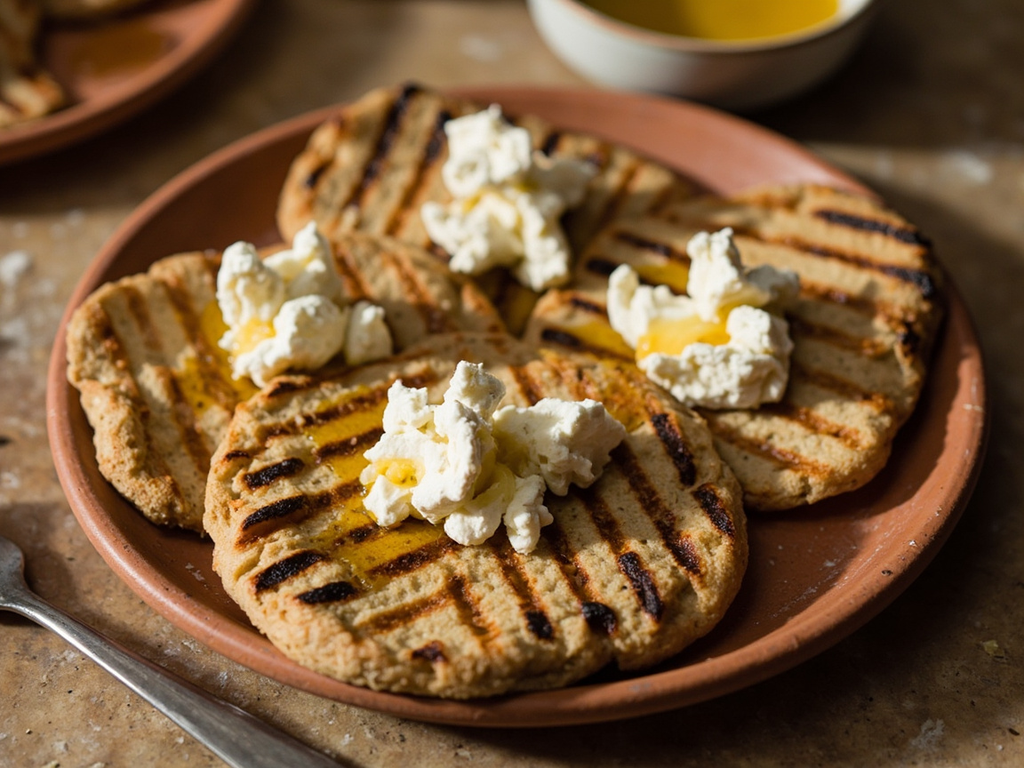
- Cook on a hot griddle or pan, 2 to 3 minutes per side, until golden.
- Serve warm, drizzled with honey and sprinkled with crumbled fresh cheese.
How it was made : Barley was the quintessential Greek cereal: cheaper than wheat, it was eaten as maza, kneaded raw or cooked, rather than leavened bread (artos). Athenaeus and many sources describe its variants, sweetened with honey or savory. In Lagid Egypt, Greek settlers kept this attachment to barley even in the land of wheat.
The contemporary twist : Dressed as mini appetizer flatbreads, flowing honey and goat cheese shavings, under the name "Pella bites."
Sources : Athenaeus of Naucratis, Deipnosophistae · Andrew Dalby, Food in the Ancient World from A to Z
Berenice I · Charactorium