 flip
flipMudgaudana — rice and mung beans with ghee
Mudgaudana — rice and mung beans with ghee
Why this dish? After the Kalinga massacre, Ashoka lightened his table: this humble dish of rice and lentils, golden with ghee and perfumed with asafoetida, became the daily fare of an emperor who wanted to nourish without killing. Mudga (mung bean) is one of the oldest legumes of the subcontinent.
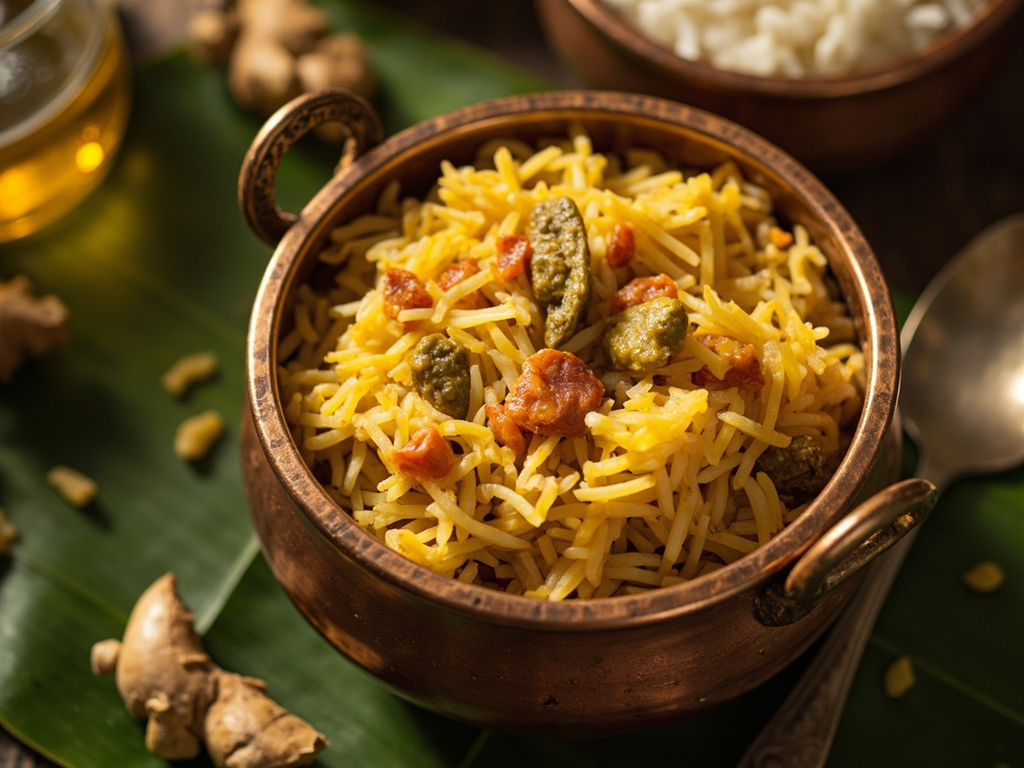
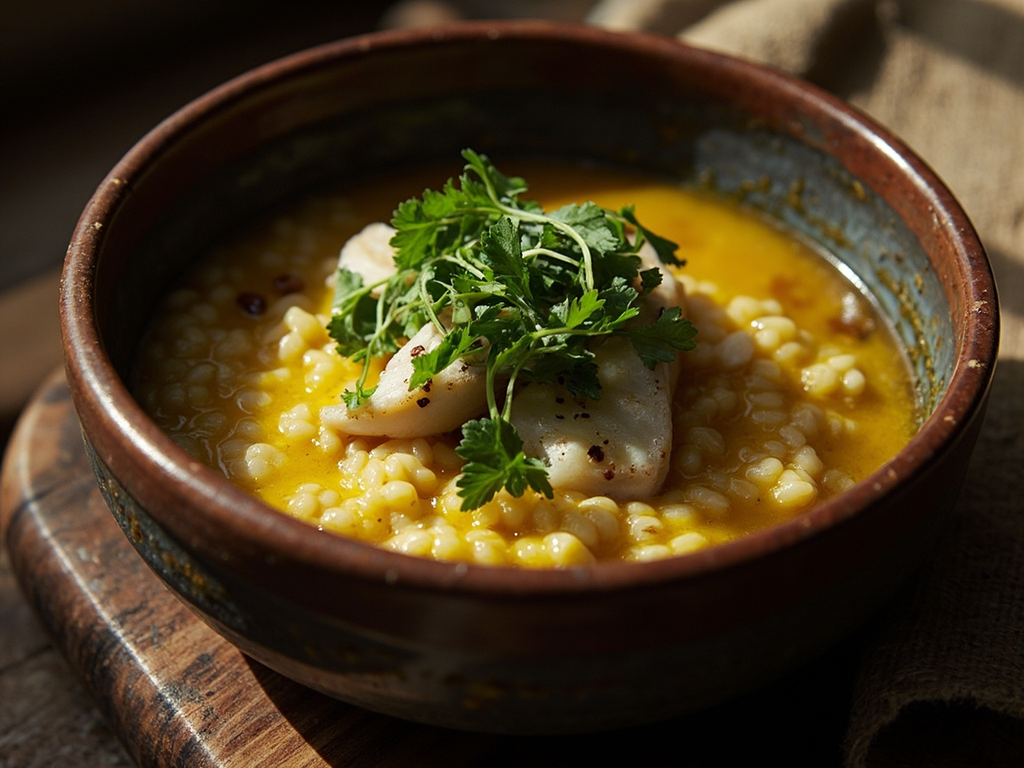
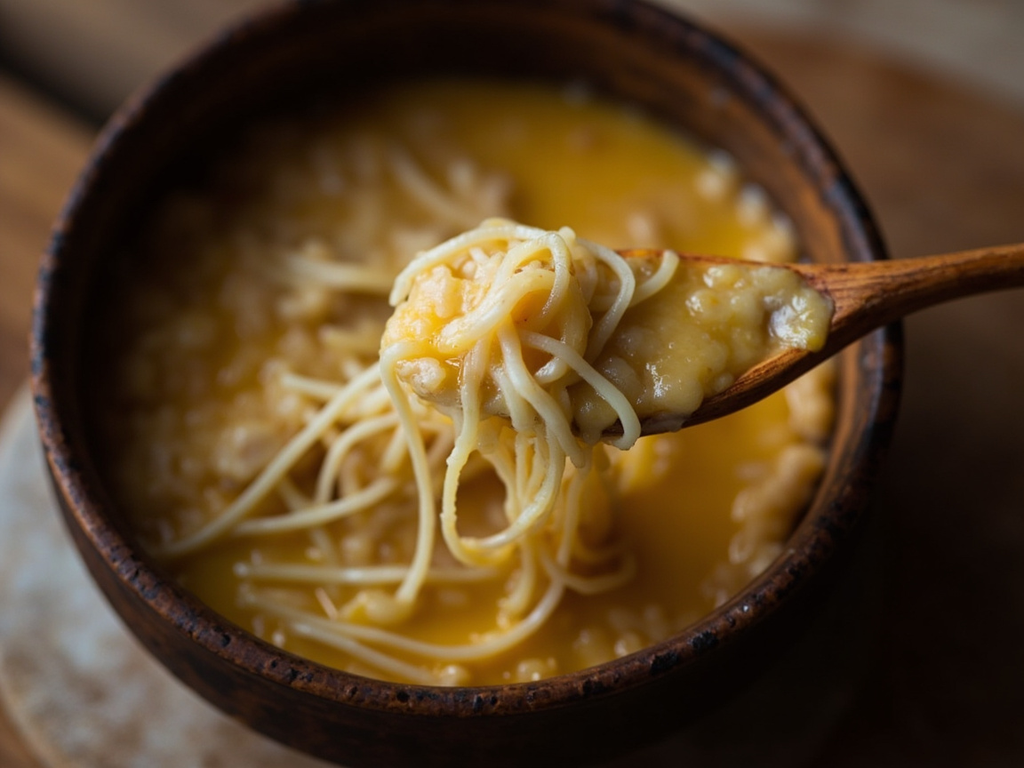
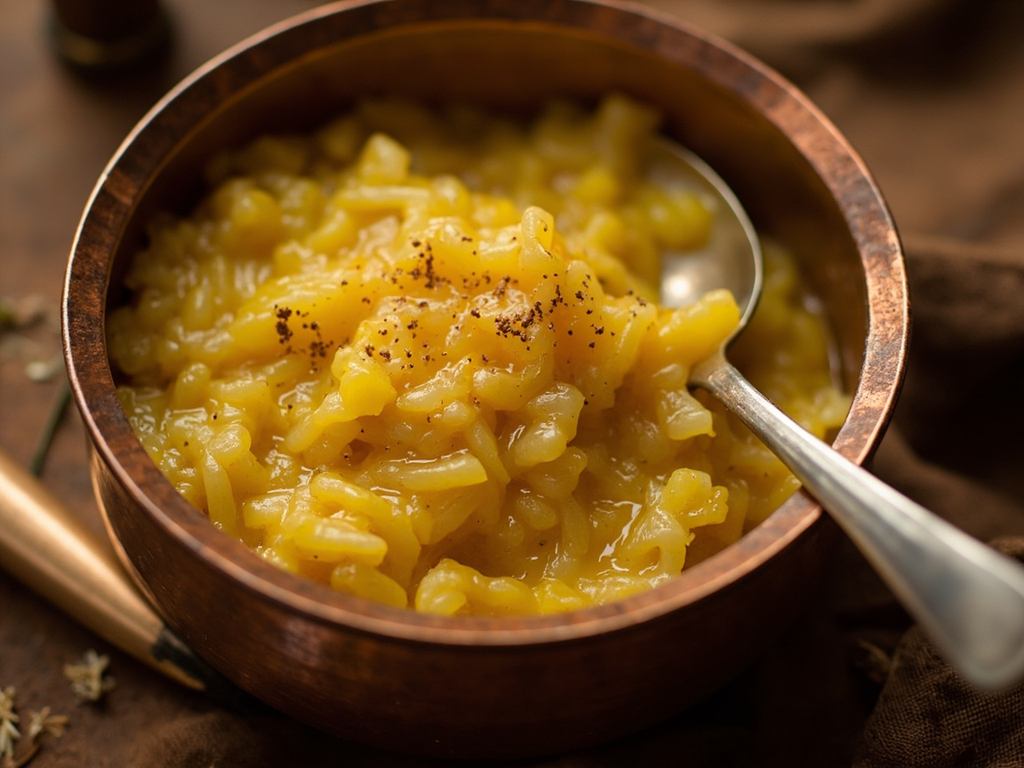
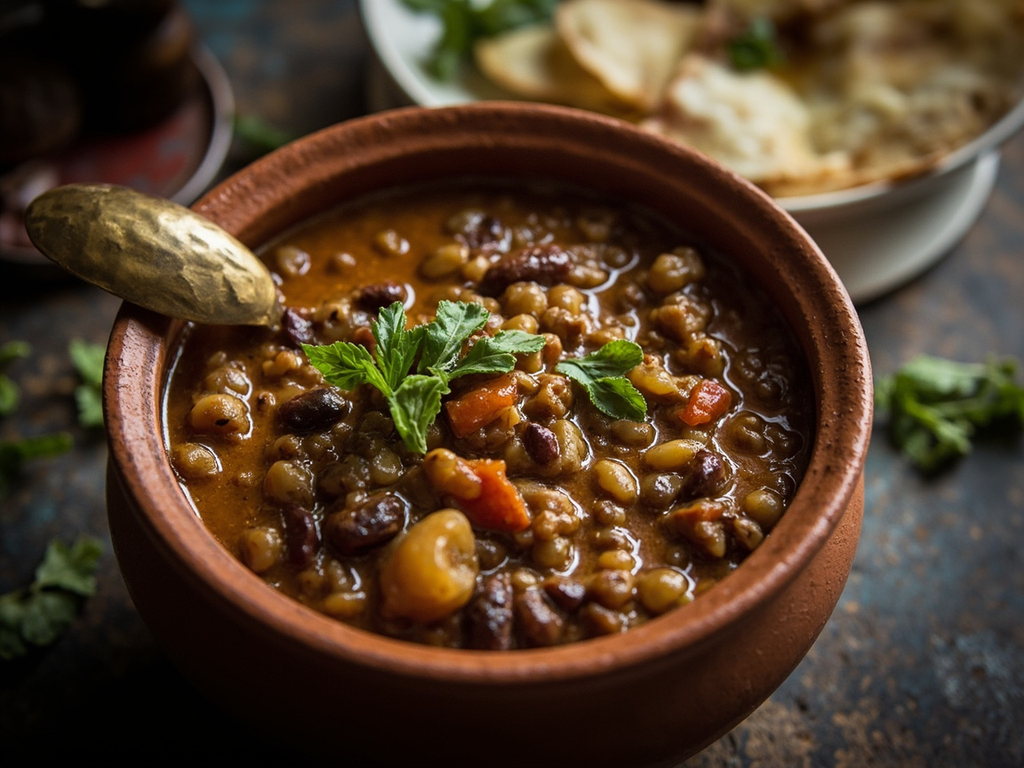
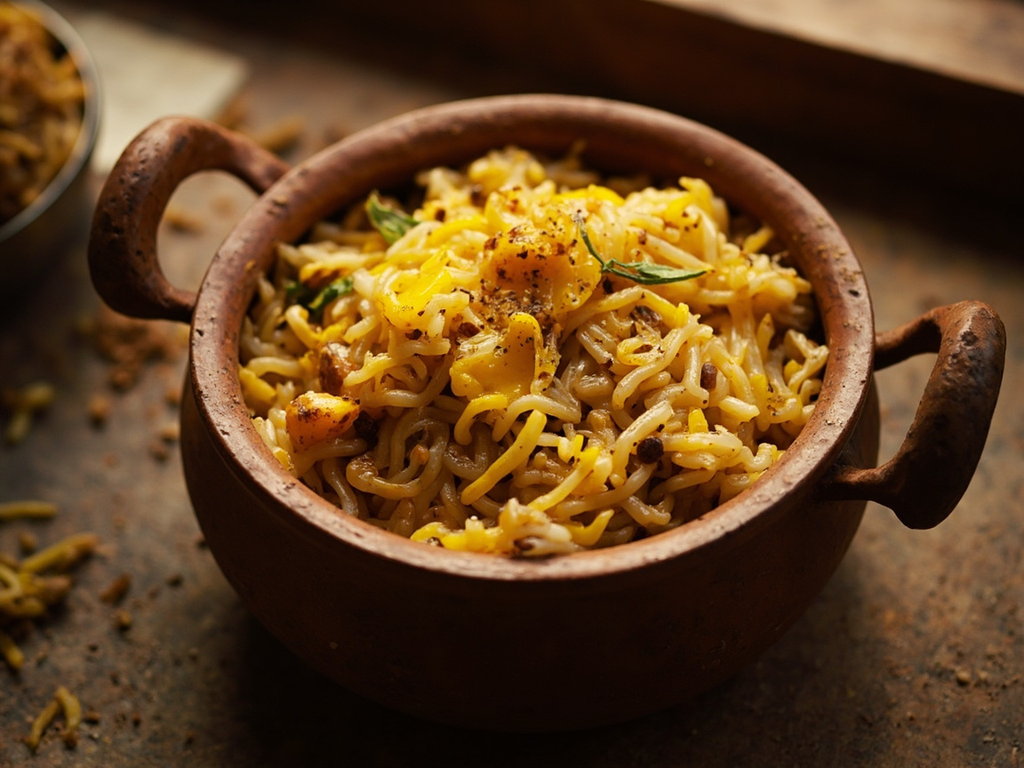
A comforting one-pot dish where rice and hulled mung beans cook together until they melt, seasoned with turmeric, cumin, ginger, and a pinch of hing, then drizzled with hot ghee. It is the direct ancestor of khichdi.
I, the Beloved of the Gods, saw the rivers of Kalinga reddened, and since that day my kitchen has changed. Where thousands of beasts were once slaughtered, now only rice and mudga are soaked in the earthen pot. Boil the grain and the legume together, my child, until they become one, then pour smoking ghee and a pinch of hing: this is a meal that satisfies without a single living breath having groaned. Eat it slowly, thinking of the dhamma.
- •Rice (taṇḍula) — one measure (base grain)
- •Hulled mung beans (mudga) — half a measure (legume)
- •Ghee (ghṛta) — as needed (fat, aromatic binder)
- •Fresh turmeric, pounded (haridra) — a little (color, flavor)
- •Cumin (jiraka) — a pinch (spice)
- •Fresh ginger (ardraka) — a piece (spice)
- •Asafoetida (hing) — a trace (flavor enhancer, digestive)
- •Salt — to taste (seasoning)
Mudgaudana — rice and mung beans with ghee
A comforting one-pot dish where rice and hulled mung beans cook together until they melt, seasoned with turmeric, cumin, ginger, and a pinch of hing, then drizzled with hot ghee. It is the direct ancestor of khichdi.
Why this dish? After the Kalinga massacre, Ashoka lightened his table: this humble dish of rice and lentils, golden with ghee and perfumed with asafoetida, became the daily fare of an emperor who wanted to nourish without killing. Mudga (mung bean) is one of the oldest legumes of the subcontinent.
I, the Beloved of the Gods, saw the rivers of Kalinga reddened, and since that day my kitchen has changed. Where thousands of beasts were once slaughtered, now only rice and mudga are soaked in the earthen pot. Boil the grain and the legume together, my child, until they become one, then pour smoking ghee and a pinch of hing: this is a meal that satisfies without a single living breath having groaned. Eat it slowly, thinking of the dhamma.
Ingredients (period version)
- Rice (taṇḍula) — one measure (base grain)
- Hulled mung beans (mudga) — half a measure (legume)
- Ghee (ghṛta) — as needed (fat, aromatic binder)
- Fresh turmeric, pounded (haridra) — a little (color, flavor)
- Cumin (jiraka) — a pinch (spice)
- Fresh ginger (ardraka) — a piece (spice)
- Asafoetida (hing) — a trace (flavor enhancer, digestive)
- Salt — to taste (seasoning)
Ingredients
- Basmati rice — 200 g (base grain)
- Mung dal (hulled mung beans) — 100 g (legume)
- Ghee — 3 tbsp (fat)
- Turmeric powder — 1/2 tsp (color, flavor)
- Cumin — 1 tsp (spice)
- Fresh ginger, grated — 1 tsp (spice)
- Asafoetida (hing) — 1 pinch (digestive)
- Water — 750 ml (cooking liquid)
- Salt — 1 tsp (seasoning)
Method
- Rinse the rice and mung dal until the water runs clear.
- Heat 1 tbsp ghee in a pot, add cumin, hing, and ginger for a few seconds.
- Add the rice, dal, and turmeric, coating with the fragrant fat.
- Pour in water and salt, bring to a boil, then cover and simmer on low heat for 25-30 minutes, until soft and porridge-like.
- Off the heat, pour the remaining hot ghee on top and serve immediately.
How it was made : Rice-legume combinations are attested very early in India; the term kṛsarā already referred to a cooked mixture of grain and legume (or sesame). Hing and turmeric are among the oldest Indian aromatics. The exact form of medieval khichdi is later, hence the status of reconstruction.
The contemporary twist : Serve in a terracotta bowl, with a Dharma wheel drawn on the surface with a drizzle of ghee and a pinch of roasted cumin.
Sources : Kautilya, Arthashastra (management of Mauryan royal kitchens) · K.T. Achaya, Indian Food: A Historical Companion, Oxford University Press, 1994
Ashoka · Charactorium