 flip
flipEtnos of fava beans and split peas with oil and cumin
Etnos of fava beans and split peas with oil and cumin
Why this dish? Dried legumes—fava beans, peas, lentils—kept all year round and fed Athens from the humblest to the most powerful. In a city where Aspasia mingled with thinkers and the agora crowd alike, this hot purée was the democratic dish par excellence.
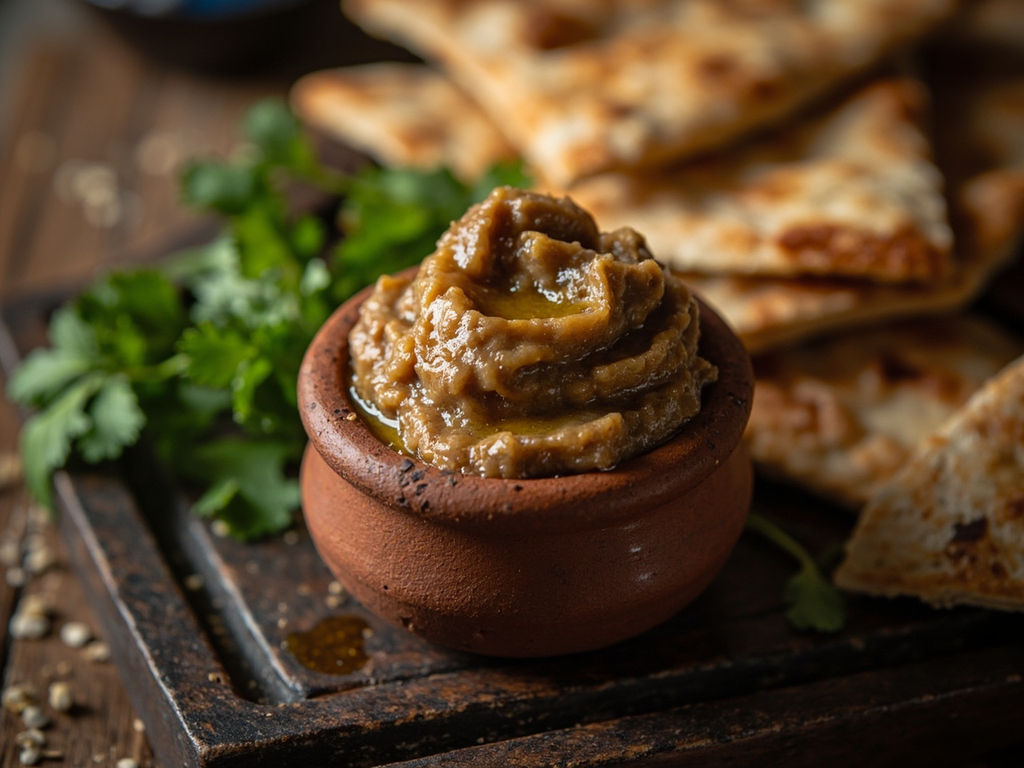
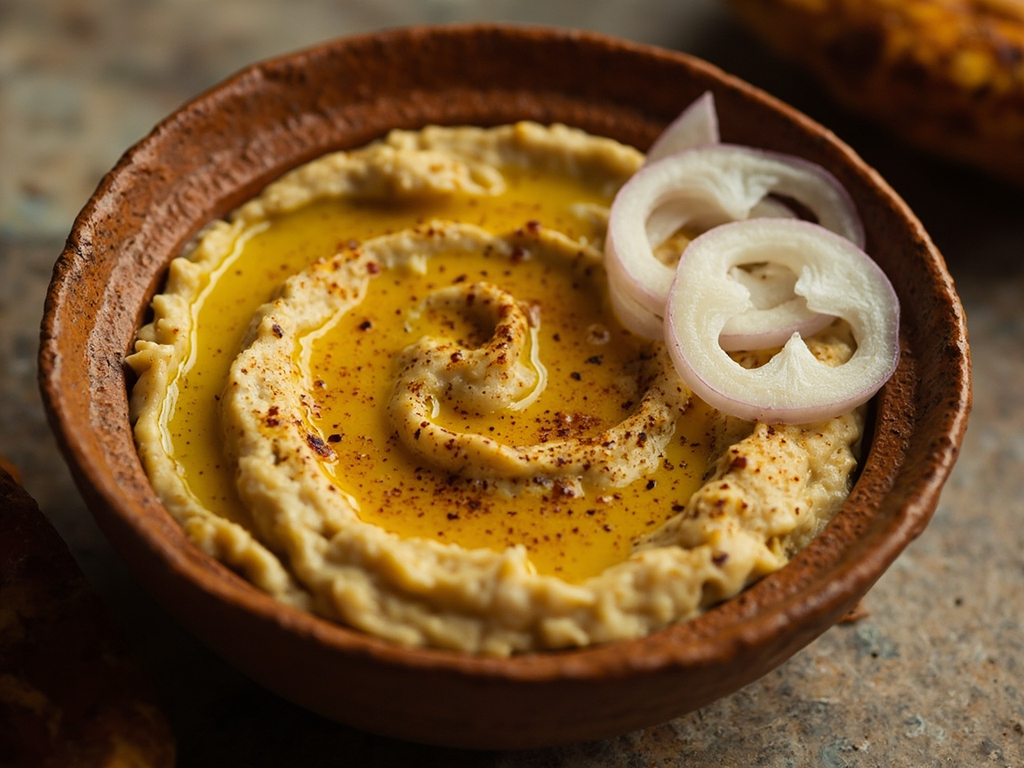
A creamy purée of fava beans or split peas, long-simmered, bound with olive oil and spiced with cumin and onion: a store-cupboard staple and comfort food of the Athenian winter.
Never despise the etnos, child! This fava bean purée has filled more Athenian bellies than all the fish of Piraeus combined. Dried fava beans keep from one harvest to the next; when winter comes, I let them melt slowly in water, mash them, and pour in my oil in a stream, a little cumin, some onion. It is the dish of the citizen and the porter alike—and believe me, one debates just as well with a belly full of etnos as with a feast of partridge.
- •Dried fava beans or split peas — a good measure (base)
- •Water — in abundance (cooking)
- •Olive oil — generously (binder and richness)
- •Onion — one (aromatic)
- •Cumin — a pinch (signature spice)
- •Sea salt — to taste (seasoning)
Etnos of fava beans and split peas with oil and cumin
A creamy purée of fava beans or split peas, long-simmered, bound with olive oil and spiced with cumin and onion: a store-cupboard staple and comfort food of the Athenian winter.
Why this dish? Dried legumes—fava beans, peas, lentils—kept all year round and fed Athens from the humblest to the most powerful. In a city where Aspasia mingled with thinkers and the agora crowd alike, this hot purée was the democratic dish par excellence.
Never despise the etnos, child! This fava bean purée has filled more Athenian bellies than all the fish of Piraeus combined. Dried fava beans keep from one harvest to the next; when winter comes, I let them melt slowly in water, mash them, and pour in my oil in a stream, a little cumin, some onion. It is the dish of the citizen and the porter alike—and believe me, one debates just as well with a belly full of etnos as with a feast of partridge.
Ingredients (period version)
- Dried fava beans or split peas — a good measure (base)
- Water — in abundance (cooking)
- Olive oil — generously (binder and richness)
- Onion — one (aromatic)
- Cumin — a pinch (signature spice)
- Sea salt — to taste (seasoning)
Ingredients
- Split peas (or dried skinned fava beans) — 300 g (base)
- Water — 1 litre (cooking)
- Extra virgin olive oil — 4 tbsp (binder and richness)
- Onion — 1 large (aromatic)
- Ground cumin — 1 tsp (signature spice)
- Salt — to taste (seasoning)
Method
- Rinse the split peas (or soak dried fava beans overnight).
- Cover generously with cold water and bring to a simmer; skim.
- Add the chopped onion and simmer for 45–60 minutes, until everything falls apart.
- Mash into a purée, more or less fine; salt and add cumin.
- Off the heat, emulsify with olive oil drizzled in for a creamy texture; serve hot with a final drizzle of oil.
How it was made : Etnos (legume purée) was a pillar of Greek diet, celebrated even on the comic stage of Aristophanes. Dried fava beans, peas, and lentils formed a protein reserve accessible to all, storable for months in dry conditions. They were seasoned with oil, herbs, and spices like cumin, then commonly imported. It was the ultimate pantry dish, an antidote to famine.
The contemporary twist : Serve the etnos as a warm hummus, smoothed with oil and sprinkled with toasted cumin, with strips of mâza for dipping—an Athenian meze ahead of its time.
Sources : Aristophanes, comedies (mentions of etnos) · Andrew Dalby, Food in the Ancient World from A to Z, Routledge, 2003
Aspasia · Charactorium