 flip
flipSalt and Cumin Dried Nile Fish
Salt and Cumin Dried Nile Fish
Why this dish? The Nile nourished Egypt as much as its fields, and salted-dried fish was the preserve par excellence — provisions for the temples Ay restored, for construction sites, and for long journeys upriver. A priest-administrator like him managed stores of dried fish by the thousands.
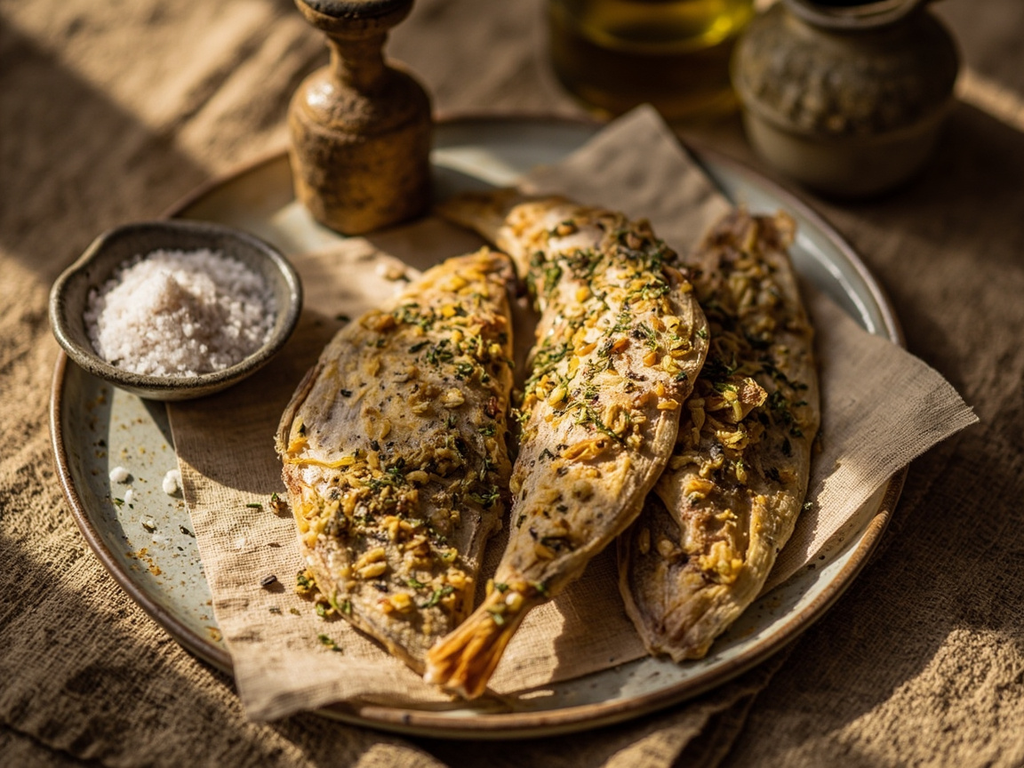
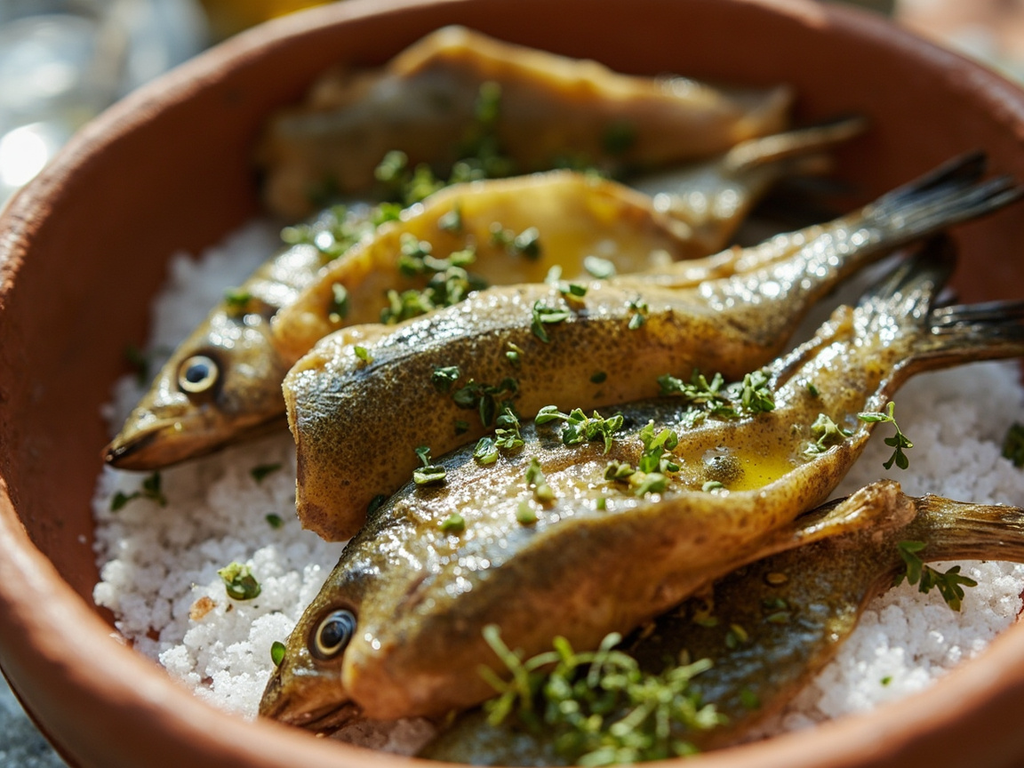
Nile fish split open, salted, and sun-dried, perfumed with cumin. Firm, salty, deeply umami: it keeps for months and is eaten as is or rehydrated, a nourishing staple for ordinary days.
The river is the liquid granary of Egypt, and none know this better than he who has counted a temple's stores. The fish is split, gutted, covered with salt until it gives up all its water, then exposed to the sun of Ra which hardens it like wood. Thus preserved, it lasts through the dry season and the river's rise without spoiling. Rub it with a little cumin, chew it with bread and beer: this is the food that never betrays the traveler.
- •Nile fish (mullet, tilapia, perch) — several (base)
- •Salt in abundance — to cover (preservation)
- •Cumin seeds — a pinch (flavor)
Salt and Cumin Dried Nile Fish
Nile fish split open, salted, and sun-dried, perfumed with cumin. Firm, salty, deeply umami: it keeps for months and is eaten as is or rehydrated, a nourishing staple for ordinary days.
Why this dish? The Nile nourished Egypt as much as its fields, and salted-dried fish was the preserve par excellence — provisions for the temples Ay restored, for construction sites, and for long journeys upriver. A priest-administrator like him managed stores of dried fish by the thousands.
The river is the liquid granary of Egypt, and none know this better than he who has counted a temple's stores. The fish is split, gutted, covered with salt until it gives up all its water, then exposed to the sun of Ra which hardens it like wood. Thus preserved, it lasts through the dry season and the river's rise without spoiling. Rub it with a little cumin, chew it with bread and beer: this is the food that never betrays the traveler.
Ingredients (period version)
- Nile fish (mullet, tilapia, perch) — several (base)
- Salt in abundance — to cover (preservation)
- Cumin seeds — a pinch (flavor)
Ingredients
- Fillets of mullet, sea bream, or tilapia with skin — 4 fillets
- Coarse salt — 500 g (to cover)
- Cumin seeds — 1 tbsp
- Coriander seeds — 1 tsp
Method
- Rinse and dry the fillets. Crush the cumin and coriander seeds.
- In a dish, make a bed of coarse salt, place the fillets skin-side down, sprinkle with spices, then cover completely with salt.
- Refrigerate for 24 to 36 hours: the salt draws out water and firms the flesh.
- Rinse the fillets quickly, dry thoroughly, then let dry for 1 to 2 days on a rack in the refrigerator (or in a cool, ventilated place) until firm.
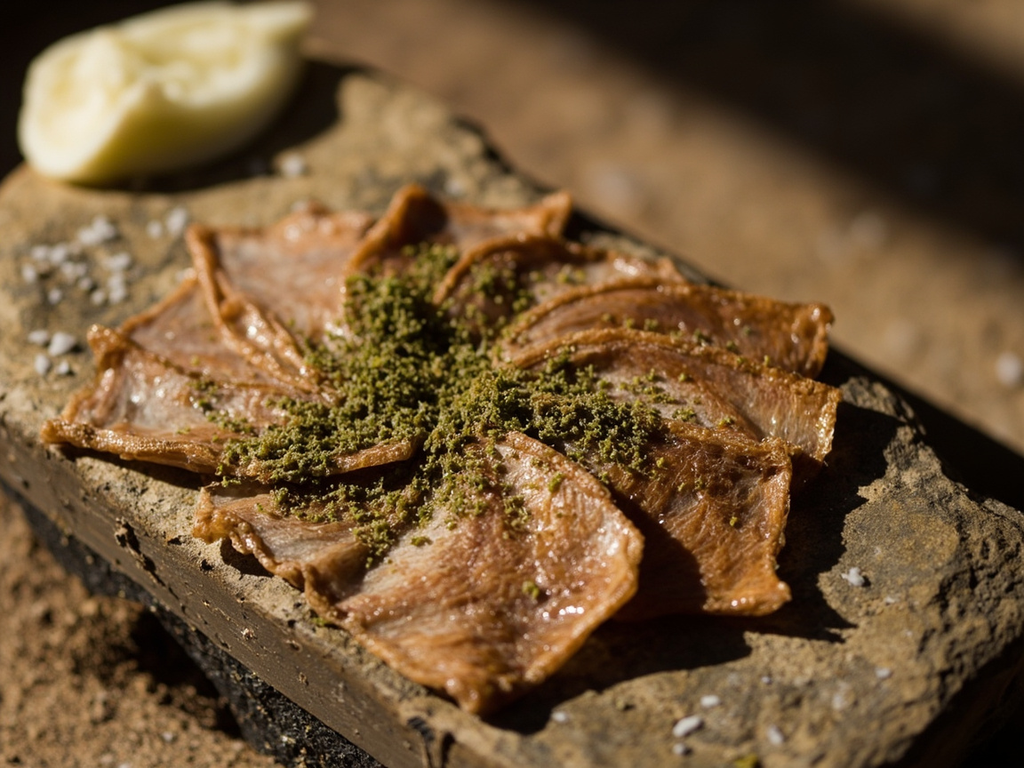
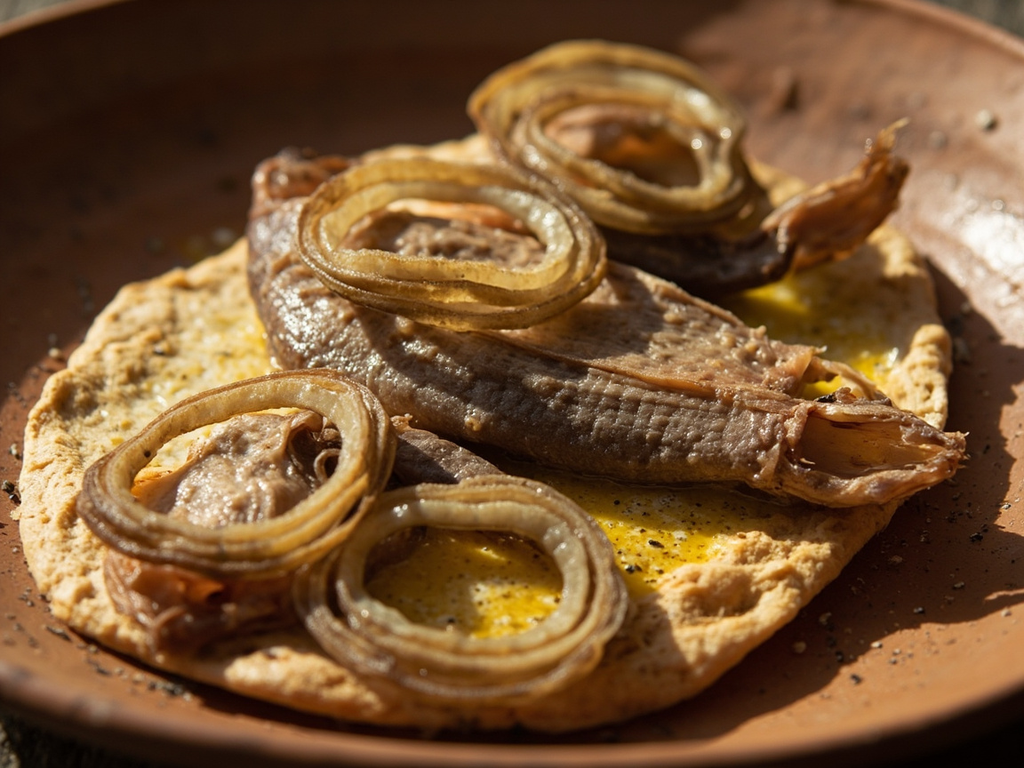
- Slice thinly. Eat as is with bread, or desalt for 1 hour in cold water then pan-fry.
How it was made : Salting and sun-drying were THE preservation techniques of Egypt, lacking refrigeration. Fish, split and gutted, was processed in large quantities on the Nile banks — a frequent scene in reliefs. Dried salted mullet roe (ancestor of bottarga) was among the sought-after delicacies. These provisions fed the crews of major construction projects and expeditions, and appeared in temple offering lists.
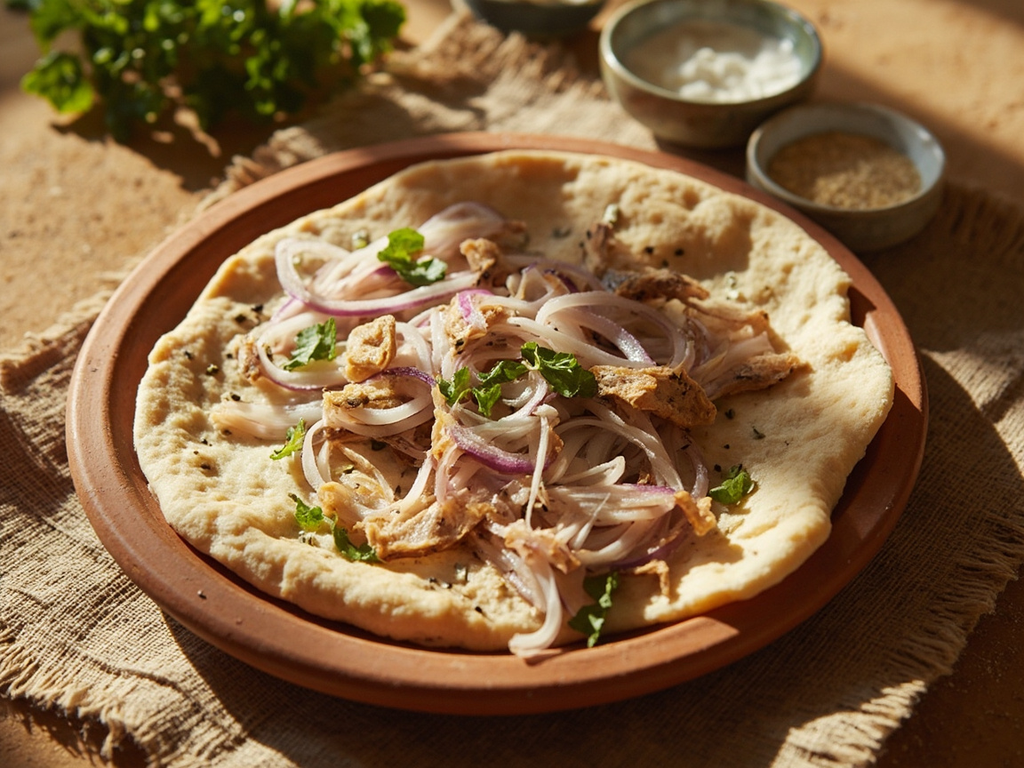
The contemporary twist : Crumble the dried fish over a salad of shoots, red onion, and lemon wedges — an Egyptian 'bottarga' style umami condiment.
Sources : Douglas J. Brewer & Renée F. Friedman, Fish and Fishing in Ancient Egypt, Aris & Phillips, 1989 · William J. Darby, Paul Ghalioungui & Louis Grivetti, Food: The Gift of Osiris, Academic Press, 1977
Ay · Charactorium