 flip
flipGohan, miso soup and grilled fish — the balance tray
Gohan, miso soup and grilled fish — the balance tray
Why this dish? Ayumi says she keeps a balanced diet to withstand tours: rice, fish, vegetables—this traditional Japanese cuisine she favors between concert halls. The teishoku—tray with rice, soup, grilled fish, and small vegetables—is exactly the staple meal that keeps her going.
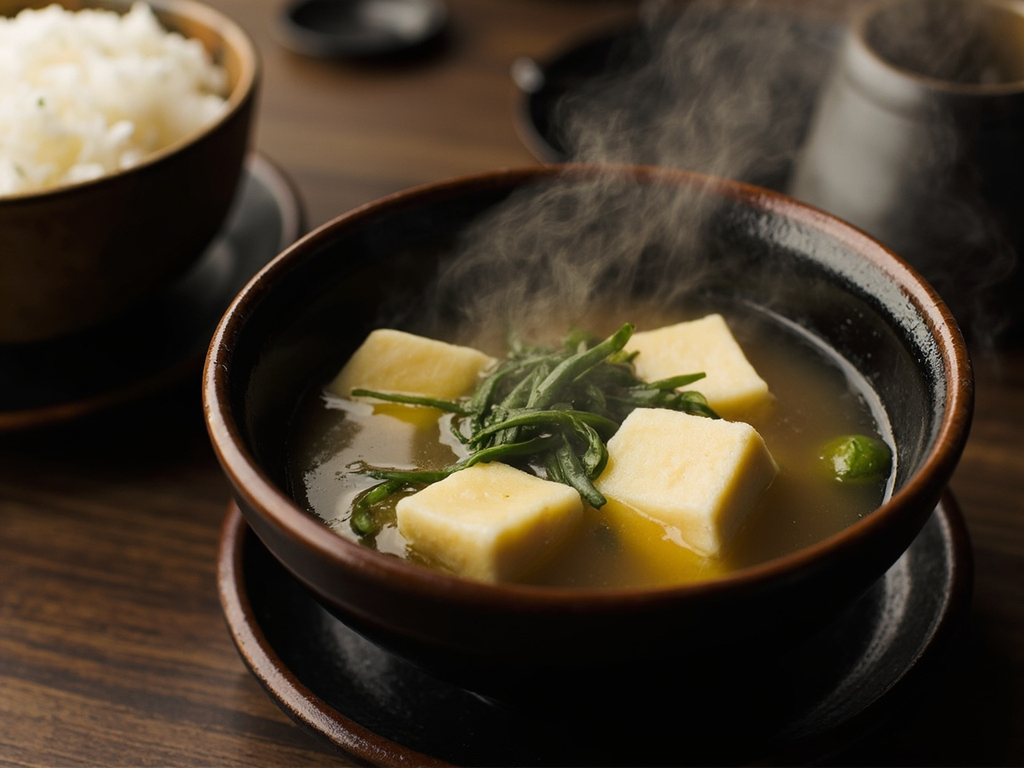
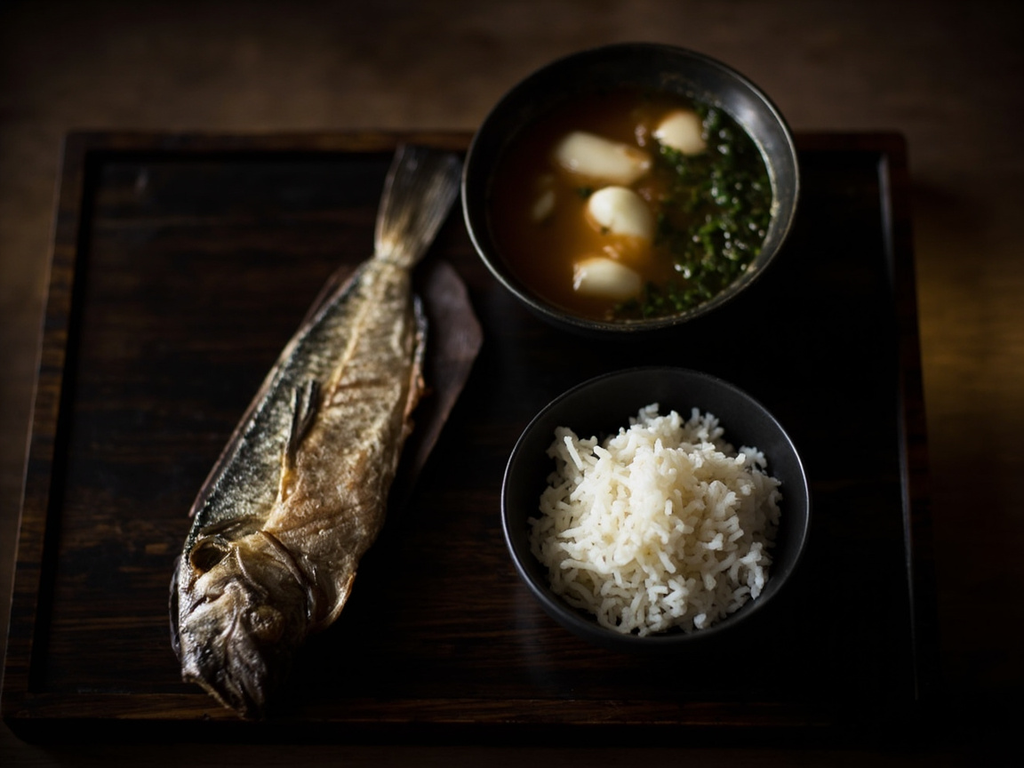
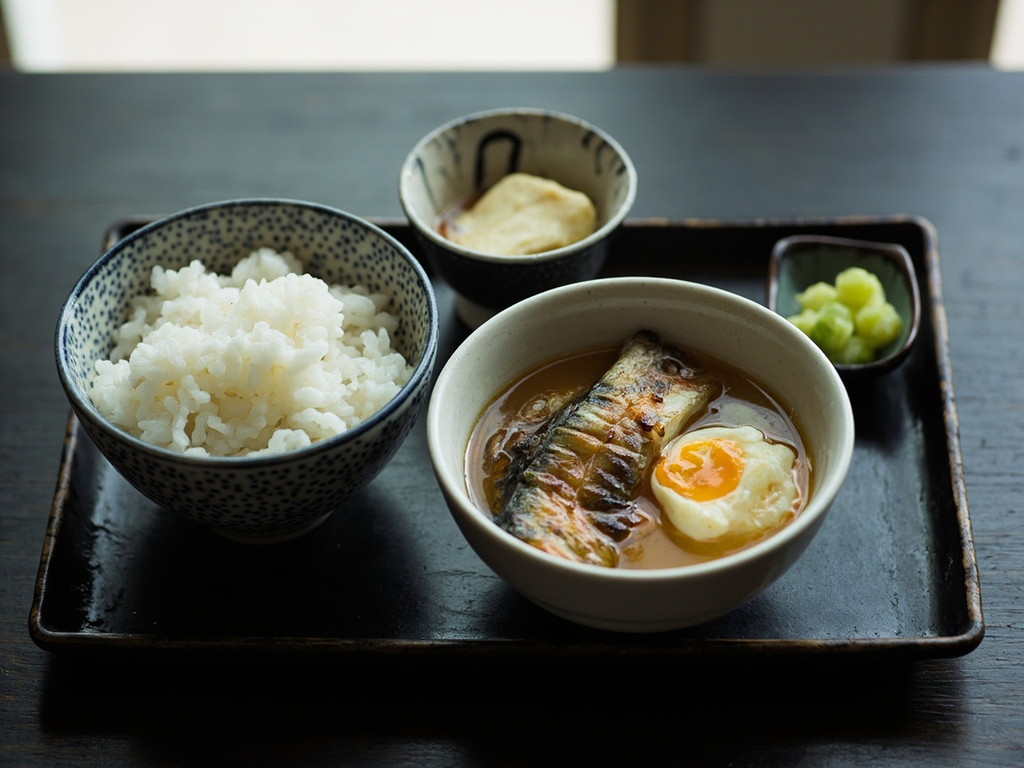
A composed tray: pearly white rice, a steaming bowl of miso soup with tofu cubes and wakame, a grilled mackerel fillet with crispy skin, and small pickled vegetables. Light, marine, comforting: the meal that all of Japan eats at lunch and dinner.
You know, after three hours on stage, my body craves something simple and real—not greasy, not complicated. I come home, I make myself a bowl of hot rice, miso soup, grilled mackerel, and I finally breathe. That's what my mother used to make in Fukuoka, and wherever I am on the planet, this tray brings me back home. Pop devours you, but a bowl of rice stitches you back together.
- •Japanese rice (japonica) — two bowls (starch staple)
- •Miso paste — two spoonfuls (soup base, fermented umami)
- •Kombu and katsuobushi — enough for broth (dashi, umami signature)
- •Tofu and wakame seaweed — a handful (soup garnish)
- •Fresh mackerel — one fillet per person (grilled fish, protein)
- •Seasonal pickled vegetables (tsukemono) — a few slices (small tangy side)
Gohan, miso soup and grilled fish — the balance tray
A composed tray: pearly white rice, a steaming bowl of miso soup with tofu cubes and wakame, a grilled mackerel fillet with crispy skin, and small pickled vegetables. Light, marine, comforting: the meal that all of Japan eats at lunch and dinner.
Why this dish? Ayumi says she keeps a balanced diet to withstand tours: rice, fish, vegetables—this traditional Japanese cuisine she favors between concert halls. The teishoku—tray with rice, soup, grilled fish, and small vegetables—is exactly the staple meal that keeps her going.
You know, after three hours on stage, my body craves something simple and real—not greasy, not complicated. I come home, I make myself a bowl of hot rice, miso soup, grilled mackerel, and I finally breathe. That's what my mother used to make in Fukuoka, and wherever I am on the planet, this tray brings me back home. Pop devours you, but a bowl of rice stitches you back together.
Ingredients (period version)
- Japanese rice (japonica) — two bowls (starch staple)
- Miso paste — two spoonfuls (soup base, fermented umami)
- Kombu and katsuobushi — enough for broth (dashi, umami signature)
- Tofu and wakame seaweed — a handful (soup garnish)
- Fresh mackerel — one fillet per person (grilled fish, protein)
- Seasonal pickled vegetables (tsukemono) — a few slices (small tangy side)
Ingredients
- Sushi rice — 250 g (uncooked) (starch staple)
- Miso paste — 2 tbsp (soup base)
- Instant dashi (or kombu + katsuobushi) — 500 ml broth (umami broth)
- Firm tofu — 100 g diced (soup garnish)
- Dried wakame — 1 tsp (soup garnish)
- Mackerel fillets — 2 (grilled fish)
- Cucumber + salt — 1/2 cucumber (quick tsukemono)
Method
- Rinse the rice until the water runs clear, then cook (rice cooker or covered pot, 12 min + 10 min rest).
- Prepare the dashi: simmer the kombu without boiling, remove, add katsuobushi off heat, strain (or reconstitute instant dashi).
- Salt the mackerel fillets and grill skin-side up under the broiler until the skin crackles.
- Heat the dashi, add tofu and wakame, then dissolve the miso off the boil (miso must never boil).
- Thinly slice the cucumber and salt lightly for quick tsukemono.
- Arrange each element in separate bowls on a tray and serve all at once.
How it was made : Since the Edo period, the Japanese meal has centered on rice with miso soup as a constant. Grilled mackerel (saba) is one of the most popular fish, cheap and nourishing. Miso, fermented for months, and dashi form the founding umami duo of this cuisine.
The contemporary twist : Serve on a black lacquered tray with mismatched designer bowls—the minimalist contrast beloved by 2000s Japanese pop aesthetics.
Ayumi Hamasaki · Charactorium