 flip
flipStudio ramen (tamago-ramen)
Studio ramen (tamago-ramen)
Why this dish? It is well known that Miyazaki himself prepares noodles, tea or coffee for his team during long production days at Studio Ghibli. The steaming bowl of ramen, crowned with a half-boiled egg and green onion, is also one of the dishes his films shoot with the most love — food as comfort for people working hard.
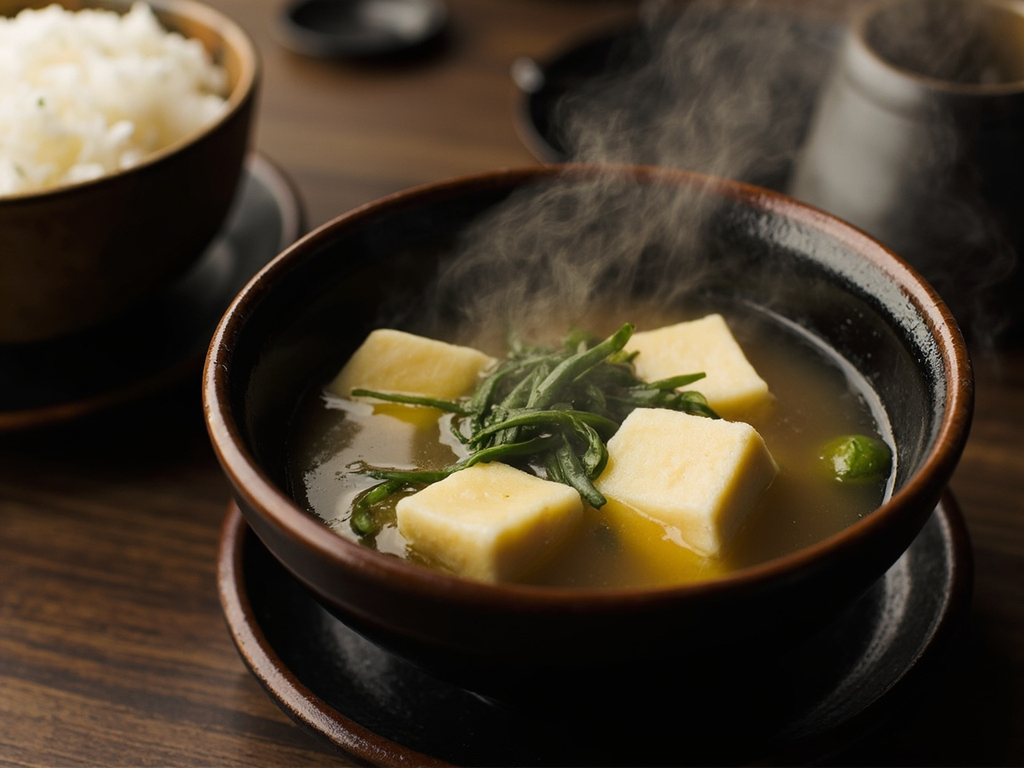
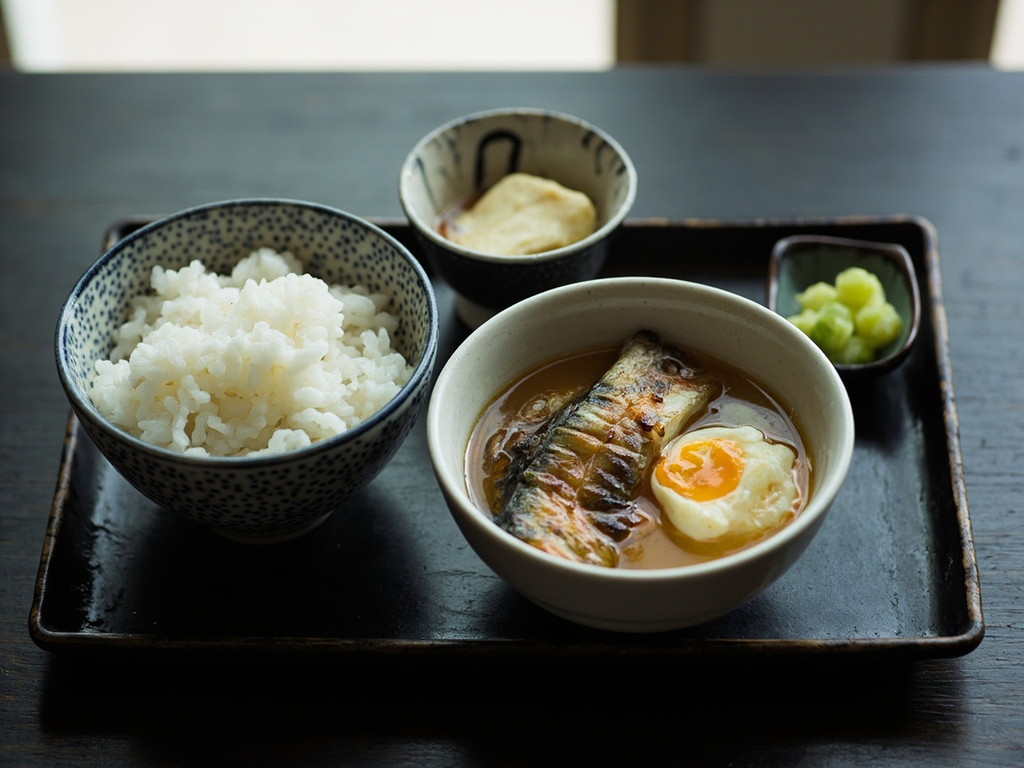
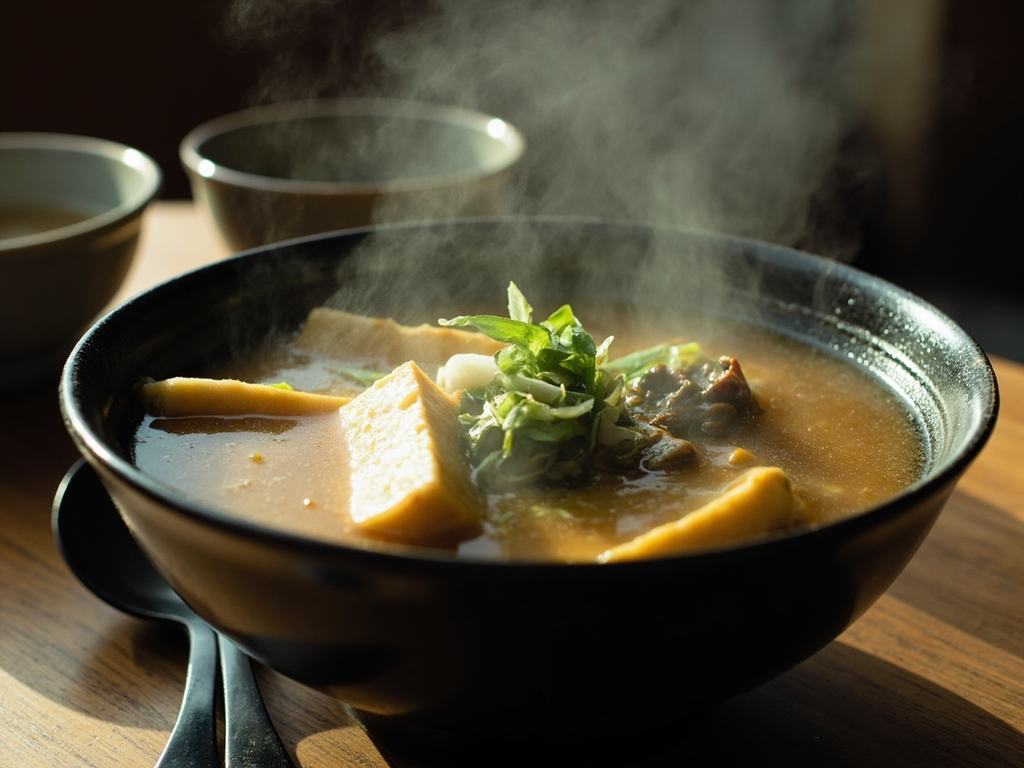
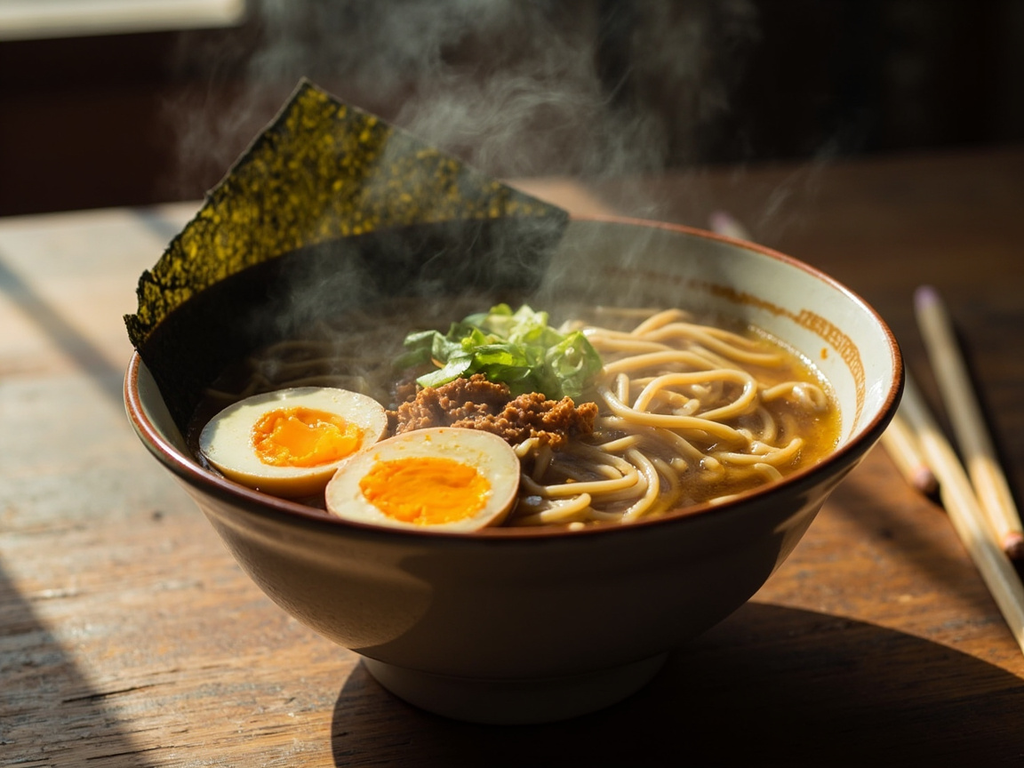
A bowl of noodles in a dashi-soy broth, topped with a soft-boiled egg, green onion and a sheet of nori. The animator's comfort meal: quick, hot, nourishing, meant to be downed between two drawn frames without stopping to think.
When the team works late and everyone's heads are empty, I go to the small kitchen and put the water on to heat. It's nothing — noodles, a little broth, an egg — but a warm belly gets a tired hand moving again, I've seen it a thousand times. Watch the egg: the yolk must stay tender, almost runny, otherwise it's no use. You don't make great cinema on an empty stomach, and you don't make great bowls either: you make simple things, with care. Eat while it's steaming, talk little, and go back to your table.
- •Fresh wheat noodles (chūka-men) — one serving per bowl (base)
- •Dashi (kombu + katsuobushi) — one large bowl per person (umami broth)
- •Soy sauce (shōyu) — a few dashes (salty seasoning)
- •Egg — half per bowl (melty garnish)
- •Green onion (negi) — sliced, a handful (freshness)
- •Nori seaweed — one sheet (sea garnish)
Studio ramen (tamago-ramen)
A bowl of noodles in a dashi-soy broth, topped with a soft-boiled egg, green onion and a sheet of nori. The animator's comfort meal: quick, hot, nourishing, meant to be downed between two drawn frames without stopping to think.
Why this dish? It is well known that Miyazaki himself prepares noodles, tea or coffee for his team during long production days at Studio Ghibli. The steaming bowl of ramen, crowned with a half-boiled egg and green onion, is also one of the dishes his films shoot with the most love — food as comfort for people working hard.
When the team works late and everyone's heads are empty, I go to the small kitchen and put the water on to heat. It's nothing — noodles, a little broth, an egg — but a warm belly gets a tired hand moving again, I've seen it a thousand times. Watch the egg: the yolk must stay tender, almost runny, otherwise it's no use. You don't make great cinema on an empty stomach, and you don't make great bowls either: you make simple things, with care. Eat while it's steaming, talk little, and go back to your table.
Ingredients (period version)
- Fresh wheat noodles (chūka-men) — one serving per bowl (base)
- Dashi (kombu + katsuobushi) — one large bowl per person (umami broth)
- Soy sauce (shōyu) — a few dashes (salty seasoning)
- Egg — half per bowl (melty garnish)
- Green onion (negi) — sliced, a handful (freshness)
- Nori seaweed — one sheet (sea garnish)
Ingredients
- Fresh ramen noodles (or dried if needed) — 200 g (2 servings) (base)
- Dashi (10 g kombu + 10 g katsuobushi, or instant packet) — 1.2 L (umami broth)
- Soy sauce — 4 tbsp (salty seasoning)
- Mirin — 1 tbsp (slightly sweet roundness)
- Eggs — 2 (soft-boiled (6 min))
- Green onions — 2 (garnish)
- Nori sheets — 2 (garnish)
- Sesame oil — a drizzle (final aroma)
Method
- Soak the kombu in cold water for 30 min, heat gently without boiling, remove the kombu just before boiling, turn off the heat, add the katsuobushi, let steep for 2 min then strain: that's the dashi.
- Season the dashi with soy sauce and mirin; taste and adjust.
- Cook the eggs for 6 minutes (soft-boiled), cool in cold water, peel and cut in half.
- Cook the noodles according to the package, drain, divide into bowls.
- Pour the boiling broth, top with the egg, green onion, nori, a drizzle of sesame oil.
- Serve immediately, while it's steaming.
How it was made : Ramen arrived in Japan from China at the beginning of the 20th century and became, after the war, THE quintessential urban popular dish — cheap, filling, sold everywhere. In Miyazaki's childhood Japan (born 1941), it was the food of people who get back up and work.
The contemporary twist : Serve "Ponyo-style": place a slice of pink ham on top and keep the lid on for 30 seconds — the wonder of a child before a steaming bowl.
Hayao Miyazaki · Charactorium