 flip
flipMallow and Millet Pottage with Fermented Soybeans
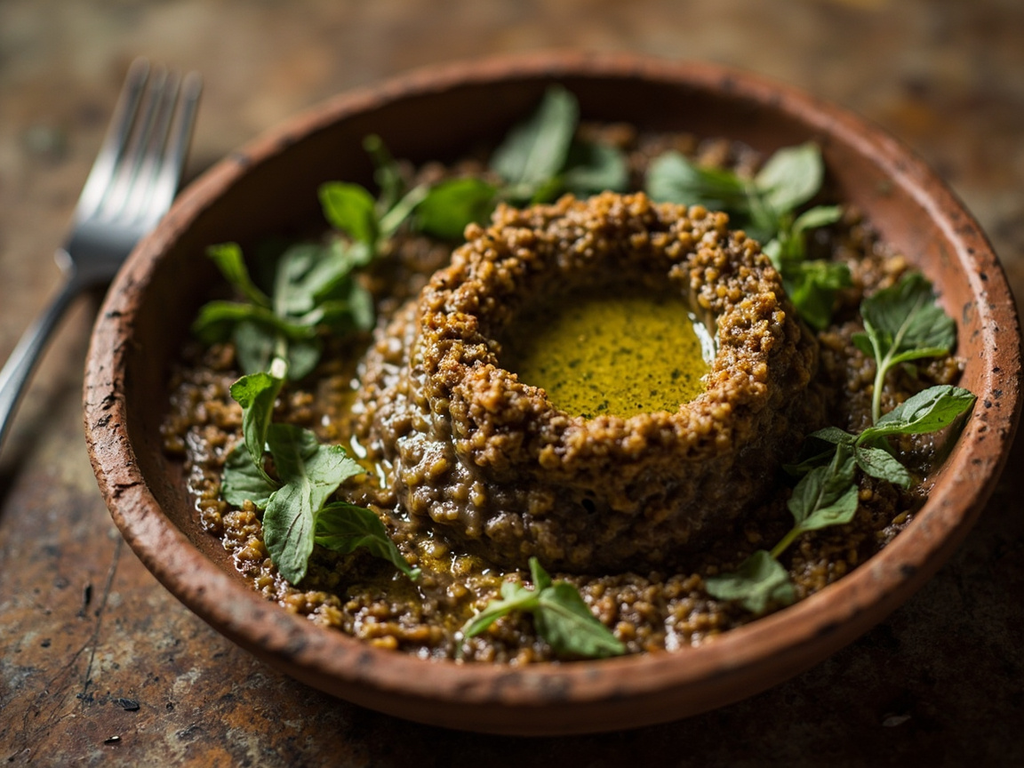
Mallow and Millet Pottage with Fermented Soybeans
Why this dish? Mallow (kuí) was THE everyday leafy green under the Han, cited everywhere in agricultural treatises. For Ban Zhao, who in her Lessons advocated frugality and domestic diligence, this simple and nourishing pottage embodies the virtuous meal of a well-run household, far from the splendor of banquets.
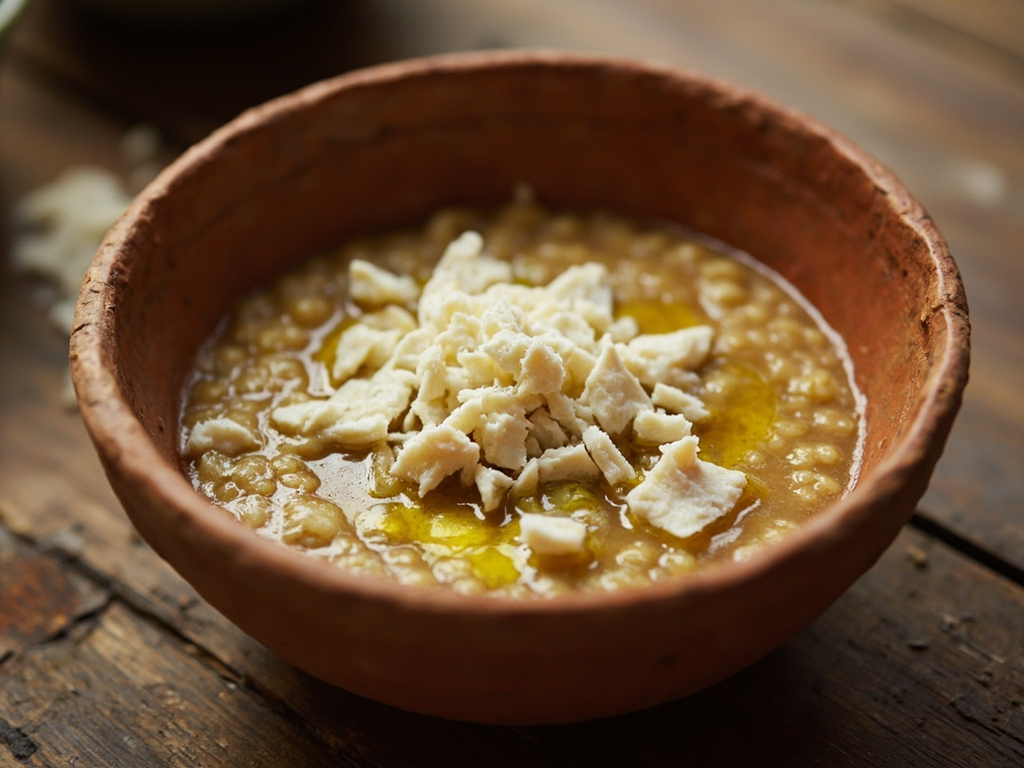
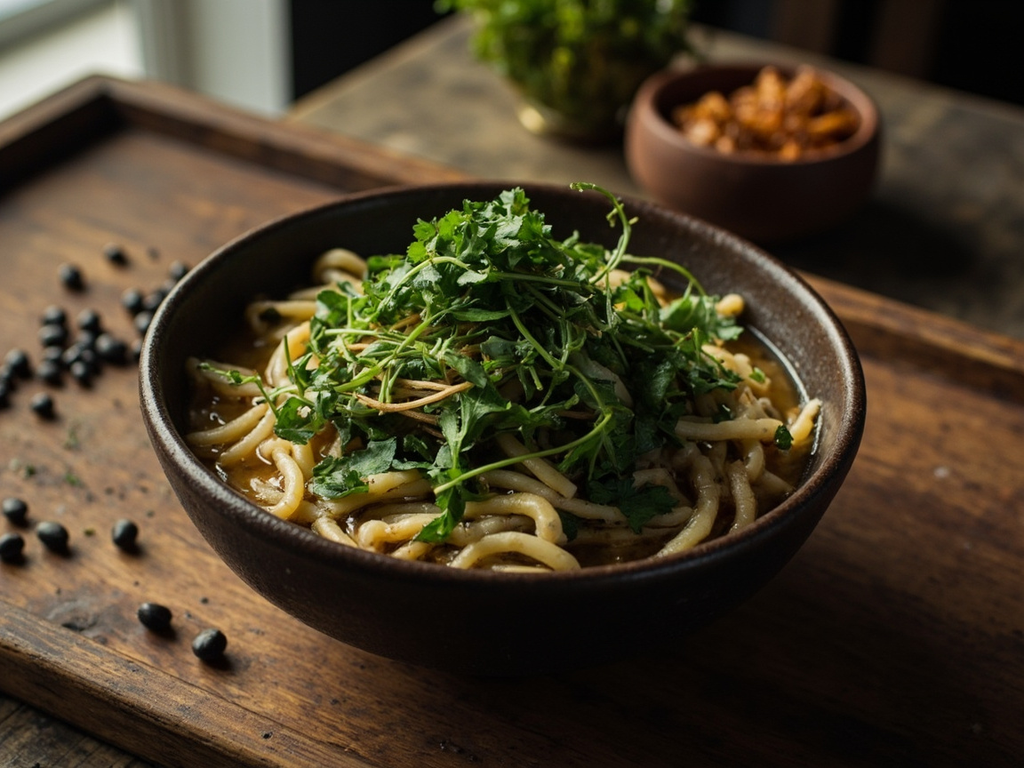
A green and comforting pottage: mallow leaves melted into a broth, thickened with millet, spiked with ginger and a handful of fermented black soybeans. The ordinary dish of a scholarly table, modest but carefully made.
Come near your tray, and do not disdain this pottage because it is humble. The good wife is known by how she feeds her household without waste: a bit of mallow gathered at dawn, yesterday's millet, a few black beans kept in their jar. I melt the leaves gently, add ginger to warm the belly, and let the beans release their strength. Eat with respect; it is in these small things done with constancy that virtue is cultivated.
- •Mallow leaves (kuí) — a good armful (central leafy green)
- •Hulled millet — one bowl (thickener and sustenance)
- •Fermented black soybeans (dòuchǐ) — a handful (salty umami, signature)
- •Fresh ginger — one piece (warmth, aroma)
- •Scallion — a few stalks (freshness)
- •Salt — to taste (seasoning)
Mallow and Millet Pottage with Fermented Soybeans
A green and comforting pottage: mallow leaves melted into a broth, thickened with millet, spiked with ginger and a handful of fermented black soybeans. The ordinary dish of a scholarly table, modest but carefully made.
Why this dish? Mallow (kuí) was THE everyday leafy green under the Han, cited everywhere in agricultural treatises. For Ban Zhao, who in her Lessons advocated frugality and domestic diligence, this simple and nourishing pottage embodies the virtuous meal of a well-run household, far from the splendor of banquets.
Come near your tray, and do not disdain this pottage because it is humble. The good wife is known by how she feeds her household without waste: a bit of mallow gathered at dawn, yesterday's millet, a few black beans kept in their jar. I melt the leaves gently, add ginger to warm the belly, and let the beans release their strength. Eat with respect; it is in these small things done with constancy that virtue is cultivated.
Ingredients (period version)
- Mallow leaves (kuí) — a good armful (central leafy green)
- Hulled millet — one bowl (thickener and sustenance)
- Fermented black soybeans (dòuchǐ) — a handful (salty umami, signature)
- Fresh ginger — one piece (warmth, aroma)
- Scallion — a few stalks (freshness)
- Salt — to taste (seasoning)
Ingredients
- Chard or spinach leaves (if mallow unavailable) — 300 g (central leafy green)
- Millet — 100 g (thickener and sustenance)
- Fermented black soybeans (douchi, from Asian grocery) — 2 tablespoons (salty umami, signature)
- Fresh ginger — 2 cm, grated (warmth, aroma)
- Scallion or spring onion — 2 stalks, sliced (freshness)
- Water or light broth — 1 liter (pottage base)
- Salt — adjust (douchi is already salty) (seasoning)
Method
- Rinse the millet and cook it in the liter of water or broth over low heat for about 20 minutes, until it softens and thickens the liquid.
- Crush the fermented beans coarsely and add them with the grated ginger.
- Wash and chop the leaves, add them to the pottage for 5 minutes: they should melt without falling apart completely.
- Taste before salting. Sprinkle with scallion and serve piping hot, in a bowl, to accompany a side of grain.
How it was made : Mallow (Malva verticillata) was grown in every Han vegetable garden; the Qimin Yaoshu (a slightly later agricultural treatise) details its cultivation. The gēng was cooked slowly in an earthenware or bronze pot set on a low hearth, and thickened with grain rather than flour. The dòuchǐ provided fermented saltiness before liquid soy sauce existed.
The contemporary twist : Served in a small appetizer bowl as a hot 'archival velouté,' with a pinch of puffed millet seeds on top for crunch.
Ban Zhao · Charactorium