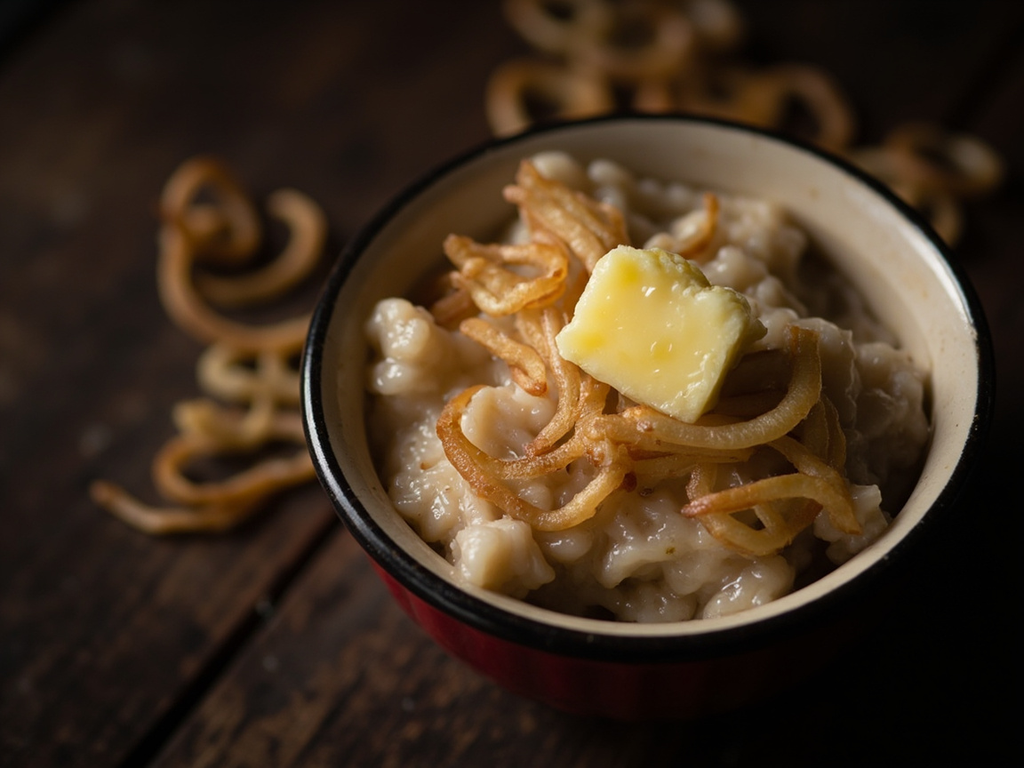
 flip
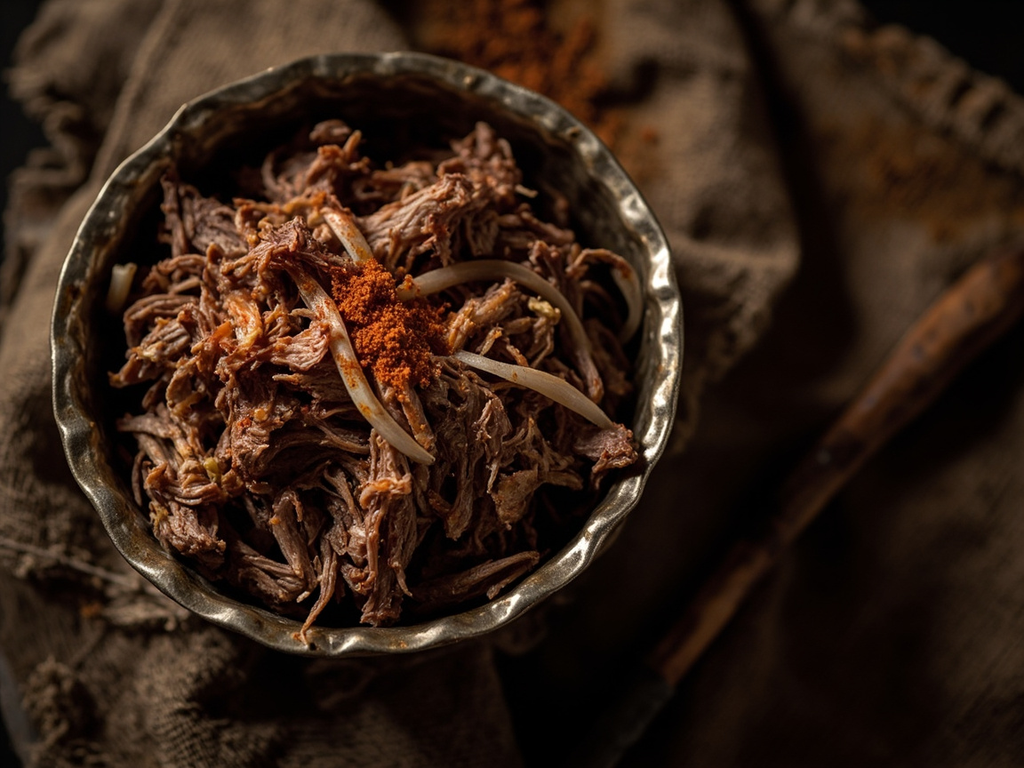
flipCharqui con mote (dried beef and hulled wheat)
Charqui con mote (dried beef and hulled wheat)
Why this dish? To cross the cordillera and liberate Chile at Chacabuco (1817) and then Maipú (1818), the armies of O'Higgins and San Martín marched for weeks. Charqui, dried and salted meat that does not spoil, and mote, boiled then dried wheat, formed the heart of the *rancho*: a harsh food that rehydrates at the campsite.
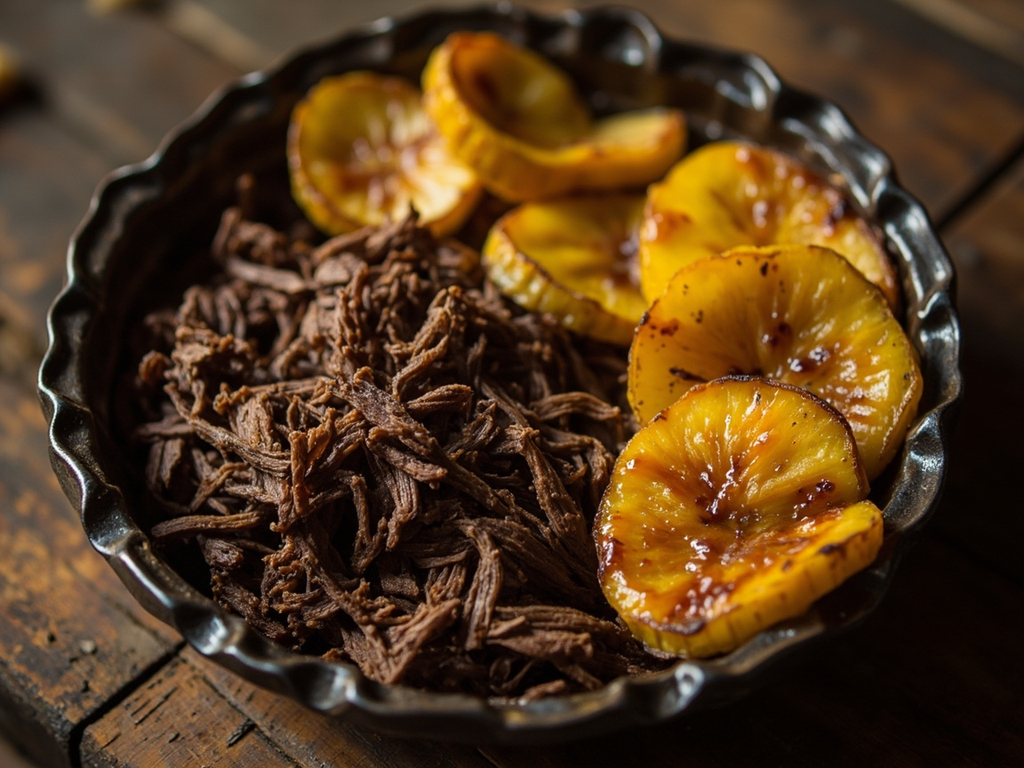
Strips of dried beef, salty and fibrous, rehydrated and shredded in a pot with hulled wheat and a little onion and ají. A one-dish meal, nourishing and deeply savory, born of the necessity of travel.
To bring freedom to Chile, we first had to conquer the mountain. My soldiers carried charqui in their packs: meat that the sun and salt had made hard as leather, but that never spoiled on long marches. In the evening, at the bivouac, we pounded it, threw it into the pot with mote and a touch of ají, and this poor soup was worth all the banquets. He who has known the hunger of the campaign knows that a good hot charqui restores courage to the heart.
- •Lean beef — in strips (to be dried into charqui)
- •Coarse salt — generously (preservation)
- •Mote (hulled wheat) — a measure (starch of the rancho)
- •Onion, ají — whatever is available (to enliven the dish)
- •Water — for rehydration (cooking)
Charqui con mote (dried beef and hulled wheat)
Strips of dried beef, salty and fibrous, rehydrated and shredded in a pot with hulled wheat and a little onion and ají. A one-dish meal, nourishing and deeply savory, born of the necessity of travel.
Why this dish? To cross the cordillera and liberate Chile at Chacabuco (1817) and then Maipú (1818), the armies of O'Higgins and San Martín marched for weeks. Charqui, dried and salted meat that does not spoil, and mote, boiled then dried wheat, formed the heart of the *rancho*: a harsh food that rehydrates at the campsite.
To bring freedom to Chile, we first had to conquer the mountain. My soldiers carried charqui in their packs: meat that the sun and salt had made hard as leather, but that never spoiled on long marches. In the evening, at the bivouac, we pounded it, threw it into the pot with mote and a touch of ají, and this poor soup was worth all the banquets. He who has known the hunger of the campaign knows that a good hot charqui restores courage to the heart.
Ingredients (period version)
- Lean beef — in strips (to be dried into charqui)
- Coarse salt — generously (preservation)
- Mote (hulled wheat) — a measure (starch of the rancho)
- Onion, ají — whatever is available (to enliven the dish)
- Water — for rehydration (cooking)
Ingredients
- Dried beef (charqui, or failing that, jerky) — 200 g (protein)
- Hulled wheat (or pearl barley) — 250 g (starch)
- Onion — 1, sliced (aromatic)
- Paprika / ají de color — 1 teaspoon (color and flavor)
- Broth or water — 1 liter (cooking and rehydration)
- Salt and cumin — to taste (seasoning)
Method
- For homemade charqui: generously salt thin strips of lean beef and dry for 2 to 3 days in a dry, airy place (or in an oven at 70°C, door ajar, for several hours).
- Soak the charqui in warm water for 1 hour to desalt and soften it, then shred it.
- Cook the hulled wheat in the broth until tender (40 to 50 min).
- Sauté the onion with paprika, add the shredded charqui, then the drained wheat; moisten and simmer for 10 minutes.
- Adjust salt, add a pinch of cumin, and serve very hot, as at the bivouac.
How it was made : Charqui (a Quechua word, origin of English 'jerky') was the quintessential Andean preservation technique: lean meat salted and dried in the cordillera sun. Light, non-perishable, it enabled long military campaigns. Mote, wheat boiled with a little ash then dried, also kept well and rehydrated easily.
The contemporary twist : Served in a steaming bowl topped with fresh onion and a drizzle of oil, rebranded as 'Liberator's ration' — a dish of memory to discuss Andean crossings in class.
Sources : Eugenio Pereira Salas, Apuntes para la historia de la cocina chilena, 1943 · Sophie D. Coe, America's First Cuisines
Bernardo O'Higgins · Charactorium