 flip
flipBáizhōu — morning rice gruel
Báizhōu — morning rice gruel
Why this dish? Rice in southern India as in Chinese monasteries was Bodhidharma's daily bread. The clear gruel, easy to receive in the alms bowl and light for a body that fasts in the afternoon, is the best-attested food of Chan monastic life: it was eaten before dawn, before the long sitting.
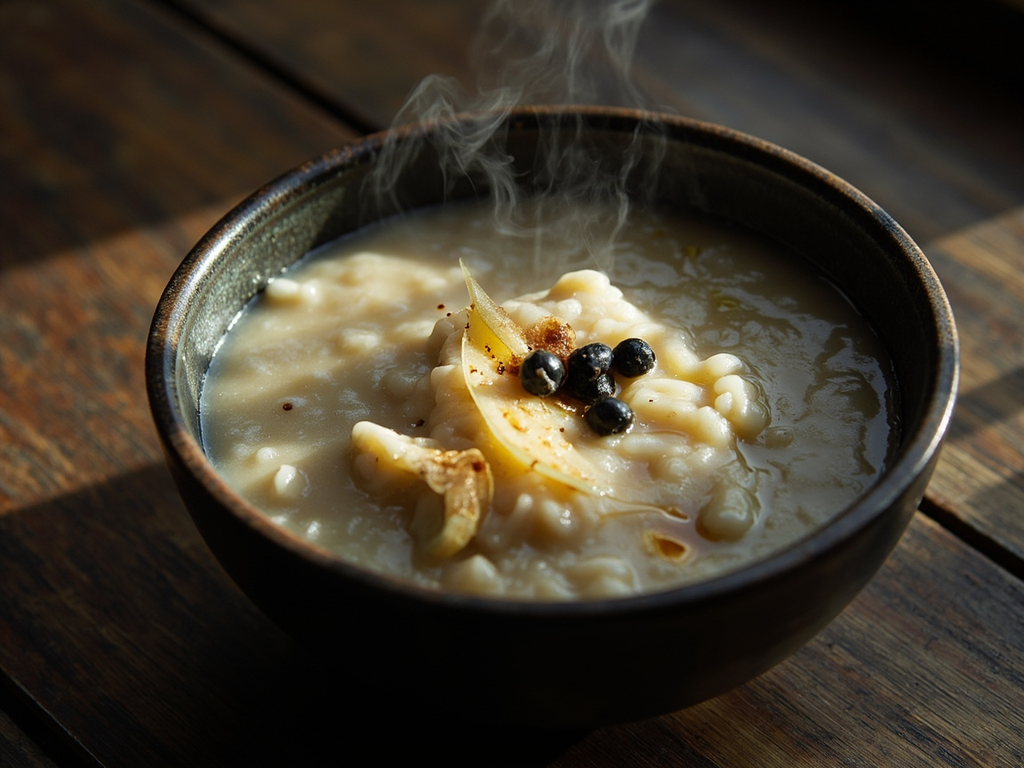
Rice long-simmered in plenty of water until it becomes a silky porridge, lifted with a touch of fermented soybean and ginger. Hot, comforting, almost nothing — and that is the whole spirit of Chan.
You seek a feast? There is no feast. Here is a bowl, here is rice become water and water become rice — nothing else. Eat it burning hot, before the sun rises, while your mind is still bare. He who scorns this gruel will find wisdom in no banquet. When you have emptied the bowl, wash it: that too is the Way.
- •White rice — a handful per monk (base, bowl cereal)
- •Spring water — in abundance (ten times the rice) (cooking liquid)
- •Fermented soybeans (douchi 豉) — a few crushed grains (umami, permitted vegetable salt)
- •Fresh ginger — a sliver (warmth, digestion)
Báizhōu — morning rice gruel
Rice long-simmered in plenty of water until it becomes a silky porridge, lifted with a touch of fermented soybean and ginger. Hot, comforting, almost nothing — and that is the whole spirit of Chan.
Why this dish? Rice in southern India as in Chinese monasteries was Bodhidharma's daily bread. The clear gruel, easy to receive in the alms bowl and light for a body that fasts in the afternoon, is the best-attested food of Chan monastic life: it was eaten before dawn, before the long sitting.
You seek a feast? There is no feast. Here is a bowl, here is rice become water and water become rice — nothing else. Eat it burning hot, before the sun rises, while your mind is still bare. He who scorns this gruel will find wisdom in no banquet. When you have emptied the bowl, wash it: that too is the Way.
Ingredients (period version)
- White rice — a handful per monk (base, bowl cereal)
- Spring water — in abundance (ten times the rice) (cooking liquid)
- Fermented soybeans (douchi 豉) — a few crushed grains (umami, permitted vegetable salt)
- Fresh ginger — a sliver (warmth, digestion)
Ingredients
- Round-grain rice (risotto or sushi rice) — 100 g (base)
- Water — 1.2 to 1.5 L (long cooking)
- Douchi (fermented black beans, Asian grocery) or 1 tsp soybean paste — 1 tbsp (salty umami)
- Fresh ginger — 2 thin slices (flavor)
- Sesame oil — a few drops (optional) (final roundness)
Method
- Rinse the rice in clear water until the water runs clear.
- Put it in a large pot with the cold water and ginger slices.
- Bring to a boil, then reduce to very low heat and simmer for 45 to 60 minutes, stirring occasionally, until creamy.
- Crush the douchi (or dilute the soybean paste) and stir in at the end of cooking; adjust consistency with a little hot water.
- Serve piping hot in a bowl, with a drop of sesame oil on top if desired.
How it was made : Zhōu (congee) has been documented since Chinese antiquity as food for monks, the sick, and the poor: it stretches a small amount of rice to feed many, which perfectly suited a community living on alms. It was cooked on the embers of the communal hearth before the morning office.
The contemporary twist : Served in a rough stoneware bowl set on a slate, with a streak of candied ginger and three aligned toasted sesame seeds: Zen minimalism as plating.
Bodhidharma · Charactorium