 flip
flipIm portaigh — bog-buried churned butter
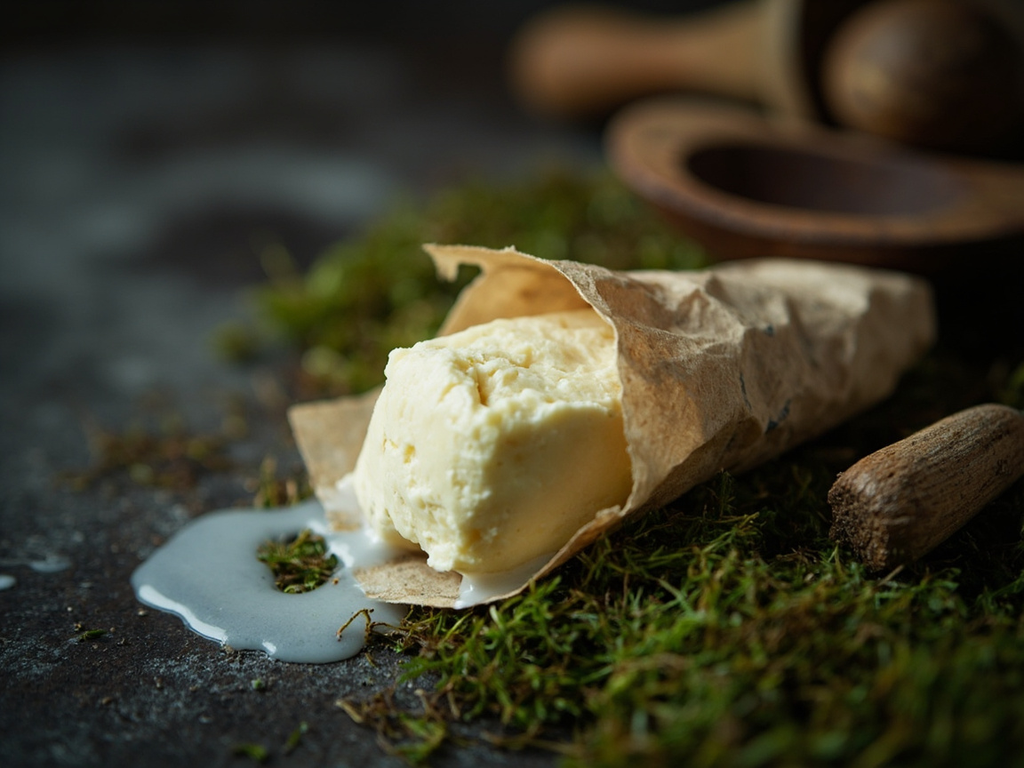
Im portaigh — bog-buried churned butter
Why this dish? Brigid is the saint of the churn: her cult is inseparable from butter. Burying a pat in fresh peat to keep it for months is an Irish practice attested by archaeology — the way her community preserved the golden fat of the herd from one season to the next.
Homemade churned butter, salted, kneaded, then wrapped and aged in the cold in the manner of 'bog butter', which develops a powerful, almost cheesy taste. A precious store of fat for lean days.
Butter is our treasure — not the gold of kings, but the wealth of the churn that I have never let run dry. When summer gives us more than we eat, do not waste it: salt it well, knead it to drive out the water, wrap it in bark and entrust it to the cold peat of the bog. The earth keeps it faithfully, and when winter comes you will find it changed, stronger in taste, but still good to feed your house and the stranger who passes.
- •Cow's milk cream — the yield of several milkings (base for churning)
- •Salt — a good handful (preservation, signature)
- •Birch bark or wicker basket — enough to wrap (packaging)
Im portaigh — bog-buried churned butter
Homemade churned butter, salted, kneaded, then wrapped and aged in the cold in the manner of 'bog butter', which develops a powerful, almost cheesy taste. A precious store of fat for lean days.
Why this dish? Brigid is the saint of the churn: her cult is inseparable from butter. Burying a pat in fresh peat to keep it for months is an Irish practice attested by archaeology — the way her community preserved the golden fat of the herd from one season to the next.
Butter is our treasure — not the gold of kings, but the wealth of the churn that I have never let run dry. When summer gives us more than we eat, do not waste it: salt it well, knead it to drive out the water, wrap it in bark and entrust it to the cold peat of the bog. The earth keeps it faithfully, and when winter comes you will find it changed, stronger in taste, but still good to feed your house and the stranger who passes.
Ingredients (period version)
- Cow's milk cream — the yield of several milkings (base for churning)
- Salt — a good handful (preservation, signature)
- Birch bark or wicker basket — enough to wrap (packaging)
Ingredients
- Full-fat heavy cream (30% minimum) — 500 ml (base for churning)
- Ice water — for washing (rinsing)
- Fine salt — 1 to 2 tsp (preservation, signature)
Method
- Let the cream rest at room temperature for a few hours to sour slightly (more distinctive taste).
- Pour it into a clean sealed jar and shake vigorously (or beat with an electric mixer) until the butter separates from the buttermilk.
- Drain the buttermilk (save it for cooking).
- Wash the butter pat in ice water, kneading it, until the water runs clear — this step ensures preservation.
- Knead in the salt thoroughly.
- Press firmly into a container, smooth the surface, and store in the coldest part of the refrigerator; aged a few weeks, it will develop powerful flavors like 'bog butter'.
How it was made : Irish bogs have yielded hundreds of 'bog butter' pats, sometimes over a thousand years old, buried in wooden or bark containers. The cold, acidic, oxygen-poor environment of the peat acted as a natural refrigerator, preserving the fat for months while giving it a strong, characteristic taste. Butter was both food, a store of wealth, and sometimes a votive offering.
The contemporary twist : Present the pat rolled in dried herbs and sliced with string, accompanied by a burnt-wood label evoking the containers found in the bogs.
Sources : Caroline Earwood, "Bog Butter: A Two Thousand Year History", Journal of Irish Archaeology, 1997 · Fergus Kelly, Early Irish Farming, 1997 · National Museum of Ireland, bog butter collections
Brigid of Kildare · Charactorium