 flip
flipRice and Mung Dal Khichari with Ghee
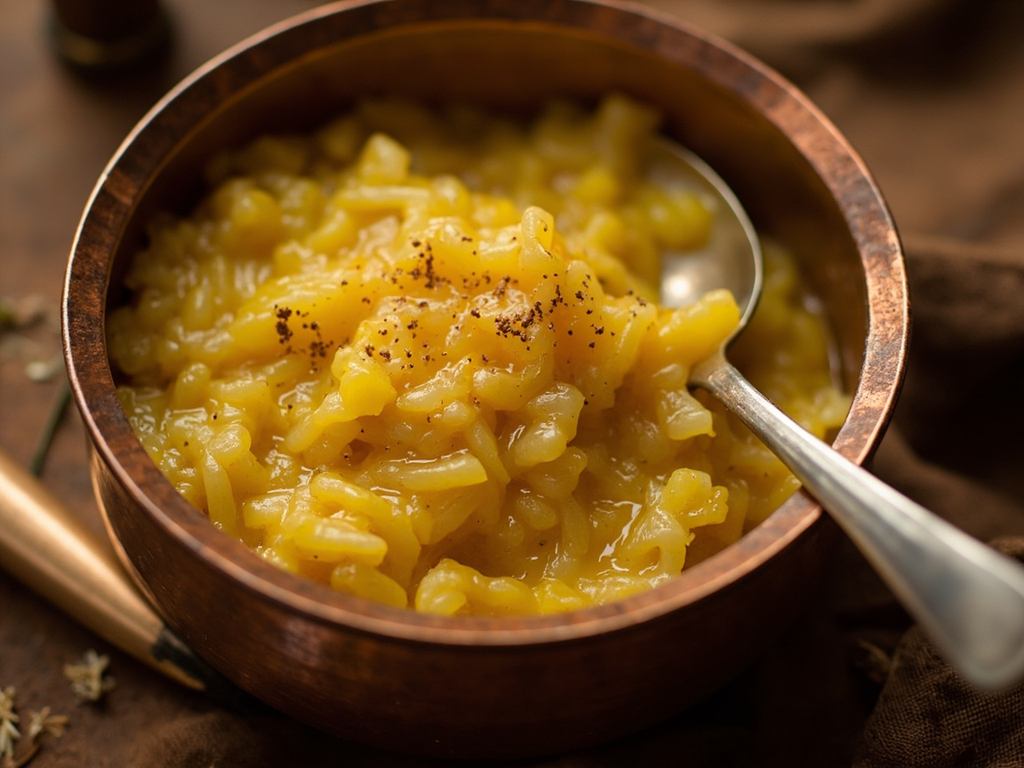
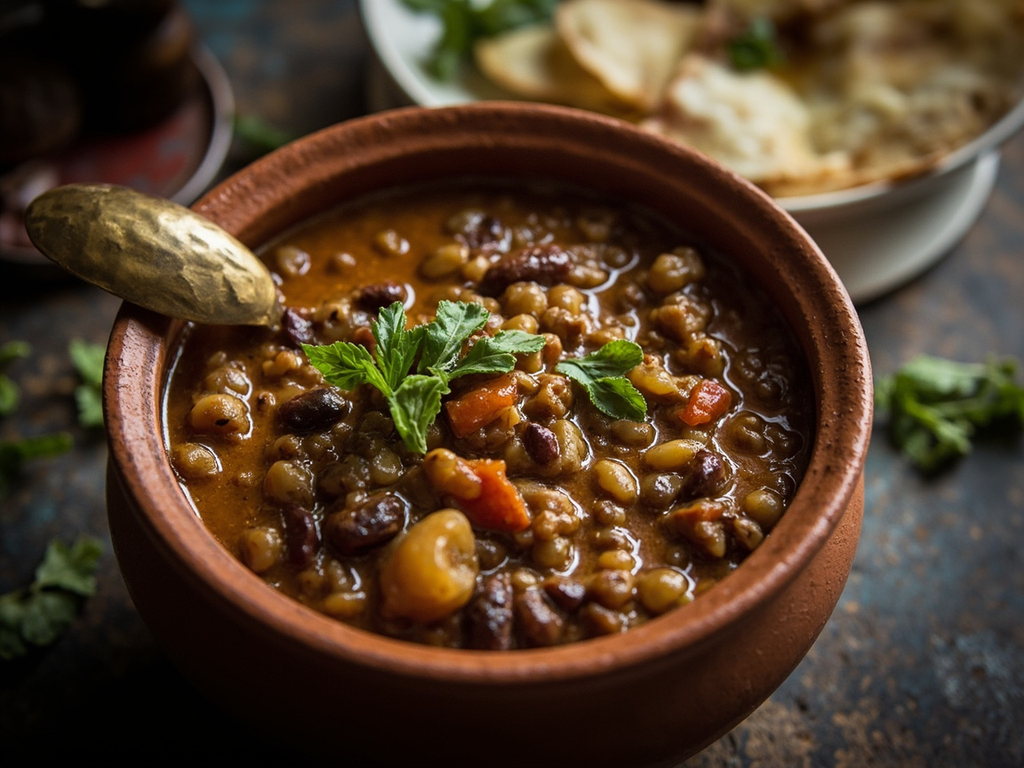
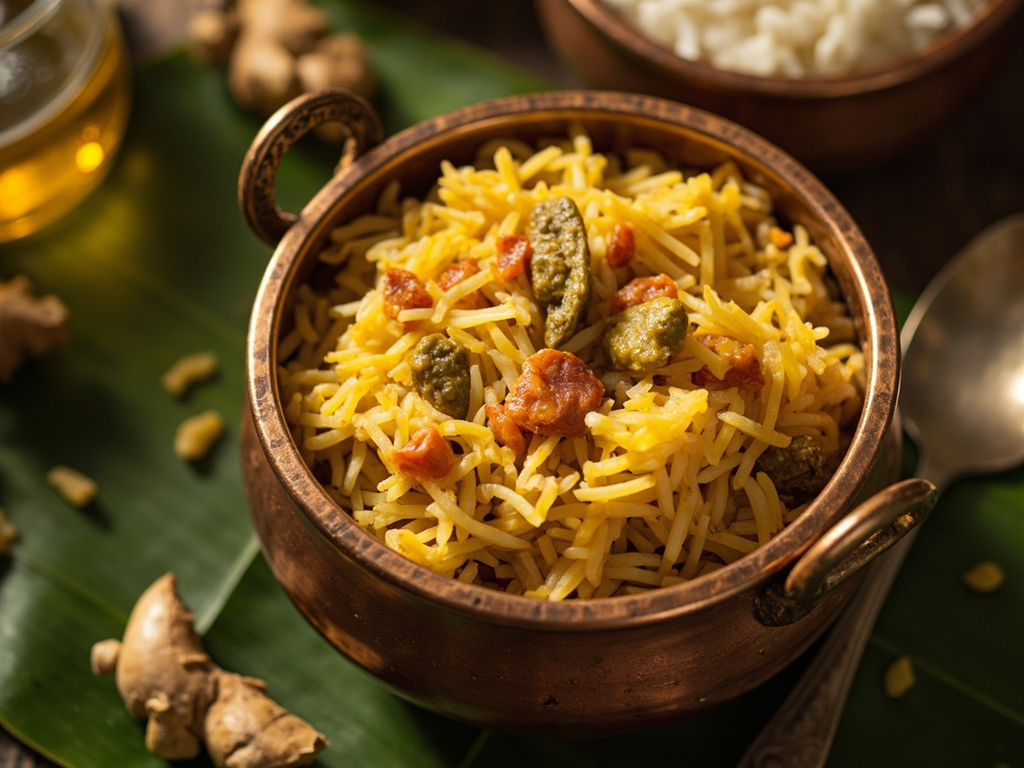
Rice and Mung Dal Khichari with Ghee
Why this dish? Rice from Magadha and mung lentils formed the staple of the royal table at Pataliputra. This one-pot porridge, nourishing and gentle on the stomach, is the attested ancestor of khichari — a dish that Chandragupta, a sober eater turned Jain follower, could eat without violating ahimsa.
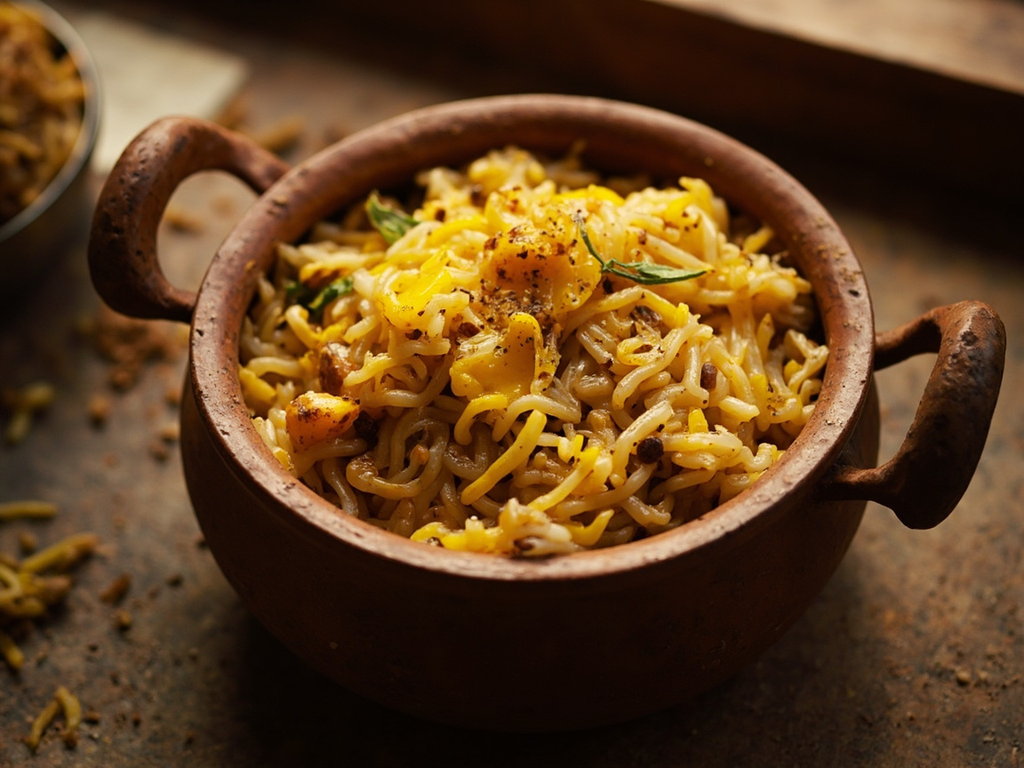
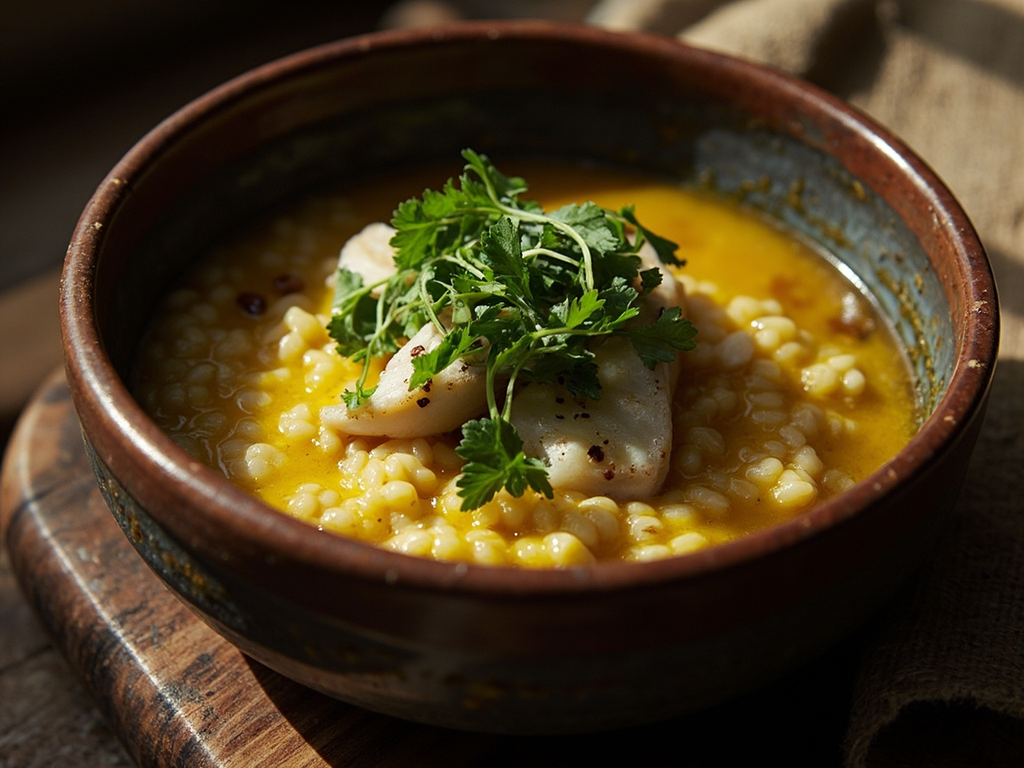
Rice and hulled mung lentils cooked together until they melt, seasoned with ginger, turmeric, and a pinch of hing, all bound with a spoonful of melted ghee. A comforting, complete, and soothing dish.
Listen, traveler. I conquered the Nanda throne and made the Western generals tremble, but at the end of my days I wanted only that pot: the rice of my Magadha and the mung lentil melted into a single porridge. Warm ghee is poured in, ginger is grated, and neither onion root nor garlic clove is added, for I learned from the naked sages to no longer harm the living. Eat slowly, like a king who has finally laid down his sword.
- •Rice from Magadha — a good handful per person (base)
- •Hulled mung lentils — half the volume of rice (protein)
- •Ghee — as desired (binder and flavor)
- •Fresh ginger — a piece (aromatic)
- •Turmeric — a pinch (color and gentle warmth)
- •Hing (asafoetida) — a grain (aromatic, replaces onion)
- •Salt — to taste (seasoning)
Rice and Mung Dal Khichari with Ghee
Rice and hulled mung lentils cooked together until they melt, seasoned with ginger, turmeric, and a pinch of hing, all bound with a spoonful of melted ghee. A comforting, complete, and soothing dish.
Why this dish? Rice from Magadha and mung lentils formed the staple of the royal table at Pataliputra. This one-pot porridge, nourishing and gentle on the stomach, is the attested ancestor of khichari — a dish that Chandragupta, a sober eater turned Jain follower, could eat without violating ahimsa.
Listen, traveler. I conquered the Nanda throne and made the Western generals tremble, but at the end of my days I wanted only that pot: the rice of my Magadha and the mung lentil melted into a single porridge. Warm ghee is poured in, ginger is grated, and neither onion root nor garlic clove is added, for I learned from the naked sages to no longer harm the living. Eat slowly, like a king who has finally laid down his sword.
Ingredients (period version)
- Rice from Magadha — a good handful per person (base)
- Hulled mung lentils — half the volume of rice (protein)
- Ghee — as desired (binder and flavor)
- Fresh ginger — a piece (aromatic)
- Turmeric — a pinch (color and gentle warmth)
- Hing (asafoetida) — a grain (aromatic, replaces onion)
- Salt — to taste (seasoning)
Ingredients
- Basmati rice — 150 g (base)
- Hulled mung lentils (yellow) — 75 g (protein)
- Ghee — 2 tbsp (binder and flavor)
- Fresh grated ginger — 1 tsp (aromatic)
- Turmeric powder — 1/2 tsp (color)
- Asafoetida (hing) — 1 pinch (aromatic)
- Water — 750 ml (cooking liquid)
- Salt — 1 tsp (seasoning)
- Cumin seeds — 1 tsp (tempering)
Method
- Rinse rice and mung lentils until water runs clear.
- In a pot, heat 1 tbsp ghee, crackle cumin, then add hing and ginger for a few seconds.
- Add rice, lentils, turmeric, and salt; stir to coat.
- Pour in water, bring to a boil, then cover and simmer on low heat for 25-30 minutes until a soft porridge forms.
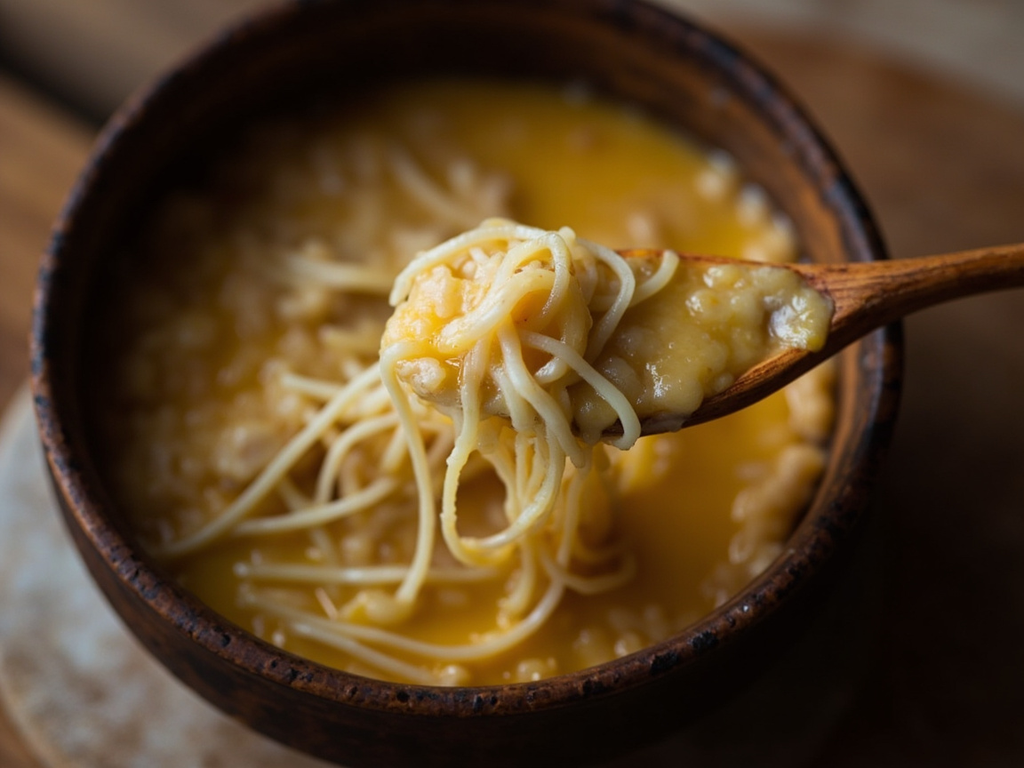
- Lightly mash with a spoon, adjust water for a creamy texture.
- Off heat, drizzle with remaining ghee and serve hot.
How it was made : This type of dish was cooked in a clay pot over an open fire, without tomato or chili (unknown in India before the 16th century). Tempering spices in ghee — tadka — is an ancient Indian technique. Megasthenes, Greek ambassador to Pataliputra under Chandragupta, describes a people who mainly ate rice.
The contemporary twist : A shower of crispy fried ginger and a few nutty ghee petals for a modern plating, served in a hammered copper bowl.
Chandragupta Maurya · Charactorium