 flip
flipMacaroni with Lombard Cheese, Cinnamon and Sugar
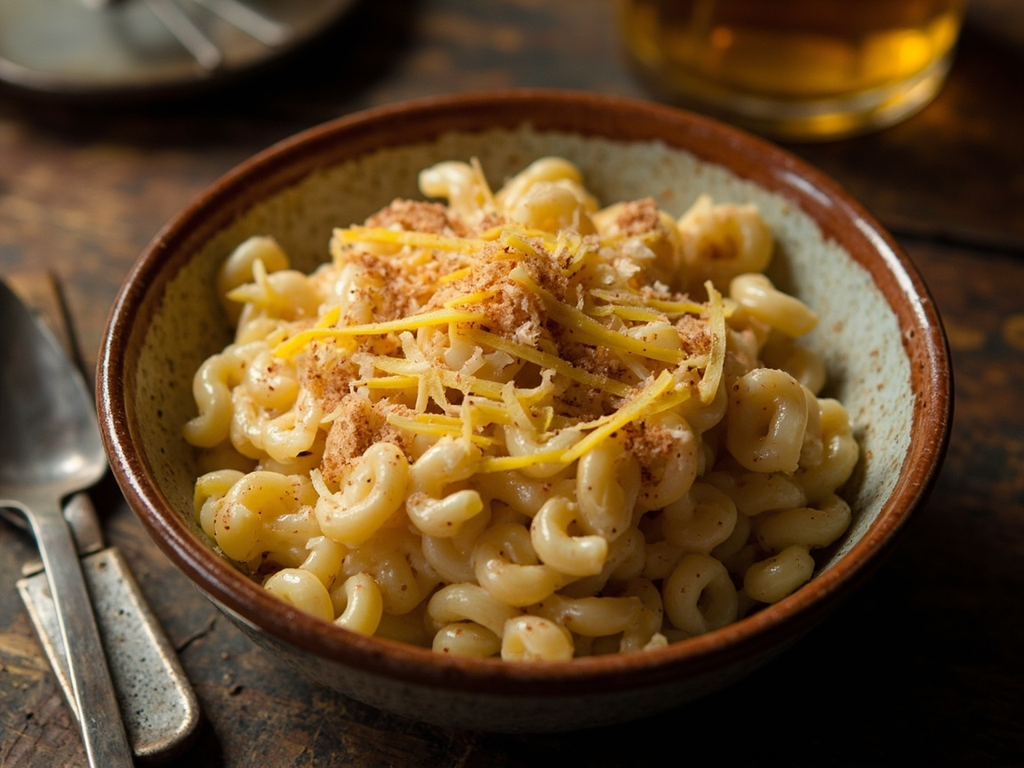
Macaroni with Lombard Cheese, Cinnamon and Sugar
Why this dish? Appointed governor of the Duchy of Milan for Louis XII, Charles d'Amboise spent years at the Castello Sforzesco and adopted Lombard habits: pasta—then eaten sweet-savory, sprinkled with cheese and cinnamon—came to his table alongside French dishes.
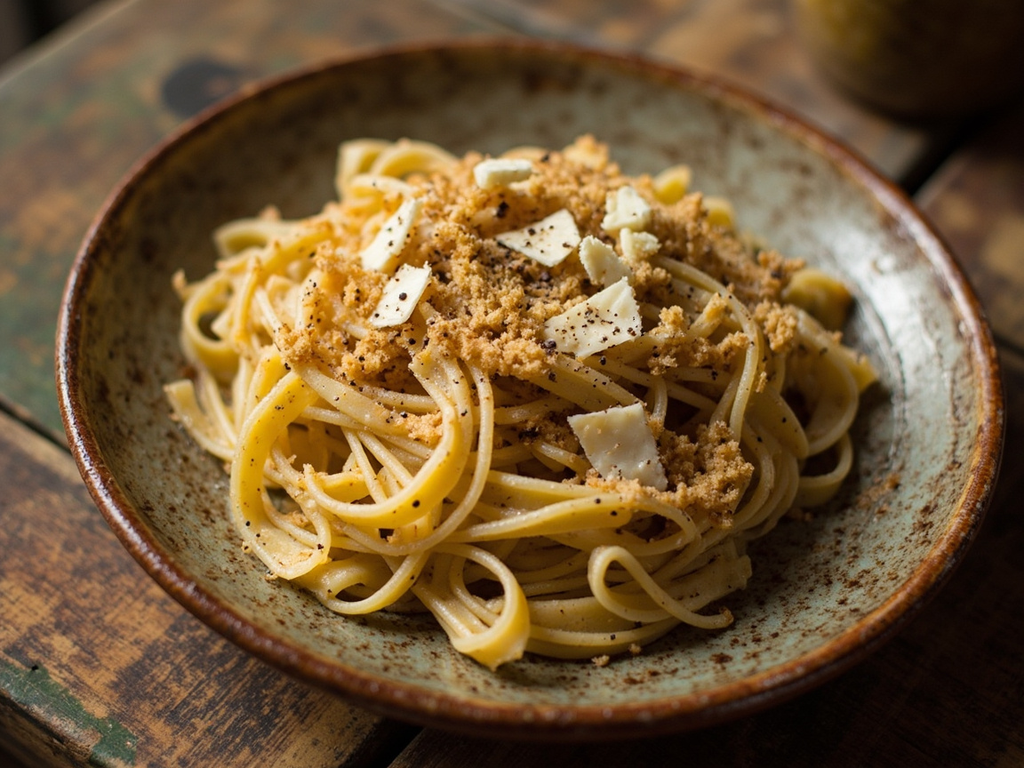
Pasta boiled until tender, layered with butter, grated Lombard cheese, sugar, and cinnamon. A soft, melting dish typical of the Italian Renaissance style where sweet and savory were not separated.
When the King my master gave me the governorship of this Duchy of Milan, I learned from the Lombards to eat these thin strips of paste they call macaroni. They are boiled at leisure, then laid in a dish with good butter and plenty of grated cheese from the country on top, and dusted with sugar and cinnamon by the handful. Believe me: cook them softer than you think, for in this country they do not like them firm under the tooth. It is an everyday dish, but it cheers as much as many a roast.
- •Fresh or dried pasta (macaroni) — a good bowlful (base)
- •Grated Lombard cheese (grana type) — large handful (umami binder)
- •Fresh butter — a good piece (fat)
- •Sugar — to taste (sweetness)
- •Ground cinnamon — a generous pinch (signature spice)
Macaroni with Lombard Cheese, Cinnamon and Sugar
Pasta boiled until tender, layered with butter, grated Lombard cheese, sugar, and cinnamon. A soft, melting dish typical of the Italian Renaissance style where sweet and savory were not separated.
Why this dish? Appointed governor of the Duchy of Milan for Louis XII, Charles d'Amboise spent years at the Castello Sforzesco and adopted Lombard habits: pasta—then eaten sweet-savory, sprinkled with cheese and cinnamon—came to his table alongside French dishes.
When the King my master gave me the governorship of this Duchy of Milan, I learned from the Lombards to eat these thin strips of paste they call macaroni. They are boiled at leisure, then laid in a dish with good butter and plenty of grated cheese from the country on top, and dusted with sugar and cinnamon by the handful. Believe me: cook them softer than you think, for in this country they do not like them firm under the tooth. It is an everyday dish, but it cheers as much as many a roast.
Ingredients (period version)
- Fresh or dried pasta (macaroni) — a good bowlful (base)
- Grated Lombard cheese (grana type) — large handful (umami binder)
- Fresh butter — a good piece (fat)
- Sugar — to taste (sweetness)
- Ground cinnamon — a generous pinch (signature spice)
Ingredients
- Short pasta (macaroni, penne) — 320 g (base)
- Grated Grana Padano or Parmesan — 100 g (umami binder)
- Butter — 50 g (fat)
- Sugar — 1-2 tbsp (sweetness)
- Ground cinnamon — 1 tsp (signature spice)
Method
- Cook the pasta in plenty of salted water until very tender (a little beyond al dente, in the old style).
- Drain, reserving a little cooking water.
- Return the pasta to the warm pot, add the butter, and toss until melted.
- Layer in a dish: pasta, grated cheese, a dusting of sugar and cinnamon, and repeat.
- Finish with cheese, sugar, and cinnamon. Serve at once, piping hot.
How it was made : Maestro Martino da Como and Bartolomeo Platina describe 15th-century pasta served with butter, grated cheese, sugar, and 'sweet spices' like cinnamon. Sugar was a prestigious seasoning, and the sweet-savory mix on pasta remained common in Italy until the 17th century.
The contemporary twist : Serve in individual ramekins, gratinéed for 5 minutes in the oven, with a final dusting of cinnamon just before bringing to table.
Sources : Maestro Martino da Como, Libro de arte coquinaria (c. 1465) · Bartolomeo Platina, De honesta voluptate et valetudine (1474)
Charles d'Amboise · Charactorium