 flip
flipSekihan, the red rice of special days
Sekihan, the red rice of special days
Why this dish? Chika Kuroda was one of the very first Japanese women to earn a scientific degree and later a doctorate in chemistry. In Japan, sekihan is cooked precisely to celebrate such milestones: passing an exam, receiving a diploma, a promotion. It's hard to imagine a more legitimate household for this red rice on the day she received her title.
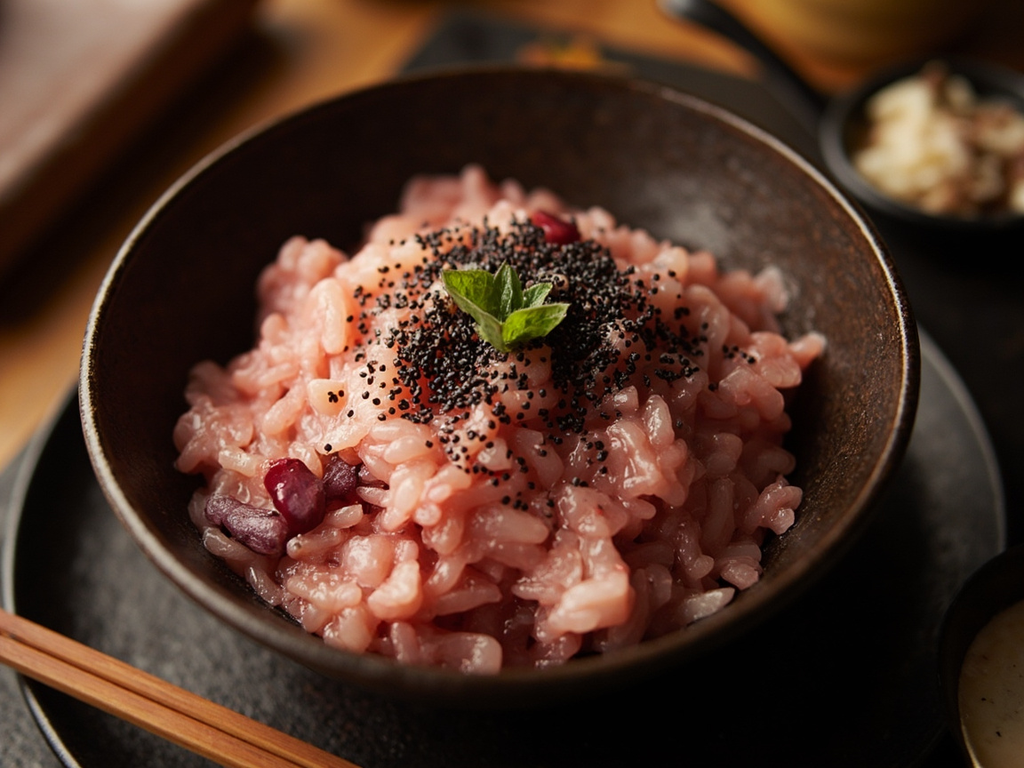
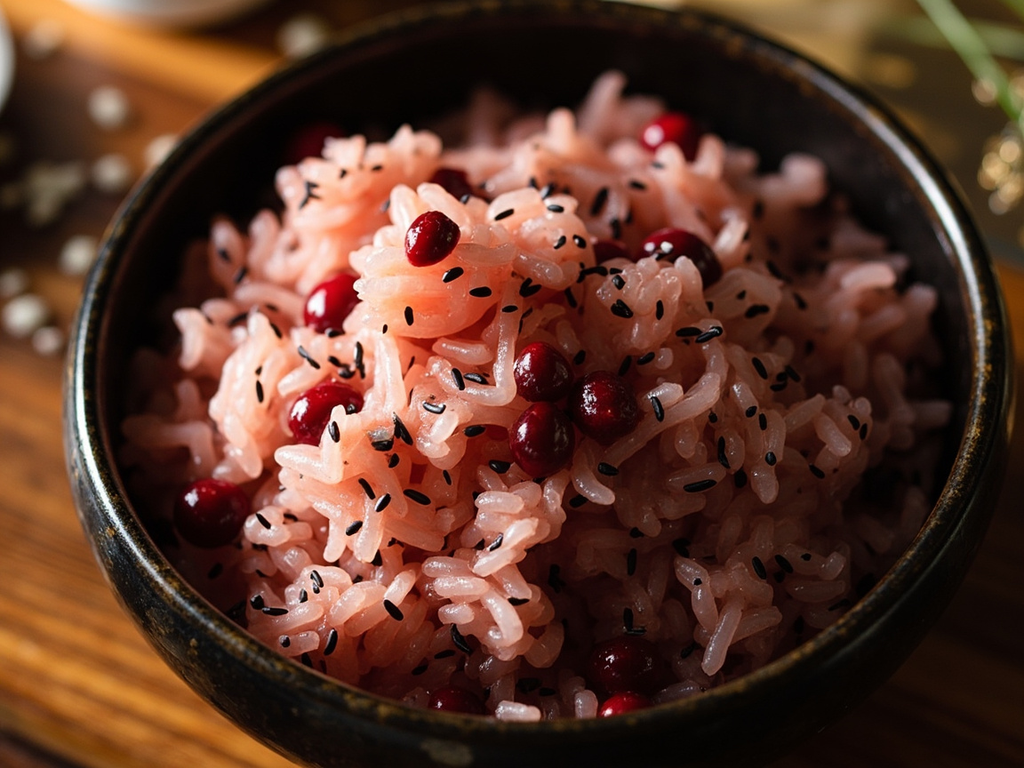
Glutinous rice steamed with azuki beans, which dye the grains a deep pink. A subtle sweetness, a hint of salt, and the famous gomashio (toasted sesame and salt) sprinkled on top to celebrate the occasion.
Red is considered auspicious — it wards off bad luck, they say at home. On the day of my diploma, my family made sekihan, and I must confess, watching the azuki cooking water turn the rice pink, I couldn't help but see a dye: a pigment passing from the bean to the water, then from the water to the grain. All my life I have pursued the colors of plants — it was fitting that color should celebrate, that evening, what it had promised me.
- •Glutinous rice (mochigome) — several gō (base)
- •Azuki beans — a handful (color and flavor)
- •Black sesame seeds — a little (gomashio)
- •Salt — a pinch (gomashio and cooking water)
Sekihan, the red rice of special days
Glutinous rice steamed with azuki beans, which dye the grains a deep pink. A subtle sweetness, a hint of salt, and the famous gomashio (toasted sesame and salt) sprinkled on top to celebrate the occasion.
Why this dish? Chika Kuroda was one of the very first Japanese women to earn a scientific degree and later a doctorate in chemistry. In Japan, sekihan is cooked precisely to celebrate such milestones: passing an exam, receiving a diploma, a promotion. It's hard to imagine a more legitimate household for this red rice on the day she received her title.
Red is considered auspicious — it wards off bad luck, they say at home. On the day of my diploma, my family made sekihan, and I must confess, watching the azuki cooking water turn the rice pink, I couldn't help but see a dye: a pigment passing from the bean to the water, then from the water to the grain. All my life I have pursued the colors of plants — it was fitting that color should celebrate, that evening, what it had promised me.
Ingredients (period version)
- Glutinous rice (mochigome) — several gō (base)
- Azuki beans — a handful (color and flavor)
- Black sesame seeds — a little (gomashio)
- Salt — a pinch (gomashio and cooking water)
Ingredients
- Glutinous rice (mochigome) — 300 g (base)
- Dried azuki beans — 50 g (color and flavor)
- Azuki cooking water — reserved (to tint the rice pink)
- Black sesame seeds — 1 tbsp (gomashio)
- Fine salt — 1 tsp (gomashio)
Method
- Boil the azuki beans for 3 minutes, discard this first water, cover with fresh water and cook for 20 minutes until almost tender; reserve both the beans AND their red cooking water.
- Soak the glutinous rice overnight in the cooled azuki cooking water: it will take on a pink hue.
- Drain the rice (keep the liquid), mix in the azuki beans, then steam everything for 30 to 40 minutes, moistening with the reserved liquid halfway through.
- Toast the sesame seeds dry, then roughly crush them with the salt to make gomashio.
- Serve the sekihan warm in a bowl and sprinkle with gomashio at the moment of eating.
How it was made : Traditionally, sekihan is steamed in a wooden steamer (seiro), sometimes with sasage beans instead of azuki, as the latter tend to burst. It was offered to the household deities before being shared during seasonal festivals and life milestones.
The contemporary twist : Pressed into small triangle onigiri shapes, sekihan slips into a celebratory lunchbox; a bamboo leaf underneath makes the pink stand out even more.
Sources : Ishige Naomichi, The History and Culture of Japanese Food (2001) · Elizabeth Andoh, Washoku: Recipes from the Japanese Home Kitchen (2005)
Chika Kuroda · Charactorium