 flip
flipUmeboshi, the salted plums of the pantry
Umeboshi, the salted plums of the pantry
Why this dish? When Chika Kuroda traveled — as far as Oxford for her research, or between Sendai and Tokyo — an umeboshi tucked into the heart of a rice ball (onigiri) was the quintessential travel preserve: reputed antiseptic, it kept the rice edible and revived spirits along the way. A reserve prepared in summer for the whole year.
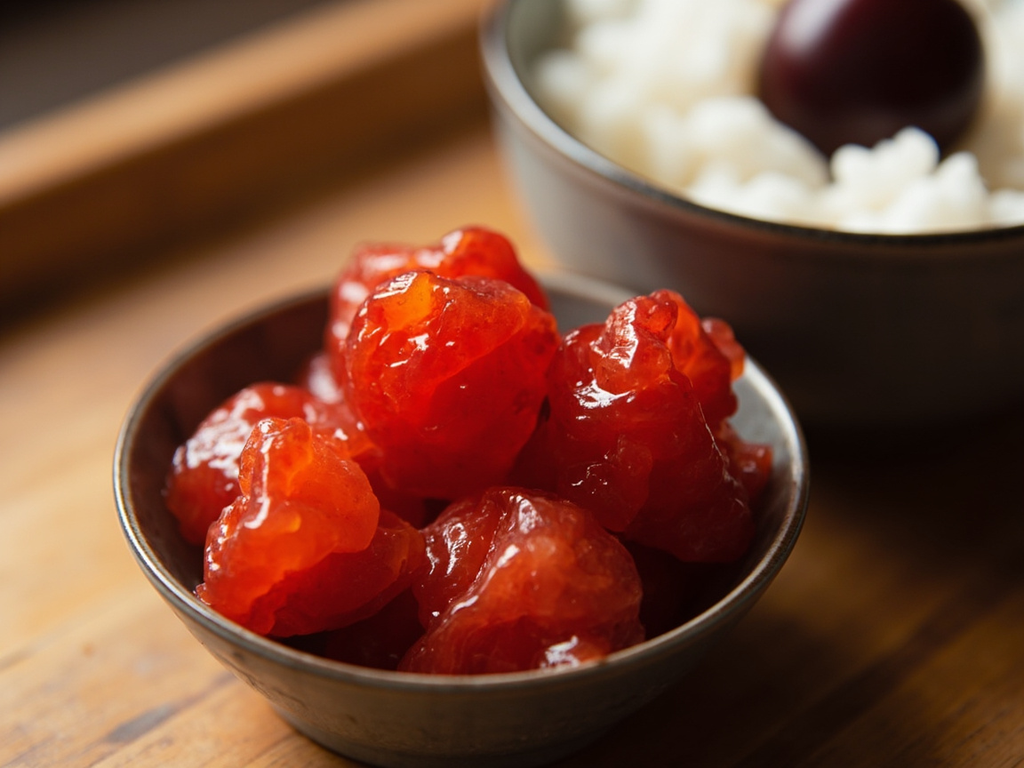
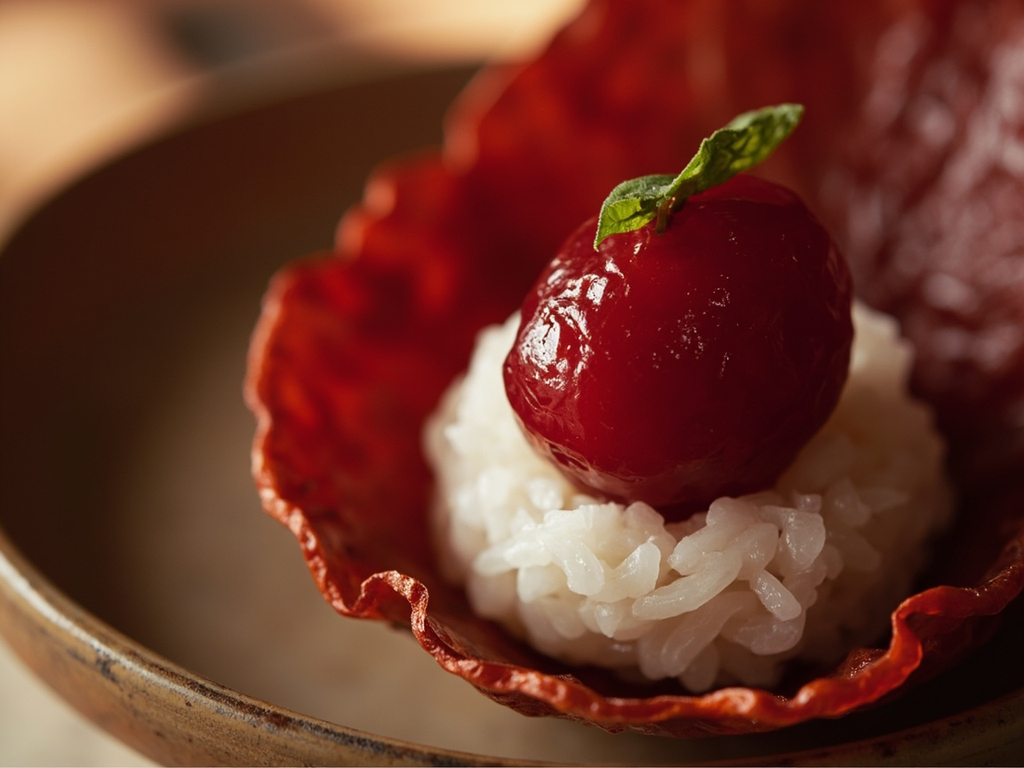
Salt-pickled ume plums dried in the sun, a deep red when combined with red shiso leaves. Sharp acidity, frank saltiness, a slightly fermented undertone: a tiny bite that awakens an entire bowl of rice.
In summer, when the ume are green and hard, we salt them and let them release their brine — the umezu, that plum vinegar. Then come three days of sun on racks, and the red shiso that dyes them. You may find me meticulous, but I want the right weight of salt: too little, and mold wins; enough, and the plum keeps for years. I would slip one into my rice for long journeys — nothing like it to make a meal last and the traveler last with it.
- •Ripe ume plums — a large jar (fruit to pickle)
- •Salt — about one-fifth the weight of the plums (salting and preservation)
- •Red shiso leaves — a bunch (color and aroma)
Umeboshi, the salted plums of the pantry
Salt-pickled ume plums dried in the sun, a deep red when combined with red shiso leaves. Sharp acidity, frank saltiness, a slightly fermented undertone: a tiny bite that awakens an entire bowl of rice.
Why this dish? When Chika Kuroda traveled — as far as Oxford for her research, or between Sendai and Tokyo — an umeboshi tucked into the heart of a rice ball (onigiri) was the quintessential travel preserve: reputed antiseptic, it kept the rice edible and revived spirits along the way. A reserve prepared in summer for the whole year.
In summer, when the ume are green and hard, we salt them and let them release their brine — the umezu, that plum vinegar. Then come three days of sun on racks, and the red shiso that dyes them. You may find me meticulous, but I want the right weight of salt: too little, and mold wins; enough, and the plum keeps for years. I would slip one into my rice for long journeys — nothing like it to make a meal last and the traveler last with it.
Ingredients (period version)
- Ripe ume plums — a large jar (fruit to pickle)
- Salt — about one-fifth the weight of the plums (salting and preservation)
- Red shiso leaves — a bunch (color and aroma)
Ingredients
- Ripe ume plums (or firm apricots as a substitute) — 1 kg (fruit to pickle)
- Sea salt — 180 g (18%) (salting)
- Red shiso leaves — 1 bunch (≈ 100 g) (color and aroma)
- Salt for the shiso — 2 tbsp (to wilt the leaves)
Method
- Wash the ume, remove the stems, and pat dry thoroughly.
- Layer them with salt in a clean container, place a weight on top, and let the brine (umezu) form for one to two weeks in a cool place.
- Massage the red shiso leaves with salt to wilt them, discard the bitter juice, then add the leaves to the jar: they dye the plums and brine red.
- On sunny days, dry the plums for three days in the sun on racks, bringing them in at night, then return them to their brine or to jars.
- Store for several months in a cool place; serve half a plum per bowl of rice or at the heart of an onigiri.
How it was made : Umeboshi is one of the oldest Japanese preserves, valued for its longevity and reputed benefits against fatigue and stomach ailments. Sun-drying (doyō-boshi) was done during the late July heat; the red brine (umezu) also served as a seasoning.
The contemporary twist : Chopped with a little katsuobushi, umeboshi becomes a paste (bainiku) spread on fresh cucumber — a tangy bite very popular as an appetizer.
Sources : Ishige Naomichi, The History and Culture of Japanese Food (2001) · Nancy Singleton Hachisu, Preserving the Japanese Way (2015)
Chika Kuroda · Charactorium