 flip
flipOji na ose oji (kola nut and spicy welcome paste)
Oji na ose oji (kola nut and spicy welcome paste)
Why this dish? Kola nut is among his typical objects, reserved 'for moments of welcome and respect'. Achebe immortalized this gesture in Things Fall Apart: 'He who brings kola brings life.' Presenting kola to a guest is the first word of any visit.
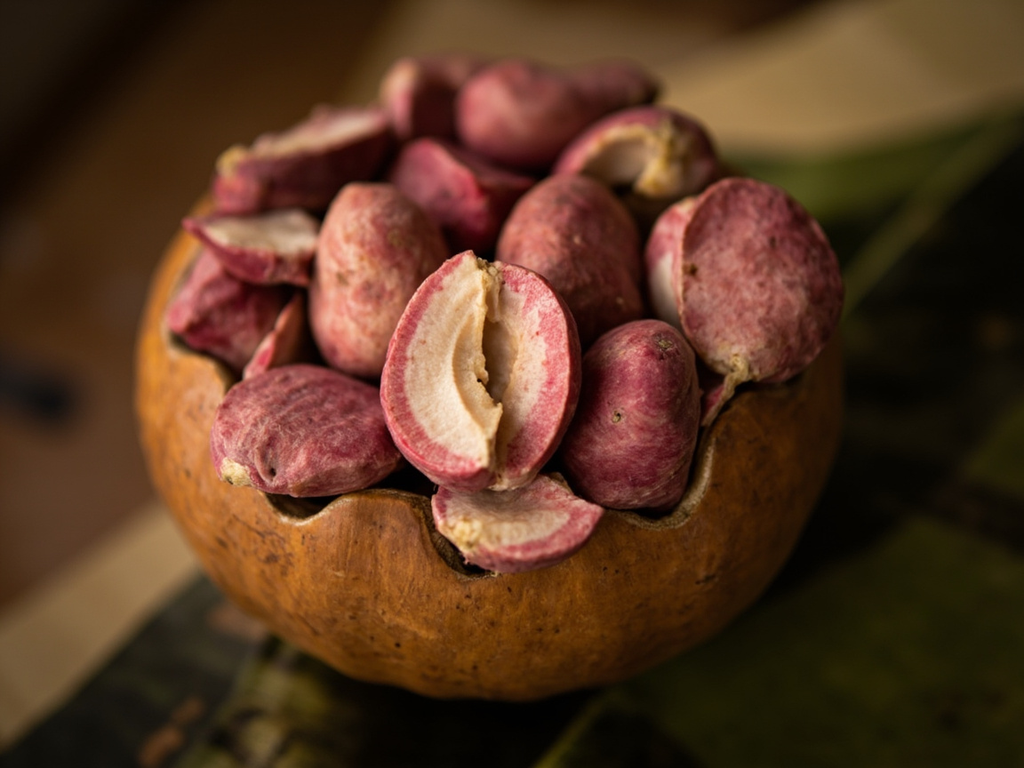
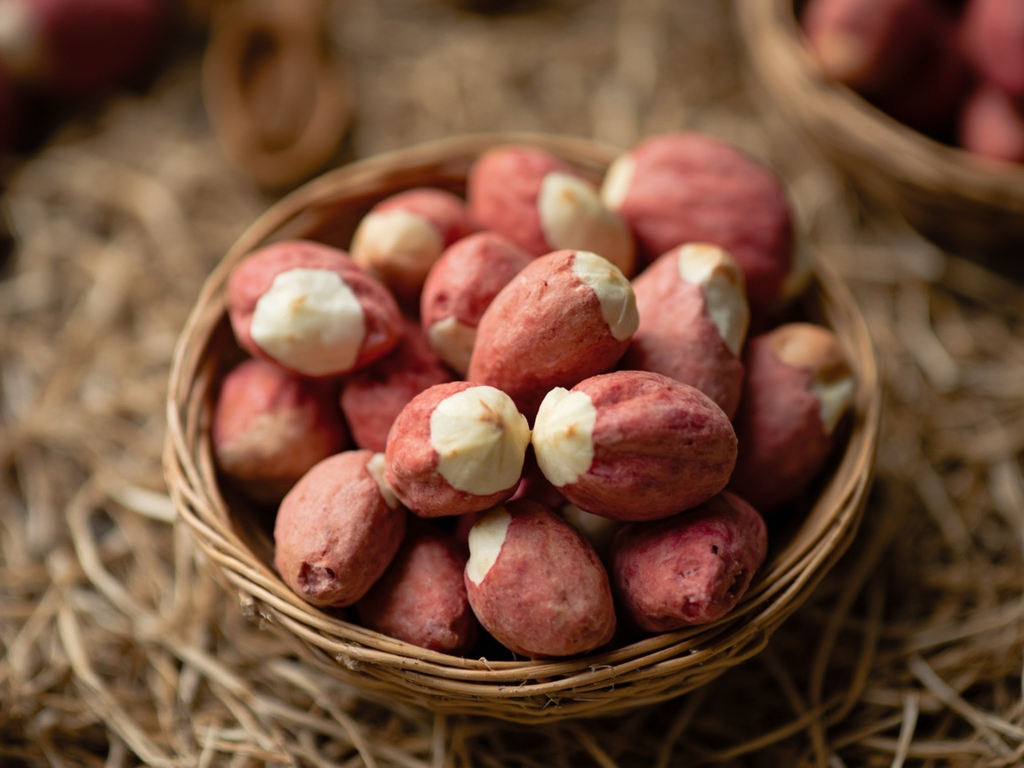
A fresh kola nut, blessed with a few words then broken and shared, accompanied by a spicy peanut-and-chili paste (ose oji) in which each segment is dipped. Bitter, stimulating, ceremonial. Presented here as a respectful evocation of Igbo hospitality, not a reproduction of the sacred rite itself.
Before anything else — before even asking why I summoned you — let me present the kola. Among us they say: he who brings kola brings life. Here, I break it before you, and whoever counts its lobes reads an omen. Dip your segment into the ose oji, this peanut and chili paste my wife prepares in the morning; the bitterness will keep your mind clear for conversation. Kola is not bargained for, it is shared — that is how a house recognizes a friend.
- •Fresh kola nut (oji Igbo, multi-lobed) — one or more (heart of the sharing)
- •Ground roasted peanuts — a handful (base of the dipping paste)
- •Dried chili — to taste (heat)
- •Salt — a pinch (seasoning)
Oji na ose oji (kola nut and spicy welcome paste)
A fresh kola nut, blessed with a few words then broken and shared, accompanied by a spicy peanut-and-chili paste (ose oji) in which each segment is dipped. Bitter, stimulating, ceremonial. Presented here as a respectful evocation of Igbo hospitality, not a reproduction of the sacred rite itself.
Why this dish? Kola nut is among his typical objects, reserved 'for moments of welcome and respect'. Achebe immortalized this gesture in Things Fall Apart: 'He who brings kola brings life.' Presenting kola to a guest is the first word of any visit.
Before anything else — before even asking why I summoned you — let me present the kola. Among us they say: he who brings kola brings life. Here, I break it before you, and whoever counts its lobes reads an omen. Dip your segment into the ose oji, this peanut and chili paste my wife prepares in the morning; the bitterness will keep your mind clear for conversation. Kola is not bargained for, it is shared — that is how a house recognizes a friend.
Ingredients (period version)
- Fresh kola nut (oji Igbo, multi-lobed) — one or more (heart of the sharing)
- Ground roasted peanuts — a handful (base of the dipping paste)
- Dried chili — to taste (heat)
- Salt — a pinch (seasoning)
Ingredients
- Fresh kola nuts (African grocery) — 2 to 3 (heart of the sharing)
- Unsalted roasted peanuts — 100 g (base of ose oji)
- Chili powder (cayenne or dried scotch bonnet) — 1/2 tsp (heat)
- Salt — 1 pinch (seasoning)
- Water — splash (to adjust texture)
Method
- Pound or roughly grind the roasted peanuts with chili and salt until a thick paste forms (add a splash of water if needed).
- Rinse and dry the kola nuts.
- At the moment of welcoming, present the whole kola to the guest of honor as a sign of respect, say a few words of welcome, then break it into its natural lobes.
- Arrange the lobes around the bowl of ose oji; each person dips their segment before nibbling.
- Serve with a little palm wine or fresh water.
How it was made : In Igbo society, kola (Cola acuminata, multi-lobed) is offered by the host according to a precise etiquette: presentation, prayer, fragmentation, sharing from oldest to youngest. The number of lobes was interpreted as an omen. It is a social and spiritual gesture, here simply evoked with respect.
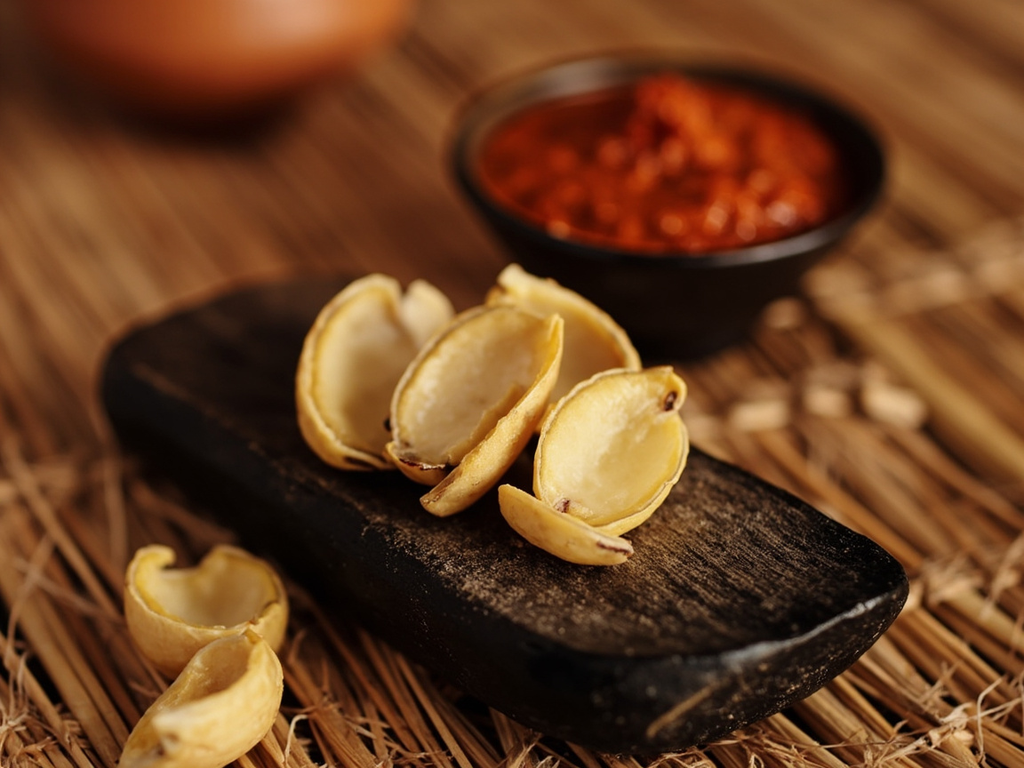
The contemporary twist : Serve the lobes on a small dark wooden board with the ose oji in a little bowl: a 'welcome tray' to set out as guests arrive.
Sources : Chinua Achebe, Things Fall Apart (1958) — kola ritual and the phrase 'He who brings kola brings life'
Chinua Achebe · Charactorium